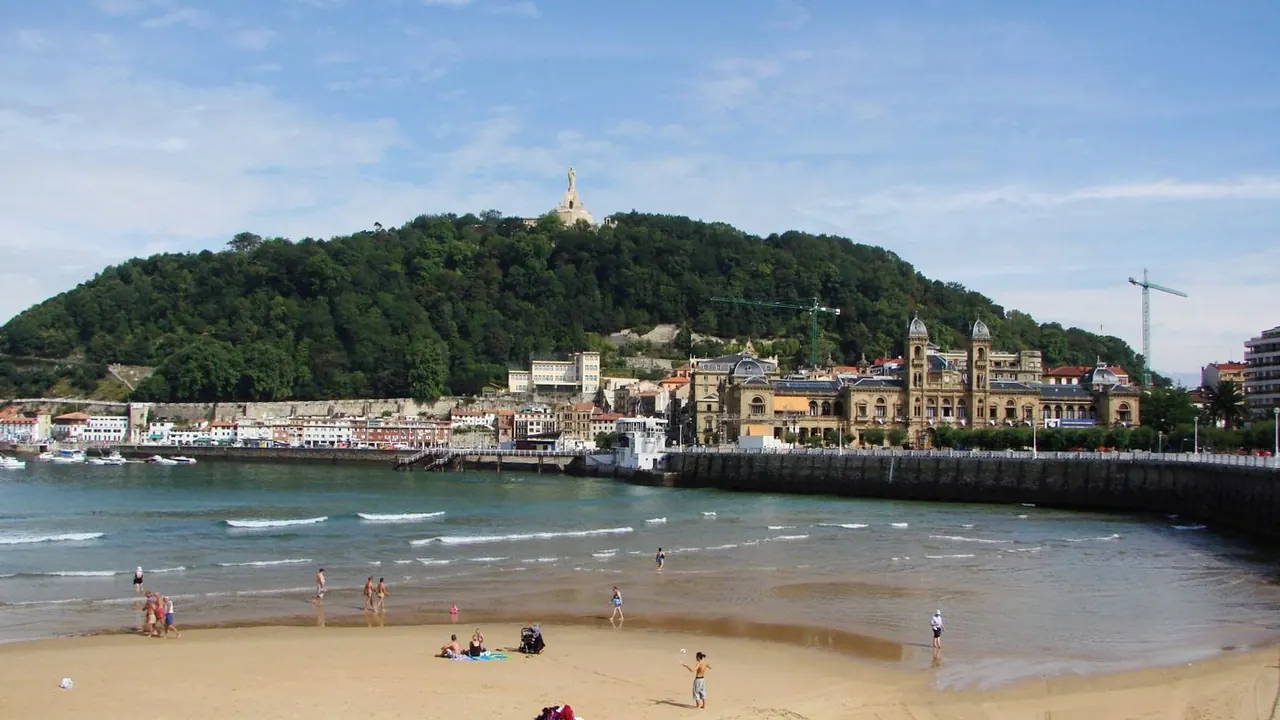
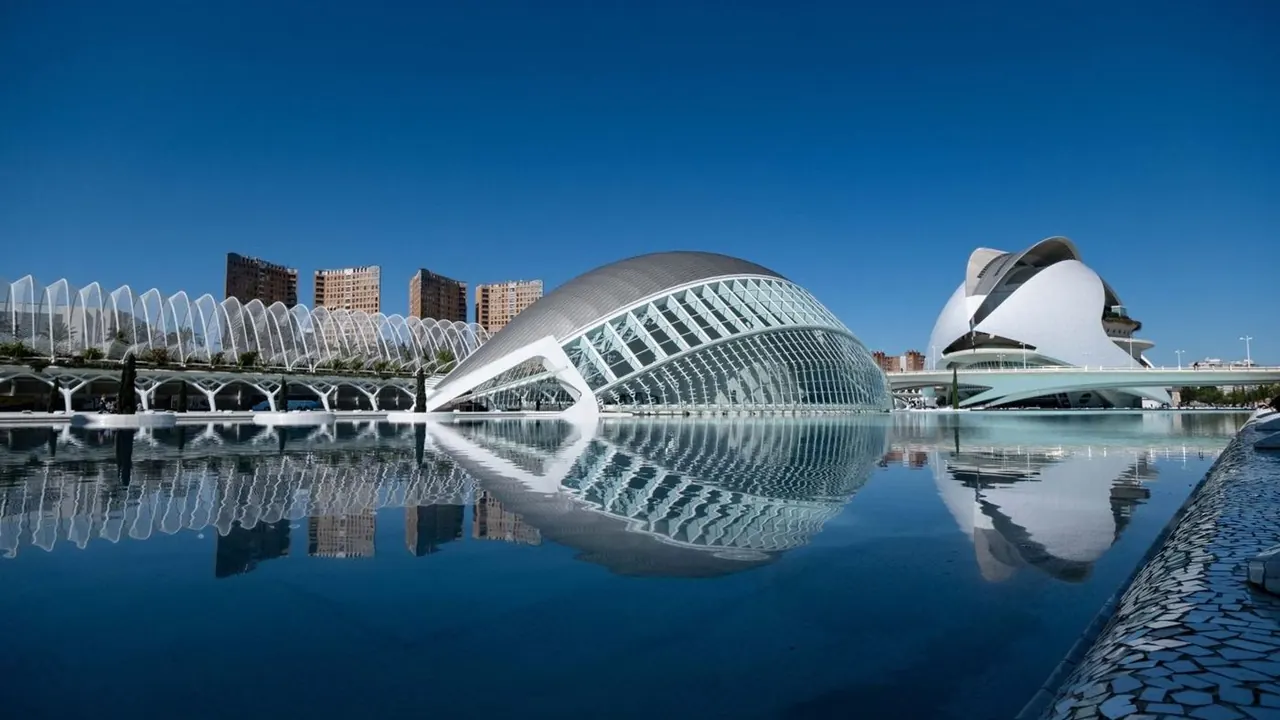
Photos: San Sebastian by Guérin Nicolas, CC BY-SA 3.0, cropped; Valencia by Francesco Ungaro, Pexels License.
San Sebastian or Valencia?
Our verdict in twelve categories, each scored against the same fixed benchmark cities, and the climate month by month, so you can choose for your trip.
Choose San Sebastian for
- food and drink
- nature and the outdoors
- day trips
San Sebastian is for travellers who plan their days around meals. The pintxo counters of the Parte Vieja and Gros, the celebrated tables in the hills and the cider houses inland make it Spain's great eating city at this size, and the green coast, the cliff paths and the easy hops into France give it more to do outdoors than its small centre suggests. Come for a long weekend of food and walking, and bring a raincoat and a generous budget.
Choose Valencia for
- prices
- nightlife
- shopping
Valencia gives more for less money and more hours of sun. Its long sandy beaches and warm sea last well into autumn, the old town has the bigger monuments, and the City of Arts and Sciences, Ruzafa's late nights and the shops of the Ensanche fill the days that San Sebastian would leave quiet. Families, beach lovers and anyone watching costs will find it the easier choice.
Scoreboard
Twelve categories on one fixed scale from 0 to 100. The shaded stretch is the gap between the two.
Your match
Pick a travel style or drag the sliders, and both match scores follow your weighting.
Wins on food and drink and nature and the outdoors with your weighting.
Wins on prices and nightlife with your weighting.
What matters to you?
Category by category
What the scores mean for a trip.
Beaches & swimming
Valencia's shore wins on length, warmth and season. Las Arenas, Malvarrosa and Patacona form one wide golden strip with room to spread out in high summer, the shallow water stays comfortable from June into October, and the pine-backed dunes of El Saler give a wilder option inside the Albufera park.
San Sebastian has the more beautiful beach in La Concha, a sheltered shell of pale sand right in the middle of town, with Ondarreta for families and Zurriola for surfers. But this is the Atlantic: the sea stays cooler, the swimming season is essentially July and August, and rain can close the beach for days.
Food & drink
San Sebastian is the stronger food destination, and for many visitors the whole point of going. Evenings are a crawl along the pintxo counters of the Parte Vieja and Gros with a glass of txakoli, the restaurants in the hills include some of Spain's most famous, and the cider houses of Astigarraga add a winter ritual.
Valencia's table is built on rice: paella valenciana, arroz negro and fideuà at the beach restaurants of Las Arenas and in the Albufera villages, with horchata in summer and the Mercado Central as a showpiece. It is excellent at lunchtime but has less depth at the top end, and both cities cook mostly their own regional food.
Culture & sights
Valencia has more and grander monuments. The Lonja de la Seda, the cathedral and its Miguelete tower, the Serranos and Quart gates and the alabaster doorway of the ceramics museum all sit within a short walk in Ciutat Vella, and the City of Arts and Sciences and two good art museums add a modern side.
San Sebastian is better enjoyed as a townscape than as a list of sights: the belle époque streets around Buen Pastor, the rebuilt grid of the Parte Vieja, the castle on Monte Urgull, San Telmo's account of Basque life and Chillida's sculptures in the rocks. It is lovely, but two days cover it.
Nightlife
Valencia goes out later and on a bigger scale. Ruzafa's cocktail bars and terraces stay full past midnight, El Carmen and the university streets are rougher and younger, summer brings open-air clubs near the port and Malvarrosa that run until dawn, and Fallas turns whole neighbourhoods into street parties.
San Sebastian's evenings are sociable but early-weighted, centred on the pintxo bars, and after dinner the choice narrows to a few late bars and clubs. It livens up in summer and during Semana Grande, but out of season a night out mostly means eating and drinking well.
Nature & outdoors
San Sebastian sits in a much more dramatic setting. Igueldo and Urgull frame the bay, the coastal path from Monte Ulia to Pasaia and on over Jaizkibel to Hondarribia crosses cliffs and sandstone formations, and the Basque hills of Aiako Harria are under an hour away, with surfing and paddleboarding in town.
Valencia's nature is flat and watery: the Albufera lagoon with its herons, rice fields and sunset boat trips, the pine woods and dunes of the Devesa, and the long green ribbon of the Turia gardens. For real hills or the gorge at Chulilla you need to drive inland.
Day trips
San Sebastian is the better base, because it sits right by the French border. Bilbao and the Guggenheim, Pamplona, walled Hondarribia and the French Basque towns of Saint-Jean-de-Luz, Biarritz and Bayonne are all within about an hour and a quarter, with the Rioja Alavesa vineyards a longer outing.
Valencia's outings are good but more spread out. Sagunto's Roman theatre and Xàtiva's castle are easy train rides, the fast train makes Cuenca's hanging houses a simple day, and Peñíscola and the Costa Blanca towns take closer to two hours.
Good for families
Valencia gives children more to do. The Oceanogràfic with its sharks and belugas, the hands-on science museum, Bioparc and the giant Gulliver playground in the Turia gardens could fill a week, and the wide, shallow city beaches suit small swimmers.
San Sebastian is safe and compact, with calm beaches, a flat car-free promenade, an aquarium, the Eureka science museum and the little funfair on Monte Igueldo. But wet days can rule out the beach, and families tend to run out of attractions after a few days.
Getting around
Both are easy without a car, in different ways. San Sebastian is small enough that the old town, La Concha, Gros and Zurriola are all linked by a short walk along the river and the bay, and the Euskotren runs straight to Hendaye and towards Bilbao.
Valencia's old town is just as walkable, but the beaches and the City of Arts and Sciences are a ride away, so you will lean on the metro, the tram and above all the bike, along the car-free Turia gardens.
Shopping & style
Valencia has much more to shop for. The Ensanche around Calle Colón holds the department store, the big chains and a run of luxury boutiques, El Carmen and Ruzafa add vintage and design, and Manises ceramics, painted fans and silk make distinctive things to take home.
San Sebastian's shopping is pleasant but small: some independent boutiques in the Centro, espadrilles and berets in the Parte Vieja and surf shops in Gros. Its best souvenirs come from La Bretxa market: Idiazabal cheese, txakoli and tins of anchovies.
Affordability
Valencia is much the cheaper stay. Central and Ruzafa hotels are fairly priced for most of the year, the multi-course lunch menu is a local fixture, and transport and museums cost little. Only Fallas and the height of summer by the beach push prices up sharply.
San Sebastian's hotels are scarce and dear, reaching big-capital levels in summer and festival weeks, and its famous restaurants are a real splurge. A pintxo crawl, cheap buses and free beaches and walks soften the bill, and an off-season visit helps most.
Live music & performing arts
Valencia has the steadier year-round programme. The Palau de les Arts stages a full season of opera and ballet with its own well-regarded orchestra, the Palau de la Música hosts the city orchestra, and the region's village wind bands are heard everywhere during Fallas.
San Sebastian's music is concentrated in summer, with the Jazzaldia festival in July, including free concerts on Zurriola beach, and the Quincena Musical in August. Outside those weeks the Kursaal and the Teatro Victoria Eugenia keep things ticking over at a quieter pace.
Wellness & relaxation
San Sebastian has the edge thanks to its royal seaside past. The historic bathing pavilion on La Concha is a seawater thalassotherapy spa looking straight onto the bay, and the small, orderly city and its promenade strolls make for an unhurried stay.
Valencia has no living bathing tradition. The Baños del Almirante survive only as a monument, so it is modern Arab-style bath houses and hotel spas, but the sunny, slow Mediterranean pace and the shady Turia gardens are restful in their own way.
When should you go?
Pick your month. The climate figures are measured averages, not a forecast.
San Sebastian in July
Valencia in July
Daytime high, °C
Rainfall in the month, mm
Where the figures come from
San Sebastian's station stands 252 m above the city centre, so the centre is likely a little warmer than the figures say.
Temperature and rainfall are climate normals, averaged over the years shown. San Sebastian: 1991-2020 normals, San Sebastian / Igueldo (6.1 km from centre). Valencia: 1991-2020 normals, Valencia (1.6 km from centre).
San Sebastian has a short, mild summer. July and August are the only months really made for the beach, with highs and sea both around 22°C, and even then grey days come through. Rain falls in every month and peaks in late autumn, with November close to 203mm, so spring and early autumn suit walking the hills and eating more than swimming. Winters are cool and damp rather than cold.
Valencia is far sunnier and drier all year. The sea is warm enough for swimming from June into October and reaches 26°C in August, but July and August afternoons climb to 31°C, too hot for long walks in the old town. September and October bring the year's heaviest rain in short bursts. Winter days of around 17°C make it a pleasant city for sightseeing when San Sebastian is at its wettest.
Which traveller are you?
On an outdoors trip, choose San Sebastian. Hills and Atlantic cliffs begin where the town ends, so a morning hike and an afternoon in the surf need no car. Valencia's flat wetlands are better for cycling and birdwatching than for hiking.
For a trip on a tight budget, Valencia makes the money last. In San Sebastian the room alone takes much of the budget. In Valencia a modest hotel leaves plenty for eating out, and the beaches, gardens and old-town museums cost little or nothing.
For a culture and arts trip, Valencia has more depth. Its sights run from Gothic grandeur to modern architecture, and an evening can end at the opera. San Sebastian's appeal lies more in its streets, and a couple of days covers it.
Before you go
| Measure | San Sebastian | Valencia |
|---|---|---|
| Official language | Spanish | Spanish |
| Currency | Euro (EUR) | Euro (EUR) |
| Sockets | CF230 V, 50 Hz | CF230 V, 50 Hz |
| Driving side | Right | Right |
| Time zone | UTC+1, UTC+2 in summer | UTC+1, UTC+2 in summer |
| Emergency number | 112 | 112 |
| Elevation | 6 m | 15 m |
| Main airport | San Sebastián Airport (EAS)16 km from centre11 non-stop destinations | Valencia Airport (VLC)9 km from centre109 non-stop destinations |
| Public holidays this year | 13 days | 13 days |
By the numbers
| Measure | San Sebastian | Valencia |
|---|---|---|
| City population | 189,866 | 840,792 |
| People per km² | 3,118 | 6,242 |
| Museums within 10 km | 14 | 45 |
| UNESCO World Heritage sites within 50 km | 3 | 2 |
| Swim season, months above 21 °C | 2 months | 5 months |
Where else could you go?
Every comparison below shares a destination with this one, so you can follow San Sebastian or Valencia somewhere new.