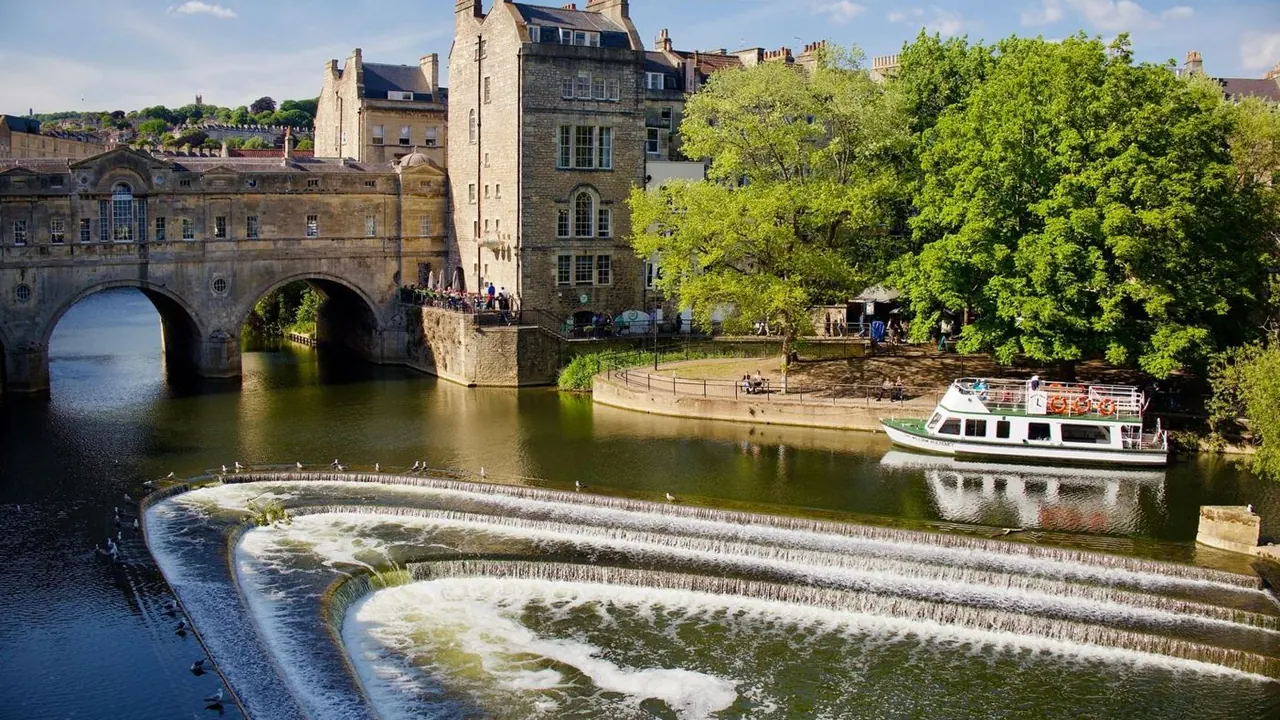
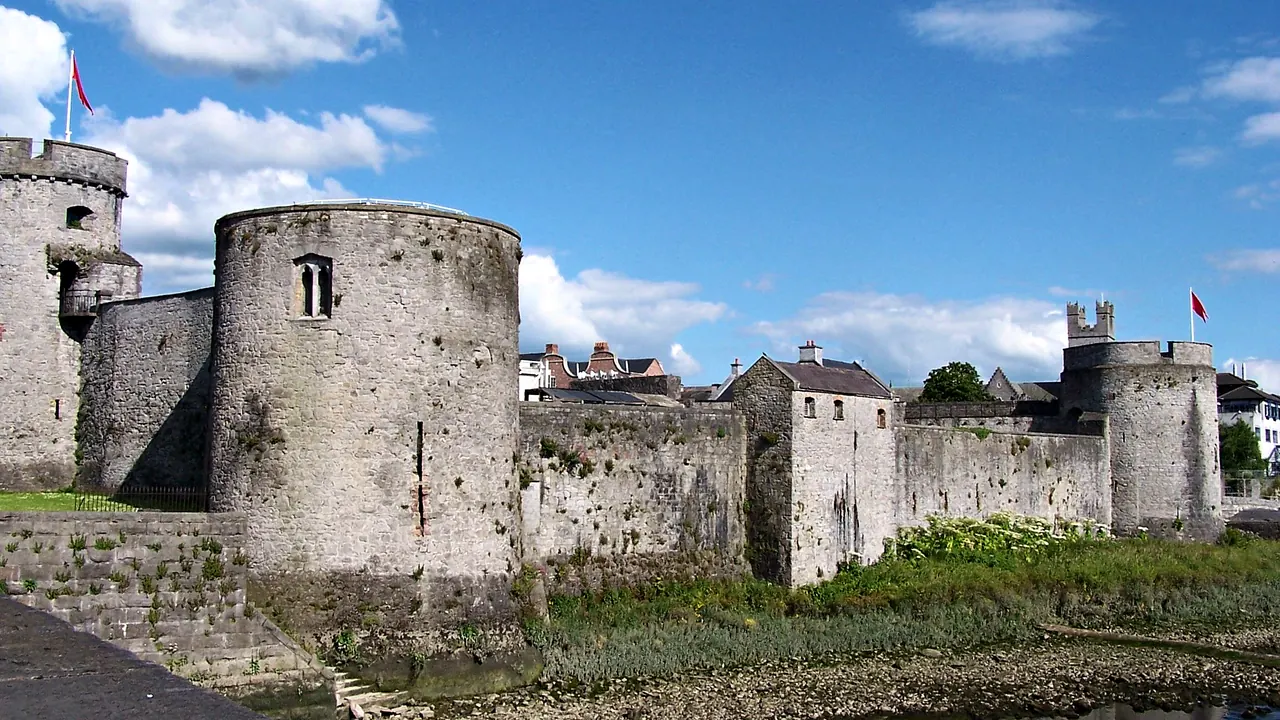
Photos: Bath by Lucas Carlini, Pexels License; Limerick by ingawh, CC BY-SA 3.0, cropped.
Bath or Limerick?
Our verdict in twelve categories, each scored against the same fixed benchmark cities, and the climate month by month, so you can choose for your trip.
Choose Bath for
- wellness
- culture and sights
- shopping
Bath suits a slow, comfortable stay in one place. It is a complete Georgian city in honey-coloured stone, with the Roman Baths at its centre and the only natural thermal bathing in Britain. Add good independent shops and railway links that make day trips easy. It is best for couples and culture lovers who want to walk everywhere and are willing to pay for it.
Choose Limerick for
- prices
- nightlife
- beaches
Limerick works better as a cheaper and livelier base for touring the west of Ireland by car. The city itself takes a day or two: a castle, a cathedral and a fine museum. Its pubs, traditional music sessions and students make for warmer evenings than Bath's early nights, and the Burren, the Cliffs of Moher and Lough Derg are all within a drive.
Scoreboard
Twelve categories on one fixed scale from 0 to 100. The shaded stretch is the gap between the two.
Your match
Pick a travel style or drag the sliders, and both match scores follow your weighting.
Wins on wellness and culture and sights with your weighting.
Wins on prices and nightlife with your weighting.
What matters to you?
Category by category
What the scores mean for a trip.
Beaches & swimming
Neither city is a beach destination, and from both the coast is about an hour away. What you find there is very different. From Bath it is Weston-super-Mare on the Bristol Channel, with brown, shallow water and a tide that goes out a very long way. From Limerick it is the wide Atlantic sand of Kilkee, Lahinch and Ballybunion, with surf that rewards a wetsuit.
Bath has the closer option for a summer dip, with river swimming in the Avon at a weir east of the city. In Limerick nobody swims in the tidal Shannon, so the coast is the only choice.
Food & drink
Bath eats a little better. More independent restaurants and gastropubs are packed into the lanes around the Abbey and up Walcot Street, and the city has its own baked goods in the Bath bun and the Sally Lunn bun. Afternoon tea in a Georgian tearoom is a ritual Limerick has no answer to.
Limerick's strength is the produce of the Munster farmland, best seen at the Milk Market at the weekend, along with its long tradition of cured ham and a well-poured stout. Both lack range. Bath has little street food and empties early, and Limerick serves plenty of solid meals but few memorable ones.
Culture & sights
Culture is one of the widest gaps between the two. All of Bath is a World Heritage Site. Its Georgian set pieces, the Circus, the Royal Crescent and Pulteney Bridge, are a few minutes' walk from the Roman Baths and the Abbey. The Holburne, No. 1 Royal Crescent and the Herschel Museum fill in the rest, and the honey-coloured streets are worth seeing in their own right.
Limerick has fewer sights, and they are smaller in scale. King John's Castle and St Mary's Cathedral stand on King's Island, the Treaty Stone is across Thomond Bridge, and the Hunt Museum keeps its medieval collection in the old Custom House. The brick terraces of the Georgian Quarter are pleasant for a walk, but they are a backdrop to a stay rather than the reason for it, as Bath's streets are.
Nightlife
Limerick is the better night out. Its pubs around O'Connell Street and Thomas Street range from snugs with open fires to loud late bars, and a few clubs stay open into the early hours at weekends. Students from its three colleges keep weeknights busy during term, and a Munster match at Thomond Park fills the whole centre.
Bath's evenings are quieter and end earlier: coaching inns and real-ale pubs, a handful of student clubs, and on weeknights little to do after dinner. Its answer is that Bristol is a short train ride away for a bigger night.
Nature & outdoors
Both cities sit in green, rainy country, and they differ in how you reach it rather than in quality. From Bath you can walk straight out of the centre onto the Skyline loop or the Kennet and Avon towpath, or cycle the Two Tunnels Greenway, with Cheddar Gorge within an hour. All of it is gentle, rolling English landscape.
Limerick's own outdoors is mostly riverside paths along the Shannon. With a car you reach wilder country: kayaking on Lough Derg, hill walking in the Galtees, and the Burren's limestone and the Cliffs of Moher on the Atlantic.
Day trips
Bath has the better day trips, and more of them are easy to reach. Bristol and Cardiff are both on the railway. Stonehenge and Avebury are about an hour away, and Wells, Glastonbury, Lacock, the southern Cotswolds and Salisbury are all within reach. In a short stay you could see Roman, prehistoric and medieval England.
Limerick is a sound touring base. Bunratty and Adare are close and the Rock of Cashel is about an hour off, but Galway, Cork and Killarney are long drives, and almost everything depends on a car or a coach tour.
Good for families
Bath has a little more for children. The Roman Baths, with rising steam and costumed characters, are a real hit, and Royal Victoria Park has a large playground. Bristol's science centre, aquarium and wildlife park are a short train ride away, and Longleat's safari park is a drive off. The steep streets are hard work with a pushchair.
Limerick is flat and easy with a buggy, and King John's Castle and Bunratty Folk Park make good outings. There is no zoo, aquarium or theme park nearby, though, and rain often decides the day.
Getting around
Bath is the easier place without a car. The centre takes about twenty minutes to walk end to end, much of it is pedestrianised, and direct trains run to London as well as Bristol. The only real effort is the hills up to the outer viewpoints.
Limerick's centre is flat and just as easy to walk, with buses to the university and trains to Dublin, Ennis and Galway. Beyond the city, though, rural buses are infrequent, so most visitors hire a car, often from Shannon Airport. Bath's country villages need a car too, but far more of its outings work by rail.
Shopping & style
Shopping is a real reason to visit Bath. It has fashion on Milsom Street in Georgian buildings, antiques on Bartlett Street, furniture makers and salvage dealers on Walcot Street, the centuries-old Guildhall Market and the little shops along Pulteney Bridge. Browsing is half the pleasure.
Limerick's shopping is mostly high-street names on O'Connell Street and a suburban shopping centre. The Milk Market's craft and secondhand stalls are the most interesting stop, and Limerick lace takes some finding. For Irish woollens and design you will find more choice in Clare or Kerry.
Affordability
Limerick is the cheaper place to stay. Hotel rooms are fairly priced for Western Europe outside high summer and big rugby weekends, and the main sights cost little. Eating, drinking and car hire are still expensive, and the car is often the biggest bill.
Bath's central hotels are dear, and very dear on summer weekends and around Christmas, and the Roman Baths and the spa add up. You do save on transport because you need no car. Staying midweek, or sleeping in Bristol, does the most to bring the bill down.
Live music & performing arts
The two are broadly level, but the evenings feel different. Bath's stage life centres on the gilded Georgian Theatre Royal, with touring drama, opera, dance and a Christmas pantomime. There are also concerts in the Abbey and the Assembly Rooms, and long-running festivals of literature and Mozart.
Limerick has something Bath lacks: a resident ensemble, the Irish Chamber Orchestra, which plays at the University Concert Hall. Its best offer, though, is the traditional music sessions in its pubs. For opera or a big production you would go to Dublin.
Wellness & relaxation
Bath was built on its hot springs, and bathing in them is the core of a visit. You can soak in the rooftop pool at Thermae Bath Spa, which looks across to the Abbey, or in the quieter Georgian Cross Bath. Tea in the Pump Room and a walk in the parade gardens fill the rest of a slow day.
Limerick has no bathing tradition of its own, so relaxing in town means a hotel spa or a stroll along the Shannon. For more, go out to the country-house spas around Adare and Lough Derg, or to the hot seaweed baths on the Atlantic coast.
When should you go?
Pick your month. The climate figures are measured averages, not a forecast.
Bath in July
Limerick in July
Daytime high, °C
Rainfall in the month, mm
Where the figures come from
Bath's temperatures are measured 29 km from the centre, at Lyneham.
Bath has no rain gauge within 25 km of the centre, so its rainfall comes from a gridded climate dataset read at the city rather than from a gauge further away.
Temperature and rainfall are climate normals, averaged over the years shown. Bath: 1991-2020 normals, Lyneham (29.2 km from centre). Limerick: 1991-2020 normals, Shannon Airport (20.1 km from centre).
Both are mild, damp places with no hot season, so neither is a beach destination at any time of year. Bath is at its best from May to September. Highs reach about 21°C, sunshine is generous and the paths in the surrounding hills dry out. In July and August the sea at Weston reaches about 18°C at most. From October the rain picks up, and by December the days are short and grey, though a cold evening is when the rooftop thermal pool is at its best.
Limerick follows a similar pattern but is wetter and cloudier all year. Each month from October to January brings more than 100mm of rain, and high summer gets noticeably fewer hours of sun than Bath. Its winters are a degree or two milder. Late spring and early summer bring the driest spell and long light for touring the coast and hills.
Which traveller are you?
On a relaxing and wellness trip, Bath is the clear choice. It is the one place in Britain where you can bathe in natural hot spring water, and its walkable Georgian centre suits slow afternoons. In Limerick you would have to drive out to country-house spas.
For a culture and arts trip, choose Bath. The Roman Baths, the Abbey, the Royal Crescent and several smaller museums fill two or three days, and the Theatre Royal covers the evenings. Limerick's castle, cathedral and Hunt Museum make a pleasant day rather than a whole trip.
On a tight budget, Limerick goes further. Its hotels are fairly priced for Western Europe and the sights cost little, while central Bath is dear, especially on summer weekends. Staying in town keeps costs low, because a hire car is Limerick's biggest expense.
Before you go
| Measure | Bath | Limerick |
|---|---|---|
| Official language | English | English, Irish |
| Currency | Pound Sterling (GBP) | Euro (EUR) |
| Sockets | G230 V, 50 Hz | G230 V, 50 Hz |
| Driving side | Left | Left |
| Time zone | UTC, UTC+1 in summer | UTC, UTC+1 in summer |
| Emergency number | 112 or 999 | 112 |
| Elevation | 132 m | 10 m |
| Main airport | Bristol Airport (BRS)25 km from centre117 non-stop destinations | Shannon Airport (SNN)21 km from centre39 non-stop destinations |
| Public holidays this year | 8 days | 11 days |
By the numbers
| Measure | Bath | Limerick |
|---|---|---|
| City population | 94,092 | 62,702 |
| People per km² | 3,245 | 3,015 |
| Museums within 10 km | 17 | 6 |
| UNESCO World Heritage sites within 50 km | 2 | 0 |
| Swim season, months above 21 °C | None | - |
Where else could you go?
Every comparison below shares a destination with this one, so you can follow Bath or Limerick somewhere new.