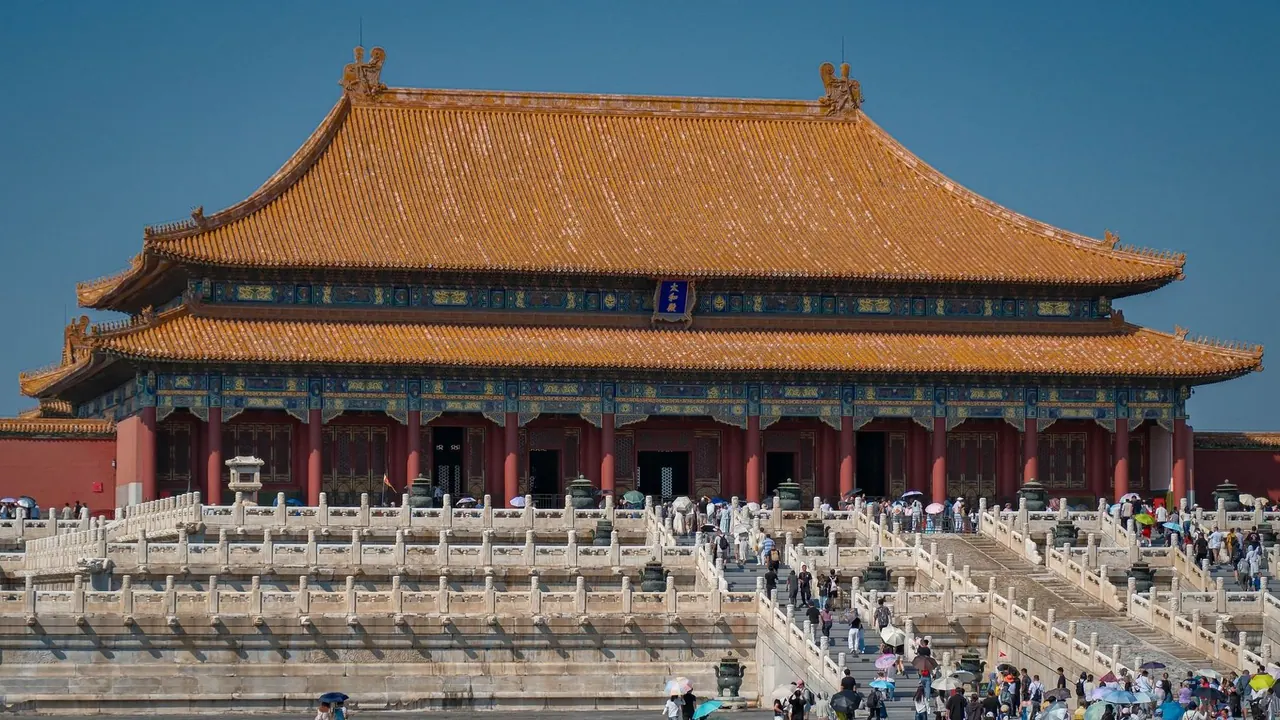
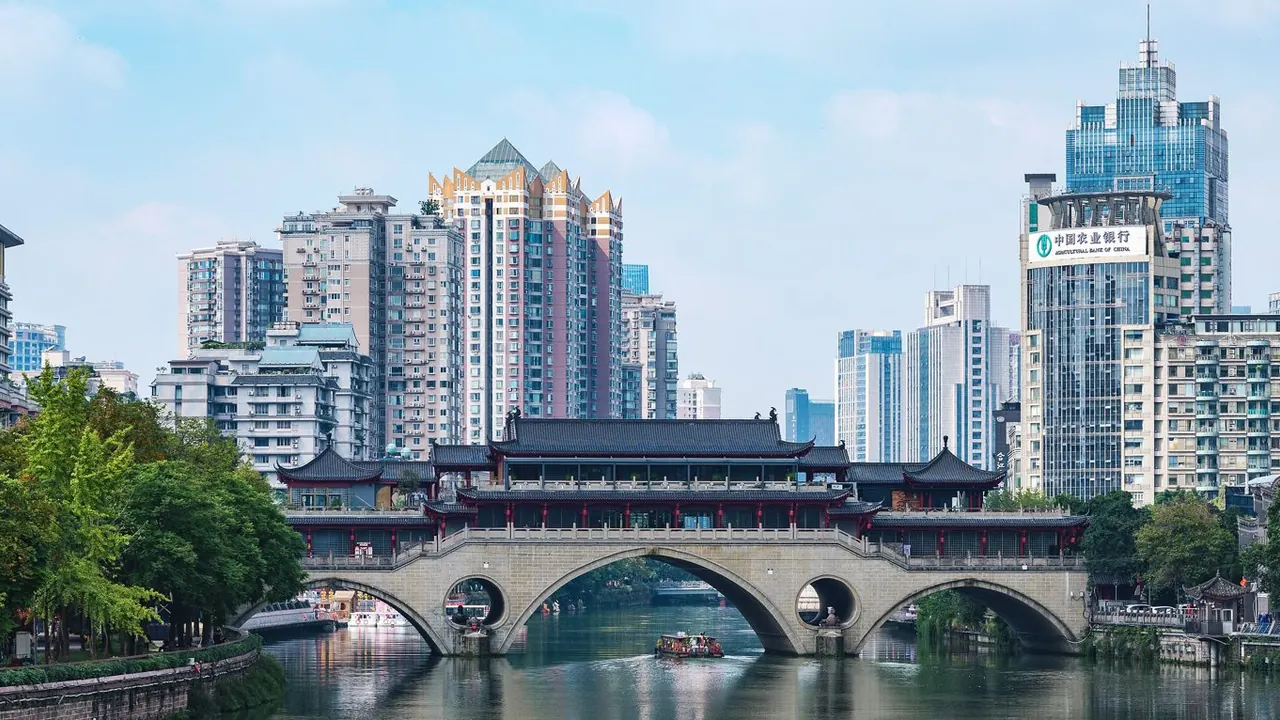
Photos: Beijing by BI ravencrow, Pexels License; Chengdu by TurnOnTheNight, CC BY-SA 4.0, cropped.
Beijing or Chengdu?
Our verdict in twelve categories, each scored against the same fixed benchmark cities, and the climate month by month, so you can choose for your trip.
Choose Beijing for
- culture and sights
- live music and the arts
- shopping
Beijing is the choice for travellers who want China's imperial history at full scale. The Forbidden City, the Temple of Heaven, the Summer Palace and the Great Wall are all within reach, along with the National Museum, Peking opera in old guild halls and the antiques stalls at Panjiayuan. It suits a first trip to China and anyone happy to give each great sight most of a morning, as long as they accept long journeys across a very large city.
Choose Chengdu for
- prices
- nightlife
- nature and the outdoors
Chengdu pays off for people who travel to eat and to take things slowly. Sichuan cooking is the main event, the evenings run late around hotpot and the Jin River bars, and afternoons go in park teahouses. Money goes further than in the capital, and the mountains and the Leshan Buddha are close by. There is less history in the city itself, so it suits a second visit to China or a trip built around food and the countryside.
Scoreboard
Twelve categories on one fixed scale from 0 to 100. The shaded stretch is the gap between the two.
Your match
Pick a travel style or drag the sliders, and both match scores follow your weighting.
Too close to call, 2 points apart
Wins on culture and sights and live music and the arts with your weighting.
Wins on prices and nightlife with your weighting.
What matters to you?
Category by category
What the scores mean for a trip.
Beaches & swimming
Neither city is a place to swim in the sea. Beijing at least has the Bohai coast at Beidaihe about two hours away by fast train, though the water there is grey and shallow. Chengdu sits deep in the Sichuan Basin with no coast within reach, and its water parks are what locals use to escape the summer heat.
Food & drink
Beijing eats well across a wide range. Its own cooking is roast duck carved at the table, followed by northern wheat noodles, dumplings and cumin lamb. The real strength is the restaurants from every province, the Sichuan, Yunnan, Xinjiang and Cantonese kitchens among them, plus more polished fine dining and cocktail bars in the business districts.
Chengdu comes out a little ahead because its own kitchen is the attraction. Mapo tofu, dan dan noodles and beef-tallow hotpot are cooked in the city where they began, at family counters in the residential lanes. A food trip here means getting to know one regional cuisine in depth, and there are plenty of milder dishes for anyone who asks for less heat.
Culture & sights
For history and monuments, the two are far apart. Beijing still follows its imperial plan, from the Forbidden City on the central axis to the Temple of Heaven and the Summer Palace by its lake. Add the National Museum's collections, the Lama Temple and the hutongs around Shichahai, and there are many days of sightseeing, though the major sights are spread out and each takes most of a morning.
Chengdu has a good handful of sights rather than a historic centre: the Wuhou Shrine, Du Fu's Thatched Cottage, the working Wenshu Monastery and the ancient Shu gold at the Jinsha Site Museum. Its old lanes at Kuanzhai Xiangzi have been rebuilt, and three or four days cover what the city itself offers.
Nightlife
Beijing's nightlife is split between distinct areas. There are big clubs and taprooms in Sanlitun, small courtyard and rooftop bars around Gulou, and touristy karaoke along Houhai. The city is so spread out that a night rarely flows from one place to the next.
Chengdu makes the more natural long night out, because food holds the evening together. A late hotpot runs into the riverside bars and clubs at Jiuyanqiao, and snack streets keep serving well past midnight. The mood is sociable rather than underground, and the clubs favour table service and commercial music.
Nature & outdoors
Beijing's best outdoor day is walking the wild, unrestored Great Wall between its watchtowers on the Yanshan ridges. The Fragrant Hills turn red with maples in autumn, and Yanqing has skiing in winter, but dust, summer humidity and smog can spoil the views.
Chengdu has more mountain scenery within reach. There are the forested Taoist trails of Qingcheng Mountain, the long climb up Emeishan, above 3,000m, through cloud forest with monkeys on the path, and the bamboo country of the Wolong panda reserves. Beyond them lies the high plateau of western Sichuan for those with several days to spare.
Day trips
Both make excellent bases, and the difference is in what you go out to see. Beijing's trips centre on the Great Wall, with restored Mutianyu or the steep ridges of Jinshanling. The emperors' world continues at the Ming and Qing tombs and at Chengde's summer palace, an hour away by fast train.
Chengdu's outings are about older cultures and religious landscapes. You can see the Leshan Giant Buddha carved into its cliff, the ancient Dujiangyan waterworks and the strange bronze masks at Sanxingdui. Wooden market towns such as Huanglongxi and Pingle make gentler days out.
Good for families
For children the two are broadly level, and pandas are the big draw in both. Beijing has more variety, with Universal Beijing Resort, the hands-on Science and Technology Museum and the toboggan ride down from the Wall at Mutianyu. Its sights are huge and get very crowded during Chinese school breaks.
Chengdu's Giant Panda Breeding Research Base is a better panda visit than any zoo, especially early in the morning when the animals are active. Food that is spicy unless you ask otherwise and signs that are often only in Chinese mean parents need to plan more carefully.
Getting around
Both have large, clean metros with English signs, and in both cities sights are far apart, so getting around is similar. Beijing is more tiring, with long walks to change lines, bag checks at every station and avenues several lanes wide. Trips to the Great Wall usually need a driver.
Chengdu is a little easier. The streets are flat and covered with shared bikes, and the centre around Tianfu Square and Chunxi Road is pleasant on foot.
Shopping & style
Beijing is the better shopping trip, mainly because of its markets and craft streets. You can browse porcelain and jade at Panjiayuan early in the morning, buy brushes and paper on Liulichang, and find tea, silk and cloth shoes in Dashilar, with the big malls of Guomao and Sanlitun for international labels.
Chengdu's shopping is concentrated in the malls around Chunxi Road. The things worth taking home are regional: Shu brocade, Sichuan embroidery, chilli bean paste, Sichuan pepper and mountain green teas.
Affordability
Beijing is good value for a capital, with cheap metro rides, local noodle shops and modest entry fees at the great sights. Costs rise quickly once you add international hotels, the famous duck restaurants and a private driver to the Wall.
Chengdu stretches a budget further, and the biggest saving is on rooms, since comfortable and even upscale hotels cost much less than in Beijing. Many temples and museums are cheap or free. The main extra costs are train fares and tickets for the day-trip sights.
Live music & performing arts
Beijing has the stronger stage. Peking opera is performed nightly in historic guild halls, often in short subtitled programmes, and the National Centre for the Performing Arts brings opera, ballet and visiting orchestras. Acrobatics shows need no language, and small venues around Gulou host rock and folk bands.
Chengdu's Sichuan opera shows, with face-changing and fire-spitting, are entertaining but closer to a variety show than full opera. Its livehouses, with indie bands and Sichuan-dialect hip-hop, are the more interesting side of its music scene.
Wellness & relaxation
Neither city is restful, but they offer different ways to unwind. Beijing has its bathhouses, open round the clock with hot pools and sleeping halls, the hot springs at Xiaotangshan, and early-morning tai chi to watch at the Temple of Heaven.
Chengdu relaxes in the open. People spend whole afternoons in bamboo chairs in People's Park, over bottomless cups of tea and mahjong, with ear cleaners doing the rounds. That easy pace suits a traveller who wants to slow down for part of the day.
When should you go?
Pick your month. The climate figures are measured averages, not a forecast.
Beijing in July
Chengdu in July
Daytime high, °C
Rainfall in the month, mm
Temperature and rainfall are climate normals, averaged over the years shown. Beijing: 1991-2020 normals, Beijing (11.1 km from centre). Chengdu: 1991-2020 normals, Chengdu (4.5 km from centre).
Both cities are best in spring and autumn, roughly April to May and late September to October, when it is warm enough for long days on foot. Summer is hot and wet in both. Beijing reaches about 32°C in July, which is also its wettest month at 163mm. Chengdu is a little less hot but even wetter, with 211mm in August, and the air stays heavy with humidity. Neither city has a beach, so in summer swimming means a pool.
Winter is where they differ most. Beijing is bitterly cold, with daytime highs around 2°C in January, but it is dry and sunny, and clear cold days suit the palaces and the Wall if you dress for them. Chengdu is milder at about 10°C, but the basin is one of the dullest places in China, with very little sun from November to January. Even in its best months it gets far less sunshine than Beijing.
Which traveller are you?
On a culture and arts trip, Beijing is the clear pick. The Forbidden City, the Temple of Heaven and the National Museum are among the great sights of Asia, and in the evenings there is Peking opera in historic theatres and concerts at the National Centre for the Performing Arts.
For a food and nightlife trip, choose Chengdu. This is where Sichuan cooking comes from, and a night out starts with a long hotpot or skewer dinner, moves on to the bars at Jiuyanqiao and ends at snack streets that are still serving after midnight.
On a trip with a tight budget, Chengdu stretches the money further. Comfortable hotels cost much less than in the capital, neighbourhood noodle counters are very cheap, and many temples and museums charge little or nothing to get in.
Before you go
| Measure | Beijing | Chengdu |
|---|---|---|
| Official language | Putonghua | Putonghua |
| Currency | Yuan Renminbi (CNY) | Yuan Renminbi (CNY) |
| Sockets | ACI220 V, 50 Hz | ACI220 V, 50 Hz |
| Driving side | Right | Right |
| Time zone | UTC+8 | UTC+8 |
| Emergency number | Police 110, ambulance 120, fire 119 | Police 110, ambulance 120, fire 119 |
| Elevation | 43 m | 500 m |
| Main airport | Beijing Capital International Airport (PEK)25 km from centre104 non-stop destinations | Chengdu Shuangliu International Airport (CTU)16 km from centre77 non-stop destinations |
| Public holidays this year | 6 days | 6 days |
By the numbers
| Measure | Beijing | Chengdu |
|---|---|---|
| City population | 21,893,095 | 20,937,757 |
| People per km² | 1,334 | 1,456 |
| Museums within 10 km | 83 | 10 |
| UNESCO World Heritage sites within 50 km | 6 | 0 |
Where else could you go?
Every comparison below shares a destination with this one, so you can follow Beijing or Chengdu somewhere new.