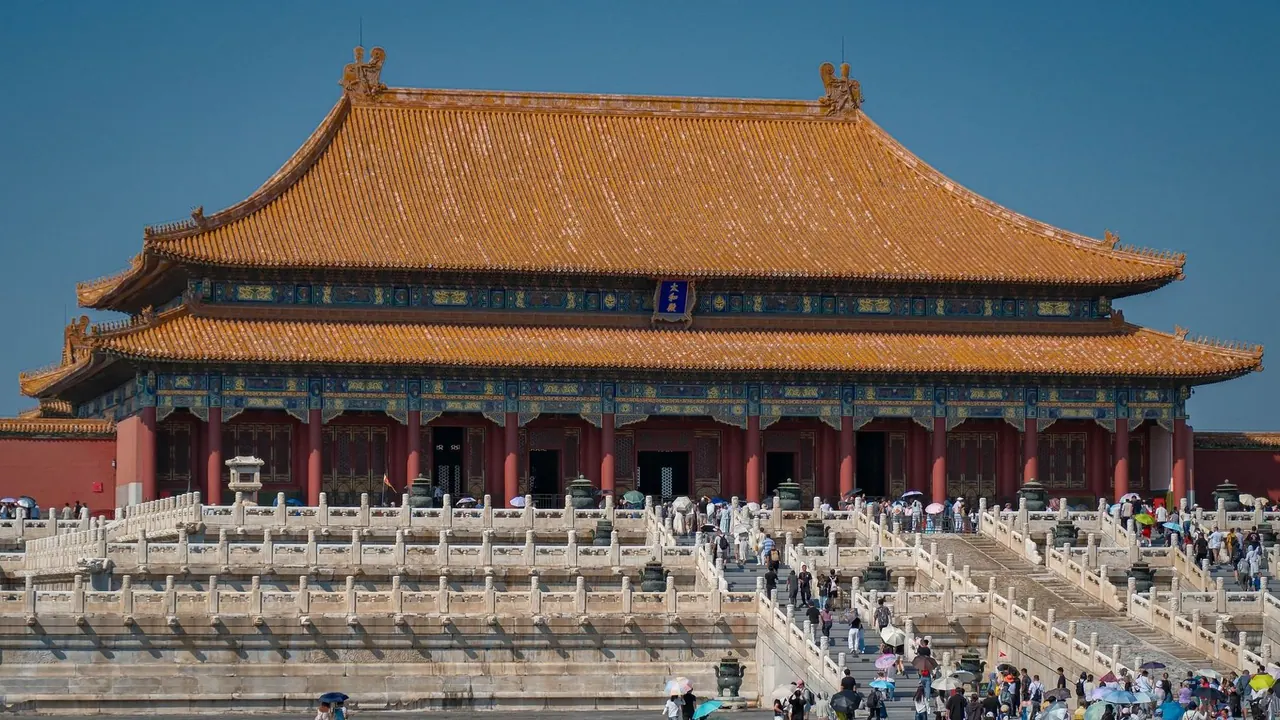
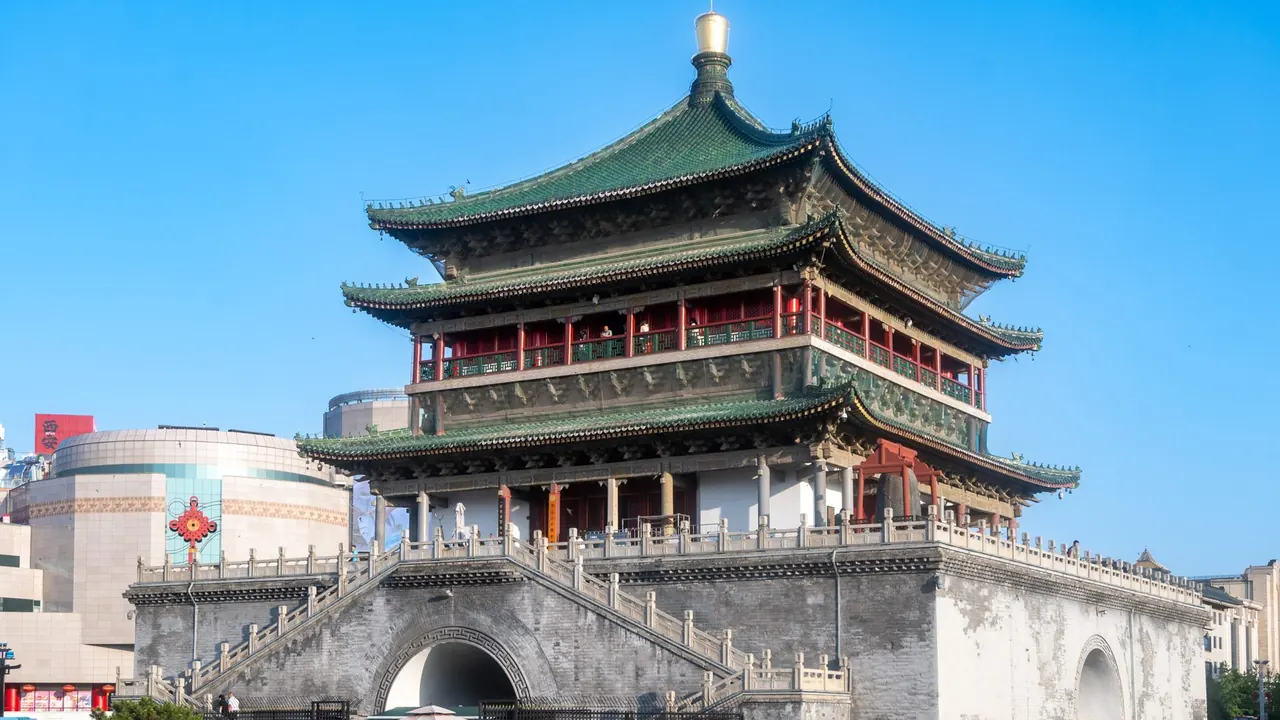
Photos: Beijing by BI ravencrow, Pexels License; Xi'an by xiquinhosilva, CC BY 2.0, cropped.
Beijing or Xi'an?
Our verdict in twelve categories, each scored against the same fixed benchmark cities, and the climate month by month, so you can choose for your trip.
Choose Beijing for
- live music and the arts
- shopping
- nightlife
Beijing suits a first trip to China and anyone who wants the widest spread from one base. The imperial capital adds the Forbidden City and the Temple of Heaven to the Great Wall, and in the evenings it offers a deeper table, Peking opera and a real choice of bars. It also has more to keep children busy. The cost is distance: sights sit far apart, and each crossing of the city eats into the day.
Choose Xi'an for
- prices
- nature and the outdoors
Xi'an is the better pick for travellers drawn to older China, the Tang dynasty and the start of the Silk Road, who would rather walk a compact walled centre than ride the metro across ring roads. The Terracotta Army, the complete city wall and the Muslim Quarter's street food make a focused few days, and money goes further. Nights are quieter and the stage is thin, so it rewards the daytime sightseer rather than the night owl.
Scoreboard
Twelve categories on one fixed scale from 0 to 100. The shaded stretch is the gap between the two.
Your match
Pick a travel style or drag the sliders, and both match scores follow your weighting.
Wins on live music and the arts and shopping with your weighting.
Wins on prices and nature and the outdoors with your weighting.
What matters to you?
Category by category
What the scores mean for a trip.
Beaches & swimming
Neither city is a beach destination, and swimming in either means a pool. Beijing at least has the sea within reach: the Bohai coast at Beidaihe is about two hours by fast train, though the water is grey and crowded. Xi'an is too far inland for even that, and its nearest substitute is a hot-spring pool at a Lintong resort.
Food & drink
Beijing eats better and more widely. Carving a roast duck at the table is the signature ritual, but the real advantage is the capital's pull on cooks from across the country, so Sichuan, Yunnan, Xinjiang and Cantonese food is cooked well, and there is serious fine dining and good cocktails in the business districts.
Xi'an is narrower but full of character, a wheat city of biangbiang noodles, roujiamo and crumbled-bread mutton soup. Its best eating is outdoors in the Muslim Quarter late into the evening, cheap and fast, with little beyond it at the top end.
Culture & sights
Both are great ancient capitals, but Beijing has more to see. The Forbidden City on its imperial axis, the Temple of Heaven, the Summer Palace and the National Museum make a set of sights few cities anywhere can equal, and the hutongs and the 798 district carry the story into everyday and modern life. The catch is that each sight fills most of a morning and they lie far apart.
Xi'an reaches further back, to the Tang dynasty and the Silk Road. Its complete Ming wall, the Shaanxi History Museum, the Wild Goose Pagodas and the courtyard-style Great Mosque are grouped more closely, though some rebuilt streets feel staged.
Nightlife
Beijing has a real going-out scene. Sanlitun has cocktail bars, taprooms and clubs that run into the early hours, and the Gulou hutongs have quieter courtyard and rooftop bars. Getting between them takes a taxi.
Evenings in Xi'an are more about walking and eating than drinking. Crowds fill the lit-up boulevard below the Big Wild Goose Pagoda and the Muslim Quarter, and the bar strip along Defu Xiang is fine for a beer but rarely runs late.
Nature & outdoors
The two are about level for the outdoors, and both look to mountains beyond a hazy plain. Beijing's are defined by the Great Wall: hiking the wild, unrestored ridge sections between watchtowers is the standout, with autumn maples in the Fragrant Hills and winter skiing at Yanqing.
Xi'an has the Qinling range to the south and the steeper thrills. Mount Hua's granite cliff paths make a hard day out, the Zhongnan valleys have Taoist temples among the forest, and Taibai Mountain suits serious hikers.
Day trips
Both cities have one of China's defining sights just outside town, and both reward a few days of outings. Beijing's has more variety: a choice of Great Wall sections from restored Mutianyu to the steep ridges of Jinshanling, plus the Ming Tombs and fast trains to Chengde's summer palace or the concession waterfront of Tianjin.
Xi'an's excursions centre on tombs and Buddhism. The Terracotta Army pairs naturally with Huaqing Palace, the Qianling and Hanyangling mausoleums lie west and north, and Luoyang's Longmen Grottoes are an easy fast-train trip.
Good for families
Beijing gives children far more. Universal Beijing Resort, the zoo pandas with the aquarium beside them, the science museum near the Olympic Park and the toboggan down from Mutianyu are all built for fun, though the huge sites and long transfers test small legs.
In Xi'an, cycling the city wall and the pandas and golden monkeys at the Qinling wildlife park are the highlights. After that, most days come down to museums and tombs meant for adults.
Getting around
Both have large, cheap metros signed in English and plenty of ride-hailing, so neither is hard to navigate. The difference is scale. Beijing spreads across its ring roads, transfers involve long underground walks, and two sights can be most of an hour apart, while the Great Wall usually needs a driver.
Xi'an's walled centre is a compact grid where the Bell and Drum Towers, the Muslim Quarter and the Forest of Steles are all within walking distance. The metro runs east to Lintong, which brings the Terracotta Army within easy reach.
Shopping & style
Beijing is the better place to shop. The malls of Guomao and Sanlitun carry every label, Panjiayuan is a proper early-morning antiques market, and Liulichang and Dashilar sell brushes, tea, silk and cloth shoes from old shopfronts.
Xi'an is mostly about mementos. Shuyuanmen inside the South Gate is good for brushes, ink stones and seals, and the Muslim Quarter sells dried fruit and shadow puppets among the trinkets and terracotta replicas.
Affordability
Xi'an is the cheaper stay. Street food and fares cost very little, and comfortable hotels inside the wall are good value, so the main cost is the admission charges at the Terracotta Army, the wall and the tomb sites.
Beijing is reasonable for a world capital if you eat locally and use the metro. Costs climb with international hotels, the famous duck houses, Sanlitun cocktails and private drivers to the Wall.
Live music & performing arts
Beijing is well ahead on stage. Peking opera plays nightly in old guild halls with subtitled short programmes, acrobatics and kung fu shows need no Mandarin, and the egg-shaped National Centre for the Performing Arts hosts opera, ballet and visiting orchestras. Gulou adds small rock and folk venues.
Xi'an's evenings lean on Tang dinner shows and the outdoor spectacle at Huaqing Palace, staged for visitors. Its raw, loud Qinqiang opera is the more authentic experience.
Wellness & relaxation
Neither city is restful, but Beijing offers more ways to unwind. Its bathhouses run round the clock with pools, saunas and sleeping halls, tuina and TCM clinics are everywhere, and watching tai chi at dawn in the Temple of Heaven is a calm start to a day.
Xi'an's best answer is the Tang emperors' hot springs at Lintong, piped into resort pools. In town, cheap foot massage and an early walk on the wall are the quiet moments.
When should you go?
Pick your month. The climate figures are measured averages, not a forecast.
Beijing in July
Xi'an in July
Daytime high, °C
Rainfall in the month, mm
Temperature and rainfall are climate normals, averaged over the years shown. Beijing: 1991-2020 normals, Beijing (11.1 km from centre). Xi'an: 1991-2020 normals, Xi'An (4.4 km from centre).
Both cities follow the same pattern of hot summers and cold, dry winters, so the best weather for walking comes in spring and autumn. In July both reach about 32°C, which makes a full day on foot hard work through high summer. Beijing has the harsher winter, with January days barely above freezing, while Xi'an stays a few degrees milder.
The difference is in the rain and the light. Beijing gets its rain in one summer burst, with about 163mm in July, and the rest of the year is dry and bright. That makes May and September to October good months, and even a cold winter trip comes with clear skies. Xi'an is greyer all year, with less than half Beijing's winter sunshine. Its wet season also runs on into autumn, with about 80mm in September and damp weather still in October. April and May are its most dependable months, warm and fairly dry.
Which traveller are you?
On a culture and arts trip, Beijing is the stronger choice. After a day of imperial palaces and great collections, the evenings bring Peking opera and full seasons of opera and ballet. Xi'an's stage cannot match that, so its days of sightseeing have less to follow them.
On a trip with a tight budget, Xi'an makes the money last longer. Everyday living costs less than in Beijing, so most of the spending goes on entry to the big sites rather than on rooms and transport. A few focused days cover the main sights cheaply.
On a family trip with children, Beijing makes the easier base for a week. Days of palaces can be broken up with outings planned purely for fun. In Xi'an, after a day or two the plan turns to tombs and museums that hold little for young visitors.
Before you go
| Measure | Beijing | Xi'an |
|---|---|---|
| Official language | Putonghua | Putonghua |
| Currency | Yuan Renminbi (CNY) | Yuan Renminbi (CNY) |
| Sockets | ACI220 V, 50 Hz | ACI220 V, 50 Hz |
| Driving side | Right | Right |
| Time zone | UTC+8 | UTC+8 |
| Emergency number | Police 110, ambulance 120, fire 119 | Police 110, ambulance 120, fire 119 |
| Elevation | 43 m | 405 m |
| Main airport | Beijing Capital International Airport (PEK)25 km from centre104 non-stop destinations | Xi'an Xianyang International Airport (XIY)26 km from centre178 non-stop destinations |
| Public holidays this year | 6 days | 6 days |
By the numbers
| Measure | Beijing | Xi'an |
|---|---|---|
| City population | 21,893,095 | 12,952,907 |
| People per km² | 1,334 | 1,283 |
| Museums within 10 km | 83 | 9 |
| UNESCO World Heritage sites within 50 km | 6 | 2 |
Where else could you go?
Every comparison below shares a destination with this one, so you can follow Beijing or Xi'an somewhere new.