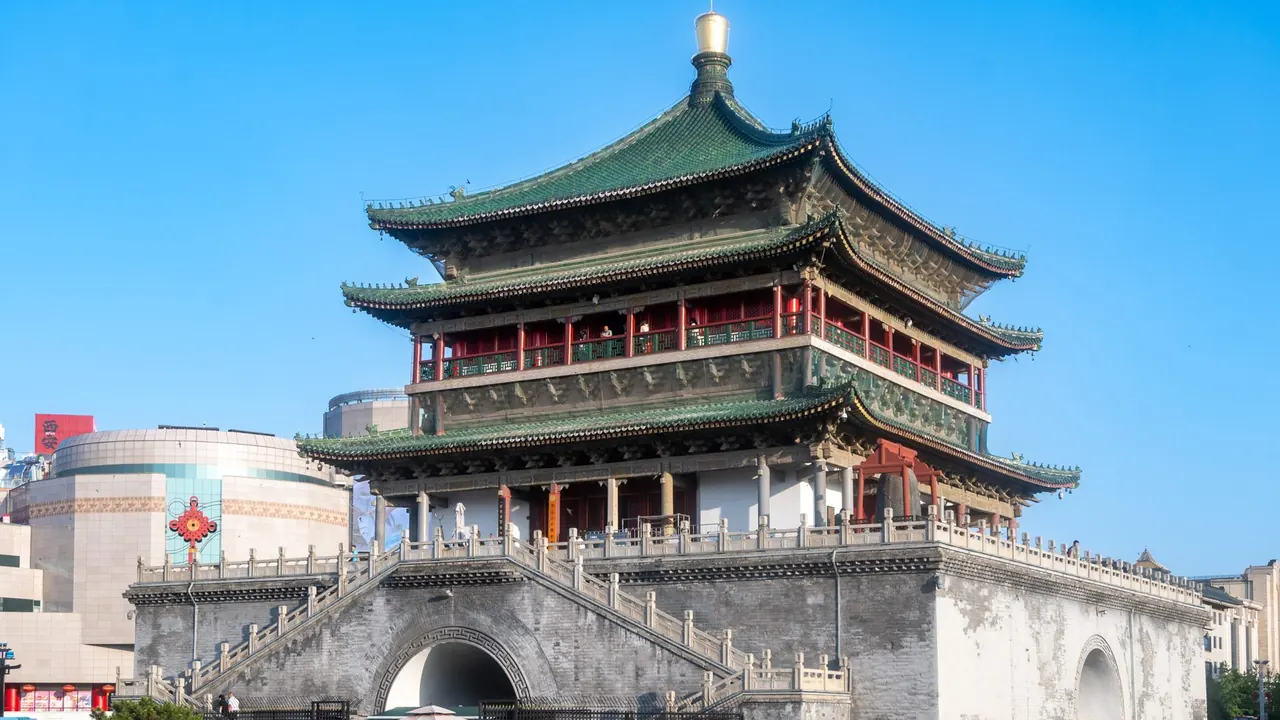
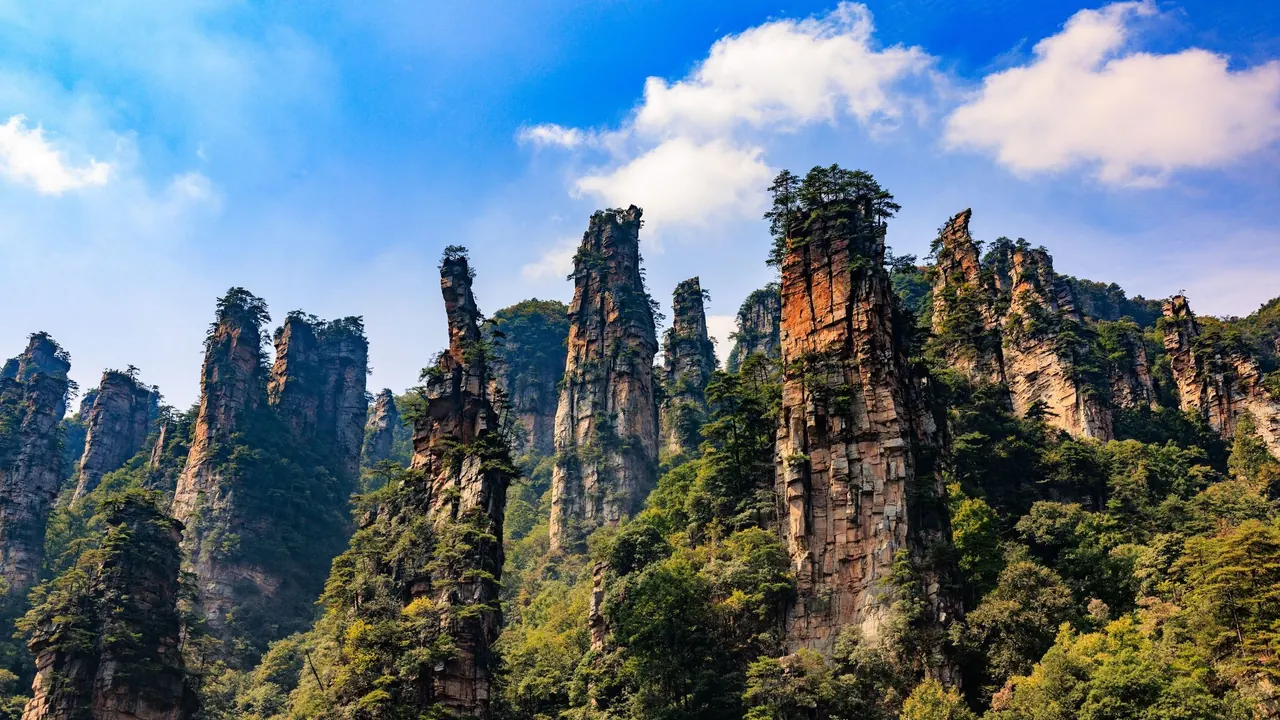
Photos: Xi'an by xiquinhosilva, CC BY 2.0, cropped; Zhangjiajie by David Tran, Pexels License.
Xi'an or Zhangjiajie?
Our verdict in twelve categories, each scored against the same fixed benchmark cities, and the climate month by month, so you can choose for your trip.
Choose Xi'an for
- culture and sights
- shopping
- food and drink
Xi'an is the choice for travellers who want ancient China in depth. It has the complete Ming wall, the Shaanxi History Museum and the Tang pagodas, and the Terracotta Army is an hour away. The food is better too, from the noodle stalls of the Muslim Quarter onwards, and a metro makes several days of sightseeing easy.
Choose Zhangjiajie for
- nature and the outdoors
Pick Zhangjiajie when the landscape is the whole point. The sandstone pillars of Wulingyuan and the cliff paths of Tianmen Mountain are scenery that Xi'an's hills cannot match. The town itself has little culture, food or evening life to offer, so expect early starts, long days on the trails and quiet nights.
Scoreboard
Twelve categories on one fixed scale from 0 to 100. The shaded stretch is the gap between the two.
Your match
Pick a travel style or drag the sliders, and both match scores follow your weighting.
Wins on culture and sights and shopping with your weighting.
Wins on nature and the outdoors with your weighting.
What matters to you?
Category by category
What the scores mean for a trip.
Beaches & swimming
Both cities are far inland, so beaches play no part in either trip. They differ in the water they do offer. Xi'an has the Lintong hot-spring resorts for a warm soak, while Zhangjiajie has boat rides on Baofeng Lake and summer rafting through the gorges.
Food & drink
Xi'an eats noticeably better, and in a different way. This is wheat country, so meals mean biangbiang noodles, roujiamo and mutton soup with flatbread you crumble in yourself. In the Muslim Quarter, eating is the main evening activity.
Zhangjiajie's cooking is rice-based, hot with chilli and smoky, with Tujia cured meats and the three-pot sanxiaguo stew simmered at the table. The city's food streets are worth looking for, because the menus near the Wulingyuan park gates are written for tour groups. Neither city offers much beyond Chinese food.
Culture & sights
This is the biggest gap between the two. Xi'an has a complete Ming wall you can cycle around, the Bell and Drum Towers, the Tang pagodas and one of China's great museums. That is enough for several full days before you even leave town.
Zhangjiajie offers Puguang Temple, a Tujia folk-customs park and a few rebuilt streets, and you can see them all in an afternoon. The region's richer heritage, the old towns and Tujia sites, lies outside the city.
Nightlife
Neither is a city for late nights, but Xi'an has more going on after dinner. Crowds walk the floodlit boulevard below the Big Wild Goose Pagoda and the lanes of the Muslim Quarter, and there are bars around Defu Xiang and a few big clubs. Zhangjiajie keeps hikers' hours, with night-food streets, karaoke and a handful of riverside bars, and Wulingyuan goes quiet once dinner is over.
Nature & outdoors
This is Zhangjiajie's category, and it wins easily. More than three thousand sandstone pillars rise out of the forest at Wulingyuan, and from the city centre a cable car climbs to the arch and glass walkways of Tianmen Mountain. The trails are paved and stepped rather than wild, and they draw crowds.
Xi'an itself sits on a flat, hazy plain with little green space beyond the moat gardens. Its outdoors is in the Qinling Mountains: the Zhongnan foothills and the sheer granite ridges of Mount Hua make an excellent day or two, but not a whole trip.
Day trips
Xi'an's excursions are among the best in China. The obvious first day is the Terracotta Army with Huaqing Palace in Lintong. After that come the Tang tombs at Qianling, Famen Temple and, by fast train, the Longmen Grottoes at Luoyang.
Zhangjiajie has three strong outings: the riverside old town of Fenghuang, the waterfall village of Furong and the ruined Tujia capital of Laosicheng. Beyond those, what lies within reach is mostly more mountain scenery, which you have already come for.
Good for families
Both suit older children better than toddlers, and Xi'an has a slight edge for families. Cycling on the wall, the Terracotta Army and the pandas at the Qinling wildlife park give a few days of variety, though most of the other sights are museums and tombs.
Zhangjiajie's thrills are bigger: cable cars, a lift up a cliff face, glass walkways and macaques beside the path. But the long days, steep stone steps and queues are hard on small children, and a pushchair is a real struggle.
Getting around
Xi'an is much easier to get around. The walled centre is a compact grid, and a metro with English signs reaches the pagodas, the stations, the airport and Lintong for the Terracotta Army.
Zhangjiajie is spread out and depends on buses, cheap taxis and hired drivers, with the forest park about 30km from town at Wulingyuan. Inside the park, confusing shuttle routes, signs mostly in Chinese and long queues slow you down. Many visitors split their stay between Wulingyuan and the city.
Shopping & style
Xi'an is the better place to buy something worth keeping. Shuyuanmen lane inside the South Gate sells brushes, ink stones and carved seals, the Muslim Quarter has tea, dried fruit and shadow puppets, and the malls near the Bell Tower carry international labels.
Zhangjiajie's shops mostly sell mountain produce, smoked bacon and souvenirs near the park gates. The thing worth looking for is xilankapu, the woven Tujia brocade, along with some Miao silverwork.
Affordability
Both are cheap places to eat, sleep and travel around, and in both the real cost is admission. In Xi'an the fees add up across the Terracotta Army, the wall and the palace and tomb sites. In Zhangjiajie the forest park pass, the Tianmen cable car, the glass bridges and the lifts are each ticketed separately, and rooms near the park gates cost more during Golden Week and Chinese New Year.
Live music & performing arts
Both cities put on polished shows for visitors. Xi'an has Tang music-and-dance dinners and the hillside spectacle at Huaqing Palace, and Zhangjiajie has Tujia and Miao folklore productions and an open-air show beneath Tianmen Mountain.
Xi'an has the edge because a local tradition survives alongside the tourist shows. Qinqiang opera is still sung in small theatres and parks, along with drum music and shadow puppetry, and the city has a provincial grand theatre and a symphony orchestra. Zhangjiajie has no stage life of its own beyond the spectacles.
Wellness & relaxation
Xi'an gives you more ways to unwind, though neither city suits a slow trip. The best of it is a soak in the Lintong springs, where the Tang court once bathed, and it fits neatly into the day you see the Terracotta Army. Back in town, a cheap evening in a Chinese bathhouse or a foot massage after a day of museums is easy to find. For calm, try a dawn walk on the ramparts or an hour in a temple courtyard.
In Zhangjiajie, rest is something you fit around the hiking. The usual reward after a day of stairs is a foot massage in town. A hotel spa or one of the hot-spring resorts outside town takes more planning, and the resorts mean a separate outing. The peaceful moments are in the lower valleys of Wulingyuan at first light, before the viewpoints fill up.
When should you go?
Pick your month. The climate figures are measured averages, not a forecast.
Xi'an in July
Zhangjiajie in July
Daytime high, °C
Rainfall in the month, mm
Where the figures come from
Zhangjiajie has no weather station within reach, so its figures come from a gridded climate model rather than a measured record, and read a broad area rather than the city itself.
Temperature and rainfall are climate normals, averaged over the years shown. Xi'an: 1991-2020 normals, Xi'An (4.4 km from centre). Zhangjiajie: 2001-2020 normals, NASA POWER reanalysis grid, no weather station within 90 km.
Neither city has a beach, so the weather matters for walking and for views. Xi'an has sharp seasons. Winters are dry and cold, with highs around 5°C in January. July reaches 33°C and is also the wettest and sunniest month. Spring and autumn, roughly April and May and then September and October, are the comfortable months for the wall, the pagodas and the tomb sites.
Zhangjiajie is a little milder in winter and less fierce in summer, but much wetter. May and June each bring more than 220mm of rain, which often means cloud on the peaks. October, at about 21°C and drier, is the most reliable month for the forest park, with April close behind. In winter the peaks sometimes carry snow.
Which traveller are you?
On a culture and arts trip, Xi'an is far ahead. Thirteen dynasties left behind the city wall, the Forest of Steles, the Wild Goose Pagodas and the Shaanxi History Museum, with the Terracotta Army and the Tang tombs close by. You can see Zhangjiajie's town sights in half a day.
For an outdoors trip, Zhangjiajie is the clear pick. The Wulingyuan pillars, the cliff paths of Tianmen Mountain, the glass bridge over the Grand Canyon and the river rafting can fill several days. Xi'an has Mount Hua and the Qinling foothills, but they are side trips, not the heart of a visit.
On a food and nightlife trip, Xi'an gives far more. Hand-pulled noodles, roujiamo and lamb skewers are sold late in the Muslim Quarter, and Defu Xiang has bars for a drink afterwards. Zhangjiajie's smoky Hunan stews are worth trying, but its evenings end early.
Before you go
| Measure | Xi'an | Zhangjiajie |
|---|---|---|
| Official language | Putonghua | Putonghua |
| Currency | Yuan Renminbi (CNY) | Yuan Renminbi (CNY) |
| Sockets | ACI220 V, 50 Hz | ACI220 V, 50 Hz |
| Driving side | Right | Right |
| Time zone | UTC+8 | UTC+8 |
| Emergency number | Police 110, ambulance 120, fire 119 | Police 110, ambulance 120, fire 119 |
| Elevation | 405 m | 170 m |
| Main airport | Xi'an Xianyang International Airport (XIY)26 km from centre179 non-stop destinations | Zhangjiajie Hehua International Airport (DYG)5 km from centre31 non-stop destinations |
| Public holidays this year | 6 days | 6 days |
By the numbers
| Measure | Xi'an | Zhangjiajie |
|---|---|---|
| City population | 12,952,907 | 1,517,027 |
| People per km² | 1,283 | 159 |
| Museums within 10 km | 8 | 0 |
| UNESCO World Heritage sites within 50 km | 2 | 1 |
Where else could you go?
Every comparison below shares a destination with this one, so you can follow Xi'an or Zhangjiajie somewhere new.
- Chongqingvs Zhangjiajie
- Guilinvs Zhangjiajie
- Yangshuovs Zhangjiajie
- Chongqingvs Xi'an
- Chengduvs Xi'an
- Chengduvs Zhangjiajie