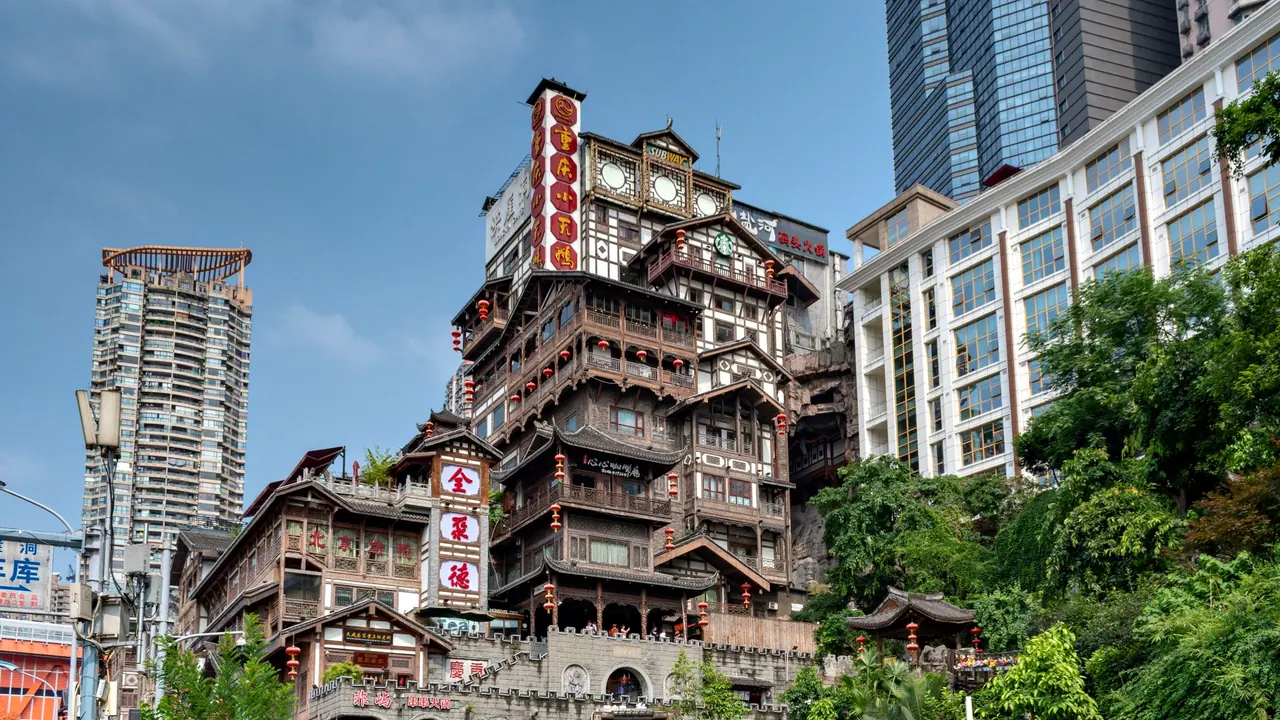
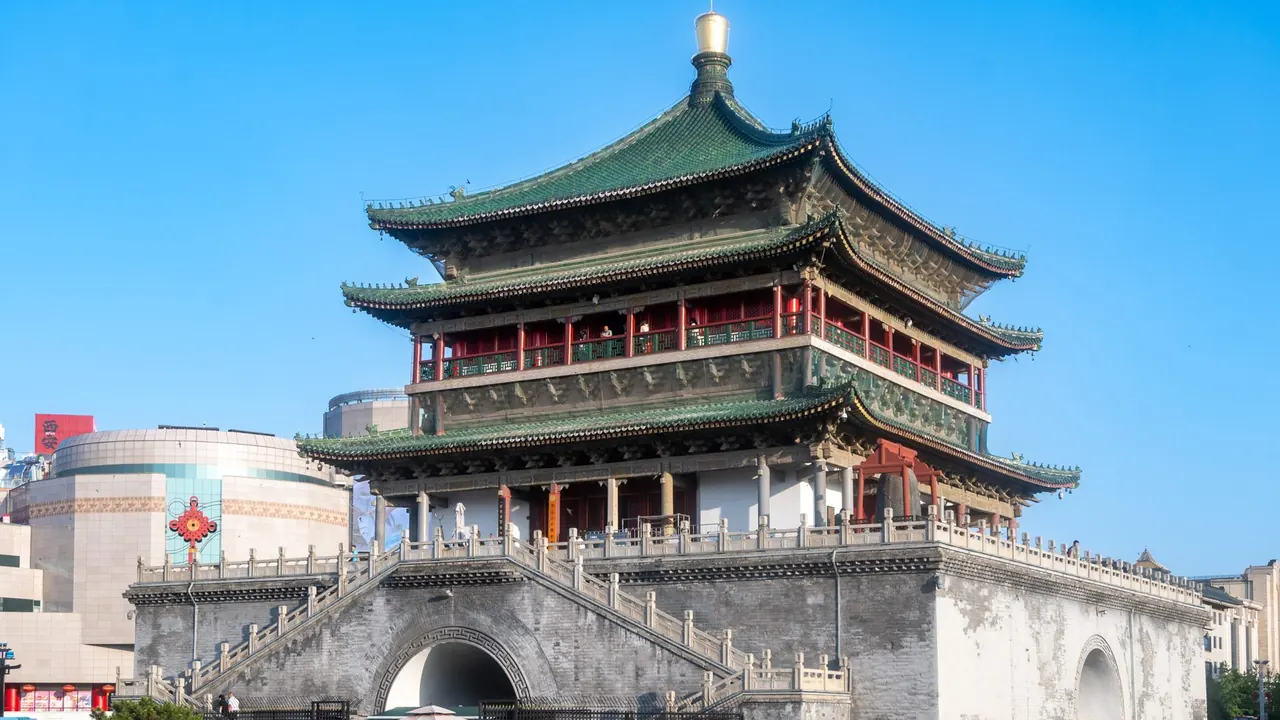
Photos: Chongqing by xiquinhosilva, CC BY 2.0, cropped; Xi'an by xiquinhosilva, CC BY 2.0, cropped.
Chongqing or Xi'an?
Our verdict in twelve categories, each scored against the same fixed benchmark cities, and the climate month by month, so you can choose for your trip.
Choose Chongqing for
- nightlife
- wellness
- food and drink
Chongqing suits travellers who plan their days around eating and their nights around staying out. Hotpot halls, fiery noodle breakfasts and skewers well past midnight are the core of a visit, and the city itself is the spectacle: towers stacked on ridges where two rivers meet, monorails running through hillsides, a peninsula lit up after dark. Add hot-spring resorts on the outskirts and you have a lively, cheap trip of a few days, as long as you can handle the chilli and the stairs.
Choose Xi'an for
- culture and sights
- day trips
- getting around
For anyone who comes to China for its ancient history, Xi'an is the clear choice. The complete Ming wall, the Shaanxi History Museum, the Tang pagodas and the Terracotta Army an hour away make it one of the richest sightseeing trips in the country, with more excursions to tombs and temples beyond. The evenings are earlier and quieter, and the food is built on wheat noodles and Hui Muslim lamb rather than chilli and numbing pepper.
Scoreboard
Twelve categories on one fixed scale from 0 to 100. The shaded stretch is the gap between the two.
Your match
Pick a travel style or drag the sliders, and both match scores follow your weighting.
Wins on nightlife and wellness with your weighting.
Wins on culture and sights and day trips with your weighting.
What matters to you?
Category by category
What the scores mean for a trip.
Beaches & swimming
Both cities lie deep in China's interior, so a beach is simply not part of either trip. In Chongqing the Yangtze and Jialing are fast, muddy working rivers. Its long, sticky summers make the hotel pools, hot-spring resorts and the odd river-shore wading spot more welcome. In Xi'an, a swim means a hotel pool or the hot-spring resorts at Lintong, which are close to the Terracotta Army.
Food & drink
Chongqing is the bigger eating destination, and many visitors come for the food alone. Its hotpot of beef tallow, chillies and numbing Sichuan pepper is the defining meal. Around it come xiaomian noodles at breakfast, chicken buried in dried chillies, grilled fish and chuanchuan skewers, served in hillside kitchens that cook far into the night. The catch is the heat: anyone who avoids spice will need to ask for split pots and milder broths.
Xi'an offers a different kitchen rather than a lesser one. It is wheat country, with hand-pulled and biangbiang noodles, roujiamo buns and yangrou paomo, a mutton soup with flatbread you crumble into it yourself. Most of the eating centres on the Muslim Quarter's lamb skewers and sweet stalls. In both cities wine, international cooking and fine dining are thin.
Culture & sights
Xi'an is far ahead for history. As the capital of thirteen dynasties and the starting point of the Silk Road, it still has a complete 14km Ming wall you can cycle along, the Bell and Drum Towers, the Tang-era Wild Goose Pagodas and the Daming Palace site. Inside, the Shaanxi History Museum and the Forest of Steles hold collections that justify a full day each.
Chongqing's appeal is the cityscape rather than its monuments: the stacked skyline, the monorail through buildings and the crowded stilt houses of Hongyadong. The Three Gorges Museum and the wartime-capital sites such as the Stilwell Museum are worth seeing, but most of the old city has been replaced.
Nightlife
Chongqing is the late-night city of the two. A typical evening moves from the river views and the cable car to hotpot and skewers that run past 2am. The glossy, table-service clubs of the Jiujie street in Jiangbei carry on later still, almost entirely among locals.
Xi'an's nights are lively but early and mostly outdoors, with families and couples walking the floodlit boulevard below the Big Wild Goose Pagoda and eating through the Muslim Quarter. The bars around Defu Xiang near the South Gate are good for a beer, though few visitors go to Xi'an for its nightlife.
Nature & outdoors
Both have good landscapes within reach, but they are arranged differently. Chongqing is built on its mountains: Nanshan's forest paths and lookouts are just across the Yangtze from the centre, and further out lie Wulong's natural bridges and sinkholes and the start of the Three Gorges cruises.
Xi'an sits on a flat, often hazy plain with little green inside the city beyond the moat gardens. The Qinling range rises an hour south, with the Taoist valleys of Zhongnan, and Mount Hua's granite ridges and cliff paths offer a tougher, more dramatic climb than anything near Chongqing.
Day trips
Xi'an has the stronger list of excursions, led by one of the world's great archaeological sites. The Terracotta Army and Huaqing Palace combine easily in a day. The Hanyangling and Qianling tombs and Famen Temple reward further trips, and a fast train reaches Luoyang's Longmen Grottoes in about an hour and a half.
From Chongqing, Chengdu and its pandas and teahouses are an hour away by high-speed train. The cliff carvings at Dazu are a worthy rival to anything near Xi'an, and old stilt-house towns such as Songji and Laitan make quieter outings. Beyond these, most longer trips from Chongqing are for scenery rather than history.
Good for families
Chongqing gives children slightly more to do. It has pandas at the zoo, a big science museum in Jiangbei, theme parks on the edge of town, and the river cable car and monorail as rides in their own right. Against that, it is a city of stairs and steep lanes where a pushchair is a burden, and much of the food is too spicy unless ordered mild.
In Xi'an, cycling on top of the wall is the highlight for children, and the wildlife park in the Qinling foothills has pandas and golden monkeys. The flat centre is easier on small legs, but most of the sights are museums and tombs that hold a child's attention only briefly.
Getting around
Both cities have large metros with English signs and cheap taxis, so the difference is the shape of the ground. Chongqing's network adds monorails, river cable cars and long escalators, but the hills make short walks hard work, and street levels that do not line up can confuse map apps.
Xi'an's walled centre is a flat grid where the towers, the Muslim Quarter and the Forest of Steles are an easy walk apart. Line 9 takes you most of the way to the Terracotta Army. Rush-hour traffic and Chinese-only signs away from the metro are its weak points.
Shopping & style
Chongqing is better for large-scale shopping, with department stores and luxury labels around Jiefangbei and a second mall district at Guanyinqiao. The best thing to take home is edible, a pack of hotpot base and Sichuan pepper.
Xi'an has malls near the Bell Tower too, but its real strength is traditional craft. Shuyuanmen, inside the South Gate, sells brushes, ink stones, seals and paper, making it the better place for a lasting souvenir, as long as you look past the countless replica warriors.
Affordability
Both are cheap by Chinese and Western standards, with low-cost noodles, inexpensive metro rides and good-value mid-range hotels. Where the money goes is what differs. In Xi'an, ticketed sites such as the Terracotta Army, the wall and the big tomb complexes add up over a few days. In Chongqing the extras are the Yangtze cruises, cable cars and paid viewpoints.
Live music & performing arts
Neither city is a destination for the stage, and each has a grand theatre and a symphony orchestra. Chongqing's signature show is Sichuan opera, with its face-changing and fire-spitting routines. Xi'an offers Tang-style dinner shows, large outdoor spectacles at Huaqing Palace, and Qinqiang, the loud, raw Shaanxi opera, which you can sometimes catch in small theatres and parks.
Wellness & relaxation
Chongqing is the better place to unwind, mainly because of its old hot-spring tradition. Resorts such as Beiwenquan near Jinyun Mountain and Nanwenquan have outdoor pools in wooded valleys, and a late foot massage after hotpot is a local habit. The centre itself is noisy, steep and humid, so rest means a trip out to the edges.
Xi'an has Lintong's springs, once used by Tang emperors, and cheap bathhouses with saunas. Here the calm is more often found in temple courtyards or on the wall early in the morning, between days of sightseeing.
When should you go?
Pick your month. The climate figures are measured averages, not a forecast.
Chongqing in July
Xi'an in July
Daytime high, °C
Rainfall in the month, mm
Temperature and rainfall are climate normals, averaged over the years shown. Chongqing: 1991-2020 normals, Chongqing (10.2 km from centre). Xi'an: 1991-2020 normals, Xi'An (4.4 km from centre).
Neither city has beach weather in any useful sense, so the question is when it is pleasant to walk the streets. In both, April to May and September to October are the best months. Chongqing's summer is the harder of the two: highs reach 34°C in July and August with heavy humidity, and June is the wettest month at about 211mm. Its winters are milder but grey, and from November to February it gets very little sunshine, with fog and haze filling the valleys.
Xi'an is drier in every month, and even its wettest, July, sees only about 96mm. It is also far sunnier from autumn through to early summer, and only in August does Chongqing briefly see more sun. Xi'an's summer is just as hot, around 33°C, but its winter is colder, with January highs of only 5°C under mostly clear, dry skies. For a winter trip, Xi'an is crisper and brighter and Chongqing milder but gloomier, and in spring Chongqing is the wetter of the two.
Which traveller are you?
On a culture and arts trip, Xi'an is the obvious choice. You can fill a week with dynastic history without repeating yourself, from the Great Mosque's courtyards to tomb excursions and Luoyang's grottoes. Chongqing offers modern cityscape and only two or three days of sights.
For a food and nightlife trip, choose Chongqing. Hotpot is cooked everywhere from pavement stalls to vast halls, kitchens stay open long after midnight and the Jiujie clubs run late, while Xi'an's evenings are mostly about early strolling and street snacks.
On a relaxing and wellness trip, Chongqing suits you better, provided you base yourself outside the dense centre. A few nights at a spring resort on the wooded edges make a real retreat, especially in the damp winter. Xi'an's days revolve around sightseeing, with rest squeezed into quiet mornings.
Before you go
| Measure | Chongqing | Xi'an |
|---|---|---|
| Official language | Putonghua | Putonghua |
| Currency | Yuan Renminbi (CNY) | Yuan Renminbi (CNY) |
| Sockets | ACI220 V, 50 Hz | ACI220 V, 50 Hz |
| Driving side | Right | Right |
| Time zone | UTC+8 | UTC+8 |
| Emergency number | Police 110, ambulance 120, fire 119 | Police 110, ambulance 120, fire 119 |
| Elevation | 237 m | 405 m |
| Main airport | Chongqing Jiangbei International Airport (CKG)19 km from centre167 non-stop destinations | Xi'an Xianyang International Airport (XIY)26 km from centre179 non-stop destinations |
| Public holidays this year | 6 days | 6 days |
By the numbers
| Measure | Chongqing | Xi'an |
|---|---|---|
| City population | 32,054,159 | 12,952,907 |
| People per km² | - | 1,283 |
| Museums within 10 km | 7 | 8 |
| UNESCO World Heritage sites within 50 km | 0 | 2 |
Where else could you go?
Every comparison below shares a destination with this one, so you can follow Chongqing or Xi'an somewhere new.
- Chengduvs Chongqing
- Zhangjiajievs Chongqing
- Zhangjiajievs Xi'an
- Guilinvs Chongqing
- Chengduvs Xi'an
- Yangshuovs Chongqing