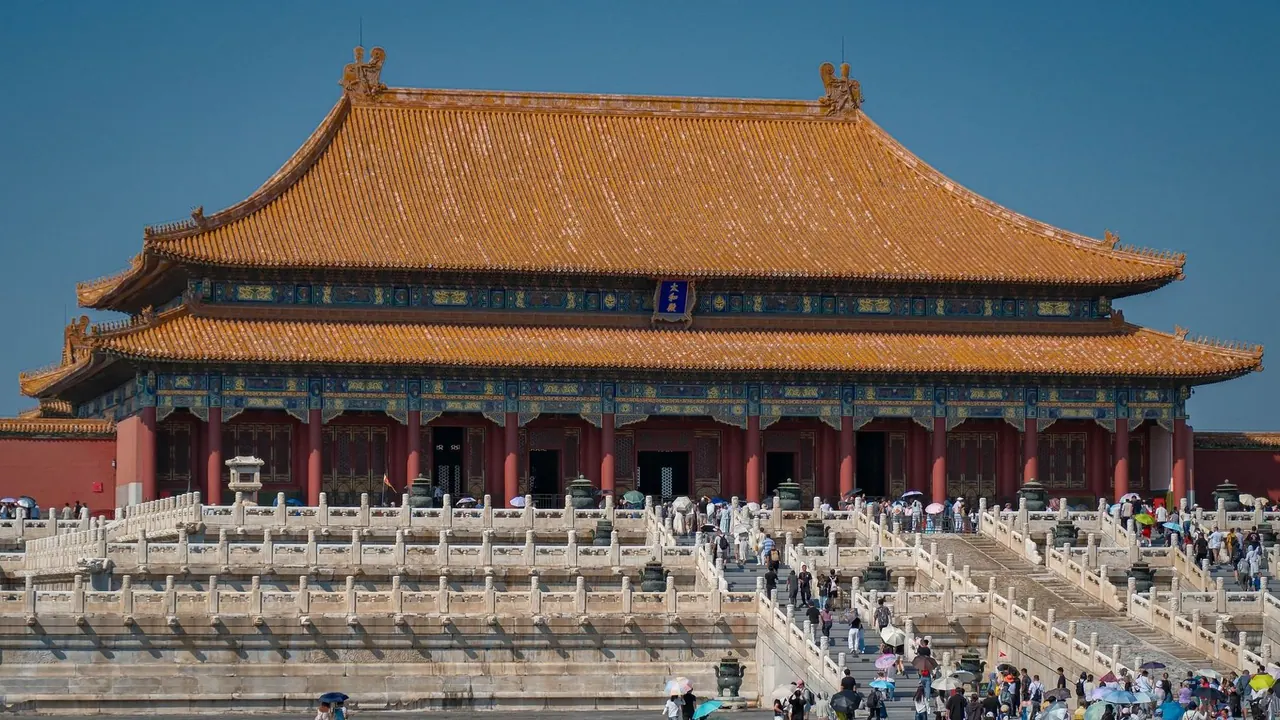
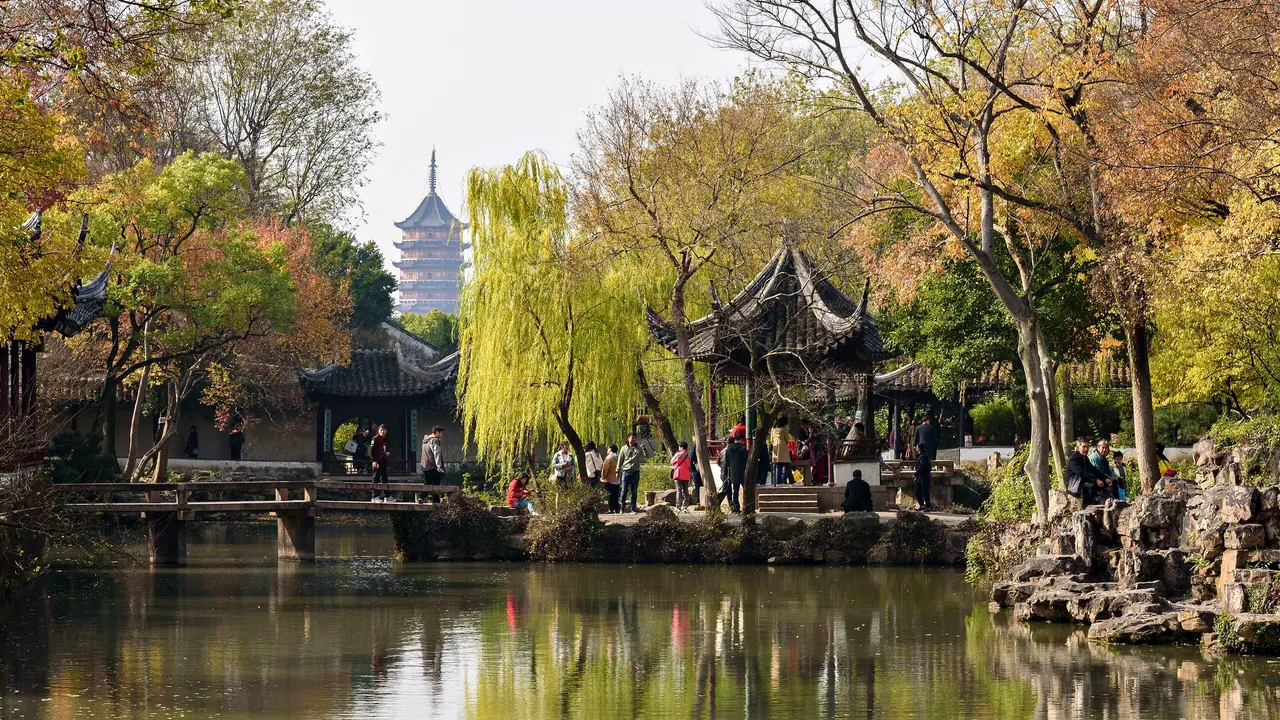
Photos: Beijing by BI ravencrow, Pexels License; Suzhou by King of Hearts, CC BY-SA 4.0, cropped.
Beijing or Suzhou?
Our verdict in twelve categories, each scored against the same fixed benchmark cities, and the climate month by month, so you can choose for your trip.
Choose Beijing for
- nightlife
- live music and the arts
- shopping
Beijing is the trip for anyone who wants China's imperial story at full scale: the Forbidden City, the Temple of Heaven, wild stretches of the Great Wall in the hills to the north, and roast duck carved at the table at the end of the day. It also gives you more to do after dark, food from every province and better shopping. The price is a sprawling city where sights lie far apart and each one fills a morning.
Choose Suzhou for
- day trips
- prices
- getting around
Choose Suzhou for a slower, more intimate visit built around the classical gardens, the canal streets and the water towns, with Shanghai, Nanjing and Hangzhou an easy fast-train ride away. Its pleasures are quieter ones: lake fish and autumn crab, green tea in a teahouse, and a lantern-lit stroll by the canals rather than a late night in the bars.
Scoreboard
Twelve categories on one fixed scale from 0 to 100. The shaded stretch is the gap between the two.
Your match
Pick a travel style or drag the sliders, and both match scores follow your weighting.
Wins on nightlife and live music and the arts with your weighting.
Wins on day trips and prices with your weighting.
What matters to you?
Category by category
What the scores mean for a trip.
Beaches & swimming
Neither city is a place to swim, and in both a hotel pool is the realistic answer. Beijing at least has a coast within reach: Beidaihe on the Bohai Sea is about two hours by fast train, and its shallow water is fine for swimming in high summer, though crowded. Suzhou's lakes and canals are for looking at, Lake Tai is not used for bathing and the nearby estuary shore is mud.
Food & drink
Beijing eats on a bigger stage. Roast duck, hand-pulled noodles, cumin lamb skewers and copper-pot hotpot form a sturdy northern base. On top of that, the capital has Sichuan, Yunnan, Xinjiang and Cantonese kitchens cooking to a high standard, plus fine dining and cocktail bars in the business districts.
Suzhou's cooking is narrower but more delicate: a slightly sweet Jiangsu cuisine of lake fish and shrimp that follows the seasons, from the breakfast bowl of Suzhou noodles to Yangcheng Lake hairy crab in autumn. Once you move beyond that local repertoire, though, the choice thins out quickly.
Culture & sights
Beijing's heritage is on an imperial scale that Suzhou can't match. The Forbidden City stands on the central axis, the round hall of the Temple of Heaven rises among ancient cypresses, and the Summer Palace, the Lama Temple and the Confucius Temple add more. The National Museum holds one of the great collections of Chinese art. Beyond the monuments, the hutong lanes of Shichahai and Dashilar show courtyard-house life, and the 798 art district brings the story up to modern times.
Suzhou's sights are private rather than imperial. Its UNESCO-listed gardens, from the Humble Administrator's Garden to the tiny Master of the Nets, are scholars' retreats of rockeries, ponds and framed views, and they are best visited early, before tour groups fill the paths. Tiger Hill's leaning pagoda, the canal streets of Pingjiang Road and I. M. Pei's museum complete a lovely but narrower programme. Much of the old town has also been rebuilt.
Nightlife
Beijing gives you a real night out. Cocktail bars, taprooms and clubs around Sanlitun and the Workers' Stadium run into the early hours, small courtyard and rooftop bars around Gulou are quieter, and in summer there are late-night skewer and beer stalls. The drawback is the long distances between areas.
Suzhou's evenings are gentler and end earlier: usually a lantern-lit walk along Pingjiang Road or Shantang Street and a drink by the water, with a few small bars on Shiquan Street and lounges by Jinji Lake. People who want something livelier take the train to Shanghai.
Nature & outdoors
Beijing has the mountains that Suzhou lacks. The Yanshan ridges carry wild, unrestored stretches of the Great Wall that make a superb hike, the Fragrant Hills turn red in autumn and Yanqing has ski slopes in winter, although dust and smog can hide the views.
Suzhou's countryside is flat and watery. There are orchards and tea terraces on the Lake Tai peninsulas, lakeside roads for cycling and short climbs up Lingyan Hill and Tianping Hill. It is pleasant for a gentle day out but offers nothing more demanding.
Day trips
Both cities make excellent bases, but the outings differ in character. From Beijing, the day trips centre on the Great Wall, either at restored Mutianyu or on the steep ridges of Jinshanling, along with the Ming and Qing tombs and the emperors' summer retreat at Chengde. Tianjin is half an hour away.
Suzhou's strength is how many major cities sit close by on the fast-rail network: Shanghai is half an hour away, Nanjing about an hour and Hangzhou's West Lake not much further. Closer in, canal water towns such as Tongli and Luzhi make easy half days, though one or two of them is enough.
Good for families
Beijing gives children more to look forward to. There is Universal Beijing Resort, the giant pandas and aquarium at the zoo, the hands-on galleries of the science museum and the toboggan ride down from the Great Wall at Mutianyu. Even so, the huge sights and long journeys tire out small legs.
Suzhou's main attraction, the gardens, is the part children enjoy least, because they are narrow, crowded and made for quiet contemplation. Canal boat rides, the open parks around Jinji Lake and the amusement and water parks in the western districts make up for it.
Getting around
Getting around is about equally easy in both cities, but in different ways. Beijing relies on a vast metro with English signs, spread across a sprawl of ring roads, so most journeys involve long transfers and bag checks. Only the hutong quarters near the lakes are pleasant on foot.
Suzhou's old town inside the moat is small enough to walk or cycle between gardens along the canals, with shared bikes everywhere, and the metro links it to the stations and Jinji Lake. Tiger Hill and Lake Tai are best reached by taxi. In both cities, setting up Chinese mobile payment before you arrive saves a lot of trouble.
Shopping & style
Beijing offers far more range. The malls in Guomao and Sanlitun carry every international label and Wangfujing has the department stores, but the markets are the memorable part: Panjiayuan for antiques and reproductions early in the morning, Liulichang for brushes, paper and ink, and Dashilar for tea, silk and cloth shoes.
Suzhou's shopping centres on one thing, but it does that thing well: silk and embroidery, from the workshops of Zhenhu village to the long-established shops on Guanqian Street. Beyond that there are fans, tea and souvenirs on the canal streets, and serious fashion shoppers go to Shanghai.
Affordability
Day to day, both cities are good value, with cheap metro rides and taxis and noodles that cost very little. What drives the bill up differs. In Beijing it is international hotels, the famous duck restaurants, Sanlitun cocktails and private drivers to the Great Wall. In Suzhou it is the separate entry fees for each garden, hairy crab dinners and hotel rates that jump during national festival weeks such as Golden Week.
Live music & performing arts
Beijing's performances are easier for a visitor to enjoy. Peking opera, with its painted faces and acrobatic fighting, is staged nightly in short subtitled programmes, and the acrobatics and kung fu shows need no language at all. The National Centre for the Performing Arts adds opera, ballet and orchestras, and small venues around Gulou host rock and folk bands.
Suzhou's own arts are older and quieter. Kunqu, the slow, refined opera born here, is sung in garden pavilions on summer evenings, and pingtan storytelling in the local dialect is performed in small teahouses. They are lovely to listen to, but visitors who don't speak Chinese mostly take them in as atmosphere.
Wellness & relaxation
Neither city is a spa destination, and in both there are massage parlours on almost every street. What sets Beijing apart is its bathhouses, open around the clock, and the hot springs at Xiaotangshan, though traffic, crowds and uneven air quality work against the calm.
Suzhou relaxes more quietly: an early hour in a garden before the groups arrive, a pot of Biluochun tea in a canal-side teahouse or a resort spa on Lake Tai. Unlike Beijing, though, it has no hot springs or thermal baths.
When should you go?
Pick your month. The climate figures are measured averages, not a forecast.
Beijing in July
Suzhou in July
Daytime high, °C
Rainfall in the month, mm
Where the figures come from
Suzhou's temperatures are measured 79 km from the centre, at Shanghai / Hongqiao.
Suzhou has no rain gauge within 25 km of the centre, so its rainfall comes from a gridded climate dataset read at the city rather than from a gauge further away.
Suzhou's sunshine is measured 81 km from the centre, at Shanghai.
Temperature and rainfall are climate normals, averaged over the years shown. Beijing: 1991-2020 normals, Beijing (11.1 km from centre). Suzhou: 1991-2020 normals, Shanghai / Hongqiao (78.8 km from centre).
Beijing has sharp seasons. Winters are dry, sunny and bitterly cold, around 2°C by day in January. Summer is hot, and most of the year's rain falls in July and August, 163mm in July alone. The best weather for walking is in May and from September to mid-October, when the days are warm, dry and bright.
Suzhou is milder in winter, around 9°C in January, but damp and grey, with rain in every month and less sunshine than Beijing all year round. June brings heavy rain, and July and August reach 33°C with sticky humidity. April, early May and above all October, when rainfall drops to 25mm, are the months for the gardens. Neither city has a beach season.
Which traveller are you?
For a culture and arts trip, Beijing is the stronger choice. The Forbidden City, the Temple of Heaven, the Summer Palace and the National Museum make up one of the world's great historic ensembles, and nightly Peking opera and acrobatics fill the evenings.
On a food and nightlife trip, Beijing pulls ahead again, with roast duck, lamb skewers and kitchens from every province, followed by Sanlitun's clubs or the courtyard bars around Gulou. In Suzhou, an evening usually means a canal walk and an early night.
For a short city break, Suzhou is the easier fit. The gardens cluster around the old moat and the canal lanes are easy to walk, so two or three days cover the essentials. In Beijing, the main sights often sit an hour apart.
Before you go
| Measure | Beijing | Suzhou |
|---|---|---|
| Official language | Putonghua | Putonghua |
| Currency | Yuan Renminbi (CNY) | Yuan Renminbi (CNY) |
| Sockets | ACI220 V, 50 Hz | ACI220 V, 50 Hz |
| Driving side | Right | Right |
| Time zone | UTC+8 | UTC+8 |
| Emergency number | Police 110, ambulance 120, fire 119 | Police 110, ambulance 120, fire 119 |
| Elevation | 43 m | 5 m |
| Main airport | Beijing Capital International Airport (PEK)25 km from centre109 non-stop destinations | Shanghai Hongqiao International Airport (SHA)69 km from centre82 non-stop destinations |
| Public holidays this year | 6 days | 6 days |
By the numbers
| Measure | Beijing | Suzhou |
|---|---|---|
| City population | 21,893,095 | 12,748,262 |
| People per km² | 1,334 | 1,473 |
| Museums within 10 km | 83 | 9 |
| UNESCO World Heritage sites within 50 km | 6 | 1 |
Where else could you go?
Every comparison below shares a destination with this one, so you can follow Beijing or Suzhou somewhere new.