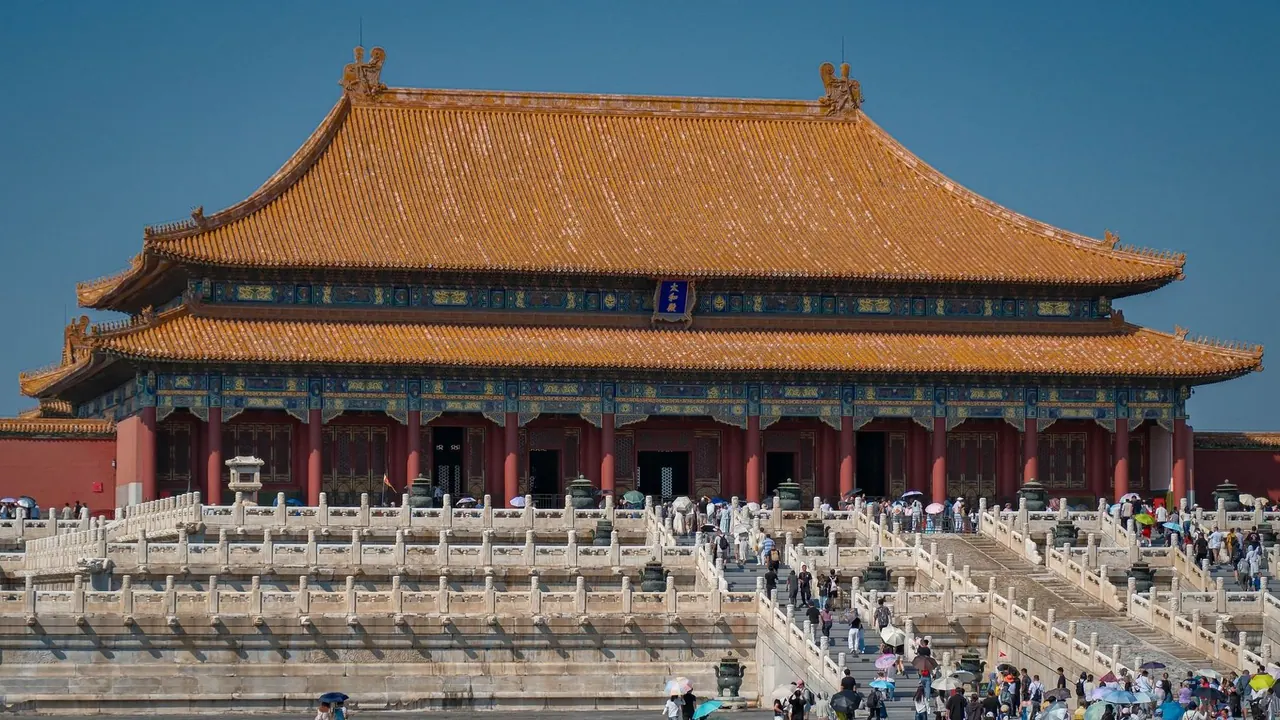
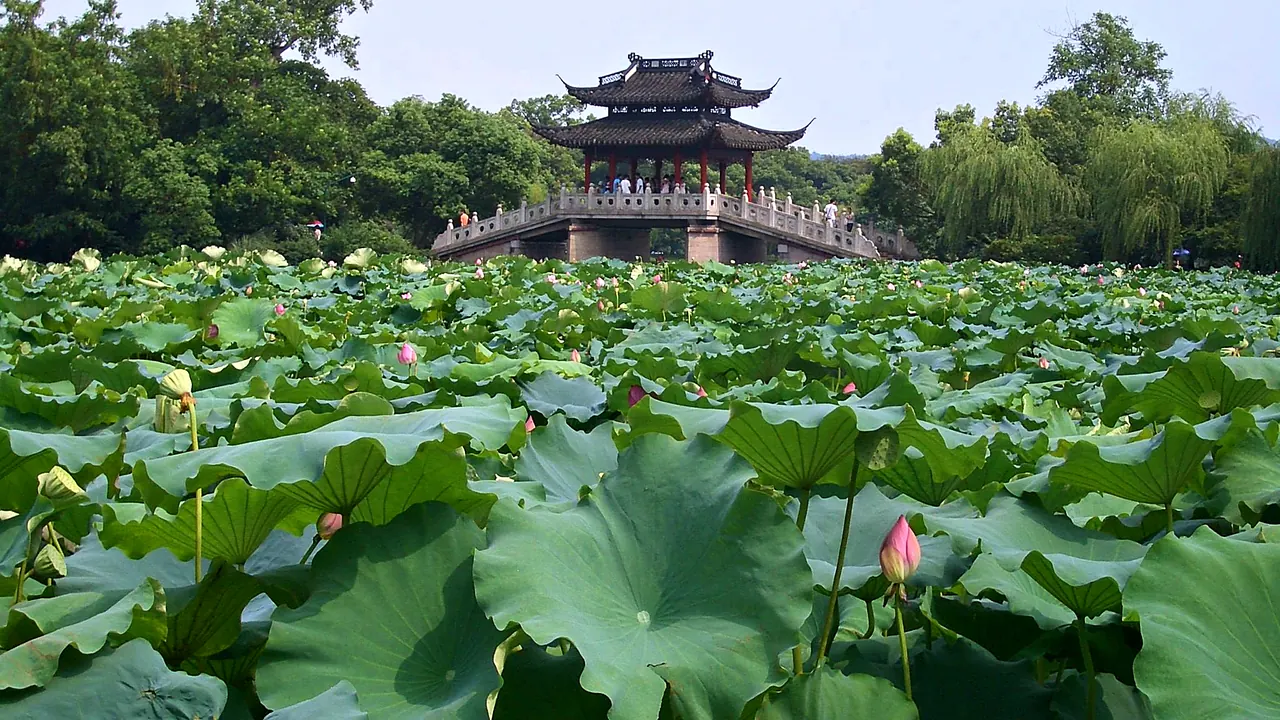
Photos: Beijing by BI ravencrow, Pexels License; Hangzhou by Vmenkov, CC BY-SA 3.0, cropped.
Beijing or Hangzhou?
Our verdict in twelve categories, each scored against the same fixed benchmark cities, and the climate month by month, so you can choose for your trip.
Choose Beijing for
- culture and sights
- live music and the arts
- nightlife
Beijing is the trip for anyone who wants imperial China at full scale. The Forbidden City, the Temple of Heaven and the Summer Palace, wild stretches of the Great Wall on the ridges to the north, roast duck carved at the table and Peking opera in old guild halls add up to a heavier, richer itinerary. It also has the stronger going-out districts and markets, as long as you can accept long metro rides between sights.
Choose Hangzhou for
- nature and the outdoors
- prices
- beaches
Travellers after a gentler pace will be happier in Hangzhou. Its main attraction is West Lake itself, with temples, tea villages and wooded hills reached on foot or by bike from the shore. Evenings stay quiet and the cooking is milder and slightly sweet, but the green walking country starts at the edge of town, and Suzhou, Shanghai and the canal water towns are all easy outings.
Scoreboard
Twelve categories on one fixed scale from 0 to 100. The shaded stretch is the gap between the two.
Your match
Pick a travel style or drag the sliders, and both match scores follow your weighting.
Wins on culture and sights and live music and the arts with your weighting.
Wins on nature and the outdoors and prices with your weighting.
What matters to you?
Category by category
What the scores mean for a trip.
Beaches & swimming
Neither city is a beach destination, and both have only a distant, imperfect option. From Beijing, the fast train to Beidaihe on the Bohai Sea takes about two hours and leads to grey, crowded shallows. From Hangzhou, the guarded swimming areas at Qiandao Lake are a similar distance away, but the setting is a freshwater lake among islands rather than the sea.
Food & drink
Beijing eats better and more widely. Alongside roast duck and the northern kitchen of wheat noodles, dumplings and lamb hotpot, it draws strong Sichuan, Yunnan, Xinjiang and Cantonese cooking from across the country, and the business districts add fine dining.
Hangzhou's cooking is narrower and gentler, built around lake fish in vinegar sauce, Dongpo pork and shrimp with Longjing tea leaves. It comes into its own when you drink the spring tea harvest in the hill villages where it is grown, but anyone wanting chilli heat or variety will find more in the capital.
Culture & sights
Beijing has far more monuments to see. The Forbidden City, the Temple of Heaven, the Summer Palace and the Lama Temple all lie within one city. The National Museum holds a great collection of Chinese art, and the hutong lanes still show how people lived in courtyard houses. Expect each site to take most of a morning.
Hangzhou's heritage lies mainly in its landscape. The causeways and pagodas of West Lake, Lingyin Temple and the Feilai Feng carvings are superb, and the silk and tea museums are excellent. But the old streets around Hefang are mostly rebuilt, and there is no imperial palace quarter to build a stay around.
Nightlife
Beijing has the bigger night out. Sanlitun's clubs near the Workers' Stadium keep going into the early hours, and the courtyard and rooftop bars around Gulou suit a slower evening. In Hangzhou, a typical evening is a walk along the lit lakeshore followed by a drink near Hubin, and keen night owls tend to head to Shanghai.
Nature & outdoors
Hangzhou puts green country within reach on foot. The tea terraces of Longjing, the bamboo and streams of the Nine Creeks valley and the Xixi wetland are all a half-day outing from the lake, and the bike ride round the shore at dawn costs nothing.
Beijing's outdoors is more rugged but takes more effort to reach. The best of it is hiking the unrestored Great Wall along the Yanshan ridges, autumn maples in the Fragrant Hills and winter skiing at Yanqing, but dusty springs and smog can spoil the views.
Day trips
Both cities make excellent bases, but the outings are very different. From Beijing, most trips are to one monumental place at a time: Great Wall sections such as Mutianyu or Jinshanling, the Ming and Qing tombs, or Chengde's summer palace and Tibetan-style temples by fast train.
Hangzhou works more as a hub for a whole region. Shaoxing is under half an hour away, Shanghai and Suzhou's gardens are each an easy train ride, and the canal towns of Wuzhen and Xitang are an hour or so by road, so several days of short outings are easy to fill.
Good for families
Beijing has a little more for children: Universal Beijing Resort, the pandas at the zoo, the science museum's hands-on galleries and the Mutianyu toboggan. Hangzhou is easier to enjoy without a plan, with pedal boats, scooter paths along the lake and a polar aquarium with beluga whales. Beijing's distances and vast sites are harder on small legs, while in Hangzhou the bigger obstacle is that little English is spoken.
Getting around
Both cities depend on clean, inexpensive metros and mobile payment, so getting around is equally manageable, but the experience differs. In Beijing, the main effort is distance: ring roads, wide avenues, long changes between lines and bag checks at every station.
Hangzhou is more compact around its centre, and shared bikes along the lake cycle lanes carry much of the sightseeing. Once you leave the metro, though, English signs disappear and taxi drivers rarely speak it.
Shopping & style
Beijing gives a shopper more to hunt for. Early mornings at the Panjiayuan antiques market, bargaining for silk and pearls, and Liulichang's shops of brushes, ink and paper sit alongside the big malls of Guomao and Sanlitun. Hangzhou's shopping is focused on two things it produces itself: silk in its market district and Longjing tea bought straight from the growers, plus fans and parasols around Hefang Street.
Affordability
Day to day, both cities are inexpensive, with cheap noodles, transport and modest entry fees, and Hangzhou is slightly the gentler on a budget. The lake, the causeways and most hill walks are free, although room rates jump during the national festival weeks. In Beijing, the spending climbs on duck banquets, Sanlitun cocktails and private drivers to the Great Wall.
Live music & performing arts
Beijing's stage is far deeper. Peking opera runs nightly in historic guild halls with subtitles, acrobatics and kung fu shows need no language, and the National Centre for the Performing Arts brings in ballet and orchestral seasons. Gulou adds local rock and folk.
In Hangzhou, the performances most visitors see are tourist spectaculars, staged on West Lake itself or at the Song-dynasty theme parks. Its local Yue opera is sung in dialect and rarely surtitled.
Wellness & relaxation
The two cities are about even for rest, but they offer different kinds of it. Beijing's version is indoor and around the clock, with huge bathhouses offering hot pools, scrubs and sleeping halls, plus hot springs at Xiaotangshan.
Hangzhou has no bathing culture to speak of, but its everyday rhythm is slower. Tai chi under the willows at dawn, long pots of Longjing in hillside teahouses and retreat spas in the tea valleys make it the calmer place to unwind, as long as you avoid weekends by the lake.
When should you go?
Pick your month. The climate figures are measured averages, not a forecast.
Beijing in July
Hangzhou in July
Daytime high, °C
Rainfall in the month, mm
Temperature and rainfall are climate normals, averaged over the years shown. Beijing: 1991-2020 normals, Beijing (11.1 km from centre). Hangzhou: 1991-2020 normals, Hangzhou (1.9 km from centre).
Beijing has a dry continental climate with sharp seasons. Winters are bitterly cold and almost rainless, with daytime highs around 2°C in January. Most of the year's rain falls in the hot summer months from June to August, and July is the wettest month. The best weeks for walking the palaces and the Great Wall are late April, May, September and early October. Days are warm and sunny then, and the summer downpours have either not yet arrived or already passed.
Hangzhou has much gentler winters than Beijing, but it is damp all year round. Rain is heaviest in June, at around 254mm, and July and August reach about 34°C in heavy humidity, which is hard going on the lake paths and hill trails. April and the stretch from October into November are the best times, with mild temperatures, tea on the slopes in spring and drier weather in autumn. The nearby sea is warmest in August, at around 29°C, but the estuary is not a place for swimming.
Which traveller are you?
For a culture and arts trip, Beijing is the clear choice. It has the imperial axis from the Forbidden City to the Drum Tower, the National Museum's collections, 798 for contemporary art, and Peking opera or a ballet season at the egg-shaped performing arts centre in the evening.
On an outdoors trip, Hangzhou serves you better. Trails climb straight from West Lake into the tea terraces and the Nine Creeks valley, the causeways are made for cycling, and Moganshan's bamboo hills and the Tianmushan forests are only a short drive away.
On a food and nightlife trip, Beijing gives you more. There is roast duck, cumin lamb skewers and serious regional cooking from every province, then cocktail bars and clubs in Sanlitun or small courtyard bars around Gulou. Hangzhou's evenings mostly end with a lakeshore stroll.
Before you go
| Measure | Beijing | Hangzhou |
|---|---|---|
| Official language | Putonghua | Putonghua |
| Currency | Yuan Renminbi (CNY) | Yuan Renminbi (CNY) |
| Sockets | ACI220 V, 50 Hz | ACI220 V, 50 Hz |
| Driving side | Right | Right |
| Time zone | UTC+8 | UTC+8 |
| Emergency number | Police 110, ambulance 120, fire 119 | Police 110, ambulance 120, fire 119 |
| Elevation | 43 m | 19 m |
| Main airport | Beijing Capital International Airport (PEK)25 km from centre109 non-stop destinations | Hangzhou Xiaoshan International Airport (HGH)25 km from centre131 non-stop destinations |
| Public holidays this year | 6 days | 6 days |
By the numbers
| Measure | Beijing | Hangzhou |
|---|---|---|
| City population | 21,893,095 | 11,936,010 |
| People per km² | 1,334 | 708 |
| Museums within 10 km | 83 | 13 |
| UNESCO World Heritage sites within 50 km | 6 | 3 |
| Swim season, months above 21 °C | - | 5 months |
Where else could you go?
Every comparison below shares a destination with this one, so you can follow Beijing or Hangzhou somewhere new.
- Shanghaivs Hangzhou
- Xi'anvs Beijing
- Shanghaivs Beijing
- Hong Kongvs Hangzhou
- Guilinvs Hangzhou
- Xi'anvs Hangzhou