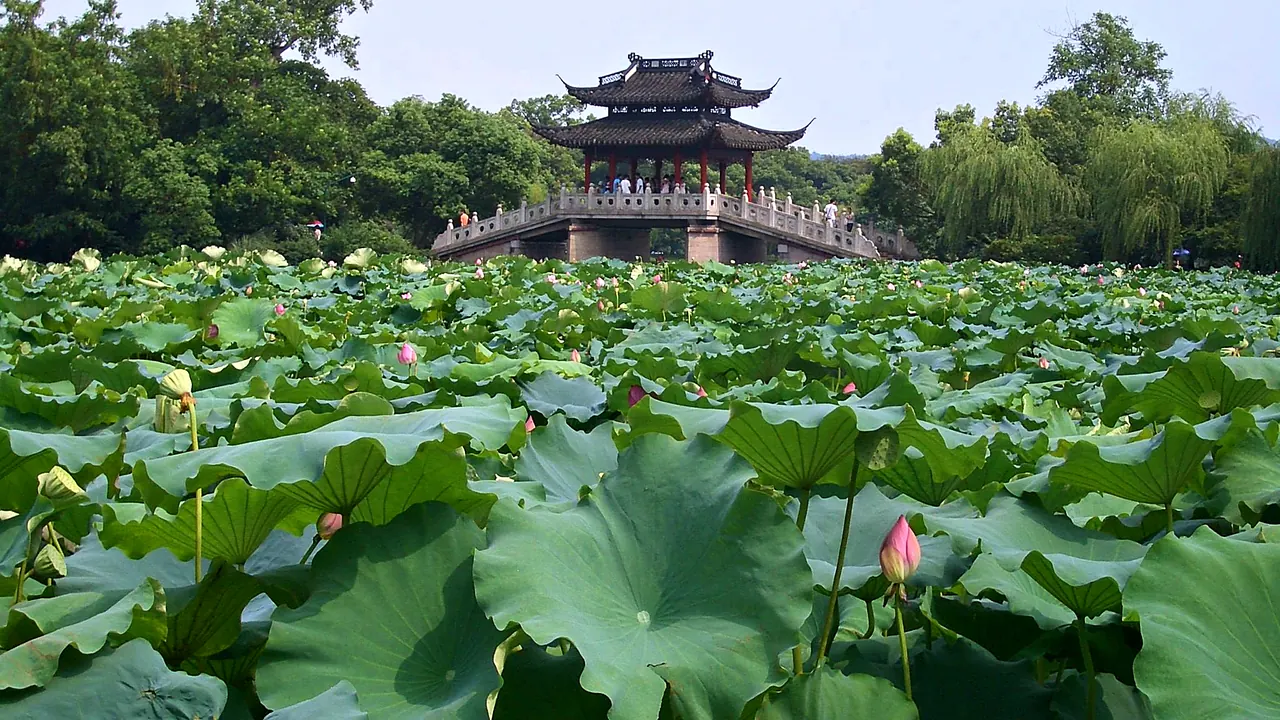
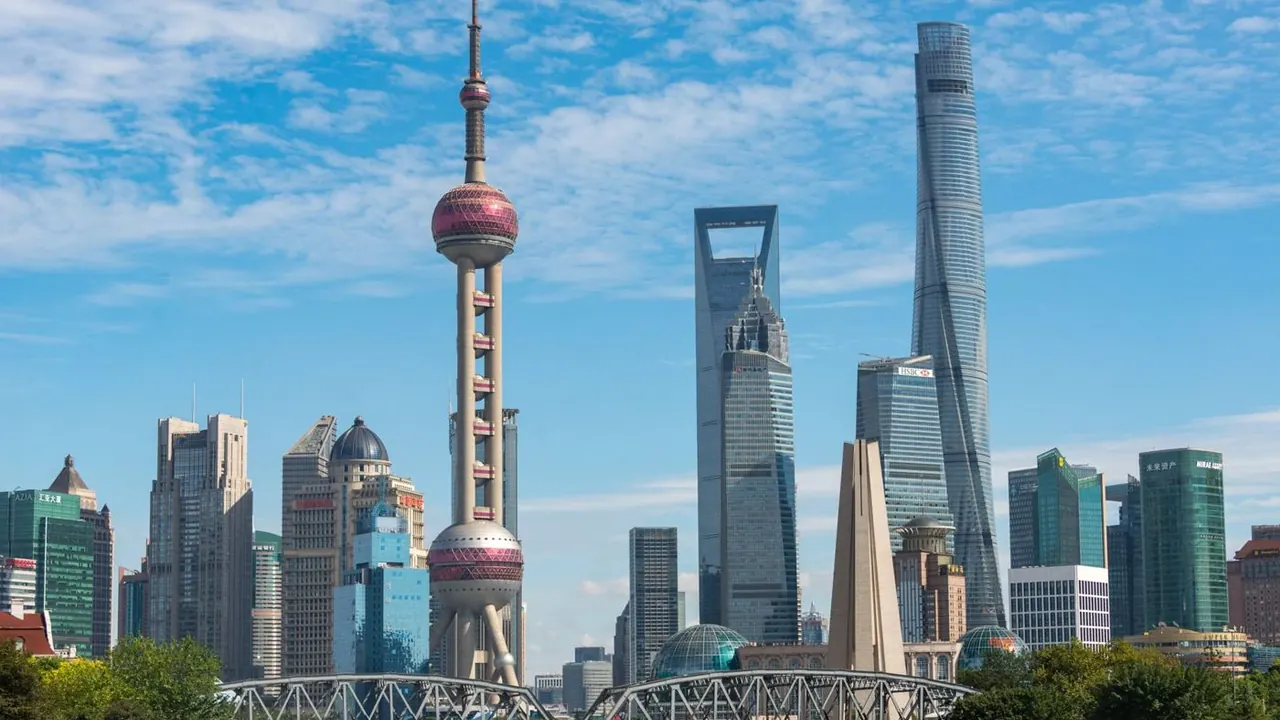
Photos: Hangzhou by Vmenkov, CC BY-SA 3.0, cropped; Shanghai by xiquinhosilva, CC BY 2.0, cropped.
Hangzhou or Shanghai?
Our verdict in twelve categories, each scored against the same fixed benchmark cities, and the climate month by month, so you can choose for your trip.
Choose Hangzhou for
- nature and the outdoors
- prices
- culture and sights
Hangzhou suits travellers who want a slower, greener China: mornings on West Lake, walks up through the Longjing tea terraces, Lingyin Temple and long afternoons over a pot of tea. It is cheaper to stay and eat in, the hills start at the edge of town and evenings end early. That makes it the better pick for walkers, tea lovers and anyone after classical scenery rather than late nights.
Choose Shanghai for
- nightlife
- shopping
- families
Choose Shanghai for a bigger, faster city trip. It eats better, with cooking from all over China and a deep international scene. It also has one of Asia's best nights out, far more shopping and stage shows, and a metro that makes it easy with children. It costs more and has little green space, but Hangzhou is only an hour away by train if you want the lake as well.
Scoreboard
Twelve categories on one fixed scale from 0 to 100. The shaded stretch is the gap between the two.
Your match
Pick a travel style or drag the sliders, and both match scores follow your weighting.
Wins on nature and the outdoors and prices with your weighting.
Wins on nightlife and shopping with your weighting.
What matters to you?
Category by category
What the scores mean for a trip.
Beaches & swimming
Neither city will do for a beach trip, and the only difference is what the nearest swim looks like. From Hangzhou it is the fresh water of Qiandao Lake, about two hours away, with a few designated swimming areas among wooded islands in summer.
From Shanghai it is the sand at Jinshan behind a sea wall, a little closer but with an industrial backdrop. For real sea and sand, plan a separate leg to Hainan or the Zhoushan islands.
Food & drink
Hangzhou's cooking is a refined local style built on West Lake fish in vinegar sauce, Dongpo pork and shrimp stir-fried with Longjing tea. Its best food moment is drinking the spring tea harvest in the hill villages where the leaves were picked. The range beyond that is narrower, with little spicy food and limited international choice.
Shanghai is the stronger place to eat. Alongside its own soup dumplings, shengjian buns and autumn hairy crab, it brings together cooking from Sichuan to Xinjiang. It adds fine dining and a serious café culture in the lanes of the former French Concession, so you can eat something different at every meal for a week.
Culture & sights
The two are evenly matched for sightseeing, but their heritage is completely different. Hangzhou's is classical Chinese: West Lake, shaped into an ideal landscape over a thousand years, Lingyin Temple and the Feilai Feng carvings, the pagodas, and the silk and tea museums. Its old streets, though, are largely rebuilt.
Shanghai's heritage comes from its treaty-port century and is seen mainly in its buildings. The Art Deco banks of the Bund face the towers of Lujiazui, the former French Concession has shikumen lanes and villas, and the Shanghai Museum's bronzes and ceramics are its great collection. Go to Hangzhou for temples and scenery, and to Shanghai for city streets and modern art spaces.
Nightlife
Evenings in Hangzhou are gentle: a stroll along the lit-up lakeshore, a drink on a terrace around Hubin, perhaps karaoke or a craft beer bar. That suits people who want a quiet glass after a day of walking.
Shanghai has one of Asia's serious nights out. There are speakeasy cocktail bars in the former French Concession, hotel bars high above the Bund, and clubs ranging from polished venues with international DJs to underground techno rooms that run until dawn at weekends. Hangzhou's own night owls take the train there.
Nature & outdoors
Here Hangzhou is far ahead. Wooded ridges and tea terraces rise straight from West Lake, and the Nine Creeks valley and the Xixi wetland are within the city. Moganshan, Tianmushan and Qiandao Lake make easy trips further out.
Shanghai is flat and built-up, so being outdoors there means Century Park, cycling along the Huangpu or birdwatching on Chongming Island. People from Shanghai travel to Moganshan and the Zhejiang hills, which Hangzhou has close at hand.
Day trips
Both are excellent bases for the Yangtze delta and share many destinations, including Suzhou and the water towns of Wuzhen and Xitang. The difference is direction. Hangzhou is closer to Shaoxing, Moganshan and the southern hills, and it brings Huangshan and the Huizhou villages within reach of a long day.
Shanghai has the faster links north and west. Suzhou is half an hour away, Nanjing with its Ming walls and museums about an hour and a half, and the canal town of Zhujiajiao lies within the city limits. Each city also makes an easy day out from the other.
Good for families
Shanghai is the easier city with children. Disneyland is on the metro, Legoland and an ocean park sit on the edge of the city, and the science and natural history museums are large and hands-on. Lifts in the metro make a buggy easy to manage.
Hangzhou's appeal is simpler: pedal boats on West Lake, wide lakeside paths for scooters, a zoo in the hills, an aquarium with beluga whales and theme parks with Song-dynasty shows. It is pleasant for a few days, but it has fewer big attractions and little English is spoken.
Getting around
Away from its metro, Hangzhou expects you to manage in Chinese. The metro itself is clean and modern and reaches the railway stations and the airport. But the temples, tea villages and Xixi wetland are spread around a large lake, so most days mix walking and shared bikes along the lakeshore with buses, taxis or ride-hailing, and the drivers rarely use English.
Shanghai's metro is one of the largest in the world and is signed in English throughout. It runs to both airports and the railway stations, and the Maglev speeds in from Pudong. That makes it far easier to cross without help, even though trips between districts take a while underground. Ferries over the Huangpu are a cheap shortcut, and in both cities it is worth setting up mobile payment before you arrive.
Shopping & style
Silk and Longjing tea are what Hangzhou does best. You can buy scarves, fabric and qipao in the silk market district, and tea straight from the growers in the hill villages, finest in spring. Wulin and the eastern lakeshore cover the big brands, but independent design shops are few and hard to track down.
Shanghai goes much further, from luxury flagships on West Nanjing Road and in Lujiazui to Chinese designer fashion, ceramics and homeware in the small boutiques of Wukang and Anfu roads. Its fabric markets tailor a suit or qipao in a few days, so this is the place for a dedicated shopping trip.
Affordability
Hangzhou is the cheaper stay. Noodle shops, transport and temple fees cost little, and the lake, the causeways and most hill walks are free, so only lakeside luxury pushes the bill up.
Shanghai eats just as cheaply at street level, but central hotels around the Bund and Jing'an, and its cocktail bars, are priced like a European capital's. In both cities, room rates jump during the national festival weeks.
Live music & performing arts
Shanghai has far more on stage. Acrobatics shows are a regular part of its evenings, and Kunqu, Yue and Peking opera all have homes, including the Yifu Theatre from the 1920s. The Shanghai Symphony Orchestra, the Grand Theatre and the Oriental Art Center bring concerts, ballet and musicals, often in English, while jazz clubs carry on a tradition from the 1930s.
In Hangzhou, most evenings on stage are large tourist spectaculars, one of them performed on West Lake itself. Beyond those there is Yue opera sung in dialect and concerts at the Grand Theatre.
Wellness & relaxation
The two offer similar chances to unwind, in different forms. Hangzhou's calm is outdoors and slow: tai chi and water calligraphy by the lake at dawn, long afternoons in the hill tea houses and spa retreats in the tea valleys. It has no tradition of public baths.
Shanghai has exactly that bathing culture, with large bath centres where people soak, eat and sleep for hours. There is also foot massage on every residential street and traditional medicine clinics offering acupuncture. Quiet moments in Shanghai are smaller, found in temple courtyards and the lanes of the former French Concession.
When should you go?
Pick your month. The climate figures are measured averages, not a forecast.
Hangzhou in July
Shanghai in July
Daytime high, °C
Rainfall in the month, mm
Temperature and rainfall are climate normals, averaged over the years shown. Hangzhou: 1991-2020 normals, Hangzhou (1.9 km from centre). Shanghai: 1991-2020 (rainfall 1981-2010) normals, Shanghai / Hongqiao (8.1 km from centre).
The two share almost the same calendar, and both are at their best in spring and autumn. April, May and October bring warm, comfortable days for walking the West Lake causeways or the Bund, and October is the drier of the two seasons. From June the plum rains arrive, and Hangzhou gets the heavier soaking, with around 254mm in June against about 184mm in Shanghai. July and August are hot and humid in both, with highs of 33°C to 34°C that make long days on foot hard going.
Winter is cool and grey in both. Shanghai stays noticeably drier from November to February, while Hangzhou keeps a steady drizzle. Neither is a swimming destination, but the sea off Shanghai warms to about 28°C in August, the best time for the enclosed bay at Jinshan, and Hangzhou's lake swimming at Qiandao follows the same hot months. Shanghai's sunniest stretch runs from July to October.
Which traveller are you?
For an outdoors trip, Hangzhou wins easily. Paths lead from West Lake into the tea terraces and the Nine Creeks valley, the causeways are made for early-morning cycling, and Moganshan and Tianmushan are close by. Shanghai has parks and riverside paths.
On a food and nightlife trip, Shanghai is the clear choice. It pairs soup dumplings, hairy crab and cooking from every Chinese region with speakeasy cocktail bars, rooftops above the Bund and clubs open until dawn. Hangzhou winds down after a lakeside drink.
On a tight budget, Hangzhou makes money go further. Its best sights, the lake, the causeways and the hill walks, cost nothing, temple fees are modest and rooms back from the shore are cheap. Shanghai's central hotels are priced like a European capital's.
Before you go
| Measure | Hangzhou | Shanghai |
|---|---|---|
| Official language | Putonghua | Putonghua |
| Currency | Yuan Renminbi (CNY) | Yuan Renminbi (CNY) |
| Sockets | ACI220 V, 50 Hz | ACI220 V, 50 Hz |
| Driving side | Right | Right |
| Time zone | UTC+8 | UTC+8 |
| Emergency number | Police 110, ambulance 120, fire 119 | Police 110, ambulance 120, fire 119 |
| Elevation | 19 m | 4 m |
| Main airport | Hangzhou Xiaoshan International Airport (HGH)25 km from centre131 non-stop destinations | Shanghai Pudong International Airport (PVG)33 km from centre208 non-stop destinations |
| Public holidays this year | 6 days | 6 days |
By the numbers
| Measure | Hangzhou | Shanghai |
|---|---|---|
| City population | 11,936,010 | 24,870,895 |
| People per km² | 708 | 3,922 |
| Museums within 10 km | 13 | 45 |
| UNESCO World Heritage sites within 50 km | 3 | 0 |
| Swim season, months above 21 °C | 5 months | 5 months |
Where else could you go?
Every comparison below shares a destination with this one, so you can follow Hangzhou or Shanghai somewhere new.
- Seoulvs Shanghai
- Beijingvs Shanghai
- Hong Kongvs Hangzhou
- Guilinvs Hangzhou
- Beijingvs Hangzhou
- Xi'anvs Hangzhou