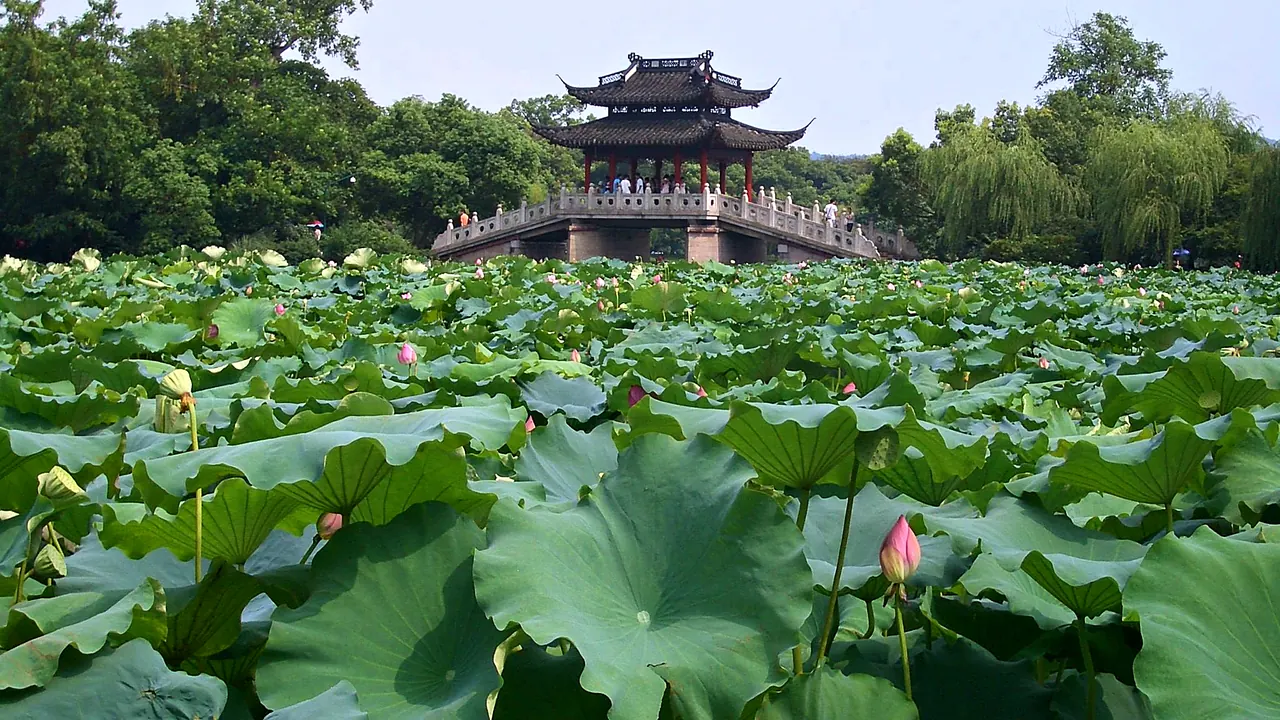
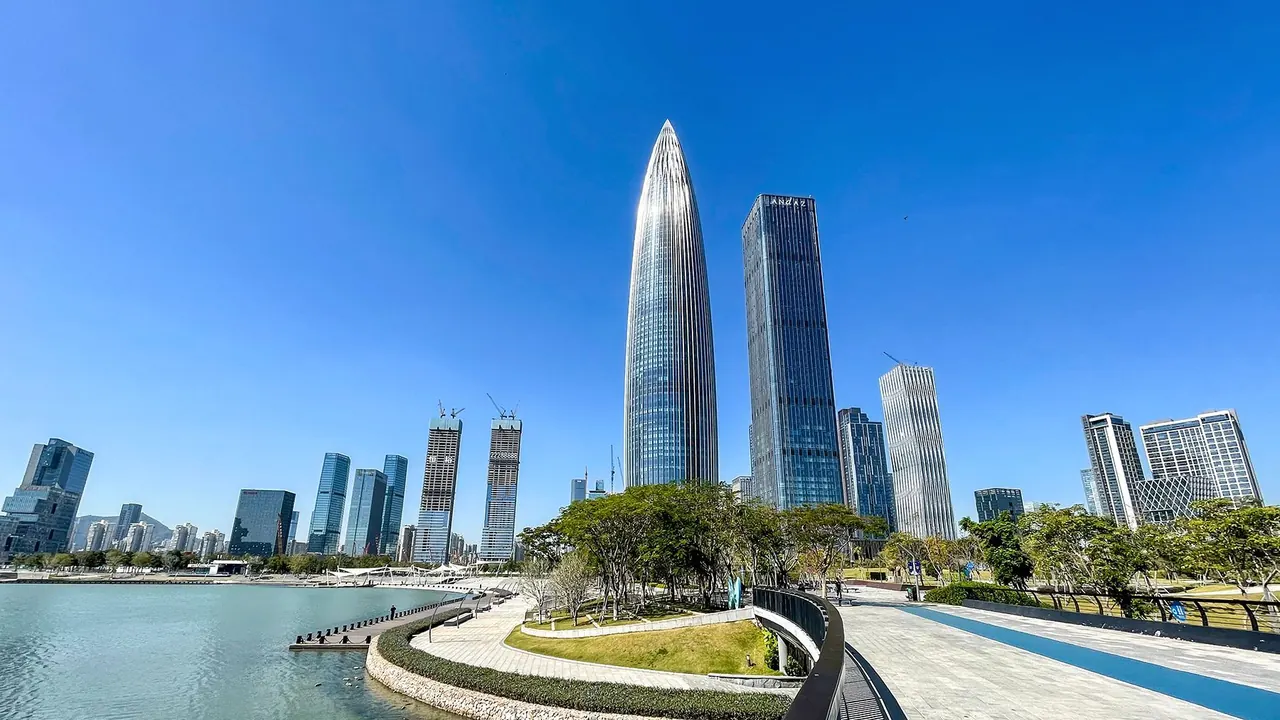
Photos: Hangzhou by Vmenkov, CC BY-SA 3.0, cropped; Shenzhen by Windmemories, CC BY-SA 4.0, cropped.
Hangzhou or Shenzhen?
Our verdict in twelve categories, each scored against the same fixed benchmark cities, and the climate month by month, so you can choose for your trip.
Choose Hangzhou for
- culture and sights
- day trips
- live music and the arts
Hangzhou suits the traveller who wants the China of poems and paintings: a lake shaped over a thousand years, great Buddhist temples in the hills, tea villages you can walk to and serious museums of silk, tea and early civilisation. It is also the better base for roaming, with Shanghai, Suzhou, Shaoxing and the canal towns all close. Evenings are quiet, which suits walkers and tea drinkers more than night owls.
Choose Shenzhen for
- beaches
- families
- wellness
Families and anyone wanting sea and sand will get more out of Shenzhen. Theme parks, a safari park and the Dapeng beaches keep children busy, a bilingual metro makes the sprawling city easier to handle, and the all-night bathhouses and massage parlours give tired travellers a proper way to unwind. Come for the modern city and the short hop to Hong Kong rather than for history.
Scoreboard
Twelve categories on one fixed scale from 0 to 100. The shaded stretch is the gap between the two.
Your match
Pick a travel style or drag the sliders, and both match scores follow your weighting.
Too close to call, 2 points apart
Wins on culture and sights and day trips with your weighting.
Wins on beaches and families with your weighting.
What matters to you?
Category by category
What the scores mean for a trip.
Beaches & swimming
Hangzhou has nothing for beach lovers. The Qiantang is a brown tidal estuary, more famous for its bore than for bathing, and West Lake is for boats, so the nearest swim is a summer outing to Qiandao Lake.
Shenzhen has real beaches, although they lie an hour or more east of the centre on the Dapeng peninsula. Xichong, with open sea and green hills behind, is the one worth the journey, and Dameisha is easier to reach but crowded. It is a day out rather than a daily swim, but the sea is warm and swimmable for half the year.
Food & drink
The two cities eat equally well, but in different ways. Hangzhou has a cuisine of its own, gentle and slightly sweet: vinegar-glazed West Lake fish, Dongpo pork and shrimp with Longjing tea, best paired with a pot of the tea itself in the hill villages where it grows.
Shenzhen's strength is range rather than tradition. Migrants from across China cook Chaoshan beef hotpot, Hakka chicken and fiery Sichuan and Hunan dishes, and the tanks of live seafood at Nan'ao and Shekou are a treat. Anyone who wants chilli heat or international choice will be happier here than in Hangzhou.
Culture & sights
This is where Hangzhou pulls well ahead. West Lake, with its causeways and pagodas, is a cultural landscape in its own right, and Lingyin Temple, the Feilai Feng cliff carvings, the Grand Canal and the Neolithic site of Liangzhu give it real historical depth, even without an intact old town.
Shenzhen is mostly a city of the last few decades, so its sights are the Ping An tower, the Civic Centre roof and the galleries of OCT Loft. Nantou's Ming lanes and the Hakka walled villages are interesting, but they are scattered and take time to reach, and they would not fill a cultural itinerary.
Nightlife
Neither city is a night-out destination, but Shenzhen has more to offer. The big clubs and DJs around Coco Park, the international pub scene in Shekou and late KTV rooms give it a broader range, even if the clusters are far apart and largely indoors.
In Hangzhou the classic evening is a stroll along the lit-up lake followed by a drink near Hubin, with craft beer and karaoke for the student crowd, and anyone after a big night tends to head for Shanghai.
Nature & outdoors
Both cities have good green escapes, but of different kinds. Hangzhou's are gentle and cultivated: tea terraces at Longjing, the bamboo and streams of the Nine Creeks valley, the Xixi wetland waterways, with Moganshan and Tianmushan further out for forest walks.
Shenzhen offers sea and steeper climbing. Wutong Mountain is a hard ascent with views towards Hong Kong, the Dapeng coastal trail links rocky headlands and coves, and kayaking adds a coastal element that Hangzhou lacks. Hangzhou is best for walking in spring and autumn, Shenzhen in autumn and winter.
Day trips
Hangzhou is the stronger base, mainly because the Yangtze delta is so dense with places to visit. Shaoxing is under half an hour by train, Shanghai and Suzhou's gardens are easy, and the canal towns of Wuzhen, Xitang and Nanxun are each about an hour away, so a week of different outings is easy to fill.
Shenzhen's trump card is Hong Kong, under half an hour away, with Guangzhou just as close and Macau a ferry ride off. After those three the choices get thin, and the border crossings need the right visa to get back into the mainland.
Good for families
In Hangzhou, much of a family day can be spent around the lake, where there is room to run and scoot along the shore and local people make a fuss of young visitors. The difficulties are the humid summers, the dense lakeside crowds of the national festival weeks and how little English is spoken. Shanghai Disneyland is a long day out rather than an easy trip.
Shenzhen copes better overall. Its biggest attractions are grouped in Overseas Chinese Town, so several days can pass without crossing the city, and the clean, safe streets, the science museum and large parks with lawns and playgrounds make quieter days easy. The weak points are distance, since anything in the eastern hills or on the coast means a long ride, and fierce summer heat.
Getting around
Shenzhen is easier for a foreign visitor to navigate, mainly because its metro has bilingual signs and announcements and reaches the theme parks, border posts and stations. The drawback is the sheer size of the city: reaching the Dapeng beaches from Shekou can take most of a morning, and multilane roads make walking between districts tedious.
Hangzhou's metro is good too, and cycling along the lake shore is a pleasure, but the temples, tea villages and wetlands are scattered, so taxis fill many gaps, and very little English is spoken once you leave the metro.
Shopping & style
Shenzhen is slightly ahead, largely because of Huaqiangbei, whose floors of electronics markets are an experience in their own right, along with the tailors of Luohu and the canvases of Dafen. Its polished malls are also a draw, though there are few traditional crafts.
Hangzhou is the place for traditional souvenirs: silk scarves and qipao, Longjing tea bought directly from the growers in spring, and fans and parasols in the lanes around Hefang Street, with luxury malls in Wulin.
Affordability
Both cities are good value for visitors, with cheap noodles, transport and taxis. What differs is where the money goes. In Hangzhou the main sights cost little or nothing, since the lake, the causeways and the hill paths are free, but room rates rise sharply during the national festival weeks.
In Shenzhen, comfortable modern hotels are the bargain, and the extra spending comes from theme park tickets and imported drinks in Shekou and Coco Park.
Live music & performing arts
Hangzhou has the edge, mainly because of performances you can only see there. The evening spectacle staged on the surface of West Lake and the Song-dynasty shows in the theme parks are made for tourists but still impressive, and Yue opera gives a regional tradition, though without English surtitles.
Shenzhen's offering is solid but generic: the symphony at the Concert Hall, touring ballet and musicals at the Poly and Grand theatres, and Chinese indie bands in the live houses around OCT Loft.
Wellness & relaxation
For pampering, Shenzhen is the better choice. Its huge bathhouse complexes stay open all night with pools, saunas, sleeping halls and massage on several floors, foot-reflexology parlours are everywhere, and hot-spring resorts lie in the hills nearby.
Hangzhou relaxes in a quieter way: tai chi and water calligraphy beside the lake at dawn, long afternoons in tea houses in the hills, and retreat spas in the valleys, though it has no bathing culture and the lake gets crowded at weekends.
When should you go?
Pick your month. The climate figures are measured averages, not a forecast.
Hangzhou in July
Shenzhen in July
Daytime high, °C
Rainfall in the month, mm
Where the figures come from
Shenzhen has no rain gauge within 25 km of the centre, so its rainfall comes from a gridded climate dataset read at the city rather than from a gauge further away.
Shenzhen's sunshine is measured 28 km from the centre, at King's Park.
Temperature and rainfall are climate normals, averaged over the years shown. Hangzhou: 1991-2020 normals, Hangzhou (1.9 km from centre). Shenzhen: 1999-2020 (sunshine 1991-2020, rainfall 1991-2020) normals, Shenzhen (4.7 km from centre).
Hangzhou has four distinct seasons, and the best are spring and autumn. April reaches about 22°C and October is much the same, both ideal for the lake shore and the tea hills. June is the wettest month, at around 254mm, as the plum rains arrive, and July and August are hot and sticky enough to make sightseeing tiring. Winter is cold and damp, with January highs of about 9°C.
Shenzhen is subtropical and never truly cold, so its winter is the most comfortable time to walk around. November to January are dry and the sunniest of the cool months, while February and March turn greyer. October is a good compromise, still warm enough for the beach and sunny. From May to September the sea is around 28°C for swimming, but this is also the rainy season, peaking near 339mm in August, with heavy storms and typhoons. In winter Shenzhen is clearly the more pleasant of the two. In high summer neither is comfortable for walking, though only Shenzhen has the sea, and in spring and autumn Hangzhou is at its best.
Which traveller are you?
On a culture and arts trip, Hangzhou is the clear choice. West Lake, Lingyin Temple, the Feilai Feng carvings and the silk and tea museums are worth several days, and the evening lake spectacle and Yue opera add a stage side that Shenzhen's touring programme lacks.
For a beach and sun trip, Shenzhen wins easily. Xichong and the other Dapeng sands give warm sea swimming from late spring to autumn and seafood villages close by, while Hangzhou has only a muddy estuary and a lake two hours away.
On a family trip with children, Shenzhen makes life easier. The OCT theme parks, the safari park and the marine park at Xiaomeisha are all on the metro or close to it, with lifts and play areas everywhere. Hangzhou's pedal boats and zoo are pleasant but offer less.
Before you go
| Measure | Hangzhou | Shenzhen |
|---|---|---|
| Official language | Putonghua | Putonghua |
| Currency | Yuan Renminbi (CNY) | Yuan Renminbi (CNY) |
| Sockets | ACI220 V, 50 Hz | ACI220 V, 50 Hz |
| Driving side | Right | Right |
| Time zone | UTC+8 | UTC+8 |
| Emergency number | Police 110, ambulance 120, fire 119 | Police 110, ambulance 120, fire 119 |
| Elevation | 19 m | 0 m |
| Main airport | Hangzhou Xiaoshan International Airport (HGH)25 km from centre131 non-stop destinations | Shenzhen Bao'an International Airport (SZX)28 km from centre174 non-stop destinations |
| Public holidays this year | 6 days | 6 days |
By the numbers
| Measure | Hangzhou | Shenzhen |
|---|---|---|
| City population | 11,936,010 | 17,494,398 |
| People per km² | 708 | 8,759 |
| Museums within 10 km | 13 | 7 |
| UNESCO World Heritage sites within 50 km | 3 | 0 |
| Swim season, months above 21 °C | 5 months | 8 months |
Where else could you go?
Every comparison below shares a destination with this one, so you can follow Hangzhou or Shenzhen somewhere new.
- Hong Kongvs Shenzhen
- Macauvs Shenzhen
- Suzhouvs Hangzhou
- Shanghaivs Hangzhou
- Guilinvs Shenzhen
- Hong Kongvs Hangzhou