Photos: Hangzhou by Vmenkov, CC BY-SA 3.0, cropped; Zhangjiajie by David Tran, Pexels License.
Hangzhou or Zhangjiajie?
Our verdict in twelve categories, each scored against the same fixed benchmark cities, and the climate month by month, so you can choose for your trip.
Choose Hangzhou for
- culture and sights
- shopping
- day trips
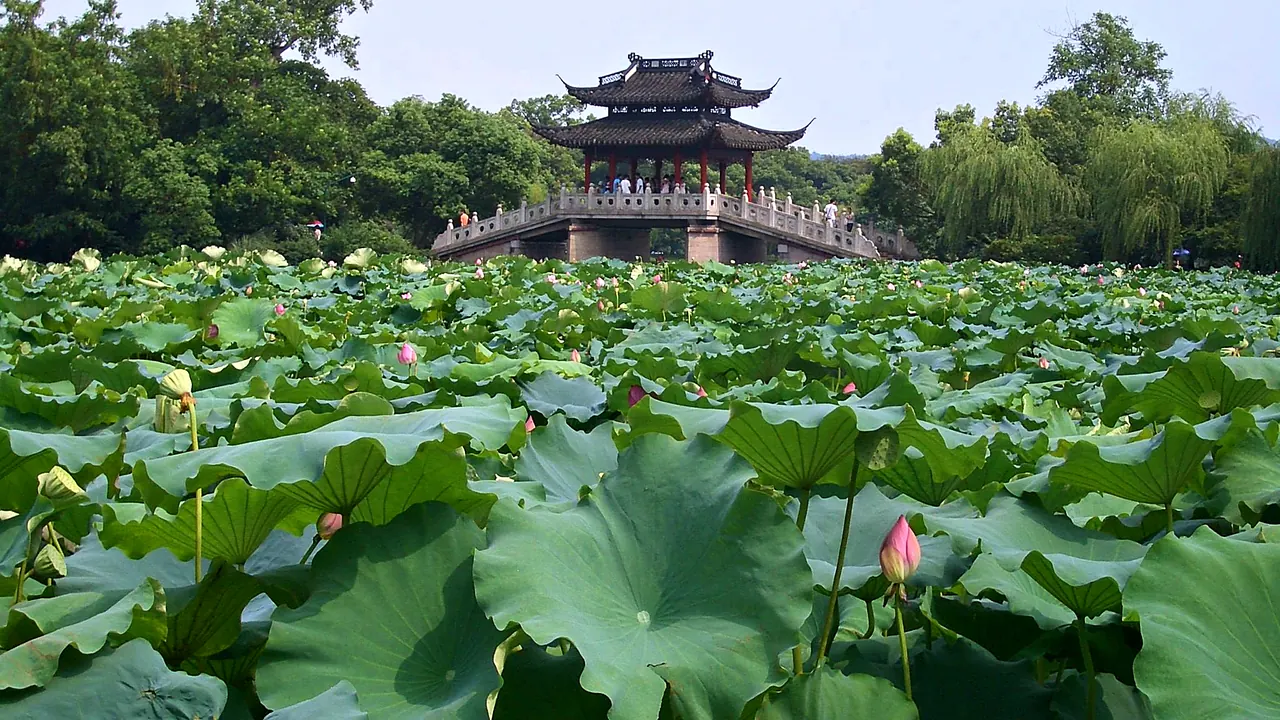
Hangzhou suits a traveller who wants a rounded, gentler trip. It has a lake landscape that poets and gardeners shaped over centuries, great temples and museums, refined eastern Chinese cooking, tea drunk in the villages where it grows, and easy train rides to Suzhou, Shaoxing, Shanghai and the canal towns. It is the better choice for a first taste of China, for couples who like slow mornings and good dinners, and for anyone who wants several different things from one base.
Choose Zhangjiajie for
- nature and the outdoors
- prices
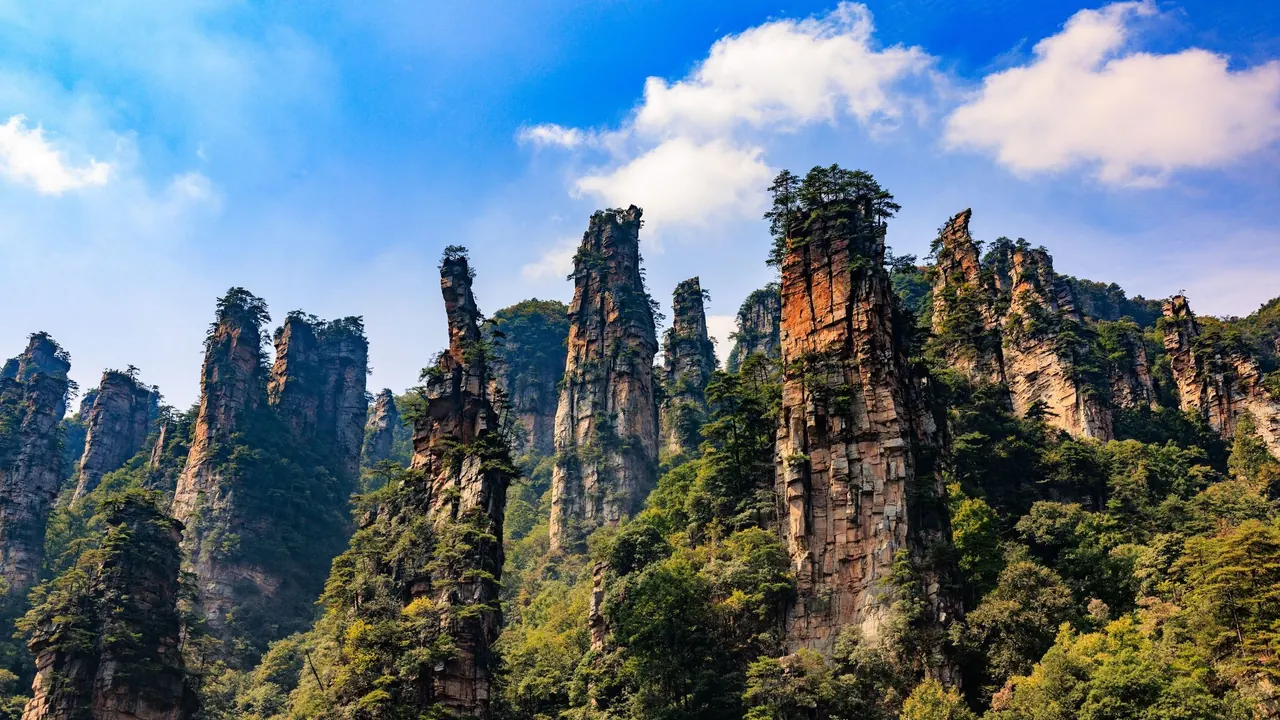
Pick Zhangjiajie for the scenery, because that is almost all it offers. The sandstone pillars of Wulingyuan and the cliffs of Tianmen Mountain are among the most startling landscapes in Asia, and a few days of cable cars, glass walkways and misty viewpoints are the whole point of going. Come with strong legs and early alarms, and accept plain evenings and fiery Hunan food. In return you get mountain scenery that no lakeside walk in Hangzhou can match.
Scoreboard
Twelve categories on one fixed scale from 0 to 100. The shaded stretch is the gap between the two.
Your match
Pick a travel style or drag the sliders, and both match scores follow your weighting.
Wins on culture and sights and shopping with your weighting.
Wins on nature and the outdoors and prices with your weighting.
What matters to you?
Category by category
What the scores mean for a trip.
Beaches & swimming
Neither city is a place for a swim, so anyone who wants sand and sea will need to go elsewhere for that part of the trip. What differs is the nearest thing to it. From Hangzhou, the designated summer swimming areas at Qiandao Lake are about two hours away. Zhangjiajie offers summer whitewater rafting in the gorges, and otherwise only a hotel pool.
Food & drink
Hangzhou eats better for most visitors. Its cooking is delicate and slightly sweet, from West Lake fish in vinegar sauce to shrimp with Longjing tea. On top of that come lakeside banquets, tea drunk in the hill villages where it is picked, and the night markets and food courts of a large city.
Zhangjiajie's western Hunan cooking is bolder: chilli, sour pickles, wood-smoked bacon and the three-pot stew simmering at the table. Its evening food streets are worth finding. The choice is narrow, though, meals near the park gates are generic tour-group food, and anyone who avoids chilli has to keep asking for dishes without it.
Culture & sights
The gap here is wide. West Lake is itself a designed cultural landscape, surrounded by Lingyin Temple, the Feilai Feng carvings and old pagodas. Hangzhou adds serious museums of silk, tea and Zhejiang history, and the Neolithic city of Liangzhu on the outskirts, even though its old streets have mostly been rebuilt.
In Zhangjiajie the town has the quiet Ming-dynasty Puguang Temple, a Tujia folk-customs park and a few rebuilt streets, and you can see them all in half a day. Its deeper heritage is out in the old towns and Tujia sites, so culture there means making a separate trip.
Nightlife
Neither is a nightlife city, but Hangzhou at least gives you an evening. You can stroll the lit lakeshore, have a drink on a terrace around Hubin, or head to the clubs, craft beer bars and karaoke in Wulin, which students and young workers keep busy. Zhangjiajie goes to bed early because everyone is up at dawn for the parks, and a beer at a riverside bar is about as late as it gets.
Nature & outdoors
This is Zhangjiajie's category by a long way. The quartz-sandstone pillars of Wulingyuan rise out of forest and mist, macaques forage beside the Golden Whip Stream path, and Tianmen Mountain has cliff-edge walkways and its great natural arch. Very few places anywhere look like this, although the trails are paved steps and get packed in the peak weeks.
Hangzhou's outdoors is gentler and closer to the city. There are half-day walks through the tea terraces and the Nine Creeks valley, cycling on the causeways, and boats through the Xixi wetland, with Moganshan's bamboo hills an hour away. It is countryside to enjoy between sights rather than scenery to build a trip around.
Day trips
Hangzhou sits in one of the richest parts of China for day trips. Shaoxing is under half an hour by high-speed train, Shanghai about an hour and Suzhou's classical gardens about an hour and a half. The canal towns of Wuzhen, Xitang and Nanxun are each an easy trip by road.
From Zhangjiajie the list is shorter but good. Fenghuang's stilt houses on the Tuo River and Furong Town on its cliff above a waterfall are both on the rail line, and Laosicheng, the overgrown Tujia capital, is a UNESCO site. Beyond those three, most of what is in reach is more mountains.
Good for families
Hangzhou is the easier city with children. West Lake has pedal boats, ferries to the islands and wide paths for scooters, and there is also a zoo in the hills, an aquarium with penguins and beluga whales, and theme parks on the edge of town. The main drawbacks are humid summers and festival crowds.
Zhangjiajie thrills older children with swaying cable cars, glass walkways over sheer drops and macaques by the path. Almost nothing there is made for children, though, and long queues and steep steps wear out small legs and defeat pushchairs.
Getting around
Hangzhou is simpler to get around. A clean metro reaches the railway stations and the airport, shared bikes and lakeside cycle lanes cover the scenic core, and cheap taxis fill the gaps out to the temples and tea villages.
Zhangjiajie falls into two parts: the walkable city centre, where the Tianmen cable car starts, and Wulingyuan around 30km away, reached by bus or with a hired driver. Inside the forest park the shuttle routes are confusing and the signs mostly in Chinese, so many visitors split their stay between two hotels.
Shopping & style
Hangzhou gives shoppers a real reason to browse: silk fabric, scarves and qipao, spring Longjing tea bought from the growers, and the department stores and luxury malls of Wulin. Zhangjiajie sells mostly souvenirs and mountain produce such as dried mushrooms and smoked bacon. The things worth taking home are the Tujia xilankapu brocade and Miao silverwork.
Affordability
Both cities are inexpensive to stay in. The difference is where the money goes. In Hangzhou the main sights cost little, since the lake, the causeways and most hill walks are free, and the bill rises mainly with lakeside hotels and banquet dining on the water.
In Zhangjiajie, hotels, meals and taxis are cheap, but the forest park pass, the Tianmen cable car, the glass bridges and the lifts are all ticketed separately and soon become the biggest cost. In both cities, rooms cost more during the national festival weeks.
Live music & performing arts
Both cities rely on large staged shows for visitors: Hangzhou's evening performance on the surface of West Lake, and Zhangjiajie's Tujia and Miao folklore productions, including an open-air show beneath the Tianmen cliffs. Hangzhou has more beyond those. Yue opera plays in local theatres if you can follow it without surtitles, and the Grand Theatre hosts the city orchestra, touring ballet and concerts, while Zhangjiajie has no theatre or music scene of its own.
Wellness & relaxation
Hangzhou is much the better place to unwind, because rest is part of the day there rather than a reward at the end of it. An hour under the willows or a slow pot of tea needs no planning, and a massage is rarely more than a short walk away. The lake is calmest before breakfast and on weekdays, and the side valleys stay peaceful when the shore is crowded.
In Zhangjiajie, relaxing mostly means recovering from the trails, with a foot rub after a day of stone steps or the spa at one of the better hotels. Its one real advantage is bathing. Hot-spring resorts lie in the countryside outside town, and Hangzhou itself has no tradition of bathing to match them.
When should you go?
Pick your month. The climate figures are measured averages, not a forecast.
Hangzhou in July
Zhangjiajie in July
Daytime high, °C
Rainfall in the month, mm
Where the figures come from
Zhangjiajie has no weather station within reach, so its figures come from a gridded climate model rather than a measured record, and read a broad area rather than the city itself.
Temperature and rainfall are climate normals, averaged over the years shown. Hangzhou: 1991-2020 normals, Hangzhou (1.9 km from centre). Zhangjiajie: 2001-2020 normals, NASA POWER reanalysis grid, no weather station within 90 km.
Hangzhou is at its best in spring and autumn, when walks around the lake and up the tea slopes are mild and pleasant. October is the best month, warm and the driest of the warmer months. June is the wettest month, with around 254mm of rain, and July and August reach 34°C with heavy humidity, which is too hot for long days on foot. Winter is cool, damp and grey. Swimming at Qiandao Lake is only possible in summer.
Zhangjiajie is a little cooler all year, with July highs around 30°C, but its rain starts earlier and lasts longer. May, June and July each bring more than 200mm, and the peaks are often lost in cloud. September and October give the clearest views. Winter is cold but dry, with January highs near 7°C and sometimes a light covering of snow on the summits.
Which traveller are you?
For a culture and arts trip, Hangzhou is the clear choice. West Lake, Lingyin Temple, the silk and tea museums and the Neolithic site at Liangzhu fill several days, and Suzhou's gardens are a train ride away. Zhangjiajie's town sights take half a day.
On an outdoors trip, Zhangjiajie wins easily. Wulingyuan's pillar forest, the cliff paths of Tianmen Mountain, the Grand Canyon and the river rafting give you days of scenery. Hangzhou's tea slopes and wetlands are pleasant, but they are on a smaller scale.
For a relaxing and wellness trip, choose Hangzhou. Tai chi by the lake at dawn, long afternoons over Longjing tea in the hill tea houses and retreat hotels in the tea valleys keep the pace slow. Zhangjiajie means early starts and thousands of stone steps.
Before you go
| Measure | Hangzhou | Zhangjiajie |
|---|---|---|
| Official language | Putonghua | Putonghua |
| Currency | Yuan Renminbi (CNY) | Yuan Renminbi (CNY) |
| Sockets | ACI220 V, 50 Hz | ACI220 V, 50 Hz |
| Driving side | Right | Right |
| Time zone | UTC+8 | UTC+8 |
| Emergency number | Police 110, ambulance 120, fire 119 | Police 110, ambulance 120, fire 119 |
| Elevation | 19 m | 170 m |
| Main airport | Hangzhou Xiaoshan International Airport (HGH)25 km from centre131 non-stop destinations | Zhangjiajie Hehua International Airport (DYG)5 km from centre31 non-stop destinations |
| Public holidays this year | 6 days | 6 days |
By the numbers
| Measure | Hangzhou | Zhangjiajie |
|---|---|---|
| City population | 11,936,010 | 1,517,027 |
| People per km² | 708 | 159 |
| Museums within 10 km | 13 | 0 |
| UNESCO World Heritage sites within 50 km | 3 | 1 |
| Swim season, months above 21 °C | 5 months | - |
Where else could you go?
Every comparison below shares a destination with this one, so you can follow Hangzhou or Zhangjiajie somewhere new.
- Suzhouvs Hangzhou
- Shanghaivs Hangzhou
- Chongqingvs Zhangjiajie
- Guilinvs Zhangjiajie
- Yangshuovs Zhangjiajie
- Xi'anvs Zhangjiajie