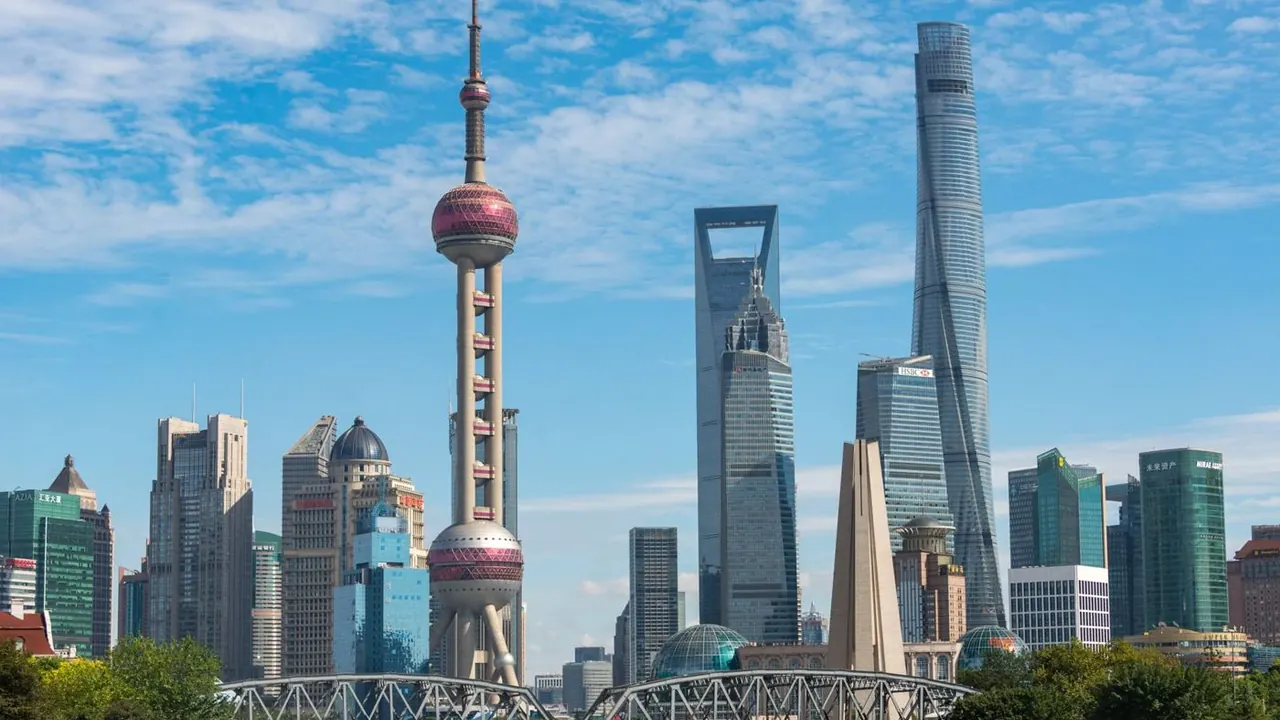
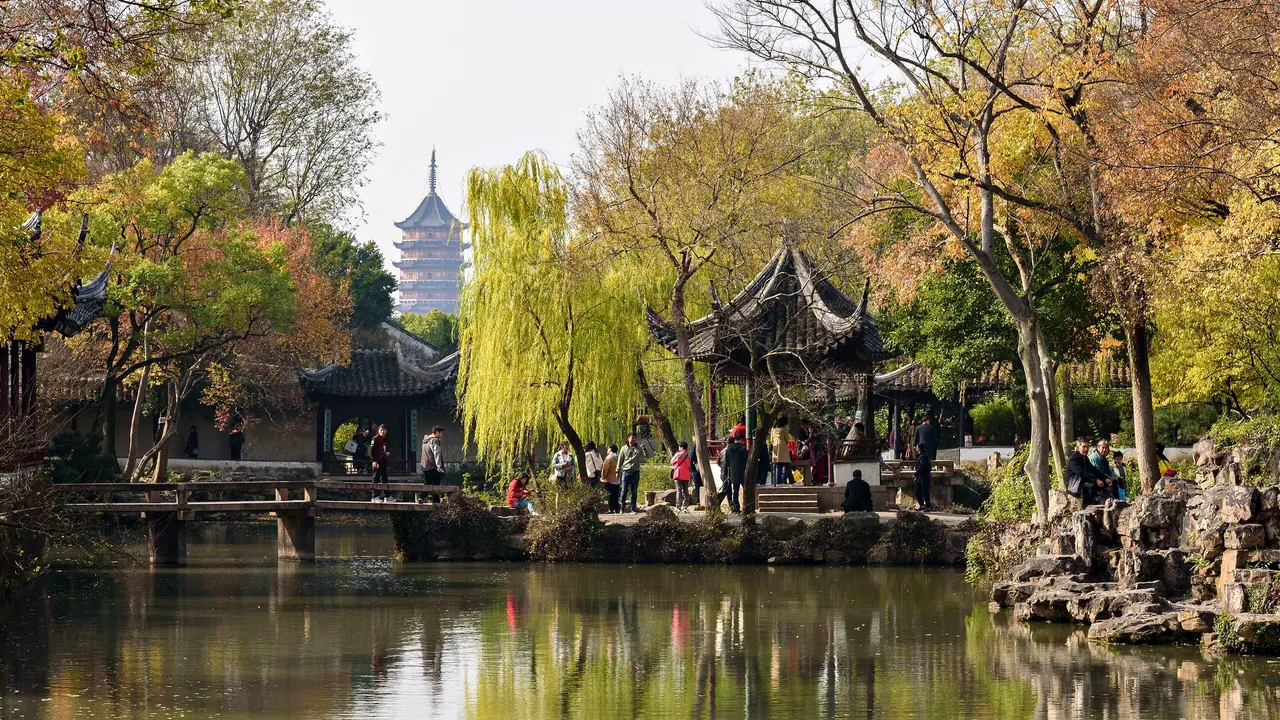
Photos: Shanghai by xiquinhosilva, CC BY 2.0, cropped; Suzhou by King of Hearts, CC BY-SA 4.0, cropped.
Shanghai or Suzhou?
Our verdict in twelve categories, each scored against the same fixed benchmark cities, and the climate month by month, so you can choose for your trip.
Choose Shanghai for
- nightlife
- families
- shopping
Choose Shanghai for a trip with more range. It is one of Asia's great food cities, its nights run from speakeasies to Bund-top bars and late clubs, the shopping goes from luxury flagships to designer boutiques, and the metro makes it easy to get across a huge city. Disney and the big hands-on museums also make it the stronger choice with children. A comfortable stay costs more, and its history is the treaty-port Bund and lane houses rather than classical China.
Choose Suzhou for
- nature and the outdoors
- prices
- culture and sights
Suzhou is the place for old China at a gentler pace. You come for the classical gardens, the canal streets and Kunqu sung where it began, with Lake Tai's tea hills for a bike ride, and hotels cost much less. Evenings are quiet. The two cities are only half an hour apart by train, so many visitors stay in calm Suzhou and go to Shanghai for a big night out or a shopping day.
Scoreboard
Twelve categories on one fixed scale from 0 to 100. The shaded stretch is the gap between the two.
Your match
Pick a travel style or drag the sliders, and both match scores follow your weighting.
Wins on nightlife and families with your weighting.
Wins on nature and the outdoors and prices with your weighting.
What matters to you?
Category by category
What the scores mean for a trip.
Beaches & swimming
Neither city is a place to swim, and there is little between them. Shanghai at least has Jinshan City Beach, a filtered bay behind a sea wall about an hour and a half away, though the setting is industrial. Suzhou has only its canals and Lake Tai, and nobody swims in either, so in both cities the hotel pool is the realistic answer in summer.
Food & drink
Shanghai is the stronger food city by some way. It has its own benbang cooking, with soup dumplings and shengjian buns, plus food from every Chinese region from Sichuan to Xinjiang, a deep international scene and serious fine dining. Cafés and bistros fill the former French Concession.
Suzhou's cooking has a narrower range but real finesse. It is built on freshwater fish and shrimp from the lakes, with squirrel-shaped mandarin fish as the showpiece and a bowl of Suzhou noodles in dark broth for breakfast. Both cities share the autumn hairy crab, Suzhou's coming from Yangcheng Lake, but Suzhou has little foreign food outside its business district.
Culture & sights
Suzhou has the deeper classical heritage. Its UNESCO-listed gardens, including the Humble Administrator's Garden, the Lingering Garden, the Master of the Nets and the Lion Grove, all lie in or near the old moat. Around them are Tiger Hill's leaning pagoda, the Panmen water gate and canal streets such as Pingjiang Road, and I. M. Pei's Suzhou Museum adds a modern landmark.
Shanghai's sights come from its treaty-port century instead: the Bund facing the Lujiazui towers, and the villas and shikumen lane houses of the former French Concession. The Shanghai Museum holds some of China's finest bronzes and ceramics. Older sights such as Yu Garden are few, and that is exactly the gap Suzhou fills.
Nightlife
Shanghai has a real night out and Suzhou mostly does not. In Shanghai that means speakeasies in the former French Concession and hotel bars above the Bund looking across at Pudong. The clubs range from polished venues to underground techno rooms, and the busiest run until dawn at weekends.
A Suzhou evening is a lit canal walk on Pingjiang Road or Shantang Street and a drink by the water, perhaps in the small bars of Shiquan Street or a rooftop lounge at Jinji Lake. Little stays open late, and people who want more take the train to Shanghai.
Nature & outdoors
Neither city has mountains, but Suzhou has more countryside close by. Lake Tai lies to the west, with orchards and tea terraces on the Dongshan and Xishan peninsulas and lakeside roads made for cycling. Lingyan Hill and Tianping Hill are short climbs with temple views and maples in autumn.
Shanghai's outdoors is mostly parks and riverbank: Century Park, the Huangpu paths along the West Bund, the low Sheshan hills and the Dongtan wetlands on Chongming Island for birdwatching. Real hiking means a longer trip into Zhejiang.
Day trips
Both are excellent bases on the same high-speed rail network, so the real difference is which places come closest. From Shanghai, Suzhou is half an hour away and Hangzhou about an hour. From Suzhou, Nanjing comes nearer at about an hour, and the gardens of Yangzhou are within reach.
The canal water towns are shared too. Zhouzhuang, Tongli, Xitang and Wuzhen can be reached from either city, Shanghai has Zhujiajiao inside its own boundaries, and Luzhi is under an hour from Suzhou. Whichever base you choose, go on a weekday to avoid the crowds.
Good for families
Shanghai is the easier city with children because it has whole days built for them. Shanghai Disney Resort is on the metro, Haichang Ocean Park and Legoland are on the city's edges, and there is a hands-on science museum and an aquarium below the Pudong towers.
Suzhou's main sights, its gardens, are narrow and contemplative, and young children tire of them quickly. Canal boat rides, the lakeside parks around Jinji Lake and the amusement parks west of the old town go down better. Both cities share the same hot summers and festival-week crowds.
Getting around
Shanghai's metro is one of the largest anywhere, running to both airports, the railway stations and Disneyland, and the ferries across the Huangpu make a scenic shortcut. The city is so spread out, though, that trips between areas often take a good half hour. Suzhou's metro is clean and signed in English but covers less, so Tiger Hill or the Lake Tai shore is easier by taxi.
Suzhou's advantage is its old town inside the moat, which is compact enough to walk or cycle between gardens on a shared bike. In both cities, set up mobile payments before you arrive.
Shopping & style
Shanghai covers the whole range, from luxury flagships on West Nanjing Road and in Lujiazui to Chinese designer boutiques on Wukang Road and fabric markets that make a qipao in a few days. Suzhou's range is narrower but it does one thing properly: silk and embroidery, with fine double-sided pieces stitched in the workshops of Zhenhu village and silk sold along Guanqian Street. For fashion beyond that, Suzhou's own shoppers head to Shanghai.
Affordability
Suzhou is the cheaper place to stay, mainly because comfortable hotels there cost far less than good rooms near the Bund or in Jing'an, which are priced like a European capital. In both cities local food and the metro cost very little. In Suzhou the spending adds up through garden entry tickets and hairy crab dinners, while in Shanghai it is cocktails, imported wine and Western restaurants.
Live music & performing arts
Shanghai has the bigger stages. There are acrobatics shows in large theatres and Peking opera at the Yifu Theatre, and the Shanghai Symphony Orchestra, the Grand Theatre and the Oriental Art Center put on ballet, opera and musicals, often in English. Jazz has roots here going back to the 1930s.
Suzhou's offer is narrower but more its own. Kunqu began here, and on summer evenings short scenes are sung in garden pavilions by lantern light, while pingtan storytelling is heard in small teahouses. Most of it is in Chinese, so visitors enjoy it as atmosphere.
Wellness & relaxation
The two cities offer different kinds of rest. Shanghai has large bath centres with hot pools, saunas and rest halls where people stay overnight, along with clinics for acupuncture and cupping, but the city around them moves fast.
Suzhou has no tradition of thermal bathing. Its calm comes from a garden early in the morning before the crowds, a canal-side teahouse with local green tea, and quiet resort spas by Lake Tai. Both cities have foot-massage parlours on almost every street.
When should you go?
Pick your month. The climate figures are measured averages, not a forecast.
Shanghai in July
Suzhou in July
Daytime high, °C
Rainfall in the month, mm
Where the figures come from
Suzhou's temperatures are measured 79 km from the centre, at Shanghai / Hongqiao.
Suzhou has no rain gauge within 25 km of the centre, so its rainfall comes from a gridded climate dataset read at the city rather than from a gauge further away.
Suzhou's sunshine is measured 81 km from the centre, at Shanghai.
Temperature and rainfall are climate normals, averaged over the years shown. Shanghai: 1991-2020 (rainfall 1981-2010) normals, Shanghai / Hongqiao (8.1 km from centre). Suzhou: 1991-2020 normals, Shanghai / Hongqiao (78.8 km from centre).
The two cities have the same temperatures, so their best seasons are the same. April and May, then October and November, are the comfortable months for walking between gardens and along the Bund. July and August reach 33°C with heavy humidity, too hot for long days on foot. In January the highs are only around 9°C, which makes for cold sightseeing. Sunshine is at its best in July and August and lowest in midwinter.
The difference is rain. Shanghai's wet season is heavier and lasts longer, with about 184mm in June and plenty of rain until September. Suzhou is drier through most of the year, and October there is nearly dry at 25mm, which makes it the pick of the autumn. Shanghai's sea reaches 28°C in August, but it is the muddy Yangtze estuary, so neither city has a real beach season.
Which traveller are you?
For a food and nightlife trip, Shanghai is the clear pick. Days go on benbang dishes, soup dumplings and cooking from every Chinese region. Nights run from speakeasies in the former French Concession to clubs that stay open until dawn, while Suzhou's evenings end early.
On a family trip with children, Shanghai works better. Shanghai Disney Resort, Legoland, the aquarium and a hands-on science museum give whole days aimed at children, and lifts in the metro make a buggy easy. Suzhou's narrow, contemplative gardens tire young children quickly.
For a culture and arts trip centred on classical China, Suzhou is the better base. Its UNESCO-listed gardens, Tiger Hill and canal streets hold the kind of heritage Shanghai mostly lacks, and Kunqu opera in the city where it began fills an evening, though Shanghai has the bigger stages.
Before you go
| Measure | Shanghai | Suzhou |
|---|---|---|
| Official language | Putonghua | Putonghua |
| Currency | Yuan Renminbi (CNY) | Yuan Renminbi (CNY) |
| Sockets | ACI220 V, 50 Hz | ACI220 V, 50 Hz |
| Driving side | Right | Right |
| Time zone | UTC+8 | UTC+8 |
| Emergency number | Police 110, ambulance 120, fire 119 | Police 110, ambulance 120, fire 119 |
| Elevation | 4 m | 5 m |
| Main airport | Shanghai Pudong International Airport (PVG)33 km from centre208 non-stop destinations | Shanghai Hongqiao International Airport (SHA)69 km from centre82 non-stop destinations |
| Public holidays this year | 6 days | 6 days |
By the numbers
| Measure | Shanghai | Suzhou |
|---|---|---|
| City population | 24,870,895 | 12,748,262 |
| People per km² | 3,922 | 1,473 |
| Museums within 10 km | 45 | 9 |
| UNESCO World Heritage sites within 50 km | 0 | 1 |
| Swim season, months above 21 °C | 5 months | - |
Where else could you go?
Every comparison below shares a destination with this one, so you can follow Shanghai or Suzhou somewhere new.
- Hangzhouvs Suzhou
- Hangzhouvs Shanghai
- Seoulvs Shanghai
- Beijingvs Suzhou
- Beijingvs Shanghai
- Xi'anvs Suzhou