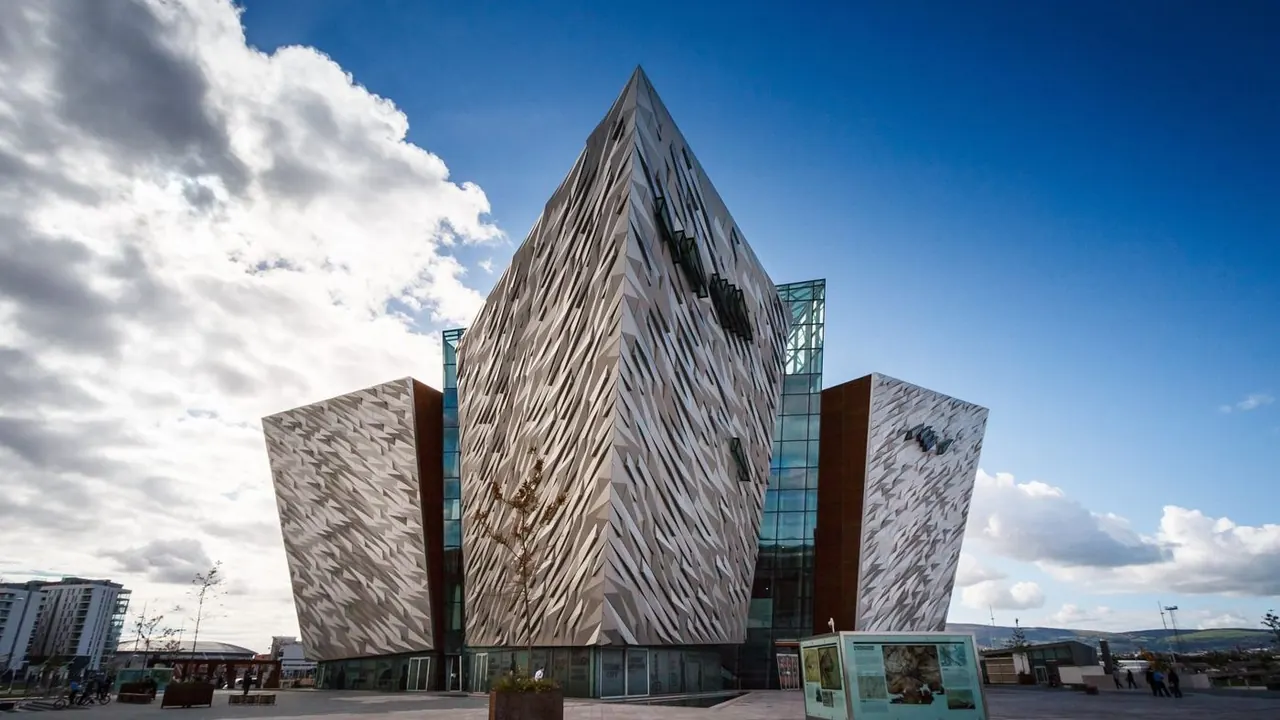
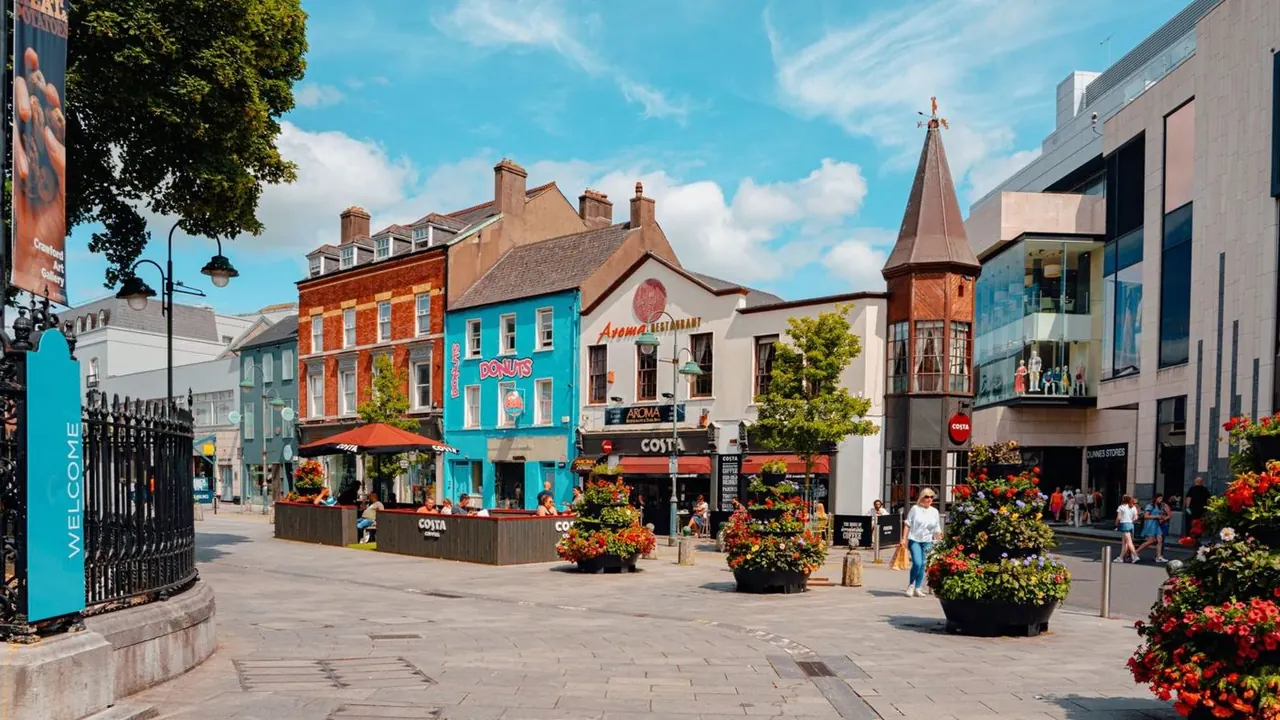
Photos: Belfast by Nico Kaiser, CC BY 2.0, cropped; Cork by Selim Karadayı, Pexels License.
Belfast or Cork?
Our verdict in twelve categories, each scored against the same fixed benchmark cities, and the climate month by month, so you can choose for your trip.
Choose Belfast for
- culture and sights
- prices
- nature and the outdoors
Belfast suits travellers who want more to do in and around the city. It has a modern history told through the shipyards, the murals and the museums, a fuller evening of pubs, music and theatre, and the Causeway Coast and the Mournes within easy reach. It is also the cheaper and drier of the two, which makes it the easier choice for a long weekend with children or a first visit to the island.
Choose Cork for
- food and drink
- beaches
- day trips
Cork rewards a slower trip built around food. The English Market and the West Cork produce behind it put eating at the centre of a visit, the sights take only a day or two, and short train rides to Cobh, Fota and Midleton make it a relaxed base for the south. Pick it if you want an easygoing Irish city and a way into Kinsale, Killarney and the west, and you don't mind paying more and packing for rain.
Scoreboard
Twelve categories on one fixed scale from 0 to 100. The shaded stretch is the gap between the two.
Your match
Pick a travel style or drag the sliders, and both match scores follow your weighting.
Wins on culture and sights and prices with your weighting.
Wins on food and drink and beaches with your weighting.
What matters to you?
Category by category
What the scores mean for a trip.
Beaches & swimming
Neither city is a place to plan a trip around the beach, and the sea off both is a brisk dip rather than a swim. The difference is in getting there. From Belfast a short train ride along the lough reaches the coves at Helen's Bay and Crawfordsburn, while Cork's harbour beaches at Myrtleville and Fountainstown, and the long strand at Inchydoney, are much easier with a car.
Cork's Atlantic water is a degree or two warmer in late summer. From Belfast, the bigger beach outing is the long drive to the north coast strands at Whiterocks and Portstewart.
Food & drink
Cork has the stronger claim at the table. It rests on the English Market, where West Cork farmhouse cheeses, smoked fish, spiced beef and drisheen are sold under one roof in the middle of town, and on the good modern Irish kitchens nearby that buy from the same stalls. Kinsale's seafood is half an hour away.
Belfast eats well on its own terms, with Strangford oysters, Mourne lamb and dry-aged beef in the Cathedral Quarter and on the Lisburn Road, and grazing at St George's Market at weekends. It is at its best in the pub, with carefully poured stout and a long whiskey shelf. Neither city offers much variety or late-night eating.
Culture & sights
Belfast gives a culture-minded visitor much more to do. Titanic Belfast on the old slipways, the Ulster Museum, Crumlin Road Gaol and the murals and peace walls of the Falls and Shankill tell a modern story of shipbuilding, linen and conflict that no other city on the island tells.
Cork's sights are gentler and quicker to see. There is St Fin Barre's Cathedral, the Shandon bells you can ring yourself, the Irish painting at the Crawford and the old city gaol. A day or two covers Cork, while Belfast rewards a longer stay.
Nightlife
Both cities go out to the pub rather than the club, but Belfast offers a fuller evening. The cobbled entries of the Cathedral Quarter pack many bars into a few streets, the Crown Liquor Saloon is worth a drink for its carved snugs alone, and weekend nights run livelier.
Cork's old wood-panelled bars off Patrick Street and Oliver Plunkett Street are just as friendly, often with music in a back room. The centre is busy mainly from Thursday to Saturday, though, and weeknights are quiet.
Nature & outdoors
Belfast has the more dramatic country around it. Cave Hill and the Black Mountain rise straight behind the city, the granite Mournes drop to the sea about an hour south, and the Causeway Coast, with its basalt columns and rope bridge, is one of the finest coastlines in these islands.
Cork's surroundings are softer: sailing and kayaking in the harbour, the cliff walk at Ballycotton, the Old Head of Kinsale and the quiet inlets of West Cork. Its big mountain scenery is in Kerry, a long day away.
Day trips
Both are good bases, and the difference is in the kind of day out. From Belfast the headline trip is Dublin, two hours by train. Closer in are the Norman castle at Carrickfergus and the cathedrals of Armagh, or you can drive up the Antrim coast to Dunluce and Bushmills or spend most of a day in walled Derry.
Cork's trips are shorter, and several go by rail: Cobh's emigrant harbour, plus Midleton's distillery and Fota House on the eastern line. Kinsale and Blarney are close by road, and Killarney, Cashel and Kilkenny make fuller days.
Good for families
Belfast has more to keep children busy, especially when it rains. W5 offers hands-on science, Titanic Belfast holds older children, the zoo sits on Cave Hill, and the Ulster Folk and Transport Museum has steam engines and trams.
Cork's best card is Fota Wildlife Park, a short train ride out, where animals roam with few barriers. The observatory at Blackrock Castle adds an indoor option, but beyond those two the list runs short.
Getting around
Both centres are small enough to walk, but Belfast's is flat while Cork's climbs steeply to Shandon on the north side. Belfast's Glider lines cross the city quickly from east to west, while Cork's buses can be slow in traffic. Cork's most useful link is the suburban train to Fota, Cobh and Midleton.
In both cities, a car makes the coast and the countryside far easier to reach.
Shopping & style
Neither city is worth the trip for shopping, and both centre on a high street of chains. Belfast has the glass-domed Victoria Square mall and Irish linen as its signature souvenir. Cork leans more on small independents off Princes Street and in the Huguenot Quarter, with knitwear, and farmhouse cheese from the English Market to take home.
Affordability
Belfast is the easier city on the wallet. Hotel prices are fairer than in the big British cities, and the Ulster Museum, the Botanic Gardens and City Hall tours cost nothing, though meals and drinks still carry UK prices.
Cork shares Ireland's high costs. Hotel rooms are dear for a city of its size, and restaurant meals and pub rounds add up quickly. The walkable centre and market lunches help, but a stay will cost noticeably more than in Belfast.
Live music & performing arts
Belfast has the broader stage. The Ulster Orchestra plays the Ulster Hall and the Waterfront Hall, the Grand Opera House takes touring opera and musicals, the Lyric stages Irish drama, and there are arts festivals in both spring and autumn, on top of trad sessions most nights.
In Cork the pub session is the main event, played round a table most nights, while the Opera House and the Everyman supply touring shows and drama. The jazz festival at the end of October is the city's big moment. Outside such weeks the formal programme is thin.
Wellness & relaxation
Neither city is built for unwinding, and both share a hardy crowd of cold-water swimmers who take year-round dips along the shore. Beyond that, a spa means a hotel spa in either place.
The difference lies in where you go to get away. From Belfast it is the country-house hotels outside town, or a day out on the coast and in the hills. Cork keeps it closer to home, with the resort spa on Fota Island in the harbour and the slower pace of a smaller city.
When should you go?
Pick your month. The climate figures are measured averages, not a forecast.
Belfast in July
Cork in July
Daytime high, °C
Rainfall in the month, mm
Where the figures come from
Cork's station stands 153 m above the city centre, so the centre is likely a little warmer than the figures say.
Temperature and rainfall are climate normals, averaged over the years shown. Belfast: 1991-2020 normals, Belfast / Aldergrove Airport (19.4 km from centre). Cork: 1991-2020 normals, Cork Airport (5.6 km from centre).
The two cities have almost the same temperatures. Both reach about 19°C in July and August and have cool, short days in winter. Neither is ever warm enough for a beach vacation, and in both May to September is the season for walking the streets and heading out to the coast. The real difference is rain. Belfast is the drier city, with as little as 55mm in late spring, while Cork's Atlantic weather brings up to 140mm in October and stays wet right through the winter.
Cork does get a little more sunshine, especially from April to July. Its sea also warms to 16°C in late summer, against 13°C off Belfast, though a swim is bracing in both. For the most settled weather, go to either city in May or June. Autumn and winter are the wettest stretch in both, and much more so in Cork.
Which traveller are you?
For a culture and arts trip, Belfast gives you more to chew on. Its story is recent and political, so a local guide brings the streets alive in a way few cities manage. The MAC mixes theatre with visual art, and small Cathedral Quarter stages carry local bands.
On a food and nightlife trip where eating matters most, Cork is the better pick. You can plan whole days around what the cheesemongers and fishmongers have in, and drink the city's own stout tradition alongside craft beer. Belfast still offers more bars to drift between late on.
On a tight budget, Belfast stretches the money further. Its costs follow UK rather than Irish levels, so everyday spending on a bus, a pub dinner or a taxi stays moderate. In Cork almost everything costs more, from a bed to a sandwich, and the cheapest days are spent on foot.
Before you go
| Measure | Belfast | Cork |
|---|---|---|
| Official language | English | English, Irish |
| Currency | Pound Sterling (GBP) | Euro (EUR) |
| Sockets | G230 V, 50 Hz | G230 V, 50 Hz |
| Driving side | Left | Left |
| Time zone | UTC, UTC+1 in summer | UTC, UTC+1 in summer |
| Emergency number | 112 or 999 | 112 |
| Elevation | 3 m | 0 m |
| Main airport | George Best Belfast City Airport (BHD)4 km from centre25 non-stop destinations | Cork International Airport (ORK)7 km from centre47 non-stop destinations |
| Public holidays this year | 10 days | 11 days |
By the numbers
| Measure | Belfast | Cork |
|---|---|---|
| City population | 345,006 | 222,333 |
| People per km² | 3,000 | 5,961 |
| Museums within 10 km | 8 | 5 |
| UNESCO World Heritage sites within 50 km | 1 | 0 |
| Swim season, months above 21 °C | None | None |
Where else could you go?
Every comparison below shares a destination with this one, so you can follow Belfast or Cork somewhere new.