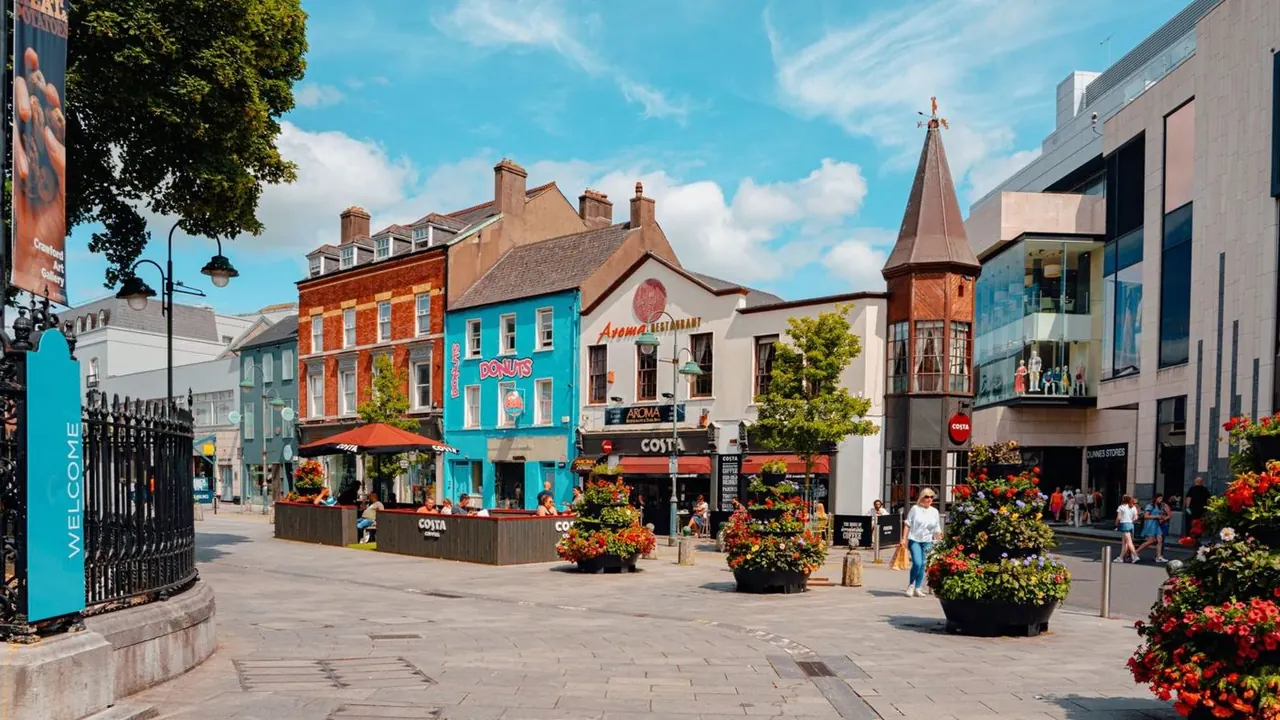
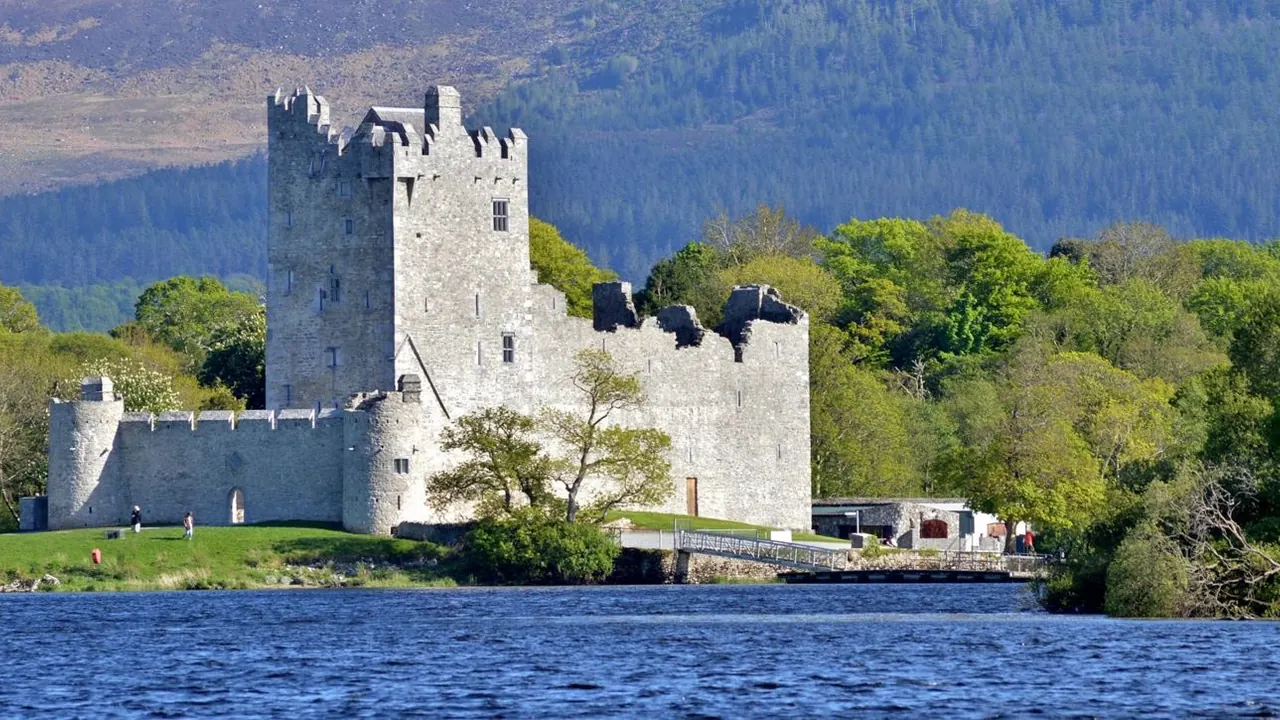
Photos: Cork by Selim Karadayı, Pexels License; Killarney by NicholasH, CC BY-SA 4.0, cropped.
Cork or Killarney?
Our verdict in twelve categories, each scored against the same fixed benchmark cities, and the climate month by month, so you can choose for your trip.
Choose Cork for
- food and drink
- shopping
- culture and sights
Cork is the better choice if you want a proper small city: the English Market and the kitchens around it, pub sessions most nights, the Crawford Art Gallery and the Opera House, and a suburban railway to Cobh, Fota and Midleton that means you don't need a car. It suits travellers who want to eat well, see a modest city with real character and take easy trips to the harbour towns.
Choose Killarney for
- nature and the outdoors
- wellness
- prices
For anyone whose trip is really about landscape, Killarney wins. The national park begins where the town ends, with lakes, oak woods, red deer and the Reeks behind them. Its lakeside hotels with spas make it a natural place for a slow stay of long walks and quiet evenings. The town itself has less to eat, see and buy, so go there for the outdoors rather than the streets.
Scoreboard
Twelve categories on one fixed scale from 0 to 100. The shaded stretch is the gap between the two.
Your match
Pick a travel style or drag the sliders, and both match scores follow your weighting.
Wins on food and drink and shopping with your weighting.
Wins on nature and the outdoors and wellness with your weighting.
What matters to you?
Category by category
What the scores mean for a trip.
Beaches & swimming
Neither is a place for beaches, and the Atlantic is cold off both. The difference is in the kind of beach. Cork's are small sandy coves on the outer edge of its harbour, such as Myrtleville and Fountainstown, with Inchydoney further west, and a local crowd swims there all year.
Killarney's nearest beaches are the wide, wild strands of Inch and Rossbeigh, about 40 minutes away by car. They suit long walks, kite-flying and beginner surf lessons more than a swim.
Food & drink
Cork is clearly the better place to eat. The English Market gives it a real food culture built on West Cork cheese, smoked fish and spiced beef. The modern Irish kitchens off Oliver Plunkett Street cook with the same produce, and Kinsale's seafood is half an hour away.
Killarney serves good Kerry lamb, chowder and brown bread, but many menus are aimed at coach parties and there is no market to browse. Visitors who care about food often drive to Kenmare or Dingle, while in Cork the best of it is in the centre.
Culture & sights
Cork has more to see, though neither place is grand. Its sights are spread across the city: St Fin Barre's Cathedral, the Shandon steeple with bells you can ring, Irish painting at the Crawford and the old prison at Cork City Gaol.
Killarney's best sights are out at the edge of the park rather than in the streets: Muckross House and its gardens, Ross Castle on Lough Leane and the ruined Muckross Abbey. Pugin's cathedral is the one real sight in town.
Nightlife
Both are pub towns, and Cork offers a bit more. A big student population keeps the centre busy from Thursday to Saturday, with a few late bars and small clubs beyond the wood-panelled pubs. Killarney's High Street pubs are packed on summer nights with visitors and weekend groups, but winter weeknights are quiet and there is nothing like a club scene.
Nature & outdoors
This is where Killarney is far ahead. The national park begins at the edge of town, with three lakes, ancient oak and yew woods and Ireland's only native red deer. The Gap of Dunloe and Carrauntoohil, the country's highest peak, are close by, so serious walks start from your door.
Cork's outdoors is gentler and coastal: sailing and kayaking in the harbour, and cliff walks at Ballycotton and the Old Head of Kinsale. West Cork's inlets lie beyond. Its big mountain scenery is the Kerry country around Killarney, a long day trip away.
Day trips
From Cork the best outings are a short train ride away, while from Killarney most of them mean getting in a car. Cobh, the Titanic's last port of call and the place generations of emigrants left from, is about 25 minutes by rail. Fota House and the Midleton distillery are on the same line, Kinsale and Blarney are close by road, and Youghal's walled old town is not much further.
Killarney's trips are mostly drives through scenery: the Ring of Kerry loop, Kenmare over Moll's Gap, and Dingle about an hour away. Its great prize is Skellig Michael, though boats only land there in summer and in calm seas.
Good for families
Fota Wildlife Park gives Cork the stronger family day out. It sits on an island in the harbour, the animals roam with few barriers, and it is a short train ride from the centre. Blackrock Castle's observatory, with its hands-on exhibits, helps when it rains, and Cobh's heritage centre brings the emigrant story to life for older children.
Killarney's family days are outdoors: flat lakeside paths for bikes and buggies, deer to spot, jaunting cars, boat trips and the animals at Muckross Traditional Farms. Many hotels have pools, but when the weather turns there are few other places to go indoors.
Getting around
Both centres are easy to walk, but Cork is easier to get around once you leave it. Its suburban rail line covers Cobh, Fota and Midleton, and buses go to Kinsale and Blarney.
In Killarney you can cycle to the park's sights on traffic-free paths, but further out it is car country. Local buses are sparse, so the Ring of Kerry and Dingle mean a hire car or a coach tour on narrow, winding roads.
Shopping & style
Cork offers more, though it is not a shopping city. Patrick Street has department stores, the Huguenot Quarter and the lanes off Princes Street have independent shops, and the English Market is good for food to take home. Killarney has an hour's worth of knitwear, tweed and souvenir shops. It is fine for an Aran sweater and little else.
Affordability
Both are expensive in the Irish way, and the costs differ in kind. In Cork, hotel rooms cost a lot for a city of its size, but you can walk the centre and the market keeps lunch affordable. Killarney has plenty of family-run B&Bs and a national park that costs nothing to enjoy. Against that, reaching anything further away usually means paying for a hire car or a tour.
Live music & performing arts
Cork has the broader stage. The Opera House and the Victorian Everyman put on touring opera, musicals and drama. The jazz festival at the end of October fills the city, and pub sessions run most nights of the year.
Killarney's live music is almost all traditional: sessions in the pubs in season, and dinner shows with set dancing. There is no theatre to speak of, and for staged folk performance you go to Siamsa Tíre in Tralee.
Wellness & relaxation
Killarney is the better choice for a restful stay. It has an unusual number of country and lakeside hotels with full spas and pools, many looking out over the lakes and mountains, and people go there for exactly that kind of slow break.
Cork has nothing to match it: a hotel spa or the resort on Fota Island. The nearest thing to a local ritual is cold-water swimming in the harbour coves.
When should you go?
Pick your month. The climate figures are measured averages, not a forecast.
Cork in July
Killarney in July
Daytime high, °C
Rainfall in the month, mm
Where the figures come from
Cork's station stands 153 m above the city centre, so the centre is likely a little warmer than the figures say.
Killarney's temperatures are measured 53 km from the centre, at Valentia Observatory.
Killarney has no rain gauge within 25 km of the centre, so its rainfall comes from a gridded climate dataset read at the city rather than from a gauge further away.
Temperature and rainfall are climate normals, averaged over the years shown. Cork: 1991-2020 normals, Cork Airport (5.6 km from centre). Killarney: 1991-2020 normals, Valentia Observatory (52.7 km from centre).
Both places are mild, damp and almost never hot, and summer is the only time anyone thinks about the sea. Cork is the drier and slightly sunnier of the two. May is its driest and sunniest month, and July and August reach about 19°C, which is comfortable for walking all day. In both places the sea is warmest in late summer at around 16°C, and still bracing. In Cork the heavy rain starts in October and lasts through the winter.
Killarney is wetter in every month. From October to January it is very wet, with up to 177mm of rain in November, and the short winter days get little sun. Its winters are a degree or so milder than Cork's, but that hardly matters for walking. For the national park, May, June and September give the best mix of daylight, warmth and drier spells. High summer is a little cloudier there than in Cork.
Which traveller are you?
On an outdoors trip, Killarney is the clear choice. You can reach the lakes, oak woods and Torc Waterfall on foot or by bike from town, and the Gap of Dunloe, Carrauntoohil and the Kerry Way give serious walking that Cork's gentler harbour country cannot match.
For a food and nightlife trip, Cork is the better base. The English Market, West Cork cheeses and a cluster of modern Irish kitchens give it far more range than Killarney's tourist menus. Its pubs, busy with students at weekends, have traditional sessions most nights.
On a relaxing and wellness trip, Killarney has the edge. Many of its lakeside and country hotels have full spas and pools with mountain views, and a slow routine of park walks and early dinners is easy to fall into. Cork offers little beyond a hotel spa.
Before you go
| Measure | Cork | Killarney |
|---|---|---|
| Official language | English, Irish | English, Irish |
| Currency | Euro (EUR) | Euro (EUR) |
| Sockets | G230 V, 50 Hz | G230 V, 50 Hz |
| Driving side | Left | Left |
| Time zone | UTC, UTC+1 in summer | UTC, UTC+1 in summer |
| Emergency number | 112 | 112 |
| Elevation | 0 m | 50 m |
| Main airport | Cork International Airport (ORK)7 km from centre47 non-stop destinations | Kerry Airport (KIR)14 km from centre10 non-stop destinations |
| Public holidays this year | 11 days | 11 days |
By the numbers
| Measure | Cork | Killarney |
|---|---|---|
| City population | 222,333 | 14,412 |
| People per km² | 5,961 | - |
| Museums within 10 km | 5 | 1 |
| UNESCO World Heritage sites within 50 km | 0 | 0 |
| Swim season, months above 21 °C | None | None |
Where else could you go?
Every comparison below shares a destination with this one, so you can follow Cork or Killarney somewhere new.