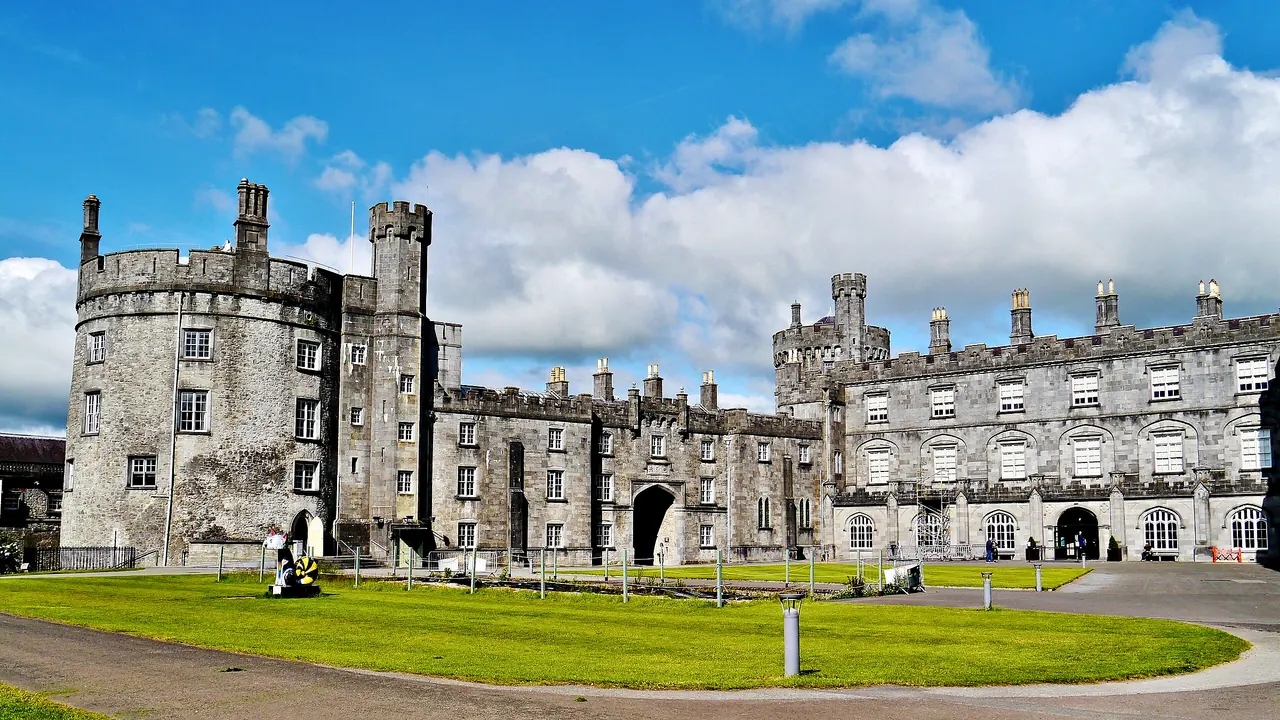
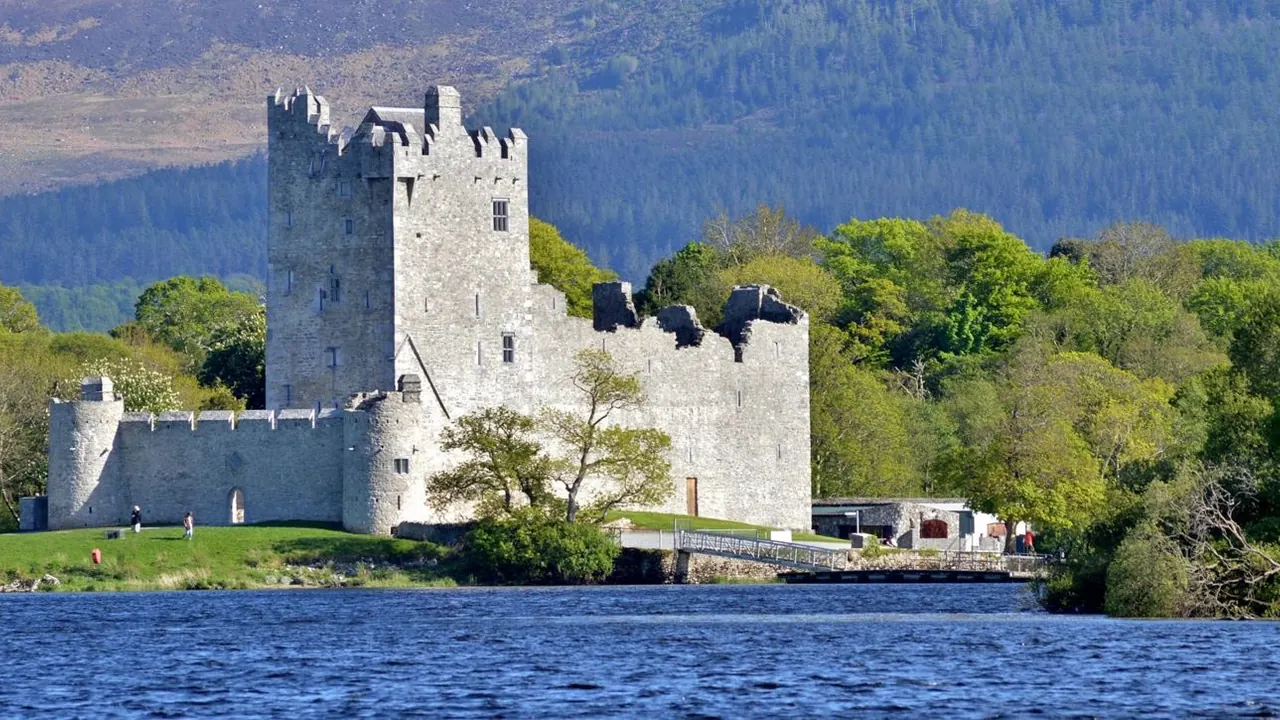
Photos: Kilkenny by Zairon, CC BY 4.0, cropped; Killarney by NicholasH, CC BY-SA 4.0, cropped.
Kilkenny or Killarney?
Our verdict in twelve categories, each scored against the same fixed benchmark cities, and the climate month by month, so you can choose for your trip.
Choose Kilkenny for
- culture and sights
- shopping
- getting around
Kilkenny suits travellers who want an Irish town to explore on foot. The Medieval Mile links a Norman castle, a great medieval cathedral with its round tower, and merchants' houses along narrow slips, all within an easy stroll of the station. Add the craft studios, the pubs with open fires and the August arts festival, and it works well for a short, history-led break, especially without a car.
Choose Killarney for
- nature and the outdoors
- wellness
- beaches
Killarney is the choice when the landscape is the point. Lakes, oak woods, red deer and Ireland's highest mountains begin at the edge of town, and the Ring of Kerry, Dingle and the Skelligs lie beyond. It also has more lakeside hotels with spas, so walkers, cyclists and anyone after a slow, restful stay in big scenery will get more from it than from Kilkenny's streets.
Scoreboard
Twelve categories on one fixed scale from 0 to 100. The shaded stretch is the gap between the two.
Your match
Pick a travel style or drag the sliders, and both match scores follow your weighting.
Too close to call, 2 points apart
Wins on culture and sights and shopping with your weighting.
Wins on nature and the outdoors and wellness with your weighting.
What matters to you?
Category by category
What the scores mean for a trip.
Beaches & swimming
Neither is a beach destination, but Killarney comes a little closer. Inch and Rossbeigh are wide, wild Atlantic strands about 40 minutes away, good for long walks and beginner surf lessons.
From Kilkenny, the nearest sand at Tramore and the Copper Coast is about an hour's drive, and visitors mostly treat it as a scenic outing. Swimming off either coast is cold even in late summer.
Food & drink
The two eat at a similar level, but the produce differs. Kilkenny draws on its dairy farms and cheesemakers, and its more ambitious cooking is in country-house kitchens. It also has a real brewing heritage, centred on the old St Francis Abbey brewery.
Killarney has more restaurants for its size and leans on Kerry lamb and Atlantic seafood from Dingle and Kenmare, but many menus are pitched at coach parties. Keen diners there often drive to Kenmare or Dingle instead.
Culture & sights
Kilkenny is clearly richer here. Its medieval street plan survives almost intact, and the castle, St Canice's Cathedral with its climbable round tower, Rothe House, the Black Abbey and the Tholsel all lie along one walkable mile.
Killarney's heritage sits out in the national park rather than in town: Muckross House and its gardens, Ross Castle on Lough Leane and the ruined Muckross Abbey. In the centre, Pugin's cathedral is the only real sight.
Nightlife
A night out is much the same in both: pubs, pints and conversation, a few late bars, and no cocktail or club scene to speak of. The difference is in the mood. Kilkenny's old bars on High Street and John Street have snugs and open fires, and weekends bring wedding and birthday groups. Killarney is busiest in summer, when the pubs on Plunkett Street fill with visitors most nights, but its winter weeknights are quiet.
Nature & outdoors
This is where the two differ most. Kilkenny's countryside is gentle: green farmland, the wooded Nore Valley Way down to Inistioge, and modest hikes on Brandon Hill and the Blackstairs. Real mountains mean an hour's drive to the Comeraghs, or longer to Wicklow.
Killarney is far ahead. Lakes, ancient oak and yew woods, Torc Waterfall and red deer sit on flat paths from the edge of town, with Carrauntoohil, Ireland's highest summit, and the Gap of Dunloe beyond. The Kerry Way and the cliffs of Dingle and Beara are within an hour or so.
Day trips
Both make good bases, but for different kinds of outing. From Kilkenny the theme is monastic and Norman heritage: the Rock of Cashel, Jerpoint Abbey, Kells Priory and Glendalough, with Waterford and Dublin reachable by train.
From Killarney the outings are mostly drives through landscape: the Ring of Kerry, Dingle, Kenmare over Moll's Gap and, weather permitting, a boat to Skellig Michael. Cork is the city trip on that side.
Good for families
Families will find both equally easy, safe and relaxed, and neither has a zoo or theme park. In Kilkenny the castle lawns are close at hand, and the tree-top courses and zip lines near Castlecomer and Dunmore Cave make the best outings. In Killarney the park is the playground, with bike rides, jaunting cars, lake boats and deer, plus Muckross Traditional Farms. Rainy days are harder to fill there, though many hotels have pools.
Getting around
Kilkenny is the easier of the two without a car. Everything worth seeing lies on or just off its 1km Medieval Mile, a short walk from the station on the Dublin to Waterford line.
Killarney's centre is also compact, and bikes or jaunting cars reach Muckross House on traffic-free paths. Its main attractions, though, are spread across the Ring of Kerry, Dingle and the Gap of Dunloe, along narrow roads busy with coaches. In both, the countryside needs a hire car or a tour.
Shopping & style
Kilkenny has a real craft identity. The old castle stables gave rise to a national design movement and still sell regional pottery, glass and jewellery, and High Street adds independent bookshops and delis.
Killarney's shops are mostly knitwear, tweed and souvenirs aimed at passing visitors, which is fine for an Aran sweater but little more.
Affordability
Both cost what Ireland costs, and neither is cheap. Killarney has a slight edge thanks to its large supply of family-run B&Bs and a national park that is free to walk or cycle. However, its hotels charge heavily in July and August. Kilkenny's main sights can also be seen on foot for little, but central rooms rise on weekends and festival dates. In both towns, a hire car is the hidden extra.
Live music & performing arts
In both towns the music is mostly traditional sessions in the pubs, so an evening of fiddles and bodhráns is easy to find in either. Kilkenny has more beyond that, with a small year-round theatre and a festival calendar led by the August arts festival, which puts classical concerts in St Canice's Cathedral. Killarney offers dinner shows with set dancing and touring acts at a hotel arena, and the National Folk Theatre is in nearby Tralee.
Wellness & relaxation
Killarney is the better place to unwind. It has an unusual number of lakeside and country hotels with full spas, many looking out over the lakes and mountains, and walks in the park make a natural partner to a spa afternoon.
Kilkenny's spas are limited to a few country-house estates outside town. Its centre turns loud on weekend nights, so a restful stay there means staying out in the Nore villages.
When should you go?
Pick your month. The climate figures are measured averages, not a forecast.
Kilkenny in July
Killarney in July
Daytime high, °C
Rainfall in the month, mm
Where the figures come from
Kilkenny has no rain gauge within 25 km of the centre, so its rainfall comes from a gridded climate dataset read at the city rather than from a gauge further away.
Kilkenny's sunshine is measured 77 km from the centre, at Rosslare.
Killarney's temperatures are measured 53 km from the centre, at Valentia Observatory.
Killarney has no rain gauge within 25 km of the centre, so its rainfall comes from a gridded climate dataset read at the city rather than from a gauge further away.
Temperature and rainfall are climate normals, averaged over the years shown. Kilkenny: 1991-2020 normals, Kilkenny (2.1 km from centre). Killarney: 1991-2020 normals, Valentia Observatory (52.7 km from centre).
Neither town has beach weather in the usual sense. Summer highs peak at around 20°C in Kilkenny and 18°C in Killarney, and the sea off the nearest coasts only reaches about 16°C in August, so a swim is for the hardy. In return, both are comfortable for walking all summer, and it never gets too hot to be out. Kilkenny is the drier and sunnier of the two. Late spring is especially good there, with May bringing long sunny spells and only about 59mm of rain.
Killarney is much wetter all year, and the difference is greatest in winter, when December brings around 187mm and days in the mountains can be grey and short. May, June and September are the best times for the park and the hills there. From October to February Kilkenny's compact streets, pubs and indoor sights make it the easier of the two to enjoy.
Which traveller are you?
On an outdoors trip, Kilkenny has gentle walks along the Nore and modest hills, and anything wilder means a drive. Killarney wins easily: the national park begins at the edge of town, with lakeside cycling, the Gap of Dunloe and the Reeks to climb.
For a culture and arts trip, choose Kilkenny. Its castle, St Canice's Cathedral and Rothe House share one medieval mile, and the August arts festival fills the cathedral with concerts. Killarney's Muckross House, Ross Castle and Muckross Abbey lie scattered through the park.
On a relaxing and wellness trip, Kilkenny's spas are few and its centre gets noisy on weekend nights. Killarney has the advantage, with many lakeside and country hotels offering spas and pools with mountain views, and quiet park walks to fill the day.
Before you go
| Measure | Kilkenny | Killarney |
|---|---|---|
| Official language | English, Irish | English, Irish |
| Currency | Euro (EUR) | Euro (EUR) |
| Sockets | G230 V, 50 Hz | G230 V, 50 Hz |
| Driving side | Left | Left |
| Time zone | UTC, UTC+1 in summer | UTC, UTC+1 in summer |
| Emergency number | 112 | 112 |
| Elevation | 60 m | 50 m |
| Main airport | Dublin Airport (DUB)109 km from centre200 non-stop destinations | Kerry Airport (KIR)14 km from centre10 non-stop destinations |
| Public holidays this year | 11 days | 11 days |
By the numbers
| Measure | Kilkenny | Killarney |
|---|---|---|
| City population | 22,179 | 14,412 |
| People per km² | 828 | - |
| Museums within 10 km | 4 | 1 |
| UNESCO World Heritage sites within 50 km | 0 | 0 |
| Swim season, months above 21 °C | None | None |
Where else could you go?
Every comparison below shares a destination with this one, so you can follow Kilkenny or Killarney somewhere new.