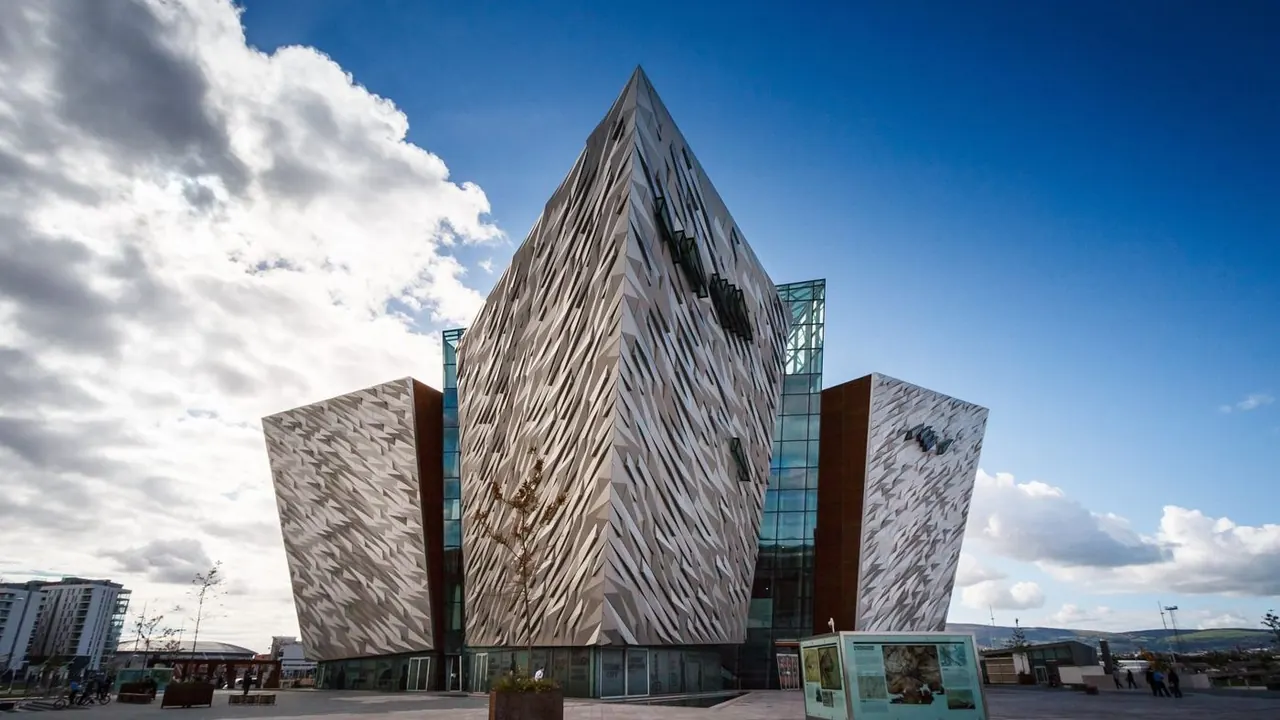
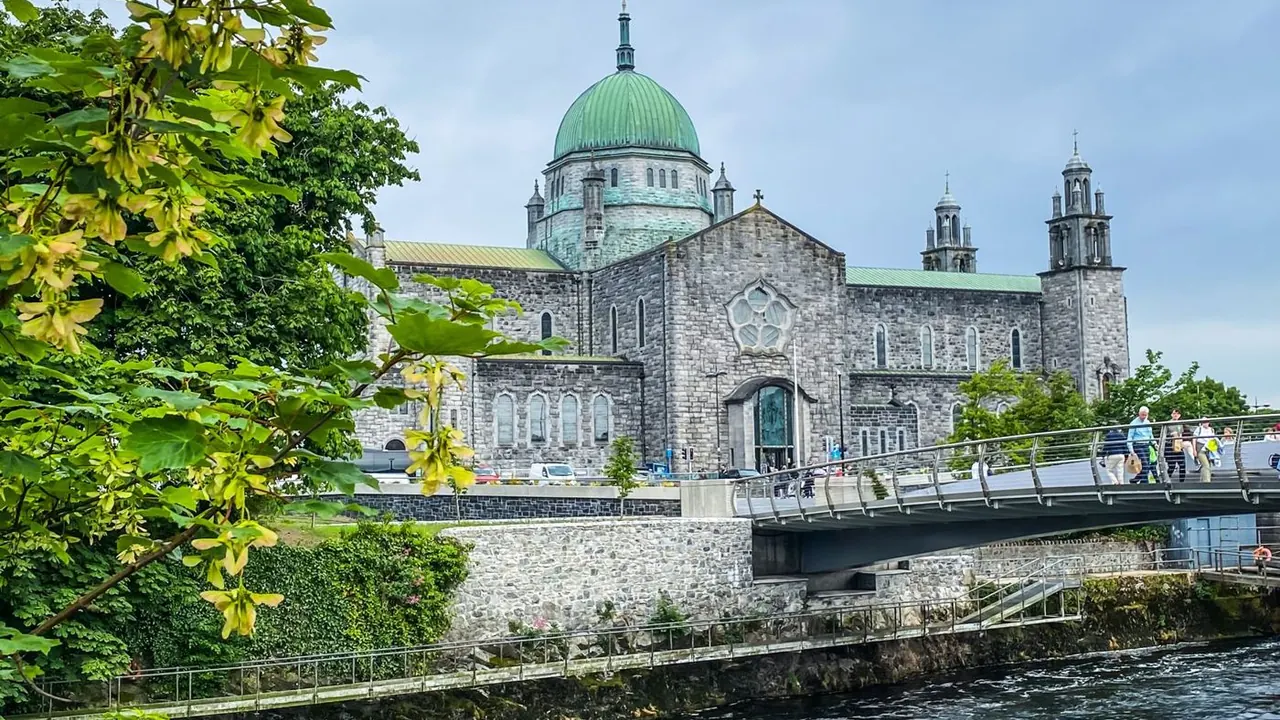
Photos: Belfast by Nico Kaiser, CC BY 2.0, cropped; Galway by Dieglop, CC BY-SA 4.0, cropped.
Belfast or Galway?
Our verdict in twelve categories, each scored against the same fixed benchmark cities, and the climate month by month, so you can choose for your trip.
Choose Belfast for
- culture and sights
- prices
- families
Belfast suits the traveller who wants a proper city with a story to tell. The shipyard heritage around Titanic Belfast, the Ulster Museum and the murals of the Falls and Shankill give it far more to see than Galway. It is also easier on the budget and better for children, and day trips reach Dublin, Derry and the Causeway Coast. Choose it for a varied week with the weather in mind.
Choose Galway for
- beaches
- nature and the outdoors
- wellness
Galway is the pick for anyone who wants a small, walkable town with the pub and the session at its centre, and the wild west on the doorstep. Connemara, the Burren and the Aran Islands are the reason to come, and Salthill gives you a sea walk and a cold swim without leaving town. It costs more and has fewer sights, but the evenings and the landscape make up for it.
Scoreboard
Twelve categories on one fixed scale from 0 to 100. The shaded stretch is the gap between the two.
Your match
Pick a travel style or drag the sliders, and both match scores follow your weighting.
Wins on culture and sights and prices with your weighting.
Wins on beaches and nature and the outdoors with your weighting.
What matters to you?
Category by category
What the scores mean for a trip.
Beaches & swimming
Neither is a beach destination, but Galway handles the sea better. Salthill's promenade is a short walk from the centre, and the Blackrock diving tower gives the city a real year-round swimming culture.
In Belfast the lough shore is for walking, and the nearest sand at Helen's Bay and Crawfordsburn means a train ride. In both places the water is cold, so expect a quick dip rather than a day on the sand.
Food & drink
These two are close, but the menus point different ways. Belfast cooks from the land as much as the water: the Ulster fry, dry-aged beef and Mourne lamb, with St George's Market for weekend grazing and a deep shelf of Irish whiskey.
Galway leans to the sea, with Galway Bay oysters, chowder and smoked salmon, the Saturday market by St Nicholas' and an oyster festival in September. Outside its small fine-dining tier, though, it is mostly pub food and cafés of uneven quality.
Culture & sights
Belfast has more to see, though it is built around a handful of strong sights rather than a historic core. Titanic Belfast beside the Harland and Wolff cranes, the domed City Hall, the Ulster Museum and Crumlin Road Gaol fill a couple of good days. The murals and peace walls of the Falls and Shankill, seen with a local guide, are what many visitors remember most.
Galway's heritage is a walk rather than a list of visits: the Spanish Arch, Lynch's Castle and St Nicholas' Collegiate Church, with the city museum and the cathedral across the river. It is charming, but anyone after serious museums is better off in Belfast.
Nightlife
Both are pub cities first, with little club life, but the mood is different. Belfast's evenings centre on the cobbled entries of the Cathedral Quarter and Victorian rooms such as the Crown Liquor Saloon, with a friendly weekend crowd and fairly early closing.
Galway has two universities in a small town, so the centre is loud even midweek in term. It reaches its peak during race week and the arts festival, and stag and hen groups are common at weekends.
Nature & outdoors
Both are gateways to superb country. Belfast has hills inside the city at Cave Hill and Divis, the Lagan towpath, and the Mournes and the Causeway Coast each about an hour away.
Galway edges it on wildness. Connemara's bogs, lakes and quartzite peaks, the bare Burren and the Cliffs of Moher feel more remote, and Lough Corrib and the Aran Islands add water and island cycling.
Day trips
Belfast offers the wider range of outings. Dublin is about two hours away by train, Derry's walls take most of a day, and Carrickfergus, Armagh, Downpatrick and the Antrim coast road add castles, cathedrals and seaside towns.
Galway's outings are mostly villages and single sites: the Aran Islands and Dún Aonghasa, Kylemore Abbey, Cong and Clonmacnoise. They are rewarding, but most need a coach tour or a car.
Good for families
Belfast is the easier city with children. W5's hands-on science suits younger ones and Titanic Belfast holds older children, and both are indoors when it rains. On drier days the zoo on Cave Hill and the steam engines and farmhouses of the Ulster Folk and Transport Museum round out the week.
Galway is welcoming but has little built for children beyond the aquarium, playgrounds and summer funfair at Salthill. Most family outings there mean driving out to farm parks, lake boats or Connemara ponies.
Getting around
Both have compact centres where walking does most of the work, though the systems differ. Belfast adds Glider rapid buses and suburban trains along the lough. Galway's core from Eyre Square to the Spanish Arch is mostly pedestrian, and the prom to Salthill is an easy walk. In both cases the countryside really needs a car or a tour, and in Galway that means narrow, winding western roads.
Shopping & style
Belfast has more of it, with the chains around Donegall Place, the glass-domed Victoria Square and Irish linen as the souvenir worth taking home.
Galway is smaller but more independent, with bookshops, music shops and Irish design along one pedestrian street. Claddagh rings and Aran knitwear are its local specialities.
Affordability
Belfast is the better deal. Hotel rooms come at fairer prices than in most UK cities, and several of its main sights cost nothing, though restaurants and drinks still carry UK prices.
Galway is expensive for its size. Rooms are scarce and climb steeply at weekends, in summer and during festival and race weeks. Its savings are the free streets, churches and pub music.
Live music & performing arts
Belfast has the orchestra and the opera house, and Galway has the session and Druid. In Belfast the formal stage is the stronger side. The Ulster Orchestra plays the Ulster Hall, the Grand Opera House takes touring musicals and opera, and the Lyric keeps up Irish drama.
Galway is the better place for traditional music, with fiddles and bodhráns in Latin Quarter pubs most nights and buskers on Shop Street by day. It is also a serious theatre town, with Druid and the Irish-language An Taibhdhearc, though classical music is rare.
Wellness & relaxation
Neither city has a spa culture, so relaxing in either means hotel spas, cold-water swims and long walks. Galway has the stronger local rituals, with year-round regulars at Blackrock and traditional seaweed baths a drive away on the west coast. Belfast's quiet comes from the Botanic Gardens, the Lagan towpath and a pub snug, and its centre is calmer at night than Galway's.
When should you go?
Pick your month. The climate figures are measured averages, not a forecast.
Belfast in July
Galway in July
Daytime high, °C
Rainfall in the month, mm
Where the figures come from
Galway's temperatures are measured 64 km from the centre, at Shannon Airport.
Galway has no rain gauge within 25 km of the centre, so its rainfall comes from a gridded climate dataset read at the city rather than from a gauge further away.
Temperature and rainfall are climate normals, averaged over the years shown. Belfast: 1991-2020 normals, Belfast / Aldergrove Airport (19.4 km from centre). Galway: 1991-2020 normals, Shannon Airport (64.2 km from centre).
Neither city ever gets warm enough for a beach vacation. Belfast peaks at about 19°C in July and August, and Galway runs a degree or so warmer. That suits long walks in town and days in the hills, and it is never too hot. May is the sunniest month in both and one of the driest, which makes late spring a strong time to go. Belfast's winters are a couple of degrees colder, down to about 7°C. Galway's are milder but much wetter, with rain building through autumn to about 120mm in December, while Belfast's wettest months are noticeably lighter.
The sea differs only in the warmer half of the year. In midwinter and again in October and November the water off both cities is much the same. From spring, though, Galway Bay warms faster and reaches about 16°C in July and August, while Belfast's water peaks later and lower, at about 14°C in September and October. Either way a swim is a bracing dip. Late spring to early autumn is the time for both, and winter visits are for pubs, museums and waterproofs.
Which traveller are you?
For a culture and arts trip, Belfast is the clear choice. Titanic Belfast on the old slipways, the Ulster Museum, Crumlin Road Gaol and a guided walk past the murals make a solid programme. Galway's medieval fragments fill an afternoon.
On a trip on a tight budget, Belfast stretches the money further. Hotel rooms are easier to find at a fair price, and the Ulster Museum, Botanic Gardens and City Hall cost nothing. Galway's scarce rooms and high Irish prices make it the dearer stay.
On an outdoors trip, both work well, and the choice comes down to terrain. Belfast gives you hills above the city, the granite Mournes and the basalt cliffs of the Causeway Coast. Galway gives you emptier country: Connemara's bog and lakes, the bare Burren and cycling on the Aran Islands.
Before you go
| Measure | Belfast | Galway |
|---|---|---|
| Official language | English | English, Irish |
| Currency | Pound Sterling (GBP) | Euro (EUR) |
| Sockets | G230 V, 50 Hz | G230 V, 50 Hz |
| Driving side | Left | Left |
| Time zone | UTC, UTC+1 in summer | UTC, UTC+1 in summer |
| Emergency number | 112 or 999 | 112 |
| Elevation | 3 m | 25 m |
| Main airport | George Best Belfast City Airport (BHD)4 km from centre25 non-stop destinations | Shannon Airport (SNN)64 km from centre39 non-stop destinations |
| Public holidays this year | 10 days | 11 days |
By the numbers
| Measure | Belfast | Galway |
|---|---|---|
| City population | 345,006 | 83,456 |
| People per km² | 3,000 | 1,563 |
| Museums within 10 km | 8 | 4 |
| UNESCO World Heritage sites within 50 km | 1 | 0 |
| Swim season, months above 21 °C | None | None |
Where else could you go?
Every comparison below shares a destination with this one, so you can follow Belfast or Galway somewhere new.