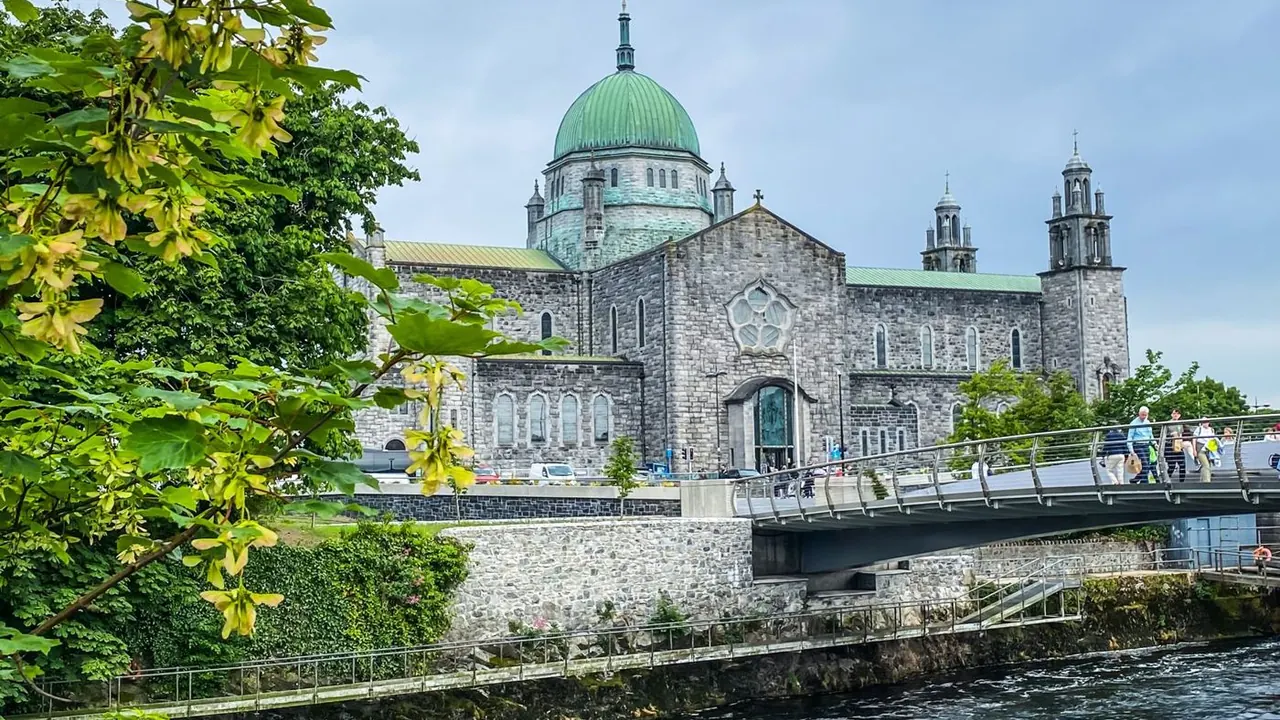
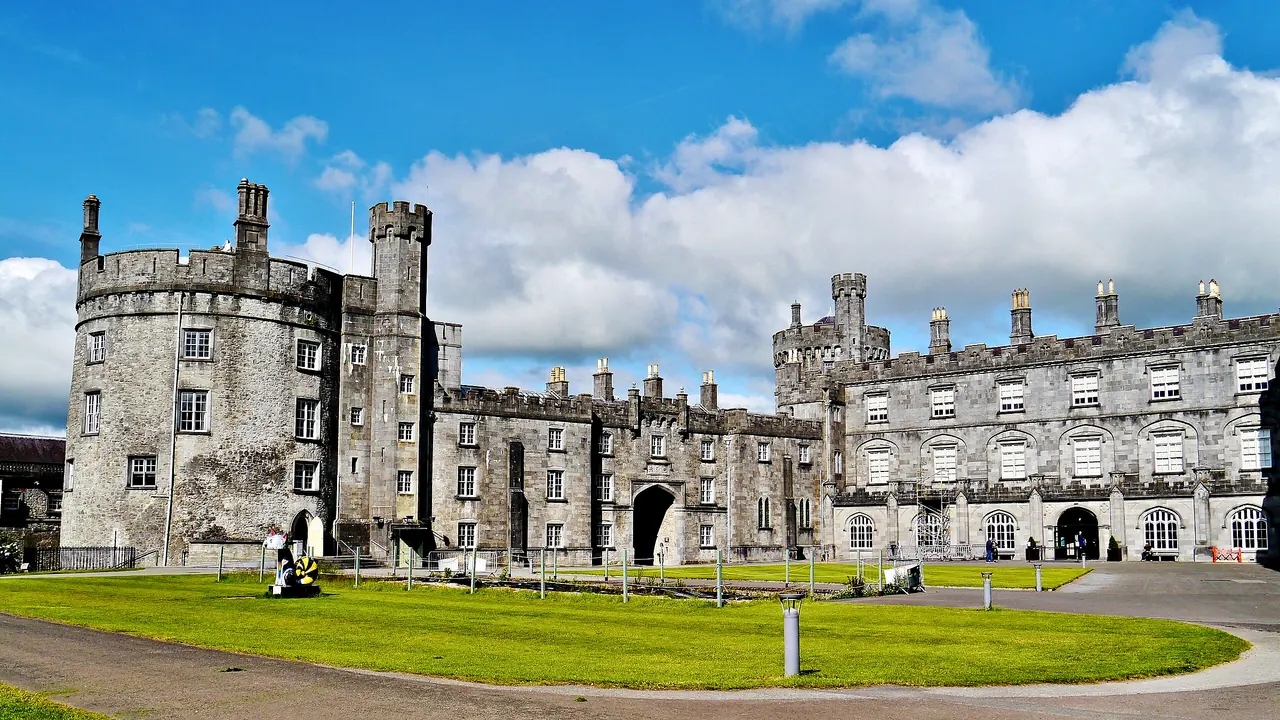
Photos: Galway by Dieglop, CC BY-SA 4.0, cropped; Kilkenny by Zairon, CC BY 4.0, cropped.
Galway or Kilkenny?
Our verdict in twelve categories, each scored against the same fixed benchmark cities, and the climate month by month, so you can choose for your trip.
Choose Galway for
- nature and the outdoors
- beaches
- nightlife
Galway suits travellers who want the Atlantic edge of Ireland. It is a pub-and-music town that two universities keep loud, with oysters from the bay and Connemara, the Burren and the Aran Islands on its doorstep. Pick it if your evenings matter as much as your days and you don't mind getting wet on a long walk.
Choose Kilkenny for
- culture and sights
- day trips
- prices
For a slower, more complete taste of medieval Ireland, Kilkenny is the better choice. The castle, St Canice's Cathedral and the Medieval Mile pack more history into a short stroll than Galway's scattered fragments do, and the town makes a handy base for Cashel, Jerpoint and Waterford. Its countryside is gentler, its weeknights are quieter and its weather is a little kinder.
Scoreboard
Twelve categories on one fixed scale from 0 to 100. The shaded stretch is the gap between the two.
Your match
Pick a travel style or drag the sliders, and both match scores follow your weighting.
Wins on nature and the outdoors and beaches with your weighting.
Wins on culture and sights and day trips with your weighting.
What matters to you?
Category by category
What the scores mean for a trip.
Beaches & swimming
Neither is a beach destination, but Galway at least has the sea at its door. Salthill's prom, the Blackrock diving tower and the sheltered cove at Silver Strand are all a walk from the centre, and the year-round swimmers make a cold dip feel like a local ritual.
Kilkenny is inland, so the nearest sand at Tramore or along the Copper Coast is an hour's drive away, and swimming in the Nore is something locals do rather than something set up for visitors. If a sea swim is on your list at all, Galway is the only one of the two where it fits into an ordinary day.
Food & drink
Galway eats from the Atlantic: Galway Bay oysters, mussels, smoked salmon and chowder. The Saturday market by St Nicholas' and a small, ambitious fine-dining scene add to that, and the Oyster Festival is in September.
Kilkenny's strengths are local dairy, lamb and cheese, the cooking in country-house kitchens just outside town, and a long brewing story told at the old brewery site by St Francis Abbey. Both offer little beyond Irish and modern European cooking, but a food-minded visitor finds more to seek out in Galway, especially if seafood is the point.
Culture & sights
Kilkenny wins on how much of its past survives in one place. Its medieval street plan is almost intact, and a single walk down the Medieval Mile takes in the castle above the Nore, Rothe House, the Black Abbey's stained glass and St Canice's Cathedral, whose round tower you can climb.
Galway's medieval town of the Tribes survives only in pieces: the Spanish Arch, Lynch's Castle and St Nicholas'. Its charm lies more in the Latin Quarter lanes and the riverside walk past the Claddagh. Neither has major museums, but Kilkenny gives a heritage-minded visitor far more to look at.
Nightlife
Nights out in both towns centre on the pub, but Galway does it on a bigger and younger scale. Its two universities fill the centre even midweek in term time, and race week at Ballybrit and the arts festival keep the town packed and loud for days.
Kilkenny's old bars on High Street and Parliament Street are atmospheric. Still, the town fills up mainly on Friday and Saturday, often with wedding and birthday groups, and winds down early midweek and out of season. Neither has real clubbing or many cocktail bars.
Nature & outdoors
Nature is where Galway pulls furthest ahead. Within about an hour you have the bogs, lakes and Twelve Bens of Connemara, the bare limestone of the Burren, the Cliffs of Moher and the stone-walled Aran Islands, and Lough Corrib runs north from the city for kayaking and boat trips.
Kilkenny's countryside is softer. There are riverside paths along the Nore, the wooded Nore Valley Way through Inistioge, and modest climbs on Brandon Hill and the Blackstairs. It is good walking and cycling country, but for anything wild you have to drive to the Comeraghs or Wicklow.
Day trips
As bases for day trips the two are about even, but the trips are quite different. From Galway you head out for landscape and island life: the ferry to Inis Mór and the cliff fort of Dún Aonghasa, Kylemore Abbey and Clifden in Connemara, and Cong between its two loughs.
Kilkenny's outings are about stone and history: the Rock of Cashel, Jerpoint's carved cloister, Kells Priory in its fields and Waterford's Viking quarter, with Dublin under two hours away by train. From either town, most places beyond the few that trains reach need a car or a tour.
Good for families
Both are small, safe and easy-going with children, and neither has much built for them. Galway's advantage is the seafront at Salthill, with the national aquarium, playgrounds and a summer funfair. Kilkenny has the castle lawns and playground, plus tree-top courses and zip lines in the forest park near Castlecomer.
Galway's wetter weather leaves families short of indoor options, and in both towns the centre on a busy weekend night is best avoided with young children.
Getting around
Both centres are made for walking. Galway's runs from Eyre Square down Shop Street to the Spanish Arch, with city buses and a half-hour walk along the prom to Salthill. Kilkenny's is the kilometre of the Medieval Mile, and the station is a short walk away.
The difference lies in the surrounding region. Galway's trains go east to Dublin and south to Limerick, but Connemara and the Aran ferry mean coaches or a car on narrow, winding roads. Kilkenny's abbeys and river villages are closer together, but the rural buses that serve them are sparse.
Shopping & style
Galway has a little more for browsing. One pedestrian street runs from Eyre Square to Quay Street with good bookshops, music shops and Irish design, and you can buy the Claddagh ring in the city where it began, with Aran knitwear on sale all over the centre.
Kilkenny's speciality is craft. The castle's former stables were the starting point of a national design movement in the 1960s and still sell regional pottery, glass and woollens, and potters, weavers and silversmiths have studios around the county. Neither town has luxury or serious fashion shopping.
Affordability
Both are expensive, as you'd expect in one of Europe's pricier countries, and meals and pints cost the same Irish rates in each. Kilkenny is slightly easier on rooms, with reasonably priced guesthouses on the edge of town midweek. Galway has few hotel rooms for the number of visitors, and they are booked months ahead for race week and the arts festival.
In both towns the centre costs nothing to walk around. The real extra expense is getting out into the countryside by hire car or tour.
Live music & performing arts
Galway is the stronger town for live performance on an ordinary night. Traditional sessions run across the Latin Quarter most nights of the year and buskers fill Shop Street. It also has serious theatre: Druid, founded here in 1975, the Town Hall Theatre and An Taibhdhearc, the Irish-language national theatre.
Kilkenny has trad in a few pubs and a small theatre, so its appeal is its festivals. The August arts festival brings classical concerts to St Canice's, there is a comedy festival in early summer, and a roots music weekend in May. If your visit falls in one of those weeks, the gap narrows.
Wellness & relaxation
Neither town has a bathing tradition, and in both a spa usually means a country-house hotel. Galway's way to unwind is bracing and outdoors: a cold swim off Blackrock or a windy walk along the prom, with seaweed baths on the coast within a drive.
Kilkenny's calm is gentler, with quiet weekday mornings in the castle park or by the Nore and the river villages beyond. Both centres get noisy at night, so if rest is the point, stay out in Connemara or the Kilkenny countryside.
When should you go?
Pick your month. The climate figures are measured averages, not a forecast.
Galway in July
Kilkenny in July
Daytime high, °C
Rainfall in the month, mm
Where the figures come from
Galway's temperatures are measured 64 km from the centre, at Shannon Airport.
Galway has no rain gauge within 25 km of the centre, so its rainfall comes from a gridded climate dataset read at the city rather than from a gauge further away.
Kilkenny has no rain gauge within 25 km of the centre, so its rainfall comes from a gridded climate dataset read at the city rather than from a gauge further away.
Kilkenny's sunshine is measured 77 km from the centre, at Rosslare.
Temperature and rainfall are climate normals, averaged over the years shown. Galway: 1991-2020 normals, Shannon Airport (64.2 km from centre). Kilkenny: 1991-2020 normals, Kilkenny (2.1 km from centre).
The two towns warm up at the same pace. Both reach about 20°C in July and August, which is pleasant for walking but never beach weather. The real difference is rain and sun. Galway is wetter in every month, and from October it gets properly soggy, with 134mm in November against 103mm in Kilkenny. Kilkenny is also noticeably sunnier, at close to 200 hours a month from May to August, while Galway's brightest stretch is April to June and it turns greyer as late summer rain comes in.
For either town, May to September is the best window. Late spring and early summer favour Kilkenny's drier days, and Galway is at its best in May and June. The Atlantic off Galway, and the southeast coast an hour from Kilkenny, peak at about 16°C, so a swim in either place is a brisk one. Winter is cold and dark in both, and in Galway it is very wet as well.
Which traveller are you?
On an outdoors trip, Galway is the clear pick. Connemara's bogs and the Twelve Bens, the bare limestone of the Burren, Lough Corrib and the Aran Islands are all within about an hour. Kilkenny offers gentle river valleys and modest hills.
For a culture and arts trip built around history, Kilkenny suits better. Its medieval street plan survives almost whole, from the castle to St Canice's, and Jerpoint and Cashel are close by. Galway answers with stronger theatre and nightly trad sessions rather than heritage.
On a food and nightlife trip, Galway gives you more. You get Galway Bay oysters and the Saturday market by day, then a student town that fills its pubs even midweek, with trad music most nights. Kilkenny's old bars are lovely, but the town goes quiet early outside weekends.
Before you go
| Measure | Galway | Kilkenny |
|---|---|---|
| Official language | English, Irish | English, Irish |
| Currency | Euro (EUR) | Euro (EUR) |
| Sockets | G230 V, 50 Hz | G230 V, 50 Hz |
| Driving side | Left | Left |
| Time zone | UTC, UTC+1 in summer | UTC, UTC+1 in summer |
| Emergency number | 112 | 112 |
| Elevation | 25 m | 60 m |
| Main airport | Shannon Airport (SNN)64 km from centre39 non-stop destinations | Dublin Airport (DUB)109 km from centre200 non-stop destinations |
| Public holidays this year | 11 days | 11 days |
By the numbers
| Measure | Galway | Kilkenny |
|---|---|---|
| City population | 83,456 | 22,179 |
| People per km² | 1,563 | 828 |
| Museums within 10 km | 4 | 4 |
| UNESCO World Heritage sites within 50 km | 0 | 0 |
| Swim season, months above 21 °C | None | None |
Where else could you go?
Every comparison below shares a destination with this one, so you can follow Galway or Kilkenny somewhere new.