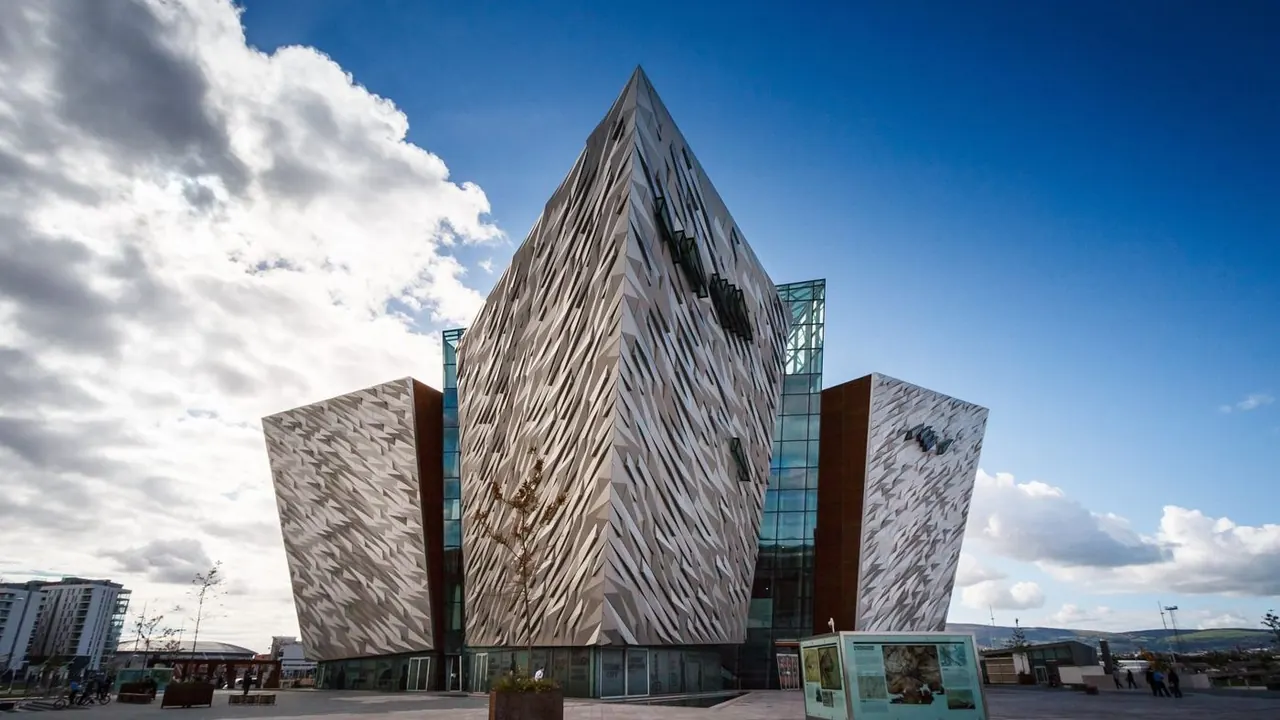
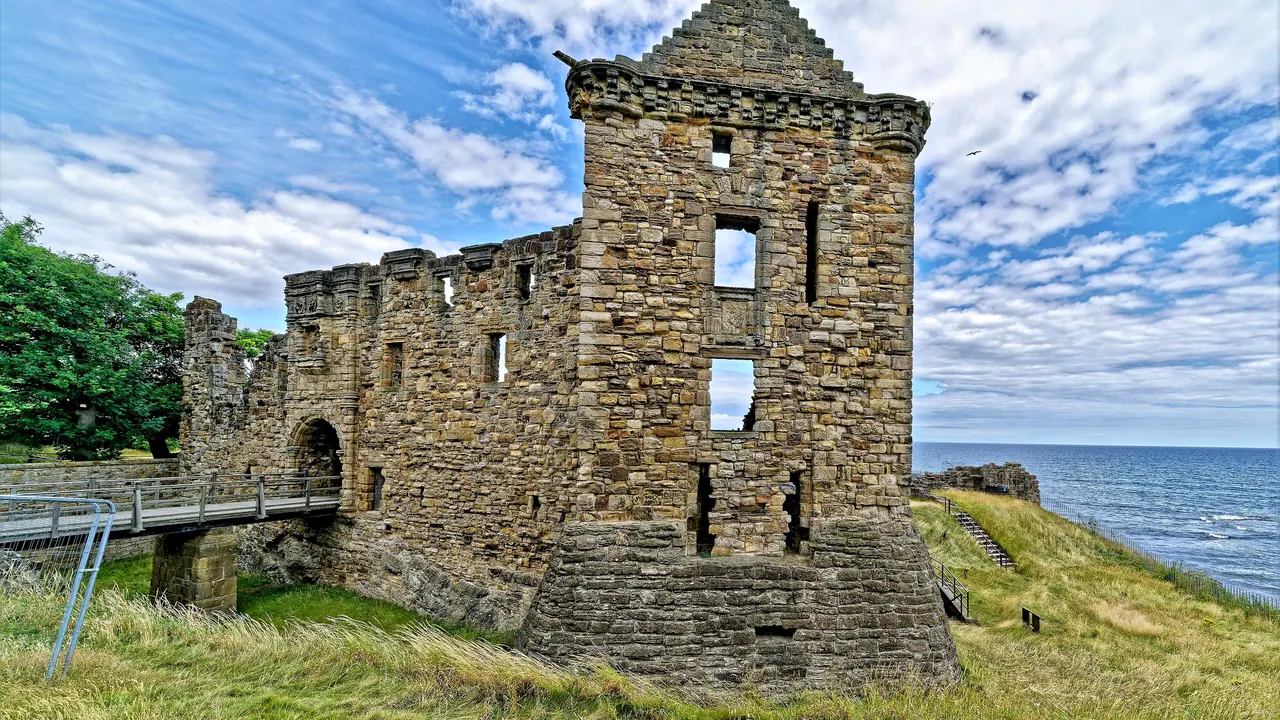
Photos: Belfast by Nico Kaiser, CC BY 2.0, cropped; St Andrews by Holger Uwe Schmitt, CC BY-SA 4.0, cropped.
Belfast or St Andrews?
Our verdict in twelve categories, each scored against the same fixed benchmark cities, and the climate month by month, so you can choose for your trip.
Choose Belfast for
- nightlife
- live music and the arts
- prices
Belfast is the pick for a proper city trip with evenings to match. Pub sessions with traditional music go on most nights, and there are more restaurants, theatres and concerts to choose from. The shipyard and Troubles history gives the sightseeing real weight. The Mournes and the Causeway Coast are close enough for big walking days, and rooms are easier on the budget, so it works for a long weekend or a fuller week.
Choose St Andrews for
- wellness
- beaches
- day trips
St Andrews suits a slower, smaller break built around fresh air. Golf, long walks on the sands and the cathedral and castle ruins fill the days. The East Neuk villages, Dundee and Edinburgh are all within easy reach for day trips. Evenings are quiet and rooms cost more, but if you want calm, a seaside town you can cross on foot and a base for exploring eastern Scotland, it is the better fit.
Scoreboard
Twelve categories on one fixed scale from 0 to 100. The shaded stretch is the gap between the two.
Your match
Pick a travel style or drag the sliders, and both match scores follow your weighting.
Wins on nightlife and live music and the arts with your weighting.
Wins on wellness and beaches with your weighting.
What matters to you?
Category by category
What the scores mean for a trip.
Beaches & swimming
Neither is a swimming destination, and cold water rules out lazy days in the sea at both. St Andrews still has the edge, because its sand is part of the town. West Sands, sheltered East Sands and little Castle Sands are all a short walk from the centre, so a beach walk fits easily into any day.
Belfast's lough shore is for strolling. Reaching sand means a train out to Helen's Bay or Crawfordsburn, or a longer drive to the north coast strands, which makes it a separate outing.
Food & drink
Belfast gives you more to eat your way through. Modern kitchens in the centre, the Cathedral Quarter and along the Lisburn Road cook seasonal menus around Mourne lamb, dry-aged beef and Strangford shellfish. St George's Market makes a good weekend grazing stop, and the pubs pour stout with care and stock a long list of Irish whiskey.
St Andrews has fewer serious tables. It has a few restaurants cooking East Neuk crab and Fife game, the golf hotels' formal dining rooms, and plenty of cafés and bakeries. Its real pleasures are simple ones: ice cream on a summer evening and fish and chips by the harbour in the villages down the coast.
Culture & sights
Belfast has more to see, and its story is modern and industrial. Titanic Belfast stands on the shipyard slipways, the Ulster Museum covers art and the Troubles, Crumlin Road Gaol is open for tours, and a guided walk past the Falls and Shankill murals stays with most visitors.
St Andrews tells an older story in a prettier setting. The ruined cathedral and St Rule's Tower, the castle's siege tunnels and the medieval university quadrangles make a lovely old town to wander. Golf heritage adds the British Golf Museum, but a day or two covers the lot.
Nightlife
Belfast is clearly the place for a night out. The cobbled entries of the Cathedral Quarter are lined with old pubs, the student streets around Botanic Avenue fill up in term, and weekend nights are lively, though clubs are few and closing time comes early.
St Andrews has a handful of traditional bars and golfers' lounges, and the students' union is the nearest thing to a club. Through the summer and the long university breaks, when most visitors come, the town is very quiet, and anyone after a big night heads to Edinburgh or Dundee.
Nature & outdoors
Belfast has the more dramatic scenery around it. Cave Hill and the Black Mountain rise right behind the city, the Mourne Mountains offer serious granite hill walking about an hour south, and the Causeway Coast to the north has the basalt columns and cliff paths of one of the great coastlines in these islands.
St Andrews has gentler, open country. You can walk the Fife Coastal Path past sea stacks and caves, watch the seals at Tentsmuir and the wading birds on the Eden estuary, or cycle the quiet farm lanes. For real hills you need a car to reach the Lomonds or Perthshire.
Day trips
St Andrews has more good outings close at hand. The harbours and pantile roofs of Crail, Anstruther and Elie are half an hour or less away, Falkland Palace and Dundee's V&A are just as near, and Edinburgh is an easy day by bus and train. With a car, Stirling, Glamis and Scone all come within range.
Belfast's best trips are fewer but bigger. Dublin is two hours away by train, and a long day up the Antrim coast takes in Dunluce Castle and Bushmills. Walled Derry, cathedral Armagh and Carrickfergus Castle round out the list.
Good for families
Belfast holds children's attention for longer, and most of what it offers is indoors, which helps in wet weather. There is the hands-on W5 science centre, Titanic Belfast for older children, the zoo on the slopes of Cave Hill, and the steam engines and old farmhouses of the Ulster Folk and Transport Museum.
St Andrews is a safe, gentle base with rock pools and kite flying on the sands, a small aquarium, the boating pond and miniature railway at Craigtoun Park, and a putting green beside the Old Course. It suits a relaxed few days more than a packed week.
Getting around
The two are equally easy to get around, in different ways. Belfast is a small city with a flat, walkable centre, plus Glider rapid buses and suburban trains along the lough for the longer hops. St Andrews is a town you cross entirely on foot, with the beaches, the Old Course and the ruins all a few minutes apart.
The catch in St Andrews is getting in and out, since the nearest station is at Leuchars, about 8km away. In both places a car makes the countryside much easier.
Shopping & style
Belfast has more to shop for. High-street chains line Donegall Place, Victoria Square has a mall under its glass dome, and Irish linen is the souvenir worth seeking out, with crafts and vintage stalls at St George's Market at weekends.
St Andrews is a pleasant browse along three streets, specialising in golf clubs and Old Course goods, with cashmere, tartan and independent bookshops alongside. It fills an afternoon, not more.
Affordability
Belfast is the easier one on the wallet. Rooms are fairly priced outside big event weekends, and the Ulster Museum, the Botanic Gardens and the City Hall tours are free, though meals and drinks still cost what they do anywhere in the UK.
St Andrews has few rooms, priced for golfers and visiting university families, and prices jump around tournaments and graduation. Lunch and getting around are cheap enough, but a round on the famous links costs a lot. Staying in the East Neuk can soften the bill.
Live music & performing arts
Belfast has a real live scene. Traditional sessions play in pubs most nights, the Ulster Orchestra performs at the Ulster Hall and the Waterfront Hall, and the Grand Opera House and the Lyric Theatre stage musicals, opera and Irish drama. Arts festivals in spring and autumn add more.
In St Andrews, live culture centres on the Byre Theatre and on the university's choral and chamber concerts. Both go quiet in the summer break, so for orchestras or major theatre you would go to Edinburgh.
Wellness & relaxation
St Andrews is the better place to slow down. The whole town moves at an unhurried pace, a walk on West Sands clears the head, and the golf resorts on the edge of town open their spas and pools to non-residents.
Belfast's calm moments are smaller: an afternoon in the Botanic Gardens, a walk along the Lagan towpath or a quiet pub snug. People who really want to unwind tend to leave for the coast. Cold-water dippers will find company in both.
When should you go?
Pick your month. The climate figures are measured averages, not a forecast.
Belfast in July
St Andrews in July
Daytime high, °C
Rainfall in the month, mm
Temperature and rainfall are climate normals, averaged over the years shown. Belfast: 1991-2020 normals, Belfast / Aldergrove Airport (19.4 km from centre). St Andrews: 1991-2020 normals, Leuchars (6.5 km from centre).
Through the year the two climates are almost twins. Both are cool year round, with July and August highs of about 19°C. That is pleasant for walking and sightseeing but never warm enough for a beach day, and the sea at both is cold even at its warmest. Late spring and summer are the best time for either. Winter days are short, grey and around 7°C, which is fine for museums and pubs but not much else.
The differences are small but real. St Andrews is the drier and brighter of the two, with April rainfall near 43mm and almost 200 hours of sunshine in May. Belfast gets more rain from late summer onwards, peaking at about 89mm in October, so autumn there means planning for wet days. Both towns are at their sunniest in May.
Which traveller are you?
On a food and nightlife trip, Belfast wins easily. Tasting menus in the Cathedral Quarter and fish and cheese at St George's Market lead into pub rounds with Irish whiskey and live trad sessions. St Andrews goes quiet after dark.
For a short city break, Belfast fills two or three days better. Titanic Belfast, City Hall and the Falls Road murals are a walk or a Glider ride apart, and the evenings give you plenty of choice. St Andrews is a small town you can see in a day or two.
For a golf trip, St Andrews is the home of the game. The Old Course and the links around it are a walk from town, along with the Swilcan Bridge and the British Golf Museum. Belfast's championship links at Royal Portrush and Royal County Down mean a drive.
Before you go
| Measure | Belfast | St Andrews |
|---|---|---|
| Official language | English | English |
| Currency | Pound Sterling (GBP) | Pound Sterling (GBP) |
| Sockets | G230 V, 50 Hz | G230 V, 50 Hz |
| Driving side | Left | Left |
| Time zone | UTC, UTC+1 in summer | UTC, UTC+1 in summer |
| Emergency number | 112 or 999 | 112 or 999 |
| Elevation | 3 m | 24 m |
| Main airport | George Best Belfast City Airport (BHD)4 km from centre25 non-stop destinations | Edinburgh Airport (EDI)56 km from centre163 non-stop destinations |
| Public holidays this year | 10 days | 10 days |
By the numbers
| Measure | Belfast | St Andrews |
|---|---|---|
| City population | 345,006 | 16,460 |
| People per km² | 3,000 | - |
| Museums within 10 km | 8 | 5 |
| UNESCO World Heritage sites within 50 km | 1 | 0 |
| Swim season, months above 21 °C | None | None |
Where else could you go?
Every comparison below shares a destination with this one, so you can follow Belfast or St Andrews somewhere new.
- Edinburghvs St Andrews
- Aberdeenvs St Andrews
- Glasgowvs St Andrews
- Dublinvs Belfast
- Invernessvs St Andrews
- Glasgowvs Belfast