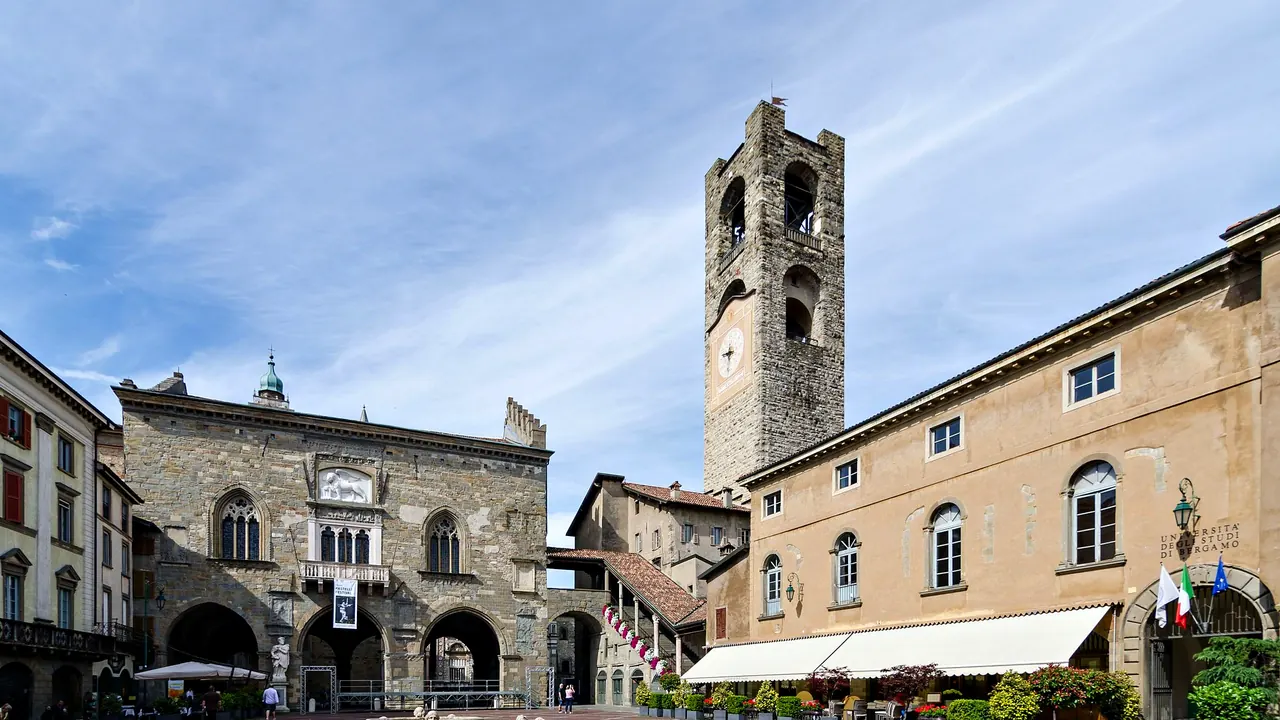
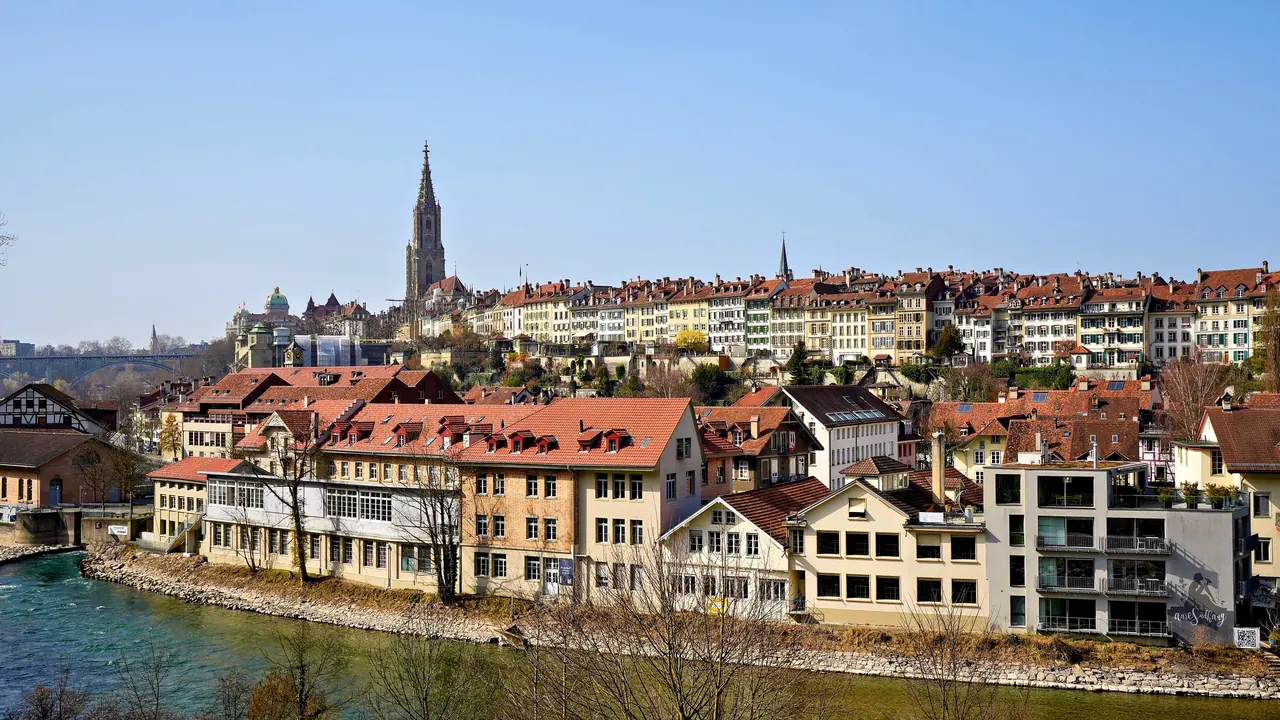
Photos: Bergamo by Steffen Schmitz, CC BY-SA 4.0, cropped; Bern by Beat Bieri, Pexels License.
Bergamo or Bern?
Our verdict in twelve categories, each scored against the same fixed benchmark cities, and the climate month by month, so you can choose for your trip.
Choose Bergamo for
- prices
- food and drink
- culture and sights
Bergamo is the better choice for travellers who care about what is on the plate and how far their money goes. Its walled hilltop town, Lombard mountain cooking and fairly priced lower-town hotels make it a comfortable base for Milan, the lakes and the art cities of northern Italy, as long as you don't mind a car for the deeper valleys.
Choose Bern for
- getting around
- beaches
- families
Bern suits those who want everything to work without effort and the high Alps close at hand. The compact arcaded old town, punctual trains and easy outings for children make for a relaxed trip, and the Jungfrau region is close enough for a day out. The price of all that is one of the most expensive stays in Europe.
Scoreboard
Twelve categories on one fixed scale from 0 to 100. The shaded stretch is the gap between the two.
Your match
Pick a travel style or drag the sliders, and both match scores follow your weighting.
Too close to call, level with your weighting
Wins on prices and food and drink with your weighting.
Wins on getting around and beaches with your weighting.
What matters to you?
Category by category
What the scores mean for a trip.
Beaches & swimming
Neither city is near the sea, but in Bern swimming is part of city life. On summer afternoons locals let the green Aare current carry them back past the Federal Palace, then come ashore at riverside lidos like the Marzili. The river is cold and strong, though, and Lake Thun is the calmer option twenty minutes away.
From Bergamo, swimming means a day out to Lake Iseo or the Lecco arm of Lake Como. The water there is warmer, but the shores are mostly pebble, grass or concrete platforms.
Food & drink
Bergamo eats better. Its mountain cooking of casoncelli in butter and sage, polenta with braised game, and some of Italy's best cheeses goes with local Valcalepio and Franciacorta sparkling wine from just over the border, and the province has a real fine-dining tier.
Bern's table is heavier and plainer: the Berner Platte, rösti and fondue in guildhall dining rooms and cellar restaurants. It does have the wider spread of foreign kitchens and excellent chocolate, but eating out there is costly.
Culture & sights
Both cities have a UNESCO-listed old town that you can see in a couple of days, but the two feel very different. Bergamo's is a walled hilltop town inside Venetian ramparts, with the marble Cappella Colleoni and an Accademia Carrara full of Raphael, Bellini and Mantegna.
Bern's sits low in a loop of the river, with its sandstone arcades, painted fountains and the Zytglogge. Its museums lean modern, with the Zentrum Paul Klee and Einstein's flat on Kramgasse, where Bergamo's strength is old masters.
Nightlife
Evenings are quiet in both cities, and the difference is mostly in mood. Bergamo goes for a long aperitivo and drinks in the upper-town squares or along the walls, and it is usually over by midnight. For more than that, people head to Milan.
Bern drinks in vaulted cellar bars under the arcades and on Aare terraces in summer. It also has the Reitschule, whose rough-edged late parties have no real counterpart in Bergamo.
Nature & outdoors
Bern has the grander mountains and makes them easier to reach. The Jungfrau region, with its high trails, cable cars and winter skiing, is an hour away by train, Lake Thun is closer, and the Emmental and Jura offer gentler walking.
Bergamo's Colli park starts right at the upper town. Beyond it, Val Brembana and Val Seriana lead into the Orobie Alps, with rifugi and high lakes, but most of that is far easier by car, and its ski areas are small.
Day trips
Both are first-rate bases, and the choice comes down to which country you want to see. From Bergamo you get Italy: Milan's Last Supper, Lake Como and Monte Isola, Verona, Cremona's violin workshops and the Franciacorta vineyards.
From Bern you get a run of tidy Swiss towns on the densest rail network around: Lucerne, Fribourg and Gruyères, walled Murten and the Lavaux terraces above Lake Geneva, all without planning around connections.
Good for families
Bern is easier with children inside the city itself. It has the bear park, the Dählhölzli zoo along the river, the Natural History Museum's dioramas and a big playground at the top of the Gurten, and the trams take pushchairs without trouble. Only the fast Aare needs watching.
In Bergamo, the funicular rides and the walls fill an afternoon, but the cobbled upper lanes are hard going with a buggy. The best family outings, Leolandia and the Le Cornelle wildlife park, are out of town.
Getting around
Bern is much simpler. You can walk the old town from the station to the bear park in about twenty minutes, under cover most of the way. Integrated trams fill in the rest, and with the main station at the top of the old town you won't need a car.
Bergamo is split over two levels. The funicular and buses handle the climb, and the airport is close, but the upper valleys and lake shores really call for a car.
Shopping & style
Bern offers a little more to browse. Its arcaded main streets have watch and chocolate shops, and below Gerechtigkeitsgasse there are cellar shops selling antiques, design and books.
Bergamo's lower town is mostly chains and mid-range fashion, so the best of it is edible: the delicatessens and cheese shops of the upper town's main lane. Neither city has much luxury shopping, and Milan is the obvious escape from Bergamo for that.
Affordability
This is the biggest gap between the two. Bergamo is moderately priced for northern Italy, with fair lower-town hotels, inexpensive trattorias and cheap funicular rides. Only the rooms inside the Città Alta push the cost up.
In Bern, rooms, meals and even a terrace beer cost far more than most visitors expect. The hotel transport pass and the free pleasures, such as the bear park, the river paths and Federal Palace tours, soften the bill only a little.
Live music & performing arts
Neither city is worth planning a trip around for its stages, but their programmes differ. Bergamo is all about opera. The Teatro Donizetti and its autumn festival honour the composer born here, and La Scala is within reach for an evening.
Bern covers more ground, with German-language opera and ballet, a symphony orchestra in the Casino, contemporary dance at the Dampfzentrale and the Gurtenfestival's rock and pop in July.
Wellness & relaxation
Both are calm places to slow down, but their spas belong to different traditions. Bergamo has historic spa towns close by: Belle Époque San Pellegrino Terme up Val Brembana, and Trescore's sulphur springs, used since Roman times.
Bern has no bathing heritage, but it does have a large modern thermal complex on the edge of the city. The real pleasure there is the unhurried pace: quiet Sundays and long lunches on the riverside terraces.
When should you go?
Pick your month. The climate figures are measured averages, not a forecast.
Bergamo in July
Bern in July
Daytime high, °C
Rainfall in the month, mm
Where the figures come from
Bergamo has no rain gauge within 25 km of the centre, so its rainfall comes from a gridded climate dataset read at the city rather than from a gauge further away.
Bergamo's sunshine is measured 64 km from the centre, at Lugano.
Bern has no rain gauge within 25 km of the centre, so its rainfall comes from a gridded climate dataset read at the city rather than from a gauge further away.
Bern's sunshine is measured 41 km from the centre, at Payerne.
Temperature and rainfall are climate normals, averaged over the years shown. Bergamo: 1991-2020 normals, Bergamo / Orio Al Serio (3.9 km from centre). Bern: 2010-2020 (sunshine 1961-1990, rainfall 1991-2020) normals, Bern / Bern - Belp Airport (5.5 km from centre).
Both cities are at their best from June to early September, when the lakes and, in Bern, the Aare are warm enough to swim. Bergamo runs a few degrees warmer, peaking around 29°C in July and August against 26°C in Bern, so steep climbs up to the Città Alta can be sweaty at midday. Late spring and early autumn are the most comfortable for walking in both.
The wet seasons fall differently. Bern is rainiest from May to August, though its arcades keep you dry. Bergamo's heaviest rain comes from September to November, at around 125mm a month. Winter is where they differ most. Both are cold, but Bergamo is noticeably brighter, while Bern's city winters are grey, with only about 41 hours of sunshine in December.
Which traveller are you?
On a trip on a tight budget, Bergamo is far easier on the wallet. Lower-town hotels, trattorias and the funicular are reasonably priced, while in Bern even plain guesthouses and simple dinners are expensive, so budget travellers end up eating from supermarket counters.
For a food and nightlife trip, Bergamo wins on the eating: casoncelli, polenta, valley cheeses like Taleggio and Strachitunt, and long aperitivo evenings. Neither city is much for clubbing, and Bern's traditional, pricey cooking can't match Bergamo for flavour.
On an outdoors trip, Bern has the edge. The Eiger, Mönch and Jungfrau are an hour away by train, with cable cars and high trails, and you won't need a car. Bergamo's Orobie Alps are fine hiking country but easier to explore by road.
Before you go
| Measure | Bergamo | Bern |
|---|---|---|
| Official language | Italian | French, German, Italian, Romansh |
| Currency | Euro (EUR) | Swiss Franc (CHF) |
| Sockets | CFL230 V, 50 Hz | CJ230 V, 50 Hz |
| Driving side | Right | Right |
| Time zone | UTC+1, UTC+2 in summer | UTC+1, UTC+2 in summer |
| Emergency number | 112 | 112 |
| Elevation | 249 m | 542 m |
| Main airport | Il Caravaggio International Airport (BGY)4 km from centre146 non-stop destinations | Zürich Airport (ZRH)101 km from centre226 non-stop destinations |
| Public holidays this year | 13 days | 10 days |
By the numbers
| Measure | Bergamo | Bern |
|---|---|---|
| City population | 119,534 | 136,988 |
| People per km² | 2,973 | 2,655 |
| Museums within 10 km | 21 | 30 |
| UNESCO World Heritage sites within 50 km | 6 | 2 |
Where else could you go?
Every comparison below shares a destination with this one, so you can follow Bergamo or Bern somewhere new.