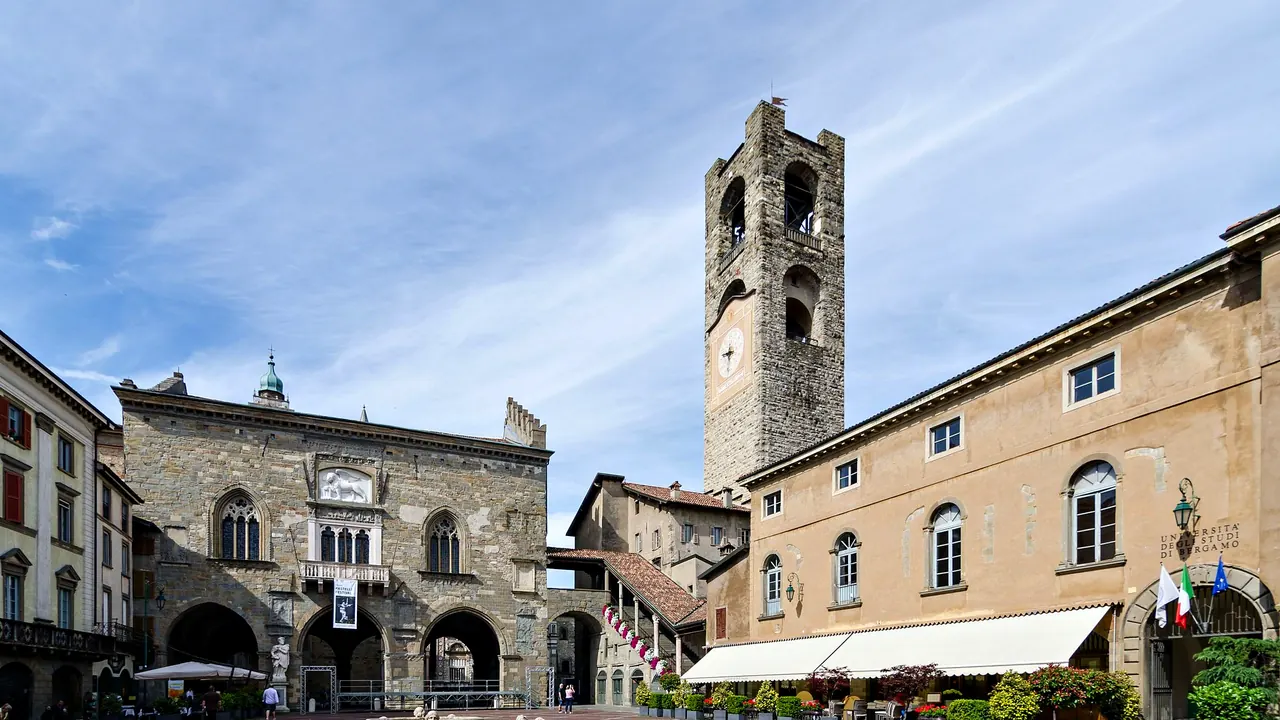
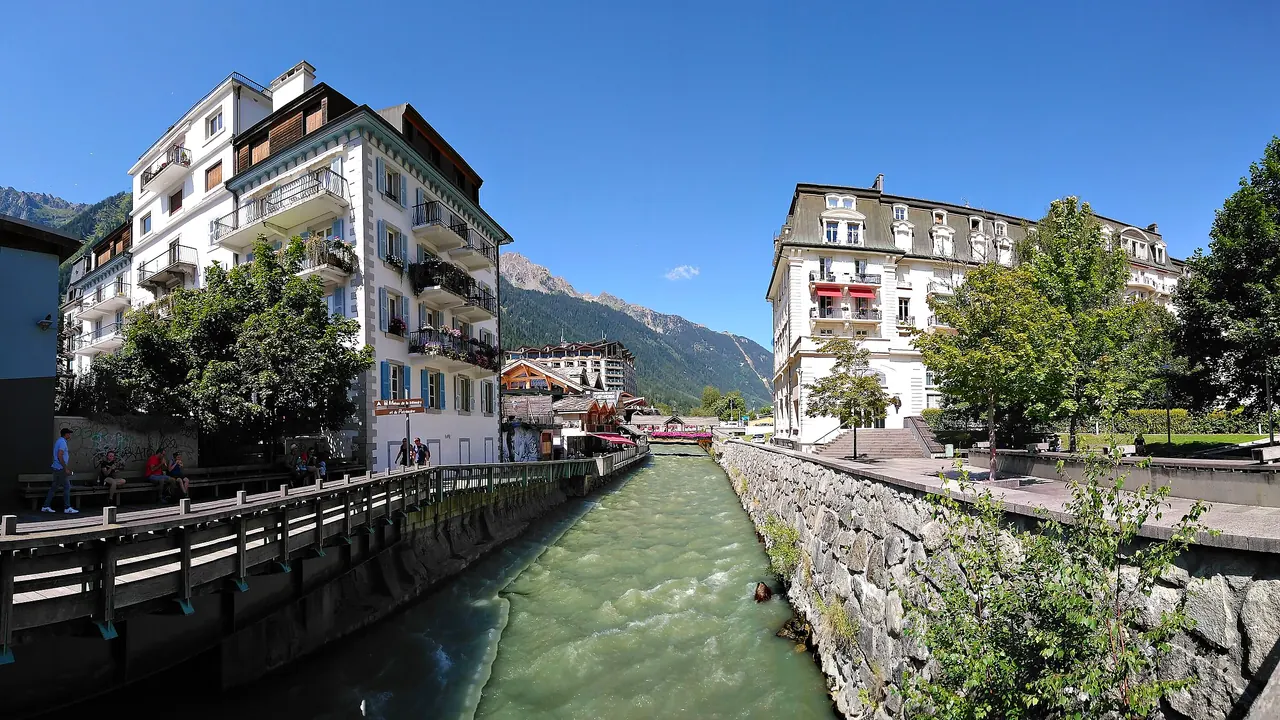
Photos: Bergamo by Steffen Schmitz, CC BY-SA 4.0, cropped; Chamonix by Tiia Monto, CC BY-SA 3.0, cropped.
Bergamo or Chamonix?
Our verdict in twelve categories, each scored against the same fixed benchmark cities, and the climate month by month, so you can choose for your trip.
Choose Bergamo for
- culture and sights
- prices
- live music and the arts
Bergamo suits a traveller who wants art, architecture and good cooking at a fair cost, with half of Lombardy on the doorstep. The walled Città Alta, the Accademia Carrara and Donizetti's opera house give it a cultural depth Chamonix cannot approach. Trains to Milan, Brescia and the lakes make it a natural base for a week of varied outings.
Choose Chamonix for
- nature and the outdoors
- nightlife
- families
Chamonix is the choice when the mountains themselves are the trip. Cable cars lift you from the town straight into glaciers and granite, the trails and ski areas start from the valley floor, and evenings end in an après-ski bar or a hot pool looking up at Mont Blanc. Expect to pay heavily for it, and to find little to do indoors on a wet day.
Scoreboard
Twelve categories on one fixed scale from 0 to 100. The shaded stretch is the gap between the two.
Your match
Pick a travel style or drag the sliders, and both match scores follow your weighting.
Wins on culture and sights and prices with your weighting.
Wins on nature and the outdoors and nightlife with your weighting.
What matters to you?
Category by category
What the scores mean for a trip.
Beaches & swimming
Neither place has a coast, but Bergamo has the better water within reach. The lidos on Lake Iseo at Sarnico and Lovere and the Lecco arm of Lake Como offer warm-weather swimming from grassy or pebbled shores, an easy outing on a hot day.
Chamonix has less: the small Lac de Passy down the valley and the town pool in summer, with Lake Annecy over an hour's drive away. In both places swimming is a break from the main programme, not the reason to go.
Food & drink
Both kitchens rest on mountain cheese, but Bergamo eats better and more widely. It offers casoncelli with butter and sage, polenta with braised game, Taleggio and Strachitunt, and Valcalepio or Franciacorta to drink, all from a city with old trattorias, pastry shops and a serious fine-dining tier.
Chamonix serves Savoyard fondue, raclette and tartiflette, which taste best on a refuge terrace facing the glaciers. In town, though, the menus repeat one another, and many places close between the seasons.
Culture & sights
This is the widest gap between the two. In Bergamo the walled upper town, Piazza Vecchia, Santa Maria Maggiore and the marble front of the Cappella Colleoni come first, followed by the Old Masters at the Accademia Carrara. Together they fill a day or two with first-rate art and architecture.
Chamonix's heritage is the history of alpinism, from the first ascent of Mont Blanc in 1786 to the first Winter Olympics in 1924, told in the Musée Alpin and the climbers' cemetery. It is absorbing for an afternoon, but the real sight here is the massif itself.
Nightlife
Neither town is a place to go out, but Chamonix keeps later hours. In winter, après-ski spills from the bars at the foot of the slopes into a lane of pubs in the old town, and two or three small clubs run into the early hours for a young, English-speaking crowd.
Bergamo's evenings are slower and more Italian: a long aperitivo around Via XX Settembre or Borgo Santa Caterina, wine in the upper-town squares in summer, and home around midnight. For a proper night out, people in Bergamo take the train to Milan.
Nature & outdoors
Bergamo has real countryside on its doorstep: the wooded Colli di Bergamo climbing to San Vigilio, the Orobie valleys with rifugi and high lakes, and two lakes for sailing and cycling. The mountains are much easier to reach with a car.
Chamonix is in another league. The Mont Blanc massif rises almost 4km above the valley, and a single cable-car ride to the Aiguille du Midi puts you among the glaciers. The Vallée Blanche, the Tour du Mont Blanc and world-class climbing all start from town.
Day trips
Bergamo is by far the better base. Milan is under an hour by train, Lake Como, Lake Iseo and the island of Monte Isola are closer still, and Crespi d'Adda, Brescia, Cremona, Verona and Mantua stretch the list across northern Italy.
Chamonix's outings depend on crossing borders: Courmayeur and Roman Aosta through the tunnel, Geneva and Annecy just over an hour away, and Martigny on the Mont Blanc Express. Beyond those the choice comes down to other resorts on slow mountain roads.
Good for families
Both are small, safe and manageable with children, but the days look different. In Bergamo the treats are the funiculars, the walls and a gelato, with Leolandia's rides and miniature Italy and the Le Cornelle wildlife park as outings. The cobbled upper town is hard going with a buggy.
Chamonix is for active families: ski schools and sledging in winter, then the summer luge, treetop courses, the Merlet animal park and the red train to the Mer de Glace. It suits older children best, as the highest lifts are too much for small ones and wet days leave little to fall back on.
Getting around
Once you arrive, both are easy without a car, in different ways. Bergamo is a city on two levels joined by a funicular, with buses to the station, a short ride to the airport and direct trains to Milan, Brescia and Lecco.
Chamonix has a flat, walkable centre strung along a valley, and its buses and the Mont Blanc Express are free with the guest card. Winter ski buses get packed, though, and most visitors arrive by shuttle from Geneva airport.
Shopping & style
Bergamo offers more range. Italian chains and mid-range fashion line the arcades of Via XX Settembre and the Sentierone, and the upper town's main lane is packed with cheese shops, delicatessens and wine sellers. Milan is under an hour away for serious fashion.
Chamonix is narrower but has one real speciality. Its climbing and ski shops, some generations old, are where mountaineers come to buy technical gear. Otherwise it offers Savoyard cheese, génépi, rock crystals and souvenirs.
Affordability
Bergamo is comfortable rather than cheap, but it costs far less than Chamonix. Lower-town hotels and trattorias are fair for northern Italy, and buses and the funicular are inexpensive. Only the Città Alta and summer weekends push prices up.
Chamonix charges famous-resort rates for rooms, meals, lift passes and guides, especially at Christmas, in the February school vacations and in high summer. Self-catering, free valley transport and trails that need no lift soften the bill, but only so far.
Live music & performing arts
Bergamo has a genuine stage life built around its native composer, Donizetti. There is an opera and concert season at the Teatro Donizetti, an autumn festival of his works, smaller productions at the Teatro Sociale and the long-running Bergamo Jazz in spring. La Scala is an easy evening trip.
Chamonix has almost none, beyond a summer jazz festival with some sets played high in the mountains and occasional church concerts. For opera, you have to drive to Geneva.
Wellness & relaxation
Both have thermal bathing nearby, but the mood differs. Bergamo's calm comes from the Città Alta at dawn and dusk, the Belle Époque spa at San Pellegrino Terme and the sulphur springs of Trescore Balneario, used since Roman times.
In Chamonix you relax after a day of effort: hot outdoor pools and saunas facing the glaciers after skiing, with the thermal gorge at Saint-Gervais down the valley. The town itself starts early and stays busy, so it rests the body more than the mind.
When should you go?
Pick your month. The climate figures are measured averages, not a forecast.
Bergamo in July
Chamonix in July
Daytime high, °C
Rainfall in the month, mm
Where the figures come from
Bergamo has no rain gauge within 25 km of the centre, so its rainfall comes from a gridded climate dataset read at the city rather than from a gauge further away.
Bergamo's sunshine is measured 64 km from the centre, at Lugano.
Chamonix's temperatures are measured 35 km from the centre, at Bourg-St-Maurice.
Chamonix has no rain gauge within 25 km of the centre, so its rainfall comes from a gridded climate dataset read at the city rather than from a gauge further away.
Temperature and rainfall are climate normals, averaged over the years shown. Bergamo: 1991-2020 normals, Bergamo / Orio Al Serio (3.9 km from centre). Chamonix: 1999-2020 (rainfall 1991-2020) normals, Bourg-St-Maurice (34.9 km from centre).
Bergamo is warmest in July and August, around 29°C and at its sunniest. That suits a lake day at Iseo but makes climbing the lanes of the Città Alta at midday sticky work. Late spring and early autumn are the most comfortable months for walking the city, though May and autumn bring the heaviest rain, with September to November each around 125mm. Winters are cool and greyer but rarely harsh, so the upper town stays walkable all year.
Chamonix runs a few degrees cooler through the year. The valley peaks at about 27°C in July, which is good weather for hiking and the high lifts, while the summits stay far colder. Rain or snow falls steadily in every month, wettest in early winter with 169mm in December. June to September is the summer window, and December to March is cold enough in the valley for proper winter conditions.
Which traveller are you?
On a culture and arts trip, Bergamo can fill several days: Lotto and Mantegna in the lower town, modern work at the GAMeC, then the Brera and the Last Supper in Milan by train. Chamonix offers the Espace Tairraz's crystals and its Belle Époque hotels.
For an outdoors trip, Chamonix lets you hike to Lac Blanc one day, then try a via ferrata or paraglide down to the meadows the next. Bergamo's strengths are gentler: gravel rides in the foothills and flat cycling across the plain.
On a trip on a tight budget, Bergamo goes further: sleep below the hill midweek, let a long aperitivo stand in for dinner, and see Lombardy by regional train. In Chamonix, picnics help, but every cable car and guided day costs dearly.
Before you go
| Measure | Bergamo | Chamonix |
|---|---|---|
| Official language | Italian | French |
| Currency | Euro (EUR) | Euro (EUR) |
| Sockets | CFL230 V, 50 Hz | CE230 V, 50 Hz |
| Driving side | Right | Right |
| Time zone | UTC+1, UTC+2 in summer | UTC+1, UTC+2 in summer |
| Emergency number | 112 | 112 |
| Elevation | 249 m | 995 m |
| Main airport | Il Caravaggio International Airport (BGY)4 km from centre146 non-stop destinations | Geneva International Airport (GVA)68 km from centre150 non-stop destinations |
| Public holidays this year | 13 days | 11 days |
By the numbers
| Measure | Bergamo | Chamonix |
|---|---|---|
| City population | 119,534 | 8,705 |
| People per km² | 2,973 | 75 |
| Museums within 10 km | 21 | 3 |
| UNESCO World Heritage sites within 50 km | 6 | 0 |
Where else could you go?
Every comparison below shares a destination with this one, so you can follow Bergamo or Chamonix somewhere new.