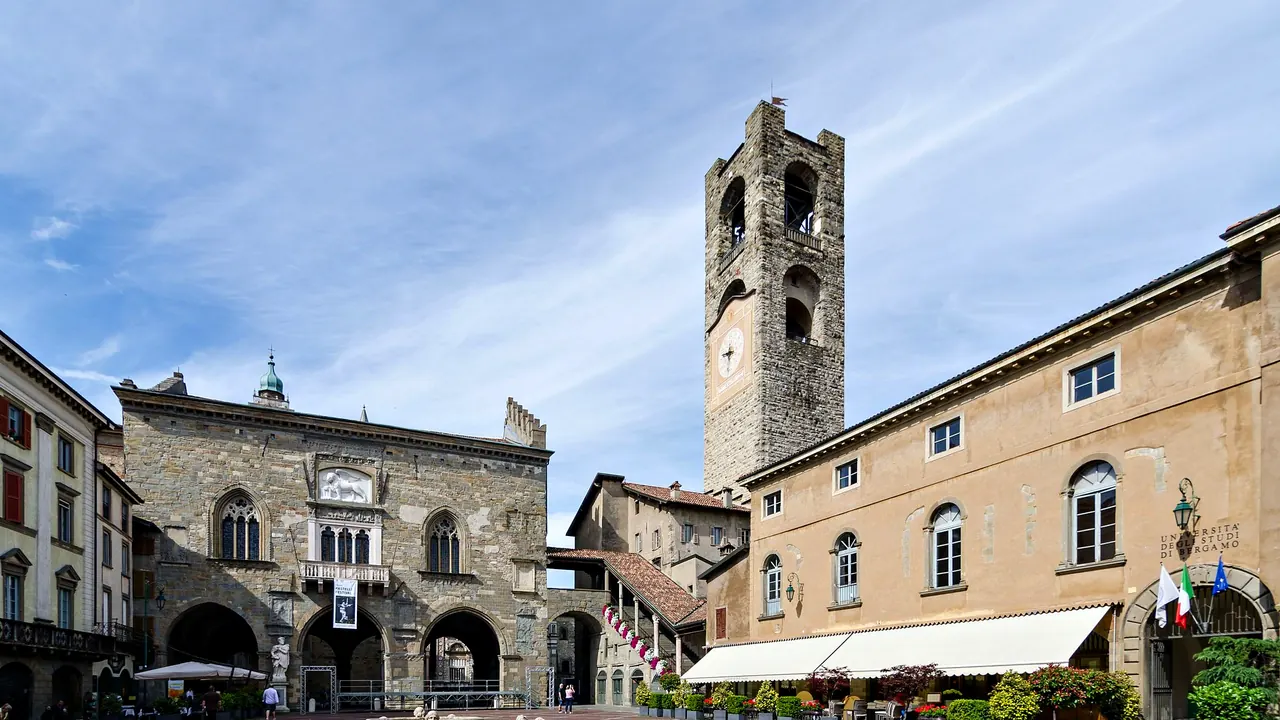
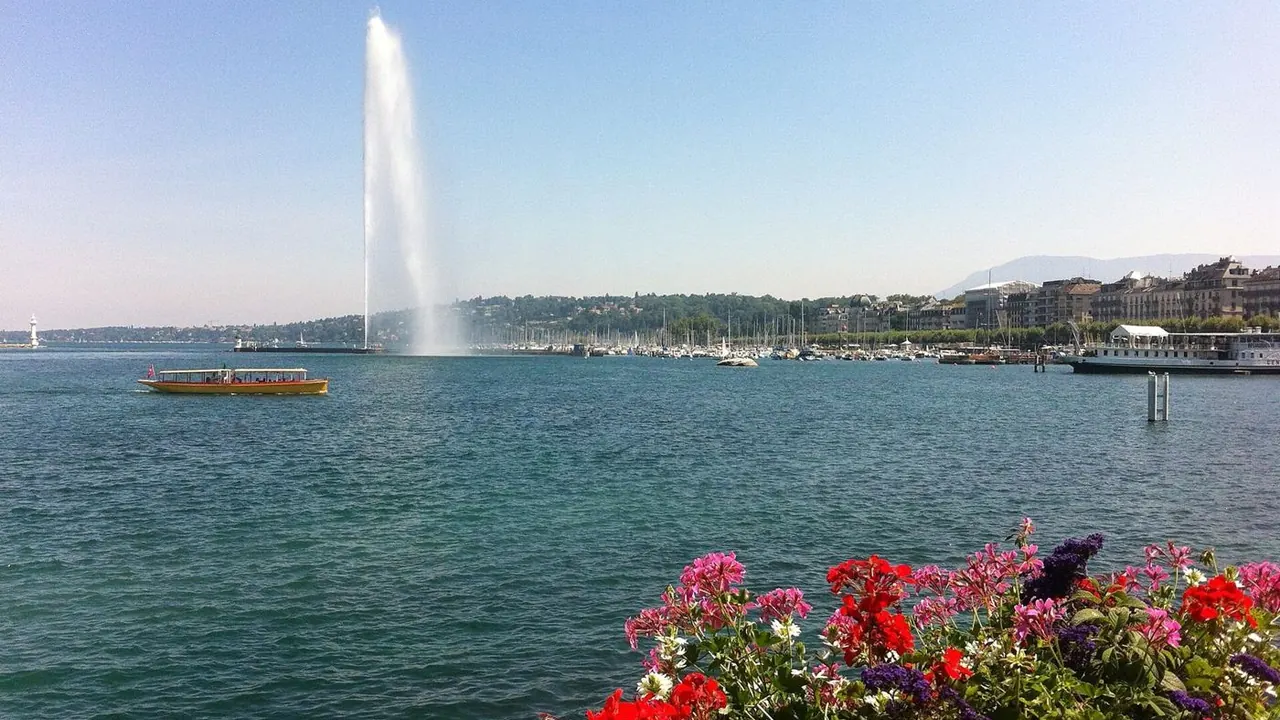
Photos: Bergamo by Steffen Schmitz, CC BY-SA 4.0, cropped; Geneva by Diviosen, CC BY-SA 3.0, cropped.
Bergamo or Geneva?
Our verdict in twelve categories, each scored against the same fixed benchmark cities, and the climate month by month, so you can choose for your trip.
Choose Bergamo for
- prices
- culture and sights
- day trips
Bergamo suits travellers who want a walled hilltop town of real beauty, an old-master gallery of stature and a base for touring Lombardy by train, without Swiss bills. Milan, Lake Iseo, Lake Como, Brescia and Verona are all within easy reach. Evenings mean long trattoria dinners rather than late nights.
Choose Geneva for
- shopping
- getting around
- beaches
Choose Geneva if mountains and a clean lake matter more than old streets, and if the budget can stretch a long way. Getting around is easier, the opera and concert stage is stronger, and the watch and jewellery shopping is among the best anywhere. The Salève, the Jura and Chamonix are all close by. Expect to pay heavily for all of it.
Scoreboard
Twelve categories on one fixed scale from 0 to 100. The shaded stretch is the gap between the two.
Your match
Pick a travel style or drag the sliders, and both match scores follow your weighting.
Too close to call, 2 points apart
Wins on prices and culture and sights with your weighting.
Wins on shopping and getting around with your weighting.
What matters to you?
Category by category
What the scores mean for a trip.
Beaches & swimming
Neither city has a sea, and both swim in lakes in summer, with the water reaching about 23°C at its warmest. The difference is that Geneva's lake is right in town. The Bains des Pâquis jetty, the Eaux-Vives shore and Genève-Plage are a walk or a tram ride away.
From Bergamo, a swim means a day out to Lake Iseo around Sarnico and Lovere, or to the Lecco arm of Lake Como, where the shores are pebble, grass and concrete platforms. Neither is a beach destination, but in Geneva a swim fits into an ordinary summer afternoon.
Food & drink
Both cities eat well, in very different styles. Bergamo cooks Lombard mountain food: casoncelli in butter and sage, polenta with braised meats, and valley cheeses such as Taleggio, Branzi and Strachitunt, with Valcalepio and Franciacorta to drink.
Geneva's cooking is French with a Swiss accent: perch from the lake, fondue and raclette, and Chasselas from the canton's own vineyards. Because of the international organisations it has far more range beyond the local food, while Bergamo is almost entirely Italian. Every meal in Geneva costs considerably more, though.
Culture & sights
Bergamo has the stronger sights, and they are lovelier to walk through. The walled Città Alta sits inside its UNESCO-listed Venetian ramparts, and Piazza Vecchia, Santa Maria Maggiore and the Cappella Colleoni are only a few minutes' stroll apart. Below the hill, the Accademia Carrara holds Raphael, Bellini and Mantegna.
Geneva's appeal lies more in ideas than in buildings: Calvin's St Pierre Cathedral, the Reformation Wall, the Palais des Nations, the Red Cross museum and CERN. It is absorbing, but it has no single great ensemble to match Bergamo's upper town.
Nightlife
Neither city is a place for big nights, though Geneva has a little more going on. Bars in the Pâquis stay busy late, and the alternative cultural centres around Plainpalais and Jonction run club nights with a small electronic scene.
In Bergamo, an evening is an aperitivo that drifts into the wine bars around Via XX Settembre and Borgo Santa Caterina, or in summer, drinks on the walls of the upper town. It is usually over by midnight, and anyone wanting more takes the train to Milan.
Nature & outdoors
Both have mountains on the doorstep, but Geneva's are easier to use. The Salève cable car lifts you onto cliffs above the city, the Jura has forest walks and cross-country skiing, and the lake is open for sailing and paddleboarding. Chamonix and Mont Blanc are about an hour away.
Bergamo starts well, with the Colli di Bergamo climbing straight from the upper town to San Vigilio. Val Brembana and Val Seriana lead into the Orobie Alps, with rifugi and high lakes. Its ski areas are small, though, and most of the high country needs a car.
Day trips
Both are first-rate bases, and Bergamo has slightly more outings that are easy by train. Milan is under an hour away, Lake Iseo and Lake Como are closer still, and Brescia, Cremona and Verona each make a simple day out. Crespi d'Adda and the Franciacorta vineyards are near as well.
Geneva's strength is variety across a border. Lake steamers run past the Lavaux terraces to Lausanne, Montreux and Chillon, a boat goes to medieval Yvoire, and Annecy is a short drive. Gruyères and Bern are further out. The scenery on Geneva's outings is grander, but its list of historic cities is shorter.
Good for families
Both cities are calm, safe and easy with children, but they keep their best moments in different places. In Bergamo the funiculars are the treat inside the city, and the big outings lie just beyond it: Leolandia, with rides for younger children, and the Le Cornelle wildlife park are each a short drive away. The cobbles of the upper town are hard going with a buggy.
Geneva keeps its main draw in the centre, where the animal dioramas of the Natural History Museum can hold young children for hours. It is flatter, its trams take pushchairs easily, and the yellow harbour boats make a cheerful ride. There is no zoo or theme park, though, so after a few days families usually head for the mountains.
Getting around
Geneva is the easier city to get around. The compact centre is walkable, trams and buses are frequent and punctual, and the harbour boats belong to the same network. The airport is a few minutes by train, and even the mountains can be reached without a car.
Bergamo works well on its two levels, which are linked by funicular, and its station has direct trains to Milan, Brescia and Lecco. The walk up to the Città Alta is steep, though, and the valleys and lake shores are much quicker by car.
Shopping & style
For shopping, Geneva is far ahead. The Rue du Rhône is lined with the flagship boutiques of the great Swiss watch houses and international luxury brands. Carouge adds small design and craft workshops, and the Plainpalais flea market sells antiques.
Bergamo has mid-range fashion and chain stores under the arcades of Via XX Settembre and the Sentierone. Its real strength is food to take home: cheese, salumi and Valcalepio wine from the delicatessens of the upper town. Fashion shoppers take the train to Milan.
Affordability
Here the gap is wide. Bergamo is comfortable rather than cheap, but hotels in the lower town are fairly priced, trattorias and aperitivo bars are reasonable, and the funicular costs little. Only rooms inside the Città Alta and summer weekends push the bill up.
Geneva is among the most expensive cities in the world, and room rates climb further during conferences and trade fairs. Free museums, free local transport for hotel guests and cheap lidos help. Many visitors on a budget sleep or eat across the French border.
Live music & performing arts
Geneva has more on stage. The Grand Théâtre runs a full season of opera and ballet, and the Orchestre de la Suisse Romande plays in Victoria Hall, which is known for its acoustics. French-language theatre and dance at the Bâtiment des Forces Motrices fill out the year.
Bergamo's stage centres on Donizetti, who was born there. The season at the Teatro Donizetti and its autumn festival of his works are reason enough for opera lovers to come, and Bergamo Jazz follows in spring. Outside these, the programme is provincial, and La Scala in Milan is the alternative for an evening out.
Wellness & relaxation
Both cities are restful rather than true spa destinations, and each has its spas a short ride away. From Bergamo that means historic thermal water: the Belle Époque resort of San Pellegrino Terme up Val Brembana and the sulphur springs of Trescore Balneario.
Geneva's own ritual is the winter sauna and hammam at the Bains des Pâquis, followed by a plunge into the cold lake. It also has serious hotel spas, with Évian and Divonne just across the border. For quiet, Bergamo has its upper town early in the morning, and Geneva its calm Sundays by the lake.
When should you go?
Pick your month. The climate figures are measured averages, not a forecast.
Bergamo in July
Geneva in July
Daytime high, °C
Rainfall in the month, mm
Where the figures come from
Bergamo has no rain gauge within 25 km of the centre, so its rainfall comes from a gridded climate dataset read at the city rather than from a gauge further away.
Bergamo's sunshine is measured 64 km from the centre, at Lugano.
Temperature and rainfall are climate normals, averaged over the years shown. Bergamo: 1991-2020 normals, Bergamo / Orio Al Serio (3.9 km from centre). Geneva: 1991-2020 normals, Geneve-Cointrin (5.7 km from centre).
Bergamo has the hotter summer, reaching 29°C in July and August, while Geneva stays a couple of degrees cooler. Both are warm enough for lake swimming in high summer, but at midday Bergamo can feel close for long walks on the hill. From May to November Bergamo is also the wetter city, and autumn is its rainiest season, with around 125mm a month from September to November. In the depth of winter the pattern turns round, and Geneva is the damper of the two.
For walking either city, May, June and September are the best months. Winters are cold in both, but Bergamo stays much brighter. In December it gets roughly twice Geneva's sunshine, and Geneva sits under grey skies from November to January.
Which traveller are you?
On a trip on a tight budget, Bergamo lets the days stretch. You can sleep below the hill, make supper of aperitivo snacks and spend cheap train rides on Milan and the lakes. In Geneva the same money runs out far sooner, unless you sleep in France.
For a shopping trip, Geneva is where you buy something meant to last a lifetime, a Swiss watch or fine jewellery, with boxes of chocolate for everyone at home. In Bergamo the bags fill with cheese and wine, and fashion means a train to Milan.
On an outdoors trip, Geneva lets you hike, paraglide or sail in the morning and be back in town by tram for dinner, with the high Alps an easy day away. In Bergamo the woods start at the upper town, but serious Alpine walking usually means hiring a car.
Before you go
| Measure | Bergamo | Geneva |
|---|---|---|
| Official language | Italian | French, German, Italian, Romansh |
| Currency | Euro (EUR) | Swiss Franc (CHF) |
| Sockets | CFL230 V, 50 Hz | CJ230 V, 50 Hz |
| Driving side | Right | Right |
| Time zone | UTC+1, UTC+2 in summer | UTC+1, UTC+2 in summer |
| Emergency number | 112 | 112 |
| Elevation | 249 m | 403 m |
| Main airport | Il Caravaggio International Airport (BGY)4 km from centre146 non-stop destinations | Geneva International Airport (GVA)5 km from centre150 non-stop destinations |
| Public holidays this year | 13 days | 9 days |
By the numbers
| Measure | Bergamo | Geneva |
|---|---|---|
| City population | 119,534 | 211,152 |
| People per km² | 2,973 | 13,280 |
| Museums within 10 km | 21 | 34 |
| UNESCO World Heritage sites within 50 km | 6 | 2 |
Where else could you go?
Every comparison below shares a destination with this one, so you can follow Bergamo or Geneva somewhere new.