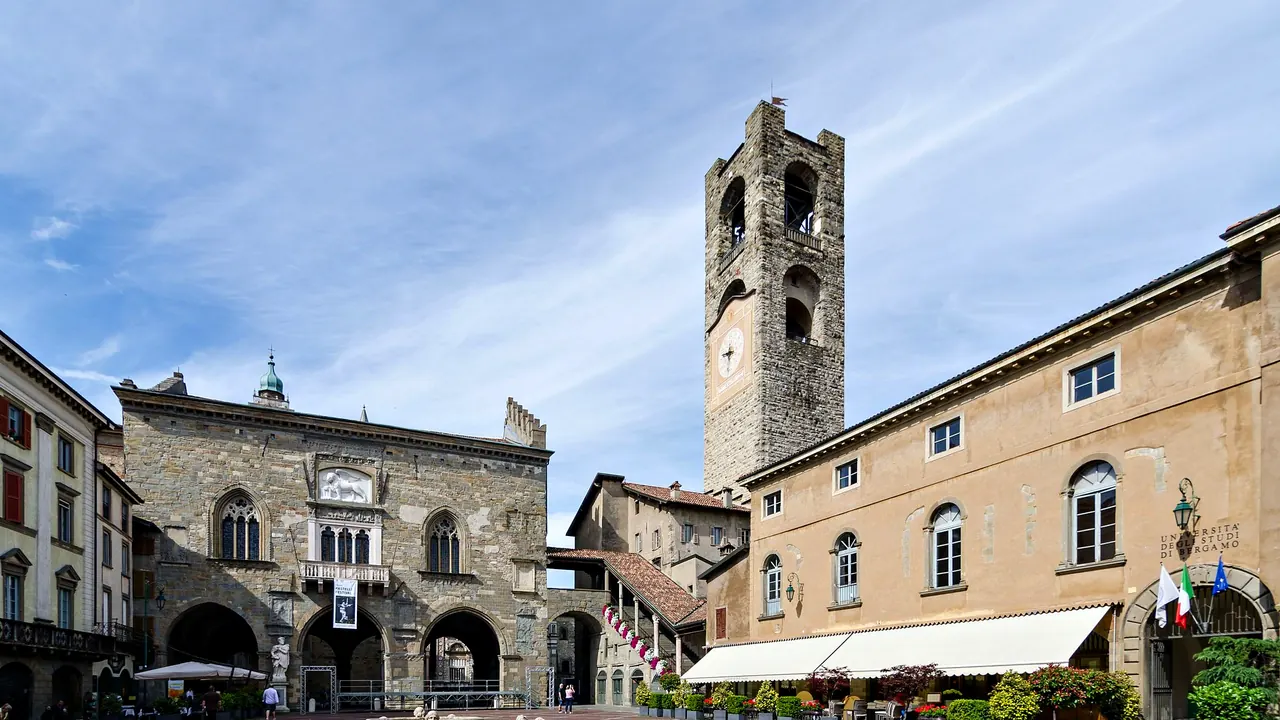
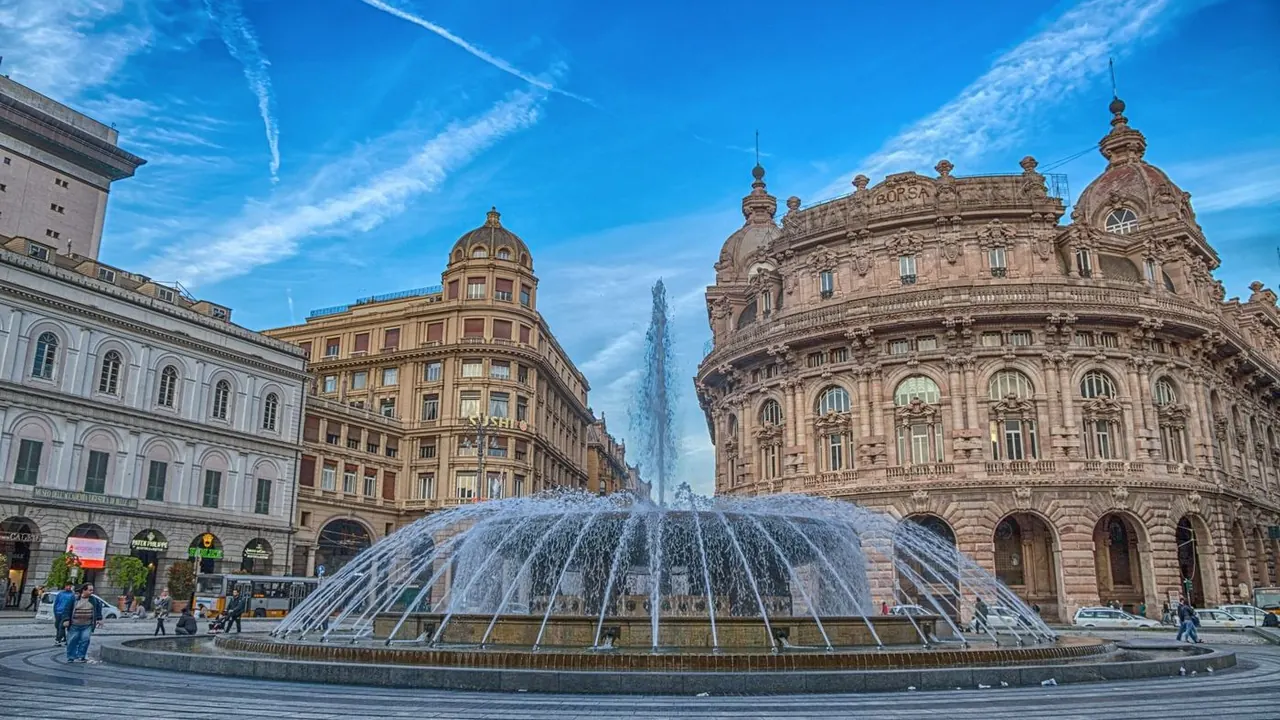
Photos: Bergamo by Steffen Schmitz, CC BY-SA 4.0, cropped; Genoa by Faber1893, CC BY-SA 4.0, cropped.
Bergamo or Genoa?
Our verdict in twelve categories, each scored against the same fixed benchmark cities, and the climate month by month, so you can choose for your trip.
Choose Bergamo for
- wellness
- day trips
- getting around
Bergamo suits a quieter trip built around a beautiful hilltop town and a lot of travel out from it. The Città Alta is compact enough to see in a day or two. After that the trains and roads lead to Milan, Lake Iseo, Lake Como and the Orobie valleys, and the spa at San Pellegrino is close. Pick it if you want calm evenings, mountain food and a good base for Lombardy, and you don't mind having no sea.
Choose Genoa for
- beaches
- food and drink
- nightlife
Genoa is the larger and richer place to stay in. It has a vast medieval old town, palace museums, pesto and focaccia from the source, and the sea right in the city. Days can mix the caruggi with a swim at Nervi or a train to Camogli and the Cinque Terre. Evenings run a little later and the aquarium keeps children happy. Choose it if you want the coast, better street food and more to see without leaving town.
Scoreboard
Twelve categories on one fixed scale from 0 to 100. The shaded stretch is the gap between the two.
Your match
Pick a travel style or drag the sliders, and both match scores follow your weighting.
Wins on wellness and day trips with your weighting.
Wins on beaches and food and drink with your weighting.
What matters to you?
Category by category
What the scores mean for a trip.
Beaches & swimming
Bergamo is inland, so swimming means a trip to Lake Iseo or the Lecco arm of Lake Como. There you swim from lidos with grass, pebble or concrete platforms in water that warms up by July. It is a nice escape on a hot day, not a reason to come.
Genoa has the sea inside the city. There is the small cove at Boccadasse, bathing establishments along Corso Italia and rock platforms below Nervi's promenade. The Riviera towns are a short train ride away. The shores are pebble or coarse sand and lined with rented loungers, but you can swim most afternoons all summer.
Food & drink
Bergamo cooks mountain food: casoncelli in butter and sage, polenta with braised meats and game, and outstanding valley cheeses such as Taleggio and Strachitunt. It also has a stronger fine-dining tier than Genoa.
Genoa still eats better day to day, because its cooking is so local and so easy to find. You can have pesto with trofie, focaccia at breakfast, and farinata or panissa by the slice from old-town shops. The Mercato Orientale shows off Ligurian produce, and the harbour trattorias serve fish with Vermentino.
Culture & sights
Bergamo's strength is concentration. The walled Città Alta, Piazza Vecchia, the Cappella Colleoni and Santa Maria Maggiore are all within a few minutes' walk, and the Accademia Carrara below adds Raphael and Bellini. You can do it well in a day or two.
Genoa has much more depth. Its medieval quarter is one of Europe's largest, and the Rolli palaces on Via Garibaldi hold Van Dyck, Rubens and Paganini's violin. Add the cathedral, the Lanterna and the marble sculpture of Staglieno cemetery, and there are several days of sightseeing that many visitors don't expect.
Nightlife
Neither is a clubbing city, and both centre their evenings on aperitivo. In Bergamo the night stays small: wine bars around Via XX Settembre and Borgo Santa Caterina, drinks on the walls in summer, and an early end. People who want more go to Milan.
Genoa goes on later. On weekends, students fill the old-town squares near Piazza delle Erbe, the Porto Antico adds waterfront bars, and in summer the evening moves to the beach clubs along the coast.
Nature & outdoors
Both have outdoor country right on the doorstep, but of different kinds. From Bergamo you walk up the Colli to San Vigilio or head into the Orobie Alps for rifugi, high lakes and serious hiking. Small ski areas such as Foppolo open in winter, but most of the mountains are much easier with a car.
Genoa has the sea as well as the hills, and much of it can be reached by train. There are fortress trails above Righi, cliff paths across the Portofino promontory to San Fruttuoso and the Cinque Terre terraces. You can also take a boat out to watch whales in the Pelagos Sanctuary.
Day trips
Both make excellent bases, so the choice is about what you want to see. From Bergamo the trips are to art cities and lakes: Milan in under an hour, Lake Iseo's Monte Isola, Lake Como, Crespi d'Adda, Brescia, and Verona or Cremona for a longer day.
From Genoa almost everything is along the coast. Camogli, Portofino, Sestri Levante and the Cinque Terre are strung along one railway, with quieter Noli and Finale Ligure to the west. Milan is a longer ride from here than from Bergamo.
Good for families
Bergamo's funiculars and a gelato on the walls make easy afternoons with children. The bigger draws are outside town, though: Leolandia theme park and the Le Cornelle wildlife park both work best with a car.
Genoa puts its main attraction right in the centre. The aquarium, the Galata museum's submarine and the science centre at the Porto Antico can fill a whole day. Both cities have steep lanes that are hard with a buggy, and Genoa has less green space, but the coves nearby make up for it.
Getting around
The two are about equally easy to get around, and both rely on climbing machines. Bergamo has a funicular linking its flat lower town to the Città Alta, a short bus ride from the airport and direct trains to Milan and Lecco. The upper valleys and the lakeshores are where a car saves time.
Genoa uses lifts, funiculars, a rack railway and a single short metro line to deal with its hills. Buses are slow, but the coastal railway does most of the work and takes you to Nervi and the Riviera without a car. Driving in the centre is best avoided.
Shopping & style
Neither city is worth a trip for shopping alone, and in both the best things to take home are mostly edible. In Bergamo they are the valley cheeses and a bottle of Valcalepio from the counters up in the Città Alta. The lower town's arcades have much the same chains and mid-range fashion as any Italian city of its size, and with Milan so close, Bergamo hardly tries to compete for clothes.
Genoa gives a browser a little more because its old town still has craft shops as well as food shops. Silver filigree and coral made in small workshops in the caruggi are souvenirs that will last longer than a wedge of Taleggio. Via Roma and the Galleria Mazzini also have a smarter range of Italian labels than Bergamo's main streets, though Genoa has no real luxury or design scene either.
Affordability
Both cost about the same, comfortable rather than cheap for northern Italy. What drives the bill is different. In Bergamo, staying in the lower town keeps costs down, while rooms and tables inside the Città Alta cost more.
In Genoa, eating focaccia and farinata in the city keeps things cheap. Costs go up when you spend days in the Riviera resorts and pay for loungers on the beach.
Live music & performing arts
Bergamo's stage life is built around Donizetti. The theatre named after him hosts the autumn festival of his operas, and Bergamo Jazz comes each spring. Outside those dates the programme is provincial, and La Scala in Milan is the usual evening out.
Genoa offers more on an ordinary week. The Teatro Carlo Felice has opera, ballet and symphonic concerts, and the Teatro Nazionale is an established drama company. There are Paganini concerts, and small clubs keep the city's singer-songwriter tradition going.
Wellness & relaxation
Bergamo is the more restful choice. San Pellegrino's grand thermal spa is about forty minutes up Val Brembana, and Trescore's sulphur springs have been used since Roman times. The Città Alta is quiet at the start and end of the day.
Genoa's busy port centre is lively rather than calming. The nearest thermal waters are at Acqui Terme, over an hour inland, so relaxing here mostly means Nervi's villa gardens or a long lunch in a Riviera village.
When should you go?
Pick your month. The climate figures are measured averages, not a forecast.
Bergamo in July
Genoa in July
Daytime high, °C
Rainfall in the month, mm
Where the figures come from
Bergamo has no rain gauge within 25 km of the centre, so its rainfall comes from a gridded climate dataset read at the city rather than from a gauge further away.
Bergamo's sunshine is measured 64 km from the centre, at Lugano.
Genoa has no rain gauge within 25 km of the centre, so its rainfall comes from a gridded climate dataset read at the city rather than from a gauge further away.
Genoa's sunshine is measured 80 km from the centre, at Capo Mele.
Temperature and rainfall are climate normals, averaged over the years shown. Bergamo: 1991-2020 normals, Bergamo / Orio Al Serio (3.9 km from centre). Genoa: 1991-2020 normals, Genova / Sestri (6.7 km from centre).
Bergamo sits on the edge of the Lombard plain and has a more inland climate. Winters are cold, around 7°C by day in January. Summer is hot, near 29°C in July and August, which makes the steep climb to the Città Alta hard going at midday. Rain is spread through the year, with wetter spells in May and from September to November. Late spring and September are the most comfortable months for walking, and the lakes are best for swimming in July and August.
Genoa is milder in winter, around 12°C in January, and summers are slightly less hot. July is very dry and the sunniest month of all. The sea is warm enough to swim from June to September and peaks at about 25°C in August. Autumn is the time to watch, because October brings heavy rain of around 212mm and November is nearly as wet. For Genoa, aim for May to early September. For Bergamo, aim for May, June or September.
Which traveller are you?
On a beach and sun trip, Genoa is the clear choice. You can swim off the rocks at Corso Italia or Nervi, and Riviera coves are a short train ride away. Bergamo can only offer lake lidos on Iseo or Como, which make a day out but not a vacation.
For a food and nightlife trip, Genoa gives you more. It has farinata and fried fish from old-town friggitorie, seafood trattorias and late weekend drinking around Piazza delle Erbe. Bergamo's cheeses and casoncelli are excellent, but its evenings usually end around midnight.
On a relaxing and wellness trip, Bergamo is the better fit. San Pellegrino's Belle Époque thermal spa and the old sulphur springs at Trescore are both close, and the Città Alta is quiet early and late. Genoa's centre is busy, and its nearest thermal waters are over an hour away.
Before you go
| Measure | Bergamo | Genoa |
|---|---|---|
| Official language | Italian | Italian |
| Currency | Euro (EUR) | Euro (EUR) |
| Sockets | CFL230 V, 50 Hz | CFL230 V, 50 Hz |
| Driving side | Right | Right |
| Time zone | UTC+1, UTC+2 in summer | UTC+1, UTC+2 in summer |
| Emergency number | 112 | 112 |
| Elevation | 249 m | 20 m |
| Main airport | Il Caravaggio International Airport (BGY)4 km from centre146 non-stop destinations | Genoa Cristoforo Colombo Airport (GOA)7 km from centre25 non-stop destinations |
| Public holidays this year | 13 days | 13 days |
By the numbers
| Measure | Bergamo | Genoa |
|---|---|---|
| City population | 119,534 | 558,745 |
| People per km² | 2,973 | 2,325 |
| Museums within 10 km | 21 | 51 |
| UNESCO World Heritage sites within 50 km | 6 | 1 |
| Swim season, months above 21 °C | - | 4 months |
Where else could you go?
Every comparison below shares a destination with this one, so you can follow Bergamo or Genoa somewhere new.