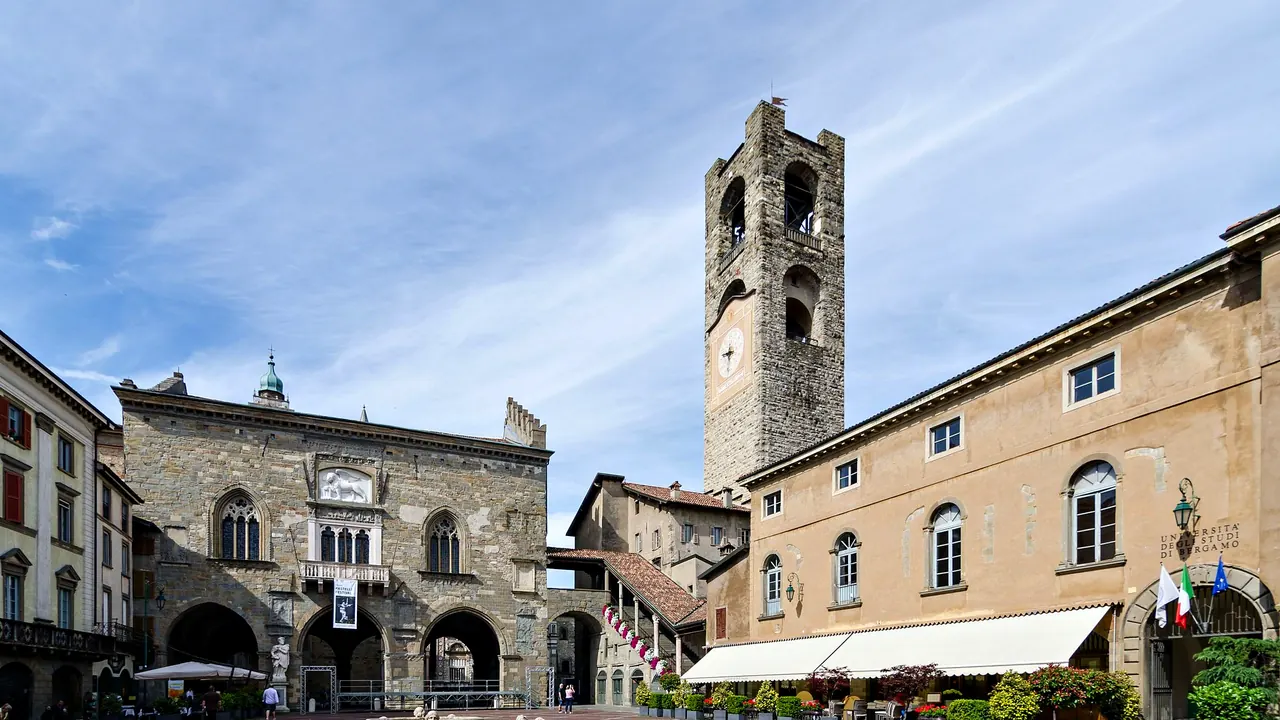
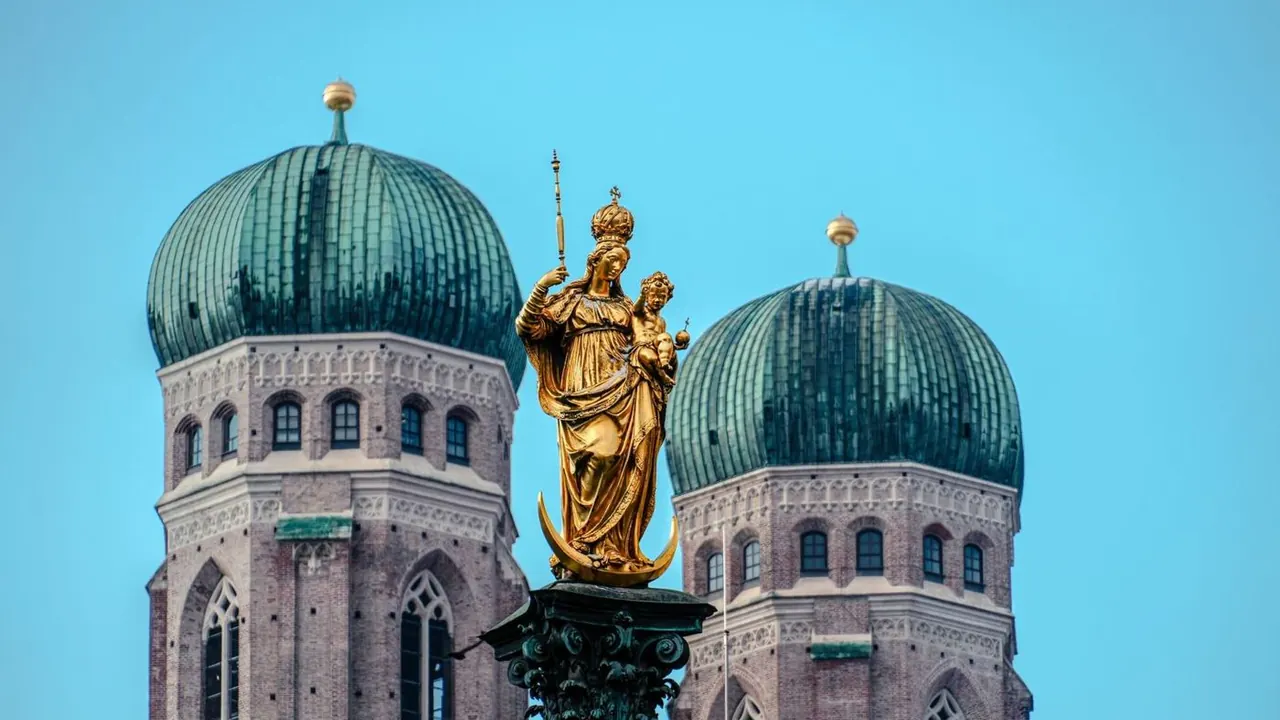
Photos: Bergamo by Steffen Schmitz, CC BY-SA 4.0, cropped; Munich by 0xd1ma, Pexels License.
Bergamo or Munich?
Our verdict in twelve categories, each scored against the same fixed benchmark cities, and the climate month by month, so you can choose for your trip.
Choose Bergamo for
- prices
- beaches
Bergamo suits a traveller who wants one beautiful, walkable old town and a cheaper base for exploring. The walled Città Alta is complete and original in a way Munich's rebuilt centre is not, and a day or two covers it. After that the town is a launch pad for Milan, Lake Iseo, Lake Como and Verona. Hotels and trattorias in the lower town cost noticeably less than anything comparable in Munich, and the evenings are quiet, ending over wine on the old walls.
Choose Munich for
- live music and the arts
- shopping
- nightlife
Munich is the stronger city in almost every other respect. Its art collections, palaces and science museum fill several days, and its opera house and orchestras rank among Europe's best. Families, shoppers and anyone who wants a proper night out will find much more here. The transport network takes you to the Alps, the lakes and the castles without a car, which suits a longer stay if the higher hotel bills are not a problem.
Scoreboard
Twelve categories on one fixed scale from 0 to 100. The shaded stretch is the gap between the two.
Your match
Pick a travel style or drag the sliders, and both match scores follow your weighting.
Wins on prices and beaches with your weighting.
Wins on live music and the arts and shopping with your weighting.
What matters to you?
Category by category
What the scores mean for a trip.
Beaches & swimming
Neither city is a beach destination, and both send summer swimmers to the lakes. The difference is where the water is. In Munich people swim and sunbathe on the gravel banks of the Isar at the Flaucher, inside the city. Bergamo has nothing like that, so a swim means a trip out to the lidos and grassy shores of Lake Iseo or the Lecco arm of Como. Those lakes are a little warmer than the alpine-fed Starnberger See and Ammersee, which are reached by S-Bahn.
Food & drink
Both cities eat well, and both cook hearty regional food with little range beyond it. Bergamo's table is pasta and polenta: casoncelli in butter and sage, braised game, and mountain cheeses such as Taleggio and Strachitunt from the cheese counters of the upper town, with Valcalepio or Franciacorta to drink.
Munich is built around beer. You eat roast pork, Schweinshaxe and white sausage in beer halls and chestnut-shaded gardens, and the Viktualienmarkt is the place for grazing. Choose Bergamo for pasta, cheese and wine, Munich for beer and big plates of meat.
Culture & sights
Bergamo's strength is a single, intact setting. The Venetian walls, Piazza Vecchia, Santa Maria Maggiore and the marble front of the Cappella Colleoni form a hilltop town that has survived almost whole. The Accademia Carrara adds Raphael and Bellini below the hill.
Munich has far more to see. The Kunstareal alone holds the Alte Pinakothek, the Glyptothek and the Lenbachhaus's Blue Rider painters, and the Residenz, Nymphenburg and the vast Deutsches Museum add days more. Its old town is handsome but largely rebuilt, so the pleasure lies in the collections rather than the streets.
Nightlife
Evenings in Bergamo are an aperitivo, a wine bar around Borgo Santa Caterina or a drink on the walls of the Città Alta, and most people are home by midnight. Anyone wanting more takes the train to Milan.
Munich offers a good deal more. Beer halls fill early, the Glockenbachviertel has a dense run of cocktail and gay bars, and a few serious techno clubs go on until morning at weekends. It is orderly rather than wild, but there is a real night out to be had.
Nature & outdoors
Bergamo's hills begin at the city walls. The Colli park climbs from the upper town to San Vigilio, and Val Brembana and Val Seriana lead into the Orobie Alps, with rifugi and high lakes. Most of that high country is much easier to reach with a car.
Munich gives you more, and more of it by train. The Zugspitze, the Wetterstein around Garmisch and Tegernsee are reached by regional rail, the Five Lakes are good for cycling and sailing, and the English Garden, with surfers on the Eisbach, is open country in the middle of the city.
Day trips
Both are excellent bases, and the choice comes down to what you want to see. From Bergamo the trips are short and Italian: Milan's Duomo and Last Supper within an hour, Lake Como, Monte Isola on Lake Iseo, the factory village of Crespi d'Adda, and Verona and Cremona a little further.
From Munich the trips are longer and cover two countries: Salzburg and Innsbruck across the border, Nuremberg and Regensburg to the north, and the royal castles of Neuschwanstein and Herrenchiemsee.
Good for families
Bergamo works best for families as a base rather than a destination in itself. Leolandia, near the Adda, is pitched at younger children, with rides, shows and a miniature Italy of famous landmarks, and Le Cornelle at the foot of the hills fills an easy half day. The rest of a good family stay comes from adding days on the shores of Lake Iseo or up in the mountain valleys.
Munich keeps children busy for longer without leaving town. The Sea Life aquarium in the Olympic Park and the trains and cars of the transport museum fill the gaps between grown-up sights, and the English Garden makes an easy summer afternoon. For a big day out, Legoland Deutschland is about an hour and a half away by car.
Getting around
Bergamo is easy on foot once you are in either part of town, and the funicular saves the steep climb between them. The airport is a short bus ride away and trains run straight to Milan. The valleys and lake shores, though, are much simpler by car.
Munich is easier all round. The flat, pedestrianised centre is linked to the museums, Nymphenburg and the airport by one integrated U-Bahn, S-Bahn and tram network. Cycling along the Isar is a pleasure, and regional trains make a car unnecessary even for the mountains.
Shopping & style
In Bergamo the best shopping is food. The main lane of the Città Alta is lined with cheese shops, delicatessens and wine sellers, while Via XX Settembre has mid-range chains, and for fashion people go to Milan.
Munich has far more to offer: luxury houses on Maximilianstrasse, department stores on Kaufingerstrasse, independent boutiques in Glockenbach and the old delicatessen Dallmayr. It also has a souvenir Bergamo cannot match in Tracht from specialist tailors, plus the craft stalls of the December Christmas markets.
Affordability
Bergamo is the cheaper stay. Lower-town hotels are fairly priced for a city with this much to see, and the buses and funicular cost little. Rooms inside the Città Alta and summer weekends cost more.
In Munich, hotels are expensive all year and climb steeply during the Oktoberfest and the big trade fairs. A beer garden picnic, the free parks and lakes and token-fee museum Sundays help, but a stay here costs clearly more.
Live music & performing arts
Bergamo's stage life centres on its native composer. The Teatro Donizetti holds an opera season and an autumn Donizetti festival that draws serious opera fans, and Bergamo Jazz has a long history. Beyond those, the programme is a provincial city's, though La Scala is an easy evening trip.
Munich is a different league. The Bavarian State Opera in the National Theatre is one of the world's leading companies, three major orchestras play halls such as the Herkulessaal, and the Cuvilliés Theatre and Gärtnerplatztheater add chamber opera and operetta.
Wellness & relaxation
Bergamo's relaxation is mostly out of town, at the Belle Époque spa of San Pellegrino Terme up Val Brembana or the old sulphur springs of Trescore Balneario. In town, the quiet mornings in the Città Alta do the rest.
Munich has a bathing culture in the city itself. There is the Art Nouveau Müller'sches Volksbad with its Roman-style steam bath, and public saunas with infusion rituals, mixed and textile-free in the German way. The huge thermal complex at Erding is forty minutes away, and a lazy afternoon in a beer garden counts as rest too.
When should you go?
Pick your month. The climate figures are measured averages, not a forecast.
Bergamo in July
Munich in July
Daytime high, °C
Rainfall in the month, mm
Where the figures come from
Bergamo has no rain gauge within 25 km of the centre, so its rainfall comes from a gridded climate dataset read at the city rather than from a gauge further away.
Bergamo's sunshine is measured 64 km from the centre, at Lugano.
Temperature and rainfall are climate normals, averaged over the years shown. Bergamo: 1991-2020 normals, Bergamo / Orio Al Serio (3.9 km from centre). Munich: 1991-2020 normals, München (1.9 km from centre).
Bergamo is the warmer of the two all year. Midsummer days reach about 29°C, against 25°C in Munich, so July and August are good for the lakes but hard work on the steep lanes of the Città Alta. Its wettest stretch comes in autumn, with October around 129mm. That makes May, June and early September the best balance for walking, though late spring is showery too. Winter in Bergamo is cool but noticeably brighter than in Munich.
Munich's rain falls mainly in summer, about 121mm in June, often as afternoon storms, and its winters are colder and greyer. Late spring and September are its best walking months: mild, sunnier than autumn and drier than high summer. Lake swimming is possible in both from about June to early September, and Munich is the more comfortable of the two in the hottest weeks.
Which traveller are you?
On a culture and arts trip, Munich is the clear choice. The Alte Pinakothek, the Residenz and the Deutsches Museum make for days of sightseeing, and in the evening you have the Bavarian State Opera and three major orchestras. Bergamo's Città Alta, Accademia Carrara and Donizetti theatre are lovely but take less time.
On a family trip with children, Munich makes things easier. The zoo on the Isar, the hands-on museums, beer gardens with playgrounds and transport built for pushchairs cover most days. Bergamo has funiculars and gelato, but cobbles and car-dependent theme parks make it harder work.
On a tight budget, Bergamo makes more sense. Lower-town hotels, trattorias and aperitivo bars are moderately priced, and cheap trains reach Milan and the lakes for day trips. Munich is Germany's most expensive city, and its hotels will take most of the money.
Before you go
| Measure | Bergamo | Munich |
|---|---|---|
| Official language | Italian | German |
| Currency | Euro (EUR) | Euro (EUR) |
| Sockets | CFL230 V, 50 Hz | CF230 V, 50 Hz |
| Driving side | Right | Right |
| Time zone | UTC+1, UTC+2 in summer | UTC+1, UTC+2 in summer |
| Emergency number | 112 | 112 |
| Elevation | 249 m | 519 m |
| Main airport | Il Caravaggio International Airport (BGY)4 km from centre146 non-stop destinations | Munich Airport (MUC)29 km from centre210 non-stop destinations |
| Public holidays this year | 13 days | 12 days |
By the numbers
| Measure | Bergamo | Munich |
|---|---|---|
| City population | 119,534 | 1,505,036 |
| People per km² | 2,973 | 4,844 |
| Museums within 10 km | 21 | 75 |
| UNESCO World Heritage sites within 50 km | 6 | 1 |
Where else could you go?
Every comparison below shares a destination with this one, so you can follow Bergamo or Munich somewhere new.