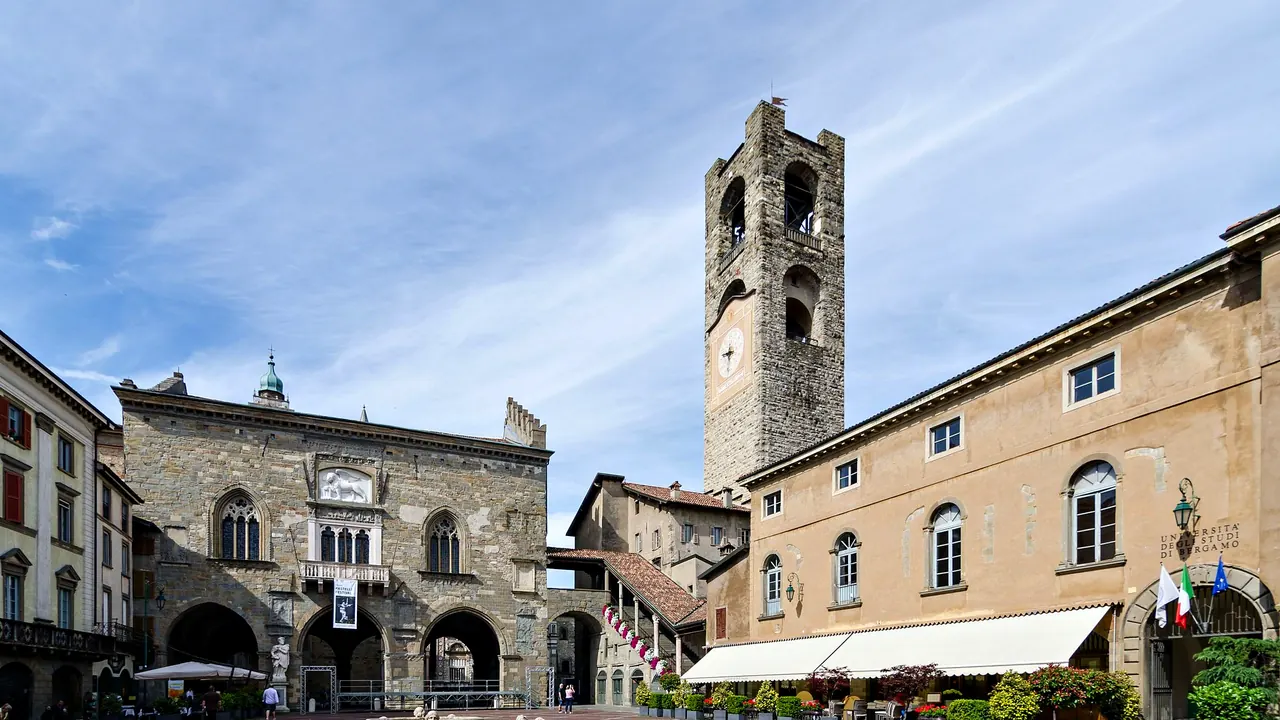
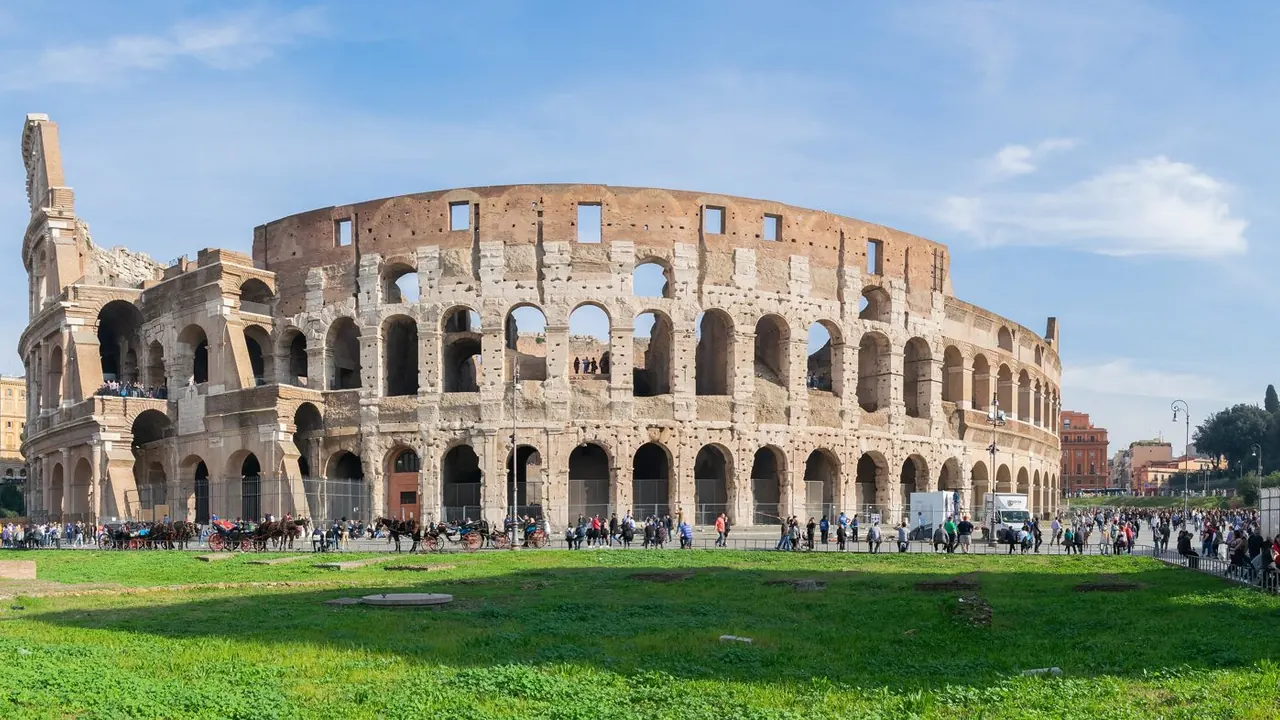
Photos: Bergamo by Steffen Schmitz, CC BY-SA 4.0, cropped; Rome by Tournasol7, CC BY-SA 4.0, cropped.
Bergamo or Rome?
Our verdict in twelve categories, each scored against the same fixed benchmark cities, and the climate month by month, so you can choose for your trip.
Choose Bergamo for
- nature and the outdoors
- prices
- wellness
Bergamo suits a smaller, slower trip. The walled Città Alta fits into a weekend, the Orobie Alps and Lakes Iseo and Como are close by, and Milan, Brescia and Verona are easy train rides away. Rooms cost less, the funiculars make the hill painless, and San Pellegrino's spa is up the valley. It is the better choice for walkers, cyclists and anyone who prefers quiet evenings to late nights.
Choose Rome for
- culture and sights
- shopping
- nightlife
Rome is the city for travellers who want history on a grand scale and want to eat well while they see it. The Forum, the Vatican and Bernini's piazzas could fill a week on their own, and the trattorias of Testaccio and Trastevere are just as much a reason to come. The evenings run later, the shopping goes deeper and the music calendar is richer. In return you pay more for a room, walk hot cobbles and share the big sights with crowds.
Scoreboard
Twelve categories on one fixed scale from 0 to 100. The shaded stretch is the gap between the two.
Your match
Pick a travel style or drag the sliders, and both match scores follow your weighting.
Wins on nature and the outdoors and prices with your weighting.
Wins on culture and sights and shopping with your weighting.
What matters to you?
Category by category
What the scores mean for a trip.
Beaches & swimming
Neither city is a beach destination, but Rome at least has the sea. Ostia's long strips of dark volcanic sand are half an hour away by suburban train, with Fregene a more relaxed choice to the north. The water is warm in high summer but rarely clear, and the lidos fill with Romans at weekends.
Bergamo has only lakes. There are lidos and grassy shores on Lake Iseo around Sarnico and Lovere, and the Lecco arm of Lake Como is also close. The shores are pebble, grass or concrete platforms rather than sand, so treat a swim there as a cooling day out in July and not a reason to choose Bergamo.
Food & drink
Bergamo cooks Lombard mountain food: casoncelli in butter and sage, polenta with braised meat and game, and valley cheeses such as Taleggio, Branzi and Strachitunt. Its wine is stronger than Rome's, with Valcalepio from the province and Franciacorta from just over the border. It is rich, rewarding eating, but over a week the range feels narrow.
Rome gives you much more to eat. Carbonara, cacio e pepe, amatriciana and gricia make a backbone, and around them come Jewish-style artichokes in the Ghetto, the offal dishes of Testaccio, supplì, and pizza both by the slice and in the thin evening style. The rule is to avoid the menus near the big sights and walk to Trastevere, Monti or Testaccio.
Culture & sights
Bergamo has one superb set piece. Inside the Venetian walls of the Città Alta stand Piazza Vecchia, Santa Maria Maggiore and the marble front of the Cappella Colleoni, and below the hill the Accademia Carrara holds Raphael, Bellini and Mantegna. A day or two covers it well.
Rome works on a completely different scale. The Forum, the Palatine and the Pantheon stand in the middle of town, beneath early Christian mosaics and the Baroque city of Bernini and Borromini, and the Vatican, the Borghese and Palazzo Massimo would each fill a morning. In Rome the hard part is deciding what to leave out.
Nightlife
Rome has the livelier evenings. Trastevere's lanes stay crowded with wine bars until late, Monti has small cocktail bars, San Lorenzo draws students and Pigneto an arty crowd. Even so, Rome is a city for drinking outdoors in the piazzas rather than dancing, and its few clubs around Testaccio and Ostiense have no great reputation.
Bergamo is quieter. The evening is a long aperitivo around Via XX Settembre or Borgo Santa Caterina, or a glass on the upper-town walls in summer, and most nights end around midnight. Anyone who wants more takes the train to Milan.
Nature & outdoors
Bergamo has much more of the outdoors on its doorstep. The Colli di Bergamo park climbs straight from the walls to San Vigilio, and Val Brembana and Val Seriana lead into the Orobie Alps, with rifugi, high lakes and small ski areas such as Foppolo. Lakes Iseo and Como add sailing and lakeside cycling, though a car helps for the mountains.
Rome's green spaces are mostly within reach of the centre. The villa parks of Borghese, Pamphili and Ada are close by, and cycling the Appian Way past tombs and aqueducts is a fine ride. The Alban crater lakes and the Apennines are further out, and summer heat rules out midday activity.
Day trips
Both cities are excellent bases, and Rome's range is a little wider. From Bergamo you can reach Milan's Duomo and Last Supper in under an hour, the towns on Lake Como and Monte Isola on Iseo, the factory village of Crespi d'Adda, and Brescia, Cremona and Verona by train.
Rome adds ancient Ostia, Hadrian's Villa and Villa d'Este at Tivoli, the Etruscan tombs at Tarquinia and Cerveteri, and Orvieto on its cliff. High-speed trains put Florence and Naples within about ninety minutes. Bergamo's trips are mostly lakes and Lombard cities, while Rome's reach back to the Etruscans and Pompeii.
Good for families
The two are about even for children, but in different ways. Bergamo is calmer and smaller. Children enjoy the funicular rides and gelato on the walls, Leolandia's rides for younger children are twenty minutes away by car, and the Le Cornelle wildlife park fills half a day. The upper town's steep lanes are hard work with a buggy.
Rome has more to fire children's imaginations, with gladiators, catacombs and the Mouth of Truth, plus the Bioparco zoo and rowing boats in Villa Borghese. Long queues, crowds and summer heat wear young children out quickly, so a gentle pace in spring or autumn works best.
Getting around
Bergamo is the easier city to get around. Two funiculars take the effort out of the climb to the Città Alta and San Vigilio, the airport is a short bus ride away, and direct trains run to Milan, Brescia and Lecco. Only the upper valleys and the lake shores really call for a car.
In Rome you will mostly be on foot. The walk from the Colosseum through the Pantheon to Trastevere is short and full of interest, but the metro barely enters the historic core, buses get stuck in traffic, and cobbles and heat make for tired feet.
Shopping & style
Rome is far stronger for shopping. The big fashion houses line Via Condotti and the streets off the Spanish Steps, Monti has independent boutiques and vintage shops, Via Margutta has artisan workshops, and Porta Portese holds a huge Sunday flea market. Leather goods and handmade shoes are the best buys.
Bergamo's shopping is mostly everyday chains along Via XX Settembre and the Sentierone. Its strength is food: the upper town's cheese shops, salumi and wine sellers are where to find something to take home. Fashion shoppers go to Milan.
Affordability
Bergamo is easier on the budget, mostly because rooms in the lower town are fairly priced. Many travellers stay there and explore Lombardy by train. Trattorias, buses and the funicular are all reasonable, though rooms inside the Città Alta and summer weekends cost more.
Rome's high cost comes from its accommodation. Rooms in the centre are small and expensive, and the Vatican, the Colosseum and the Borghese all charge substantial entry fees. Day to day, though, standing espresso, pizza al taglio, free water from the fountains and churches full of masterpieces keep spending under control.
Live music & performing arts
Bergamo's stage life centres on its native composer. The Teatro Donizetti holds an autumn festival of his operas, the Teatro Sociale stages smaller productions in the upper town, and Bergamo Jazz is a long-running spring festival. Outside those, the programme is that of a provincial city.
Rome offers more across the year. The Teatro dell'Opera moves outdoors to the Baths of Caracalla in summer, the Santa Cecilia orchestra plays at the Auditorium Parco della Musica, and churches and jazz clubs fill other evenings. Theatre in both cities is in Italian, so visitors mostly go for the music.
Wellness & relaxation
Bergamo is the more restful choice. San Pellegrino Terme, a Belle Époque spa town, is about forty minutes up Val Brembana, and Trescore Balneario's sulphur springs have been used since Roman times. In the city itself, the upper town is quiet early in the morning and in the evening.
Rome's centre is loud with scooters and crowds. Outside hotel spas, the thermal options are the Acque Albule pools at Bagni di Tivoli and the free hot springs near Viterbo. The calm moments come from a long lunch, the evening passeggiata or a sit in the villa gardens and on the Aventine.
When should you go?
Pick your month. The climate figures are measured averages, not a forecast.
Bergamo in July
Rome in July
Daytime high, °C
Rainfall in the month, mm
Where the figures come from
Bergamo has no rain gauge within 25 km of the centre, so its rainfall comes from a gridded climate dataset read at the city rather than from a gauge further away.
Bergamo's sunshine is measured 64 km from the centre, at Lugano.
Rome's sunshine is measured 31 km from the centre, at Vigna Di Valle.
Temperature and rainfall are climate normals, averaged over the years shown. Bergamo: 1991-2020 normals, Bergamo / Orio Al Serio (3.9 km from centre). Rome: 1991-2020 normals, Roma / Ciampino (15.1 km from centre).
Bergamo sits at the foot of the Alps and has cold winters, with grey, damp days from November to February. Spring and early autumn are the best times for walking the upper town and the valleys. Summer peaks at around 29°C, warm enough for a swim in the lakes in July and August. Rain is spread through the year, but it is heaviest in May and again from September to November, when October can bring 129mm.
Rome is several degrees warmer for most of the year and noticeably sunnier through the summer. July and August reach about 31°C and are almost dry, with around 21mm in July, and the sea warms to 25°C, which makes those months right for Ostia and too hot for long days among the ruins. April, May and October are the best months for sightseeing. The rain arrives in autumn and lasts into December, but winter afternoons are mild compared with Bergamo's.
Which traveller are you?
On a culture and arts trip, choose Rome. Bergamo makes a rewarding weekend: one walled hill town and one fine gallery. Rome has ancient, Christian, Renaissance and Baroque art layered street by street, enough for weeks, and opera and concerts to fill the evenings.
For an outdoors trip, pick Bergamo, where the mountains start at the edge of town. Walks leave straight from the walls, and the Alpine valleys are an easy drive. From Rome, real hills take a separate expedition, and summer heat cuts the walking day short.
On a tight budget, Bergamo goes further. A lower-town room works as a base for seeing Lombardy by train, so the money goes on days out rather than on beds. In Rome the room and the ticketed sights take most of it, however cheaply you eat.
Before you go
| Measure | Bergamo | Rome |
|---|---|---|
| Official language | Italian | Italian |
| Currency | Euro (EUR) | Euro (EUR) |
| Sockets | CFL230 V, 50 Hz | CFL230 V, 50 Hz |
| Driving side | Right | Right |
| Time zone | UTC+1, UTC+2 in summer | UTC+1, UTC+2 in summer |
| Emergency number | 112 | 112 |
| Elevation | 249 m | 21 m |
| Main airport | Il Caravaggio International Airport (BGY)4 km from centre146 non-stop destinations | Rome–Fiumicino Leonardo da Vinci International Airport (FCO)23 km from centre242 non-stop destinations |
| Public holidays this year | 13 days | 13 days |
By the numbers
| Measure | Bergamo | Rome |
|---|---|---|
| City population | 119,534 | 2,748,109 |
| People per km² | 2,973 | 2,135 |
| Museums within 10 km | 21 | 178 |
| UNESCO World Heritage sites within 50 km | 6 | 8 |
| Swim season, months above 21 °C | - | 5 months |
Where else could you go?
Every comparison below shares a destination with this one, so you can follow Bergamo or Rome somewhere new.