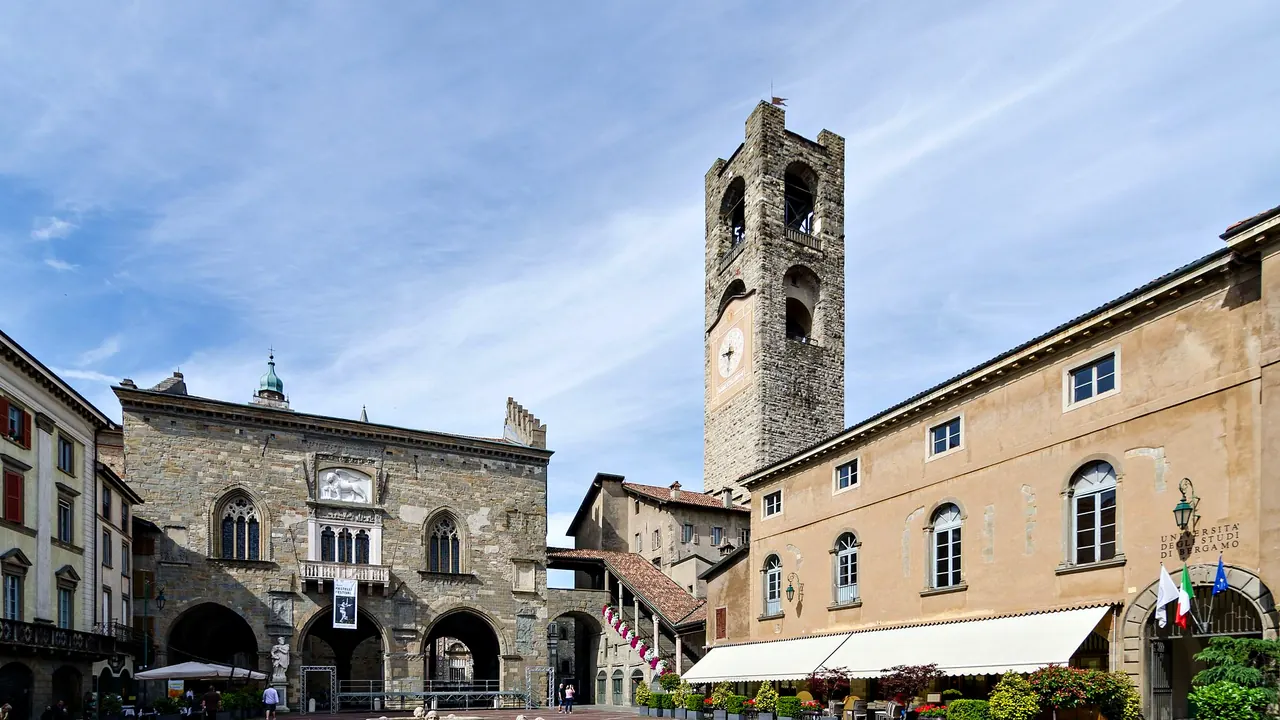
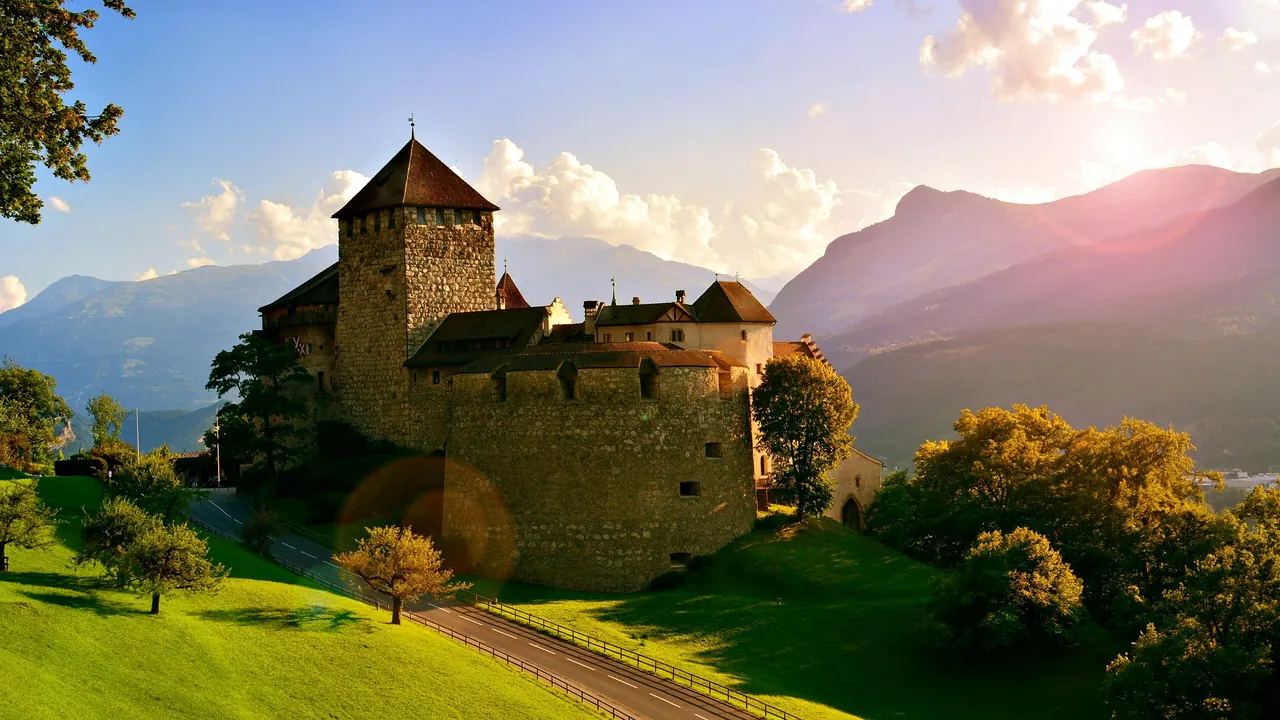
Photos: Bergamo by Steffen Schmitz, CC BY-SA 4.0, cropped; Vaduz by Justin LaBerge, CC BY 2.0, cropped.
Bergamo or Vaduz?
Our verdict in twelve categories, each scored against the same fixed benchmark cities, and the climate month by month, so you can choose for your trip.
Choose Bergamo for
- prices
- culture and sights
- food and drink
Bergamo suits the traveller who wants a proper Italian city at a manageable size. It has a walled hilltop town inside Venetian ramparts, a serious picture gallery in the Accademia Carrara, casoncelli and valley cheeses at the table, and trains to Milan, Verona and the lakes for the days in between. It is also far kinder on the budget and has more going on in the evening, even if the night still ends around midnight.
Choose Vaduz for
- nature and the outdoors
Vaduz is for someone who comes to walk. The Rätikon peaks, the Fürstensteig path and the villages of Triesenberg and Malbun start a short ride from a quiet, very safe little capital, and Bad Ragaz sits just across the Rhine for tired legs afterwards. Expect early nights, plain Alpine cooking and Swiss prices, and treat the town's two modern art museums as a bonus rather than the point of the trip.
Scoreboard
Twelve categories on one fixed scale from 0 to 100. The shaded stretch is the gap between the two.
Your match
Pick a travel style or drag the sliders, and both match scores follow your weighting.
Wins on prices and culture and sights with your weighting.
Wins on nature and the outdoors with your weighting.
What matters to you?
Category by category
What the scores mean for a trip.
Beaches & swimming
Neither has a beach, but Bergamo gets you closer to a proper swimming day. The lidos and grassy shores of Lake Iseo at Sarnico and Lovere and the Lecco arm of Como are easy outings, and the water warms to about 23°C by July.
From Vaduz the options are the municipal open-air pools, the steep-walled Walensee half an hour away or Lake Constance a little further, all with cooler water and a shorter season. In both places a swim is a break from the rest of the trip, nothing more.
Food & drink
Bergamo eats far better. Casoncelli with butter and sage, polenta with braised game and mushrooms, and cheeses such as Taleggio, Branzi and Strachitunt from the surrounding valleys make a real regional kitchen, with trattorias and pastry shops in the Città Alta and aperitivo bars below.
Vaduz has a handful of hotel dining rooms and hill inns serving Käsknöpfle and rösti, solid but limited, and no market culture. Its one strong card is wine from the prince's estate below the castle, a local answer to Bergamo's Valcalepio and nearby Franciacorta.
Culture & sights
Bergamo is in a different league here. The Città Alta is a nearly complete walled town inside UNESCO-listed Venetian fortifications, with Piazza Vecchia, the Baroque interior of Santa Maria Maggiore and the marble front of the Cappella Colleoni. Below the hill, the Accademia Carrara holds Raphael, Bellini and Mantegna.
Vaduz offers a sharper, narrower selection: modern art at the Kunstmuseum and the Hilti Art Foundation side by side, plus the National Museum and the stamp museum. The castle can only be admired from outside, and one unhurried day covers it all.
Nightlife
Neither is a place for a big night, but Bergamo at least has an evening. Aperitivo runs on into wine bars around Via XX Settembre and Borgo Santa Caterina, and in summer people drink in the upper town's squares and along the walls until around midnight.
Vaduz goes quiet after dinner, leaving a few wine bars and hotel lounges on the Städtle. For anything more, Bergamo sends people to Milan and Vaduz sends them to Feldkirch or Zurich.
Nature & outdoors
Both have mountains at the edge of town, but in Vaduz they are easier to reach. Trails climb straight from the centre through vineyards and beech forest, and buses and the road reach Malbun in about half an hour, putting the Rätikon ridge walks and the exposed Fürstensteig within a short ride with no car needed. The flat Rhine dam path suits cyclists, and Malbun has small ski slopes in winter.
Bergamo's Colli park rises from the upper town to San Vigilio, and the Orobie Alps are the bigger and higher range, with rifugi, high lakes and serious hiking up Val Brembana and Val Seriana. Getting deep into them takes longer, though, and a car helps. Its particular strength is water, with Iseo and Como for sailing and lakeside cycling.
Day trips
Bergamo is the stronger base, largely because of its trains. Milan's Duomo and Last Supper are under an hour away and Lakes Iseo and Como are closer still. Brescia, Cremona and Verona all work as day returns, and the Crespi d'Adda factory village is half an hour off.
Vaduz gives you two countries: Feldkirch in twenty minutes, St Gallen's abbey library and Appenzell in about an hour, and Lindau and Bregenz on Lake Constance. With no station in town, though, many outings mean a change at Buchs or Sargans, or a hire car.
Good for families
Bergamo gives children more to do. The two funiculars up to the Città Alta and San Vigilio are a treat in themselves, and the Leolandia theme park and the Le Cornelle wildlife park are short drives away. The upper town's steep cobbles are hard going with a buggy, though.
Vaduz is very safe and its flat centre is easy with a pushchair, but nothing there is built for children. It works best for older ones who like hiking, with open-air pools in summer and the beginner slopes at Malbun in winter.
Getting around
Bergamo has more ways to get around. Funiculars link the lower town to the Città Alta and San Vigilio, buses cover the climb and the airport run, a light-rail line goes up Val Seriana, and direct trains reach Milan, Brescia and Lecco.
Vaduz is simpler on foot, with everything on one short, flat street, and its buses reach every village and climb to Malbun. The catch is the missing railway, since train journeys start from Buchs, Sargans or Feldkirch.
Shopping & style
Bergamo is the better place to shop, especially for food: the main lane of the Città Alta is lined with cheese shops, delicatessens and wine sellers, and the arcades of the Sentierone and Via XX Settembre cover mid-range fashion. Vaduz has a few watch, jewellery and souvenir shops on the Städtle, plus its collectable stamps and local wine. For serious fashion, Bergamo sends you to Milan and Vaduz to Zurich.
Affordability
Bergamo is comfortable rather than cheap, but its lower-town hotels and trattorias are fairly priced and the buses and funicular cost little, so a week there is manageable. Vaduz is among the most expensive places to stay in Europe, with Swiss prices for rooms and even a simple lunch and few hotels to choose from. Some visitors cut the cost by sleeping across the border in Austria.
Live music & performing arts
Bergamo has a real operatic identity as Donizetti's birthplace. The Teatro Donizetti runs a season of opera and concerts and an autumn festival of his works, the Teatro Sociale adds smaller productions, Bergamo Jazz has a long history each spring, and La Scala is an evening away.
Vaduz keeps a modest calendar: the national stage in Schaan, a short orchestral season, a summer classical festival and occasional church concerts. Over a week you will find something to attend, but it is no reason to go.
Wellness & relaxation
Both rely on spa towns nearby rather than a bathing culture of their own. Bergamo has two to choose from: the Belle Époque thermal spa at San Pellegrino Terme, about forty minutes up Val Brembana, and the sulphur springs of Trescore Balneario, used since Roman times. Quiet early mornings on the Città Alta walls add to it.
Vaduz has Bad Ragaz, twenty-five minutes across the Rhine, with its large public thermal bath fed from the Tamina gorge. The town itself is calm, with quiet streets and early evenings, which suits a slow stay of walking and soaking.
When should you go?
Pick your month. The climate figures are measured averages, not a forecast.
Bergamo in July
Vaduz in July
Daytime high, °C
Rainfall in the month, mm
Where the figures come from
Bergamo has no rain gauge within 25 km of the centre, so its rainfall comes from a gridded climate dataset read at the destination rather than from a gauge further away.
Bergamo's sunshine is measured 64 km from the centre, at Lugano.
Vaduz's temperatures are measured 51 km from the centre, at Sigmarszell-Zeisertsweiler.
Vaduz has no rain gauge within 25 km of the centre, so its rainfall comes from a gridded climate dataset read at the destination rather than from a gauge further away.
Temperature and rainfall are climate normals, averaged over the years shown. Bergamo: 1991-2020 normals, Bergamo / Orio Al Serio (3.9 km from centre). Vaduz: 1991-2020 normals, Sigmarszell-Zeisertsweiler (51.3 km from centre).
Bergamo is warmer in every month. July and August reach 29°C, warm enough for lake swimming but sticky for the climb to the Città Alta at midday. Rain builds from May and is heaviest in autumn, when September, October and November each bring around 125mm. For walking the streets, April is the pick, mild and fairly dry, with June a warm second. Winter is cold but clearly sunnier than in the Rhine valley.
Vaduz tops out at about 24°C, so high summer is good mountain-walking weather rather than too hot for anything, though July and August are also its wettest months. June and September give the best balance there, and September, at around 19°C, is noticeably drier than August. Winter in the valley is cold and grey, with only about 52 hours of sunshine in December, and is better spent on the slopes at Malbun.
Which traveller are you?
On a trip on a tight budget, Bergamo is the clear pick. Hotels and trattorias in the lower town are fairly priced and the funicular costs little, while Vaduz charges Swiss prices for rooms and meals and has almost nothing at the cheap end.
For a culture and arts trip, choose Bergamo. The Venetian walls of the Città Alta, Santa Maria Maggiore, the Cappella Colleoni, the old masters of the Accademia Carrara and opera at the Teatro Donizetti outweigh Vaduz's two fine modern art museums.
On an outdoors trip, Vaduz has the edge. Trails leave straight from the centre through vineyards, buses climb to Malbun, and the Rätikon ridges are close at hand. Bergamo's best Orobie hiking lies deeper up the valleys and is easier with a car.
Before you go
| Measure | Bergamo | Vaduz |
|---|---|---|
| Official language | Italian | German |
| Currency | Euro (EUR) | Swiss Franc (CHF) |
| Sockets | CFL230 V, 50 Hz | CJ230 V, 50 Hz |
| Driving side | Right | Right |
| Time zone | UTC+1, UTC+2 in summer | UTC+1, UTC+2 in summer |
| Emergency number | 112 | 112 |
| Elevation | 249 m | 455 m |
| Main airport | Il Caravaggio International Airport (BGY)4 km from centre145 non-stop destinations | Zürich Airport (ZRH)81 km from centre226 non-stop destinations |
| Public holidays this year | 13 days | 21 days |
By the numbers
| Measure | Bergamo | Vaduz |
|---|---|---|
| Population | 119,534 | 5,668 |
| People per km² | 2,973 | 328 |
| Museums within 10 km | 21 | 7 |
| UNESCO World Heritage sites within 50 km | 6 | 3 |
Where else could you go?
Every comparison below shares a destination with this one, so you can follow Bergamo or Vaduz somewhere new.