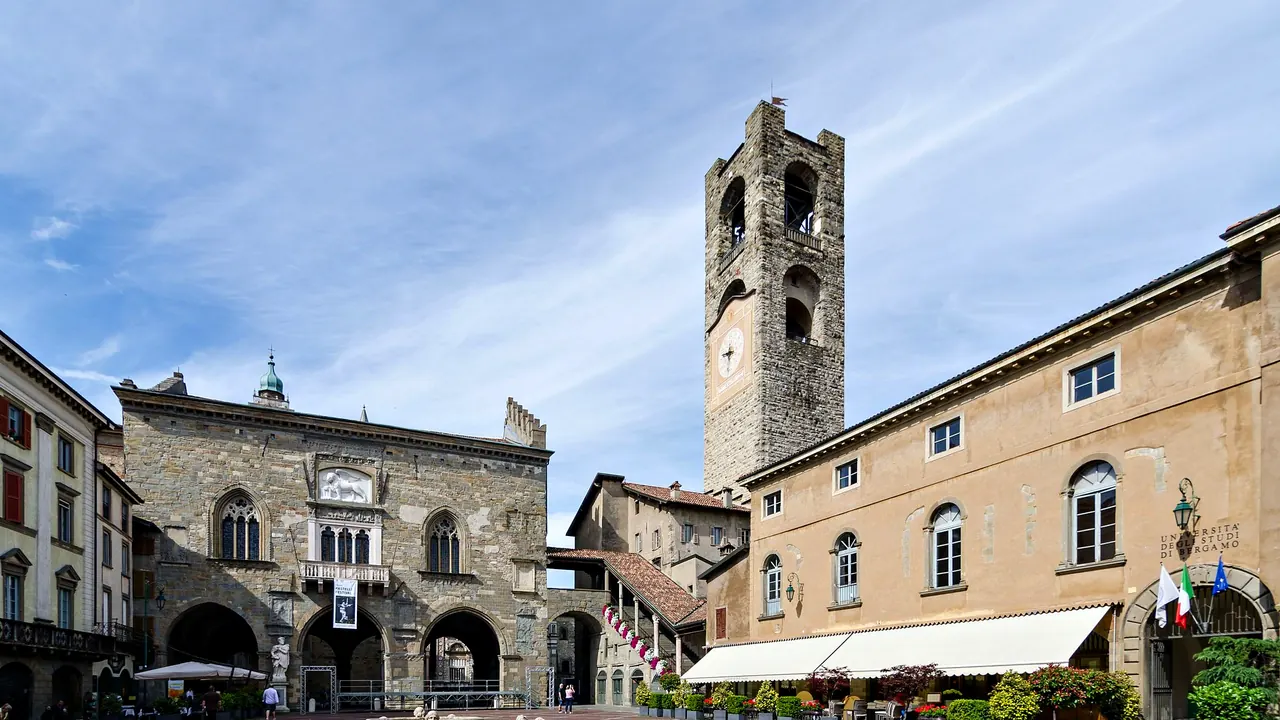
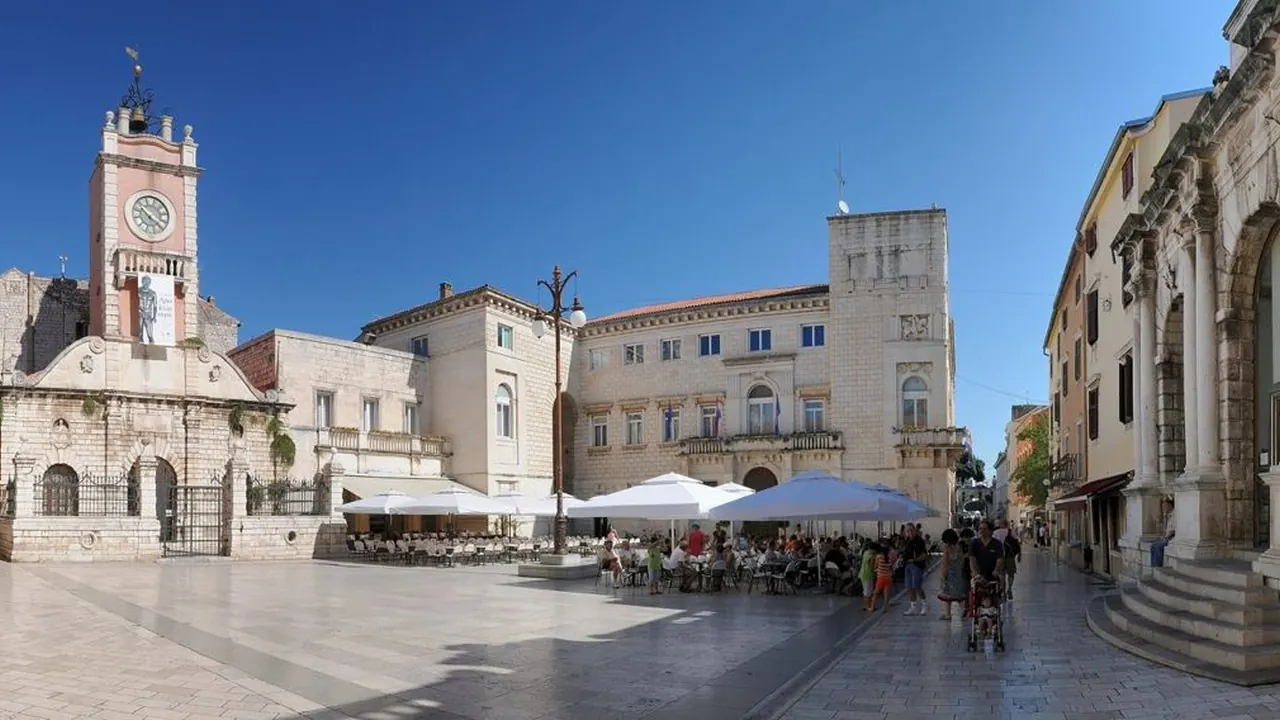
Photos: Bergamo by Steffen Schmitz, CC BY-SA 4.0, cropped; Zadar by Böhringer Friedrich, CC BY-SA 2.5, cropped.
Bergamo or Zadar?
Our verdict in twelve categories, each scored against the same fixed benchmark cities, and the climate month by month, so you can choose for your trip.
Choose Bergamo for
- live music and the arts
- wellness
- day trips
Bergamo suits travellers who want art, history and good food, with the option to see more of northern Italy. The walled Città Alta and the Accademia Carrara reward a slow visit, and the city works well as a base without a car. Milan, the lakes, Brescia and Verona are all easy to reach by train, and there is opera in Donizetti's home town. It is better for a city trip at any time of year than for lying in the sun.
Choose Zadar for
- beaches
- nature and the outdoors
- nightlife
Zadar is the choice if the sea is the main point of the trip. In summer you swim off the old town promenade, take ferries out to the islands and spend days sailing the Kornati or hiking in Paklenica. Its Roman and medieval peninsula is compact and enjoyable, but the city itself offers less to do. People come for the outdoors, the water and the sunsets over the islands.
Scoreboard
Twelve categories on one fixed scale from 0 to 100. The shaded stretch is the gap between the two.
Your match
Pick a travel style or drag the sliders, and both match scores follow your weighting.
Wins on live music and the arts and wellness with your weighting.
Wins on beaches and nature and the outdoors with your weighting.
What matters to you?
Category by category
What the scores mean for a trip.
Beaches & swimming
This is where the two cities differ most. Zadar is on the Adriatic, and in summer swimming is part of daily life, straight off the stone promenade or at Kolovare and the pine-shaded shore at Borik. Those city beaches are pebble and concrete, but the long sandy shallows at Nin and the pale sand at Sakarun on Dugi Otok are close enough for a day out.
Bergamo is inland, so swimming means a trip to the lakes. Lake Iseo, around Sarnico and Lovere, and the Lecco arm of Lake Como have lidos and grassy shores. They make a pleasant escape on a hot day, but they are no reason to choose Bergamo.
Food & drink
Bergamo has the richer and more varied table. It serves Lombard mountain cooking: casoncelli in sage butter, polenta with braised meats and game, and cheeses such as Taleggio, Branzi and the blue Strachitunt. Franciacorta sparkling wine comes from next door, and there is a serious fine-dining tier.
Zadar serves Dalmatian coastal cooking: grilled fish, black risotto, octopus or lamb from under the peka bell, and Pag cheese with pršut. It is also the home of Maraschino liqueur. The food is good, but the old town menus are much alike, so a week of eating out repeats itself more quickly here than in Bergamo.
Culture & sights
The two cities share a heritage: the Venetian fortifications around both belong to the same UNESCO listing. Inside its walls, though, Bergamo has more to see. The hilltop Città Alta has survived almost whole, with Piazza Vecchia, Santa Maria Maggiore and the marble front of the Cappella Colleoni. Below the hill, the Accademia Carrara holds Raphael, Bellini and Mantegna.
Zadar's history goes back further. A Roman forum lies open beside the round ninth-century Church of St Donatus, and the Museum of Ancient Glass is a good small collection. Its best-known modern sights are on the waterfront: the Sea Organ and the Greeting to the Sun.
Nightlife
Neither city is built for a big night out, and Zadar is only slightly livelier, mainly in summer. Evenings there start at sunset by the Sea Organ and move to terrace bars on the walls and café-bars along Kalelarga. For real clubbing, people go to Zrće on Pag, about an hour away. From October the town goes quiet.
Bergamo is steadier through the year but closes earlier. A long aperitivo leads to wine bars around Via XX Settembre and Borgo Santa Caterina, and most evenings end around midnight. Anyone wanting clubs goes to Milan.
Nature & outdoors
Both have mountains close by, and Zadar adds the sea. Paklenica's limestone gorges offer hiking and some of Croatia's best rock climbing. Boats run out to the stark Kornati islands and the cliffs of Telašćica, and the waterfalls at Krka and Plitvice are within reach.
Bergamo's outdoors is alpine. Woodland paths climb from the upper town to San Vigilio, and Val Brembana and Val Seriana lead into the Orobie Alps, with rifugi and high lakes. It also has small ski areas such as Foppolo in winter, which Zadar cannot offer.
Day trips
Bergamo is the stronger base, mainly because so much can be reached by train. Milan's Duomo and the Last Supper are under an hour away. Lake Como, Lake Iseo with its car-free Monte Isola, Brescia and Crespi d'Adda are all close, and Verona and Cremona make longer days out.
From Zadar, Šibenik's cathedral and the royal town of Nin are rewarding trips. Split and Trogir, though, mean a long day on the motorway. Without a car or an organised excursion, island ferries are the easiest outings.
Good for families
Both cities are calm and safe for children, but the days look different. In Bergamo the highlights are the funicular rides and outings to Leolandia's gentle rides or the animals at Le Cornelle. The cobbled lanes of the upper town are hard work with a buggy, though.
Zadar has no theme park or zoo, but its old town is flat and car-free. Children love the Sea Organ and the lit-up tiles of the Greeting to the Sun, and the shallow sand at Nin is ideal for small swimmers.
Getting around
Bergamo is easier to get around without a car. Funiculars link the lower town, the Città Alta and San Vigilio, the airport is a short bus ride away, and direct trains go to Milan, Brescia and Lecco. You only need a car for the upper valleys.
Zadar's peninsula takes a quarter of an hour to cross on foot, and island ferries leave from the edge of the old town. The local buses are basic, though, and the national parks and the wider coast are far easier to reach with a hire car or on an organised excursion.
Shopping & style
Neither city is a shopping destination, but Bergamo has more. The arcaded Sentierone and Via XX Settembre have mid-range fashion, the upper town's main lane is lined with cheese shops and wine sellers, and Milan's fashion streets are under an hour away.
In Zadar, shopping means Kalelarga's jewellers and souvenir shops and the open-air market by the walls. The best things to bring home are Maraschino, Pag cheese and Pag lace.
Affordability
Both cities cost about the same as a mid-range Western European destination, but costs rise for different reasons. In Bergamo, lower-town hotels and trattorias are fair, while rooms inside the Città Alta and summer weekends cost more.
In Zadar, the season matters most. Private apartments are good value outside July and August, and park entry fees and boat trips add up quickly. June and September give the best balance.
Live music & performing arts
Bergamo has a proper stage season, built around Donizetti, who was born here. The Teatro Donizetti stages opera, concerts and theatre, and in autumn it holds a festival of his works. Bergamo Jazz runs in spring, and La Scala in Milan is within reach for an evening.
Zadar's music is mostly a summer affair. The early-music concerts in the ninth-century St Donatus are unforgettable, and you may hear klapa singing in the squares. For most of the year there is little to attend.
Wellness & relaxation
Bergamo has real spa towns within easy reach. San Pellegrino Terme is a Belle Époque resort about forty minutes up Val Brembana, and the sulphur springs at Trescore Balneario have been used since Roman times.
Zadar has no bathing tradition beyond the mud lagoon at Nin and the hotel spas at Borik. Its way of relaxing is its slow pace: long café mornings and the evening sunset from the steps of the Sea Organ.
When should you go?
Pick your month. The climate figures are measured averages, not a forecast.
Bergamo in July
Zadar in July
Daytime high, °C
Rainfall in the month, mm
Where the figures come from
Bergamo has no rain gauge within 25 km of the centre, so its rainfall comes from a gridded climate dataset read at the city rather than from a gauge further away.
Bergamo's sunshine is measured 64 km from the centre, at Lugano.
Zadar has no rain gauge within 25 km of the centre, so its rainfall comes from a gridded climate dataset read at the city rather than from a gauge further away.
Temperature and rainfall are climate normals, averaged over the years shown. Bergamo: 1991-2020 normals, Bergamo / Orio Al Serio (3.9 km from centre). Zadar: 1999-2020 (rainfall 1991-2020) normals, Zadar / Zemunik (9.9 km from centre).
Bergamo is best in late spring and early autumn, when the days are mild enough to spend walking the upper town and the trails in the hills above it. Summer is warm, around 29°C in July and August, with the most sunshine of the year. That is good weather for an evening on the walls or a day swimming in the lakes. Rain is spread fairly evenly through the warm months, then gets heavier in autumn, with about 125mm a month from September to November. Winters are cold and grey, so they suit museums and trattorias more than wandering the streets.
Zadar's summer is both hotter and drier. July and August reach about 31°C and get only around 29mm of rain each, and the sea warms to 25°C. From June to September the water is warm enough for daily swimming. In midsummer the heat makes old-town sightseeing and high-ground hikes hard work, so spring and early autumn are better for walking. Heavy rain arrives from September, and from late autumn into winter the sea is too cool for most people, even though the days stay milder than Bergamo's.
Which traveller are you?
On a beach and sun trip, Zadar is the clear choice. The sea is right there all summer, so a swim fits into every day without planning, and a morning ferry turns into a day on an island. Bergamo's lakes make an outing, not a beach vacation.
For a culture and arts trip, choose Bergamo. Its galleries and churches can fill several unhurried days, a night at the opera is easy to arrange, and Milan's great collections are a short train ride away. Zadar's history is older but takes less time to see.
On an outdoors trip, Zadar has more variety. You can hike or climb in the mountains one day and sail or kayak among the islands the next, and spring and autumn suit both. Bergamo is the better fit for walkers who want alpine valleys, though most of them need a car.
Before you go
| Measure | Bergamo | Zadar |
|---|---|---|
| Official language | Italian | Croatian |
| Currency | Euro (EUR) | Euro (EUR) |
| Sockets | CFL230 V, 50 Hz | CF230 V, 50 Hz |
| Driving side | Right | Right |
| Time zone | UTC+1, UTC+2 in summer | UTC+1, UTC+2 in summer |
| Emergency number | 112 | 112 |
| Elevation | 249 m | 5 m |
| Main airport | Il Caravaggio International Airport (BGY)4 km from centre146 non-stop destinations | Zadar Airport (ZAD)10 km from centre66 non-stop destinations |
| Public holidays this year | 13 days | 14 days |
By the numbers
| Measure | Bergamo | Zadar |
|---|---|---|
| City population | 119,534 | 70,779 |
| People per km² | 2,973 | - |
| Museums within 10 km | 21 | 1 |
| UNESCO World Heritage sites within 50 km | 6 | 2 |
| Swim season, months above 21 °C | - | 4 months |
Where else could you go?
Every comparison below shares a destination with this one, so you can follow Bergamo or Zadar somewhere new.