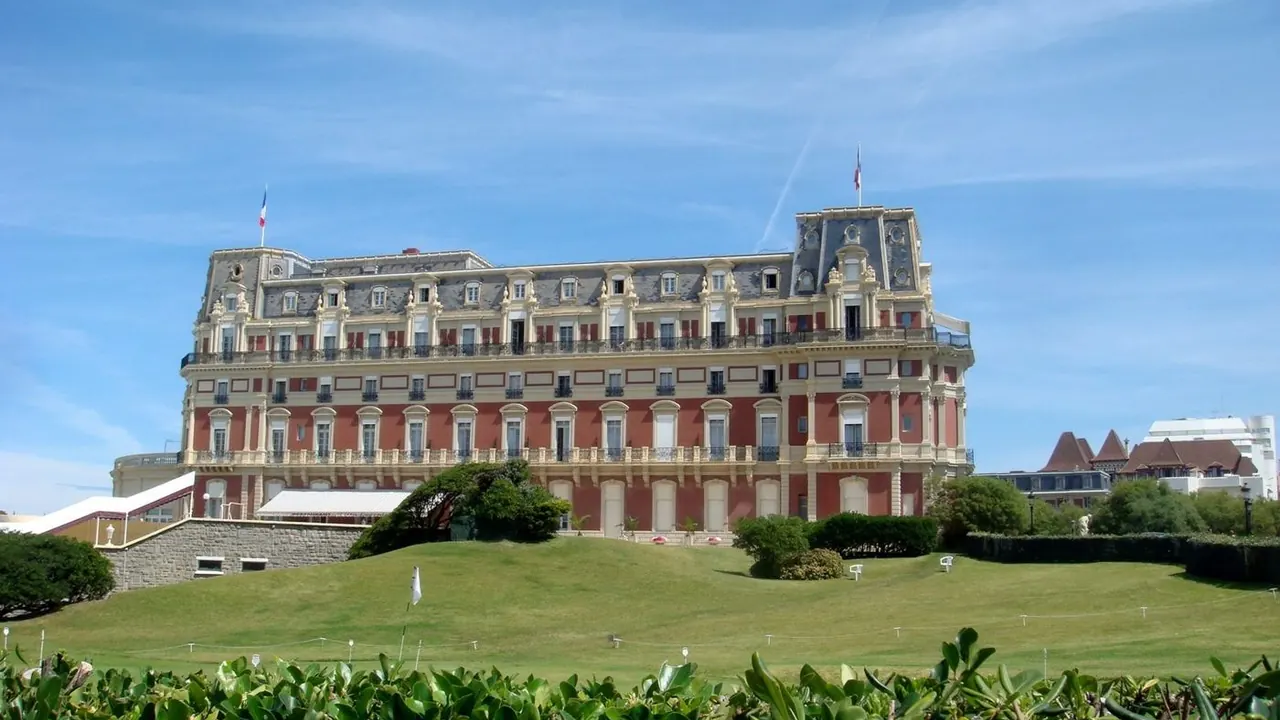
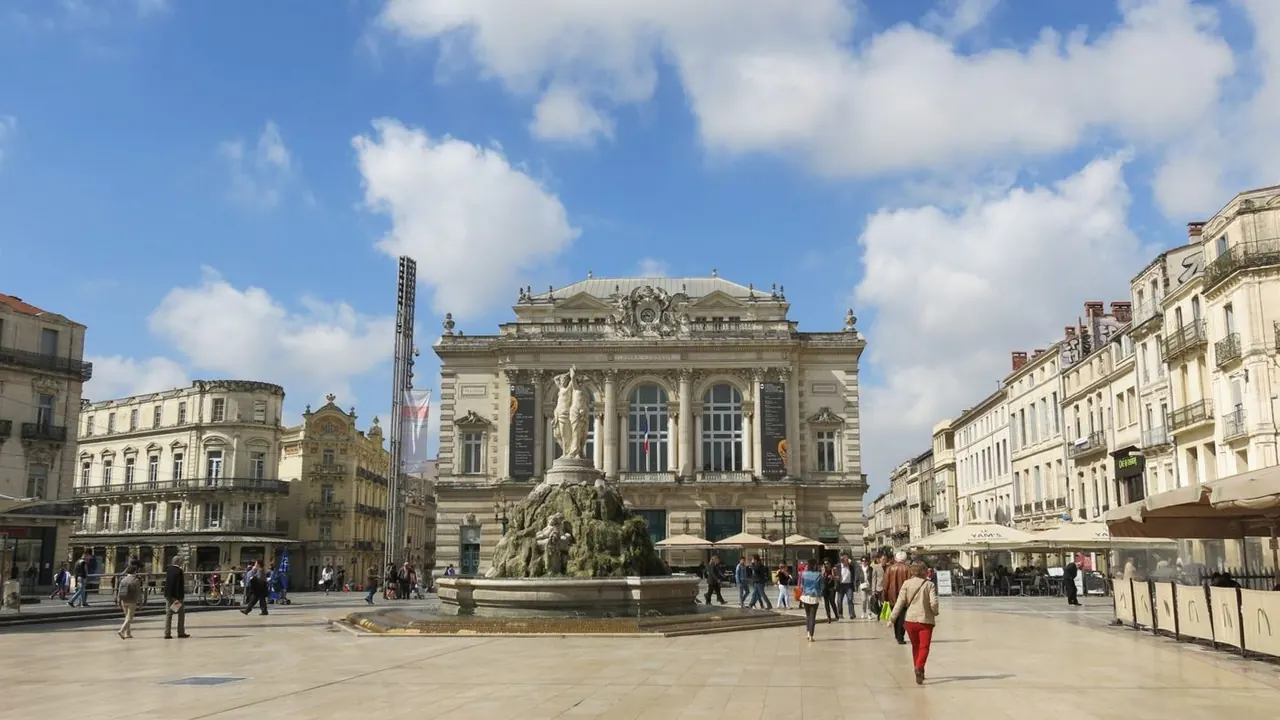
Photos: Biarritz by Lilipiapia, CC BY-SA 3.0, cropped; Montpellier by Peter, CC BY 2.0, cropped.
Biarritz or Montpellier?
Our verdict in twelve categories, each scored against the same fixed benchmark cities, and the climate month by month, so you can choose for your trip.
Choose Biarritz for
- wellness
- beaches
- nature and the outdoors
Biarritz is for travellers who want the Atlantic at the end of the street. You can take surf lessons on the Côte des Basques, book a few days of seawater spa treatment, walk the cliffs and eat pintxos at the market bars, with San Sebastián and the Basque villages close enough for easy days out. It suits a slower, outdoor trip, as long as you can accept resort prices, frequent rain and quiet evenings outside summer.
Choose Montpellier for
- culture and sights
- live music and the arts
- nightlife
When the city itself is the point and the sea is an extra, Montpellier works better. The medieval Écusson, the Musée Fabre, a proper opera and dance season and lively student bars give it far more to do after the beach. Trams make it easy to get around, it costs less, and Roman Nîmes, Arles and Avignon are close by train. The price is that the sand is a tram and bus ride away rather than on your doorstep.
Scoreboard
Twelve categories on one fixed scale from 0 to 100. The shaded stretch is the gap between the two.
Your match
Pick a travel style or drag the sliders, and both match scores follow your weighting.
Wins on wellness and beaches with your weighting.
Wins on culture and sights and live music and the arts with your weighting.
What matters to you?
Category by category
What the scores mean for a trip.
Beaches & swimming
The beaches are about equally good but very different. In Biarritz the sand is part of the town: the Grande Plage below the casino, the Côte des Basques under the cliffs, and the long Anglet beaches to the north. The water is open Atlantic with big waves and strong currents, so you swim between the flags, or in the sheltered Port Vieux cove.
Montpellier's beaches are about 11km away at Palavas and Carnon, reached by tram and then bus. In return you get shallow, gently shelving Mediterranean water that is easy for any swimmer, and wilder dunes at l'Espiguette further east.
Food & drink
This is a choice between two regional kitchens, Basque in one city and Languedoc in the other. Biarritz means pintxos and wine at the bars around Les Halles from mid-morning, Bayonne ham, Espelette pepper, axoa and gâteau basque, with Txakoli and cider to drink.
Montpellier cooks from the land and lagoons around it: Pic Saint-Loup wines, oysters from the Thau lagoon, Sète's spicy tielle and the Saturday market under the Arceaux aqueduct. Its student crowd keeps more cheap, casual places open. Neither city offers much beyond its own regional cooking.
Culture & sights
Montpellier offers far more culture. It has a real medieval old town of stone mansions and courtyards, the Peyrou terrace with its aqueduct, a cathedral beside a medical faculty dating from the Middle Ages, France's oldest botanical garden and the Musée Fabre, a serious art museum. Bofill's Antigone district adds modern architecture.
In Biarritz the heritage is the resort itself: the imperial villa, the Art Deco casino, Belle Époque villas and the footbridge to the Rocher de la Vierge. Its museums are the aquarium and the ocean science centre, so for an old town and serious art you have to go to Bayonne or further.
Nightlife
Biarritz's nights follow the season. In summer there are pintxo bars around Les Halles, sundowners above the Côte des Basques and a few late clubs. Out of season most evenings end after dinner, and anyone wanting a bigger night heads to Bayonne or San Sebastián.
Montpellier has much the livelier nights, thanks to its huge student population. The terraces around Place Jean-Jaurès and the Écusson squares fill on weeknights as well as weekends, and after the bars close the crowd takes taxis to the clubs towards Lattes.
Nature & outdoors
Ocean against lagoon and garrigue sums up the difference outdoors. Biarritz faces the Atlantic, so the days are about surfing, paddleboarding and kayaking, the cliff path along the Basque Corniche, and the green Pyrenean foothills half an hour inland, where you can climb La Rhune or ride its rack railway.
Montpellier's outdoors is Mediterranean. It has flamingo lagoons, the Camargue about an hour away, the limestone ridge of Pic Saint-Loup and canoeing in the Hérault gorges. Its windy coast suits kitesurfers, but the summer heat in the garrigue pushes walking into spring and autumn.
Day trips
Days out are a strength of both, with a slight edge to Montpellier, and they lead to quite different places. From Biarritz you can visit two countries: San Sebastián's pintxo bars in under an hour, half-timbered Bayonne next door, Saint-Jean-de-Luz, the Basque villages of Espelette and Ainhoa, and Bilbao's Guggenheim if you drive.
Montpellier opens up Roman and Provençal France. Nîmes's arena is half an hour away by train and the Pont du Gard is just beyond it, while Arles, Avignon and Carcassonne are all reachable by rail. Closer in are Sète, Aigues-Mortes and Saint-Guilhem-le-Désert.
Good for families
Each works with children, but for opposite reasons. Biarritz has surf schools, an aquarium with seals and sharks, and the calm Port Vieux cove. However, the main beaches have big waves and the steep streets are hard with a pushchair.
Montpellier is flat where it matters. The pedestrian old town and the trams are easy with a pushchair, and the nearby beaches slope gently into warm, calm water. The Zoo de Lunaret, set in a large wooded park, is good for a cooler morning, while the Odysseum aquarium and planetarium fill the indoor afternoons that the summer heat calls for.
Getting around
Biarritz is small enough to explore on foot, but the town goes up and down. You feel the climb back from the beach to the centre by the end of the day. Public transport is thin beyond that: buses run to Anglet and Bayonne, a coastal railway serves the towns along the coast, and the airport is handily placed on the edge of town. Most people heading into the Basque hills end up hiring a car.
Montpellier is far easier to get around. Its old centre is compact and largely free of traffic, and the tram covers the rest of the city, running from the station through Antigone to Port Marianne and the university quarters. Bike-share and cycle lanes help on the flatter ground. If you stay in the city you can manage without a car, although in summer the trip to the beach by tram and bus is slow.
Shopping & style
The shopping is about the same, modest in both, but the kind differs. Biarritz is a smart seaside town of fashion boutiques, surf shops, striped Basque linen, handmade espadrilles and chocolatiers. Montpellier has fewer local crafts but more chain-store choice, with the Polygone mall beside the Comédie and big brands at the Odysseum. Its best buys are regional wine and olive oil. Neither city has a luxury street.
Affordability
Montpellier is clearly the cheaper stay. Central hotels are moderately priced for most of the year, and the students keep cheap bars and counters in business. Biarritz charges fashionable-resort prices, especially for seafront restaurants and summer rooms that book up early. Eating at the market bars or sleeping in Anglet or Bayonne softens the cost. Rooms get noticeably dearer in July and August in both places.
Live music & performing arts
Montpellier has much the stronger stage. Its programme of opera, ballet and orchestral concerts is split between the horseshoe Opéra Comédie and the modern Opéra Berlioz. In summer the Montpellier Danse festival, the Radio France concerts and outdoor theatre at the Domaine d'O add more.
Both cities have a national choreographic centre, so dance fans will find something in Biarritz too. Its ballet company performs at the Gare du Midi, a former railway station, and an autumn festival fills its stages. Beyond dance, Biarritz offers only touring shows and village music.
Wellness & relaxation
Biarritz is the clear choice for wellness. It has been a sea-bathing cure town since the nineteenth century, and its large seafront thalassotherapy centres offer heated seawater pools and multi-day programmes that people plan whole vacations around. Out of season, the town's quiet headlands add to the calm.
Montpellier has hotel spas in town and real thermal water at Balaruc-les-Bains, half an hour away on the Thau lagoon. Its shaded squares are pleasant, but the student centre is lively rather than restful.
When should you go?
Pick your month. The climate figures are measured averages, not a forecast.
Biarritz in July
Montpellier in July
Daytime high, °C
Rainfall in the month, mm
Temperature and rainfall are climate normals, averaged over the years shown. Biarritz: 1999-2020 (sunshine 1991-2020, rainfall 1991-2020) normals, Biarritz (2.5 km from centre). Montpellier: 1991-2020 normals, Montpellier (7.8 km from centre).
Biarritz has an Atlantic climate, mild and green, with rain in every month. Summer highs stay around 25°C, comfortable for walking at any hour, and July and August are the beach months, when the sea reaches about 22°C. Even then a wet day is never far away, with close to 100mm falling in July. Late spring and September are pleasant. From October the rain builds to a very wet November of 224mm, and winter days are short and grey.
Montpellier is much sunnier all year, and the gap is widest in winter, when its bright, cool days get about twice Biarritz's sunshine. It is also far drier. July is almost rainless but reaches about 30°C, which makes the stone streets of the old town hard going at midday, so May, June and September are the best months for walking. The sea warms at much the same pace on both coasts, so the swimming season is the same. Montpellier's rain comes in heavy bursts in September and October rather than spread through the year.
Which traveller are you?
On a culture and arts trip, Montpellier is the clear choice. It has the medieval Écusson, the Musée Fabre's European paintings, two opera houses with a national orchestra, and a summer dance festival. Biarritz's heritage is mostly resort villas and an aquarium.
For a relaxing and wellness trip, choose Biarritz. Its seafront thalassotherapy spas with heated seawater pools are reason enough to come, and the town slows down outside summer to headland walks and long lunches. Montpellier has hotel spas and a lively centre that rarely feels restful.
For a surf trip, Biarritz is one of Europe's original surf towns, with beginner breaks on the Côte des Basques and Anglet and schools all along the seafront. Montpellier's flat, sheltered coast has wind for kitesurfing but no real waves to ride.
Before you go
| Measure | Biarritz | Montpellier |
|---|---|---|
| Official language | French | French |
| Currency | Euro (EUR) | Euro (EUR) |
| Sockets | CE230 V, 50 Hz | CE230 V, 50 Hz |
| Driving side | Right | Right |
| Time zone | UTC+1, UTC+2 in summer | UTC+1, UTC+2 in summer |
| Emergency number | 112 | 112 |
| Elevation | 0 m | 7 m |
| Main airport | Biarritz Pays Basque airport (BIQ)3 km from centre25 non-stop destinations | Montpellier-Méditerranée Airport (MPL)8 km from centre41 non-stop destinations |
| Public holidays this year | 11 days | 11 days |
By the numbers
| Measure | Biarritz | Montpellier |
|---|---|---|
| City population | 26,206 | 310,240 |
| People per km² | 2,240 | 5,452 |
| Museums within 10 km | 8 | 14 |
| UNESCO World Heritage sites within 50 km | 2 | 2 |
| Swim season, months above 21 °C | 2 months | 2 months |
Where else could you go?
Every comparison below shares a destination with this one, so you can follow Biarritz or Montpellier somewhere new.