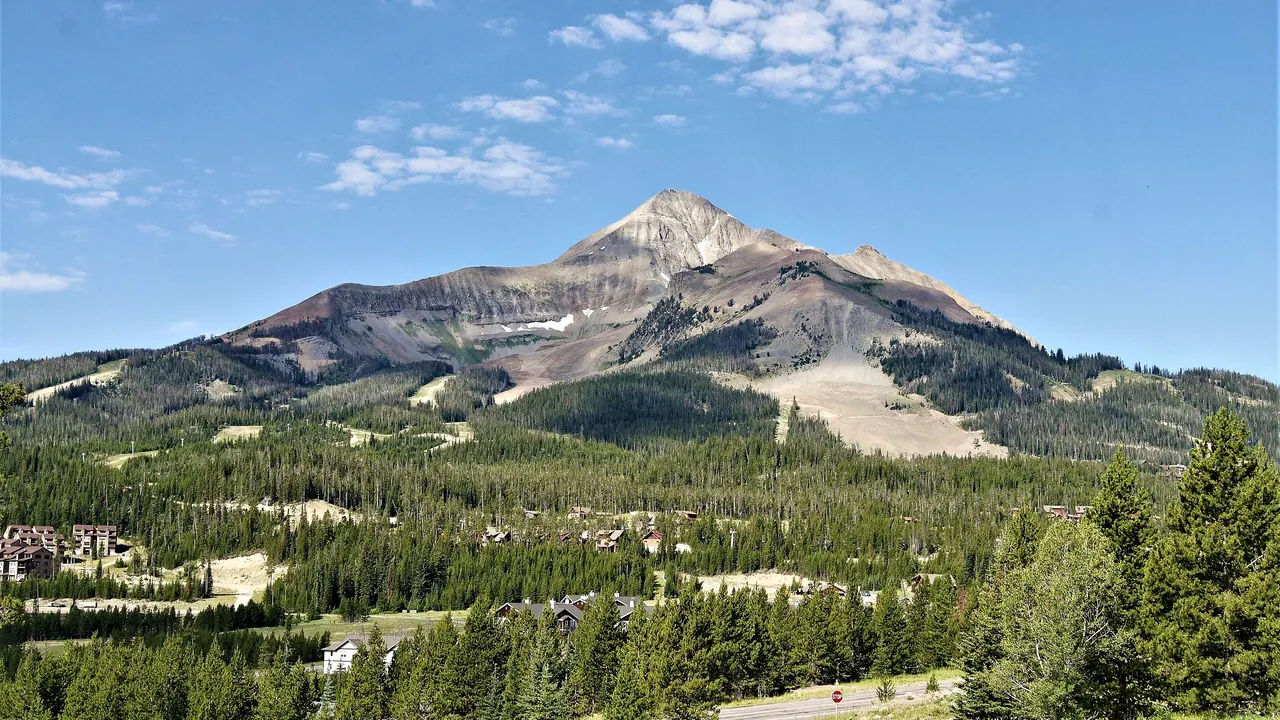
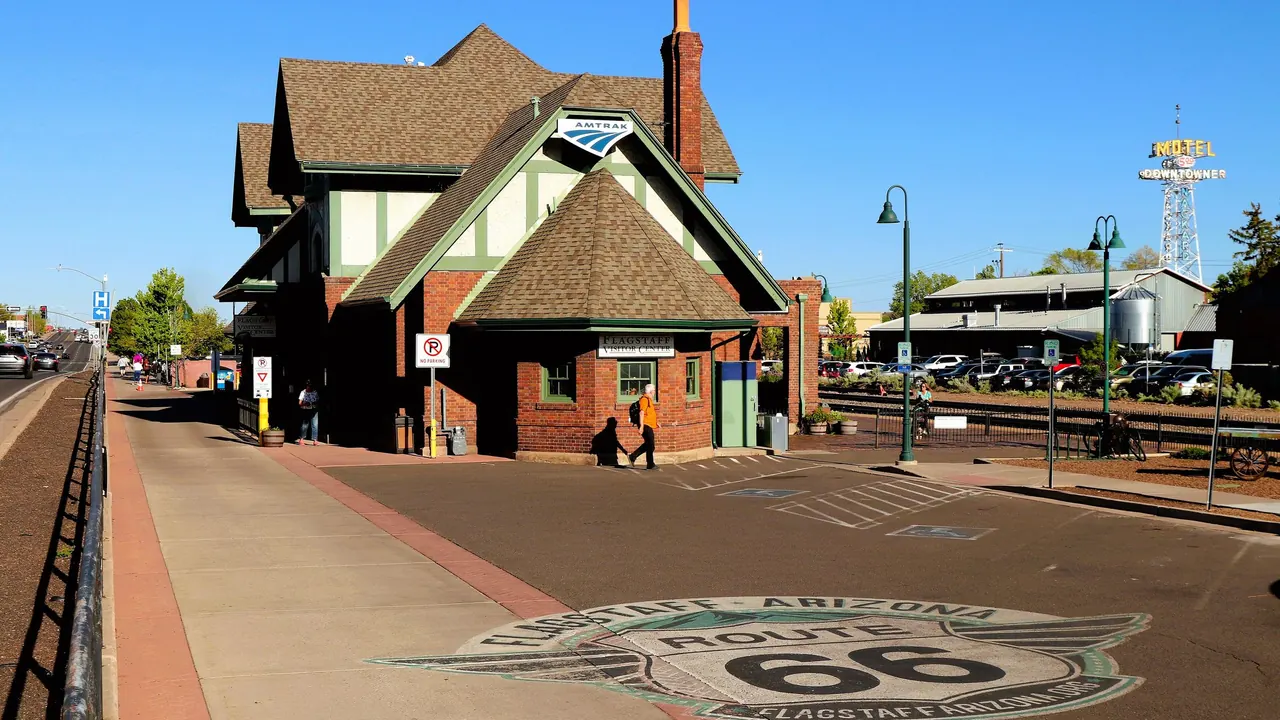
Photos: Big Sky by Greg Gjerdingen, CC BY 2.0, cropped; Flagstaff by Thank You (25 Millions) views, CC BY 2.0, cropped.
Big Sky or Flagstaff?
Our verdict in twelve categories, each scored against the same fixed benchmark cities, and the climate month by month, so you can choose for your trip.
Choose Big Sky for
- wellness
- nature and the outdoors
Big Sky is for travellers who want the mountain and very little else. In winter that means long days on Lone Peak's steep, high terrain, and in summer it means hiking the Spanish Peaks, fly fishing the Gallatin and driving to Yellowstone for bison and geysers. Evenings are for a hot tub and an early night. It suits a trip with a generous budget and no need for a town around it.
Choose Flagstaff for
- prices
- culture and sights
- day trips
Choose Flagstaff if you want the outdoors with a real town attached. Its landscape is just as strong, but it adds an observatory, a fine museum of Native American art, a walkable brewery downtown, and a long list of outings to the Grand Canyon, Sedona's red rock and ancient pueblo ruins. It also costs far less, which makes it the better base for a longer road trip or for travellers watching their spending.
Scoreboard
Twelve categories on one fixed scale from 0 to 100. The shaded stretch is the gap between the two.
Your match
Pick a travel style or drag the sliders, and both match scores follow your weighting.
Wins on wellness and nature and the outdoors with your weighting.
Wins on prices and culture and sights with your weighting.
What matters to you?
Category by category
What the scores mean for a trip.
Beaches & swimming
Neither town is a place to swim, and both are hours from any coast. The difference is in what a hot summer day offers. In Big Sky the Gallatin is too fast and cold for more than a paddle, so a hotel pool is the realistic choice.
From Flagstaff you can at least drive down Oak Creek Canyon to Slide Rock and the creek pools. These are proper outdoor swims, even if the water is cold and they are crowded at weekends.
Food & drink
Flagstaff has a little more choice, though neither place is worth choosing for its food. Big Sky serves hearty resort cooking spread across its villages, with bison, elk, Montana beef, trout and big breakfasts before a ski day, all at high prices. A few lodge kitchens aim higher, but the range is narrow and some places cut their hours between seasons.
Flagstaff is just as casual, but its craft breweries downtown and in the Southside give an evening some focus. Around them you find diners, burger joints and Mexican and New Mexican cooking with green chile. Navajo frybread and Navajo tacos turn up here and there as occasional regional touches.
Culture & sights
This is where the two differ most after cost. Big Sky was built as a ski resort, and its only real heritage is the pair of log cabins at Crail Ranch.
Flagstaff has a short but serious list. There is Lowell Observatory, where Pluto was discovered in 1930, the Museum of Northern Arizona with its Hopi, Navajo and Zuni collections, the Riordan Mansion and a brick railroad downtown on old Route 66. That is enough to fill a day or two between hikes.
Nightlife
Big Sky's evenings centre on après-ski. You drink on the sunny decks at the lifts in your boots, then perhaps have a drink in a Town Center tavern or a canyon saloon, and you are in bed early. Out of season it is almost silent.
Flagstaff has more going on after dark. Taprooms, cocktail bars and Route 66 saloons sit within a short walk of each other, and students liven up term-time weekends. Still, there are no clubs to speak of.
Nature & outdoors
Both are outstanding mountain bases, and the difference is in the kind of landscape. Big Sky is the bigger ski mountain, with Lone Peak's steep high runs, wilderness trails into the Spanish Peaks, fly fishing and rafting on the Gallatin, and Yellowstone's wildlife about an hour south.
Flagstaff offers more variety than raw scale. It has volcanic peaks and lava flows, a vast ponderosa forest, the red rock of Sedona and the Grand Canyon's South Rim within easy reach, and some of the darkest night skies of any town anywhere.
Day trips
Flagstaff has far more within reach. Sedona and the hillside mining town of Jerome are close. So are the cliff dwellings at Montezuma Castle, the Sinagua ruins at Walnut Canyon and Wupatki, the old railway from Williams to the Grand Canyon and the ancient Hopi mesas.
From Big Sky the choice is thinner. There is Bozeman with its Museum of the Rockies dinosaurs, small West Yellowstone, and the preserved gold-rush boardwalks of Virginia City about two hours off.
Good for families
Both work well for active families, but in different ways. Big Sky is resort-style: a ski school and gentle slopes in winter, and in summer a base-area adventure park with zip lines and ropes courses, plus horse riding and bison spotting in Yellowstone.
Flagstaff suits curious children who like learning something along the way, with telescope evenings at the observatory, the museum's dinosaurs, snow play and a steam-era train to the Grand Canyon. In both places the altitude tires small children for the first day or two.
Getting around
There is little to choose between them here. Big Sky is strung along about 15km of road. A free bus links the villages and many lodges let you ski straight to the lifts, but walking from one area to another is not realistic.
Flagstaff's downtown and Southside are compact enough to explore on foot or by bike on the paved urban trails, and long-distance trains stop in the centre. Still, in both places every sight beyond town needs a car or a tour.
Shopping & style
Flagstaff has the more interesting shopping because of its Native American craft. Navajo rugs, Hopi kachina carvings, pottery and turquoise jewellery are sold in downtown galleries, the museum shop and the trading posts outside town.
Big Sky offers little more than ski and fishing gear, a few Western-styled boutiques and galleries of wildlife art. Anything else means the drive to Bozeman.
Affordability
The gap is wide. Big Sky is a luxury ski resort, and lodging, lift passes, ski school, guided fishing and meals all come at a high price. Summer is cheaper, but it is still costly.
Flagstaff is moderately priced by American standards. Route 66 motels and brewery meals keep a stay reasonable, though rooms climb on summer weekends and a hire car and park fees add up.
Live music & performing arts
Flagstaff has the steadier calendar, with performances all year. The symphony and the university music school play the campus concert hall, the restored Orpheum Theater downtown books touring bands, and community theatre runs throughout the year.
Big Sky packs its arts into two seasons. Touring musicians and theatre come to the small Meadow Village arts centre in winter, and in summer there are free concerts on the Town Center lawn and a short classical festival. In between there is almost nothing.
Wellness & relaxation
Big Sky does relaxation better, at least the comfortable kind. Its big lodges have full-service spas built around tired ski legs, and a hot tub on the deck under the stars ends most days.
Flagstaff has only a handful of day spas, so its calm comes from the pine-scented air and the slow pace of the town. For real treatments, visitors drive an hour to Sedona's resorts.
When should you go?
Pick your month. The climate figures are measured averages, not a forecast.
Big Sky in July
Flagstaff in July
Daytime high, °C
Rainfall in the month, mm
Where the figures come from
Big Sky has no weather station within reach, so its figures come from a gridded climate model rather than a measured record, and read a broad area rather than the city itself.
Flagstaff has no rain gauge within 25 km of the centre, so its rainfall comes from a gridded climate dataset read at the city rather than from a gauge further away.
Temperature and rainfall are climate normals, averaged over the years shown. Big Sky: 2001-2020 normals, NASA POWER reanalysis grid, no weather station within 90 km. Flagstaff: 1991-2020 normals, Flagstaff / Fort Tuthill (7.4 km from centre).
Big Sky has two clear seasons. Winter is long and properly cold, with daytime highs below freezing from December to February and snow on the mountain until April. Spring is the awkward time. May is the wettest month at about 83mm, and the trails stay wet before they dry out. July and August are the best months for hiking, rafting and Yellowstone, warm by day and the driest of the year. September is cooler but still good, and by November winter is back.
Flagstaff is milder all year. Winter highs sit around 5°C, so a cold walk round downtown is still pleasant, though snow is likely. Late spring is the driest stretch, with June bringing only about 6mm, which makes May and June ideal for hiking and the Grand Canyon. July and August are about as warm as Big Sky, but they bring afternoon monsoon storms, with August the wettest month at about 64mm. September is still warm, with the last of the showers, and October is drier and crisp, probably the finest month of all.
Which traveller are you?
For a culture and arts trip, Flagstaff is the clear choice. Lowell Observatory, the Museum of Northern Arizona and the Route 66 downtown give it real substance, and Sinagua and Hopi sites lie within a drive. Big Sky has little beyond one homestead.
On a trip on a tight budget, Flagstaff wins easily. Chain motels on old Route 66 and casual brewery meals keep costs manageable. Big Sky is among the most expensive places in the American West, with lift passes and slopeside lodging setting the price level.
For a relaxing and wellness trip, Big Sky has the edge. Its large lodges have full-service spas and hot tubs on the deck after a day outdoors, and the nights are silent. In Flagstaff you would have to drive to Sedona for proper spa treatments.
Before you go
| Measure | Big Sky | Flagstaff |
|---|---|---|
| Currency | US Dollar (USD) | US Dollar (USD) |
| Sockets | AB120 V, 60 Hz | AB120 V, 60 Hz |
| Driving side | Right | Right |
| Time zone | UTC-7, UTC-6 in summer | UTC-7 |
| Emergency number | 911 | 911 |
| Elevation | 2,200 m | 2,106 m |
| Main airport | Bozeman Yellowstone International Airport (BZN)59 km from centre27 non-stop destinations | Flagstaff Pulliam Airport (FLG)7 km from centre2 non-stop destinations |
| Public holidays this year | 12 days | 12 days |
By the numbers
| Measure | Big Sky | Flagstaff |
|---|---|---|
| City population | 3,591 | 76,831 |
| People per km² | 12 | 464 |
| Museums within 10 km | 0 | 1 |
| UNESCO World Heritage sites within 50 km | 0 | 0 |
Where else could you go?
Every comparison below shares a destination with this one, so you can follow Big Sky or Flagstaff somewhere new.
- Sedonavs Flagstaff
- Page, Arizonavs Flagstaff
- Scottsdalevs Flagstaff
- Phoenixvs Flagstaff
- Jackson Holevs Big Sky
- Sun Valleyvs Big Sky