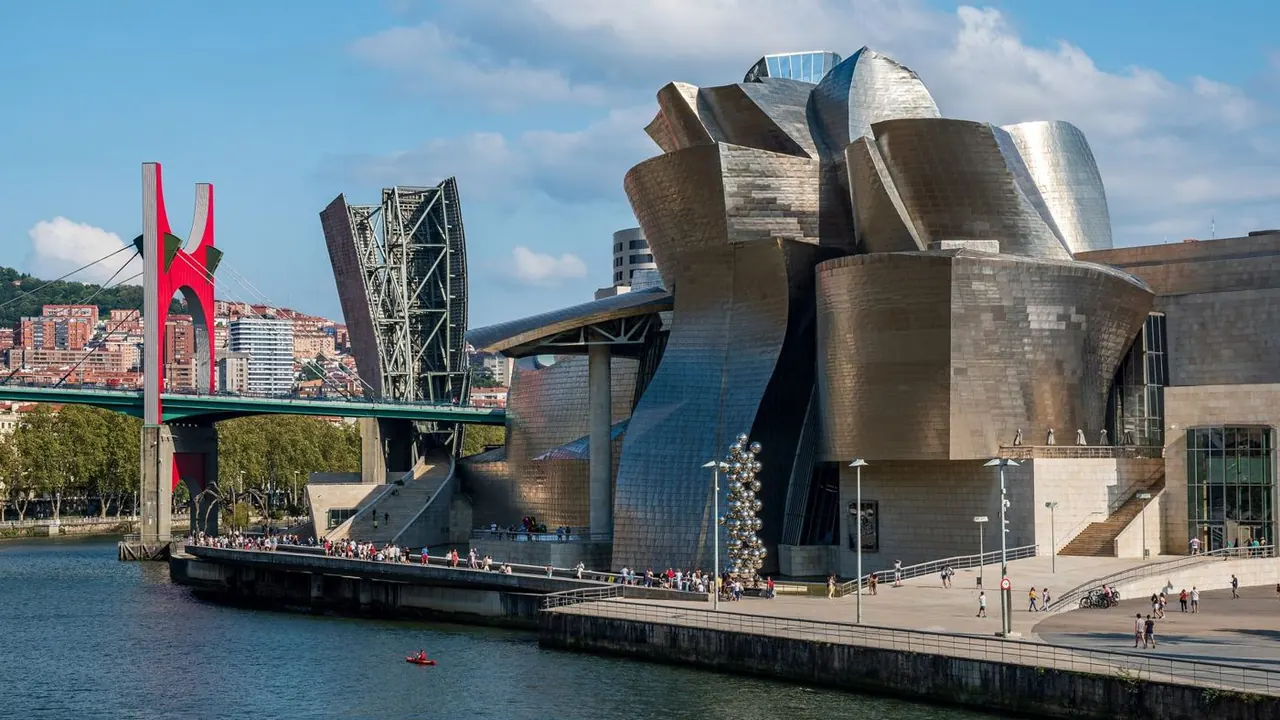
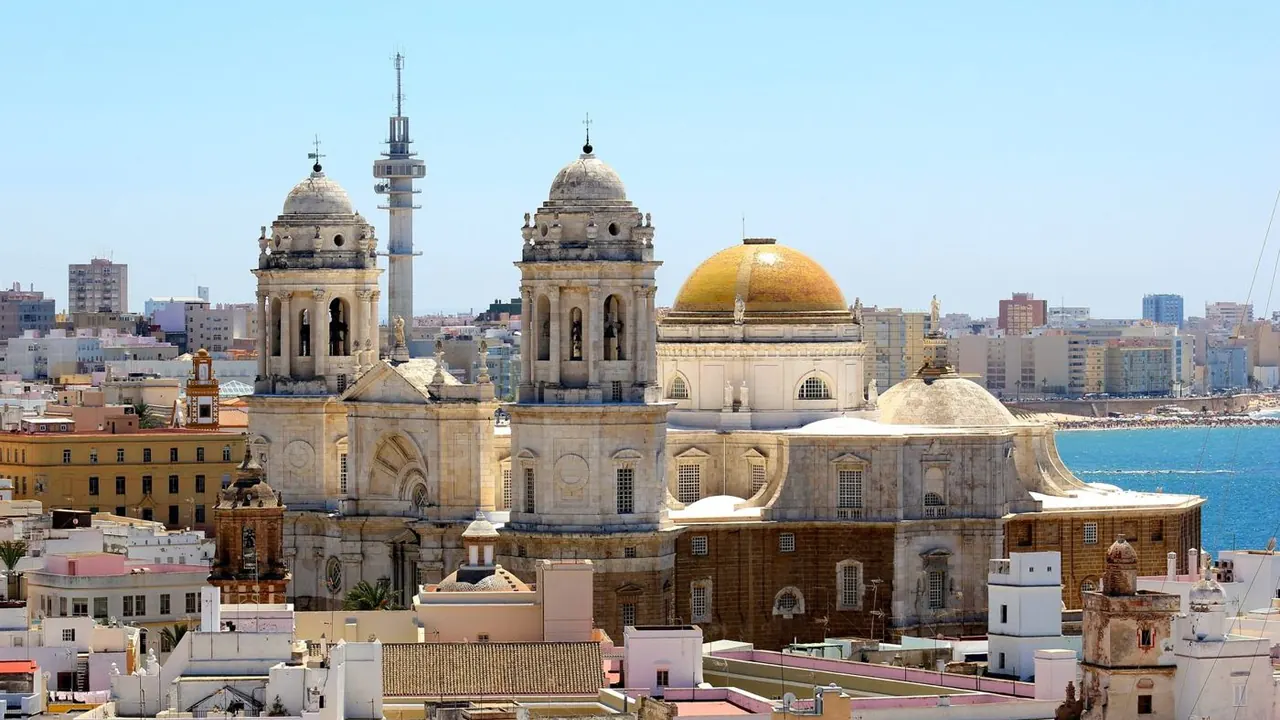
Photos: Bilbao by José Ligero Loarte, CC BY-SA 4.0, cropped; Cadiz by Bronch, CC BY-SA 3.0 ES, cropped.
Bilbao or Cadiz?
Our verdict in twelve categories, each scored against the same fixed benchmark cities, and the climate month by month, so you can choose for your trip.
Choose Bilbao for
- food and drink
- shopping
- nightlife
Bilbao suits travellers who plan their days around the table and the landscape. It has the deeper food culture, from the pintxo crawl through the Casco Viejo to the asadores and starred kitchens in the hills. Green mountains start at the edge of town, the metro and tram make it easy to get around, and the Guggenheim gives it a modern art draw Cadiz cannot match. Choose it if you don't mind rain and want good food, good walking and a city that stays lively through the year.
Choose Cadiz for
- beaches
- prices
- wellness
Cadiz is the choice for sun, sea and a slower pace. The beaches are part of the city itself, the summers are reliably dry, and tapas and sherry cost less here. The old town rests on layers of Phoenician, Roman and Atlantic-trade history, and Jerez, Seville and the white towns are close by. It suits a long, warm, unhurried summer stay or a mild escape in spring or autumn.
Scoreboard
Twelve categories on one fixed scale from 0 to 100. The shaded stretch is the gap between the two.
Your match
Pick a travel style or drag the sliders, and both match scores follow your weighting.
Too close to call, 1 point apart
Wins on food and drink and shopping with your weighting.
Wins on beaches and prices with your weighting.
What matters to you?
Category by category
What the scores mean for a trip.
Beaches & swimming
Bilbao has no beach of its own. It sits inland on its estuary, and the sand begins down the metro line at Getxo, Sopelana and Plentzia. These beaches are pleasant for an afternoon, and Sopelana's open swell is better for surfers than for paddling children, but the water is cool for much of the summer and the weather is unreliable.
Cadiz is a beach city in the full sense. La Caleta sits between two castles in the old town, and Playa Victoria offers kilometres of wide golden sand within walking distance or a short bus ride. Beyond them are El Palmar, Zahara and Bolonia on the Costa de la Luz. The levante wind is the one drawback.
Food & drink
Both cities eat superbly within a narrow regional range, but Bilbao has more depth. Its bar-to-bar poteo of pintxos and txakoli fills the Casco Viejo, Plaza Nueva and the Ensanche, and a high standard holds even in plain bars. Above that come txuleta grills, bacalao al pil-pil and a real cluster of starred kitchens in and around the city.
Cadiz is mainly about fish and does it beautifully: paper cones from the freidurías, tortillitas de camarones, almadraba tuna in La Viña, and chilled manzanilla from the sherry towns nearby. What it lacks is Bilbao's ambitious restaurant tier inside the city.
Culture & sights
The two are evenly matched for sightseeing, and each needs two or three days, but their appeal is very different. Bilbao is the art city: Gehry's Guggenheim and the old masters of the Bellas Artes give it two serious museums, while the Casco Viejo is modest and the Vizcaya Bridge brings in industrial heritage.
Cadiz rewards walking through deep history. There are Phoenician sarcophagi in the Museo de Cádiz, a Roman theatre in the Barrio del Pópulo, the Oratorio where the 1812 constitution was signed, and merchants' watchtowers above the rooftops, best seen through the Torre Tavira's camera obscura.
Nightlife
Bilbao has the steadier night out. The pintxo bars of the Casco Viejo and Plaza Nueva drift into late drinking from Thursday onwards, and Licenciado Poza draws a younger crowd, although clubbing is limited in both cities. Aste Nagusia takes over the riverbanks every August.
Cadiz depends on the season. Summer nights move to the terraces along Playa Victoria, and La Viña fills on warm evenings, but the rest of the year is quiet apart from Carnival in February, when the whole city parties in costume for ten days.
Nature & outdoors
Bilbao has the more striking outdoors. The Artxanda funicular and the Pagasarri hike start from town, and Urkiola's limestone and Gorbea's beech forests are about an hour away. Along the coast are cliff paths, the Urdaibai reserve, the stairway to San Juan de Gaztelugatxe and the famous wave at Mundaka.
Cadiz itself is flat, and its nature is gentler and more about water. Flamingos and spoonbills feed in the salt pans of the bay, the pine-topped cliffs of La Breña overlook the sea, and Tarifa offers kitesurfing and whale-watching. Real mountain walking in Grazalema means a two-hour drive.
Day trips
Both are excellent bases, and the difference lies in where they lead. From Bilbao, the outings run to San Sebastián's pintxo bars, Gernika and the fishing ports, the medieval hill quarter of Vitoria, and the Rioja bodegas around Laguardia, with buses covering most of the main towns.
From Cadiz, the trips are Andalusian. Jerez's sherry and riding school are half an hour away by train, a ferry crosses to El Puerto, and Seville is within easy reach. The white towns of Vejer and Arcos and the Roman ruins at Baelo Claudia are best reached with a car.
Good for families
With children the two are much alike: flat, safe centres, children welcome late into the evening, and no zoo, aquarium or theme park in either. Bilbao offers the riverside promenade, Doña Casilda's playgrounds, the funicular and the Guggenheim's giant flower dog Puppy, but rainy days need a backup plan.
Cadiz has the slight edge for a summer trip because the beach is on the doorstep. Playa Victoria has lifeguards and plenty of space, and La Caleta is calm for small swimmers. In return, families need to plan around the midday heat and the levante.
Getting around
Bilbao is the easier city to get around. Most sights lie along a flat riverside walk, the tram follows the same route, and Foster's metro runs out to the beaches and the Vizcaya Bridge. Regional trains and buses reach the coast and Gernika without a car.
The old town of Cadiz is small and largely traffic-free, buses run along the isthmus, and trains and the bay catamaran make Jerez, Seville and El Puerto simple. The Costa de la Luz and the white villages, however, are poorly served by public transport.
Shopping & style
Bilbao gives shoppers more to work with. The Gran Vía has the chains and a large department store, the Casco Viejo has old shops selling berets, espadrilles and cookware, and the Ribera market is good for anchovies, Idiazabal and txakoli.
Cadiz is smaller in scale: family shops around Calle Ancha and Plaza de las Flores, plus fans, ceramics and sherry to take home. Anyone who wants serious shopping heads to Seville.
Affordability
Cadiz is noticeably easier on the wallet. Tapas, freidurías and the market counters cost little, and so do a glass of sherry, the trains and the ferry. Rooms in the small old town are the exception in July, August and Carnival week, so staying near Playa Victoria or coming outside summer helps.
Bilbao is among the dearer cities in Spain, with higher hotel prices around the Guggenheim and during the Great Week. The pintxo crawl is still good value. It is the asadores and starred tables that push a budget up.
Live music & performing arts
Bilbao goes in for opera and orchestras, Cadiz for flamenco and Carnival choirs, and there is little between them in how much is on. Bilbao has the more formal stage, with the ABAO opera season and the Bilbao Symphony Orchestra at the Euskalduna, theatre and dance at the Arriaga and the Campos Elíseos, and BBK Live bringing international bands to Mount Cobetas each July.
Cadiz keeps its performance closer to the street. The peñas of the Santa María quarter, home of the alegrías, put on flamenco for audiences who know the forms, and the Gran Teatro Falla stages the satirical chirigotas and comparsas at Carnival as well as an autumn festival of Ibero-American theatre. For opera or a symphony concert, you have to go to Seville.
Wellness & relaxation
Neither city has a bathing tradition, but Cadiz relaxes more easily. There are resort spas with sea-water treatments at Novo Sancti Petri, Arab baths in Jerez, and the warm rhythm of siesta and sunset walks along the sea walls.
Bilbao offers hotel spas and long lunches, and its rain makes lingering outdoors less dependable. For a proper spa stay, the balnearios inland are a separate trip.
When should you go?
Pick your month. The climate figures are measured averages, not a forecast.
Bilbao in July
Cadiz in July
Daytime high, °C
Rainfall in the month, mm
Temperature and rainfall are climate normals, averaged over the years shown. Bilbao: 1991-2020 normals, Bilbao / Sondica (4.1 km from centre). Cadiz: 1991-2020 normals, Cadiz Bay / Puntales (5.2 km from centre).
Bilbao is at its best from June to September. Days reach about 26°C in August, and the Bay of Biscay is warm enough for a real swim only at the end of summer. Even then, grey and showery days are common. From October the rain builds sharply, peaking at around 170mm in November, and the winter is cool and gloomy, with little sunshine. Spring is mild but often wet, fine for museums and pintxo bars but uncertain for the coast.
Cadiz is a different climate. Its summer is almost completely dry and sunny, with highs near 28°C and the Atlantic at about 23°C, so the beach season runs from June into early October. Midday in July and August is hot for walking, so spring and autumn suit sightseeing better. The rain arrives in October and November but stays moderate, and winters are mild and much brighter than Bilbao's, so the city works as a gentle off-season trip too.
Which traveller are you?
For a beach and sun trip, Cadiz wins easily. You can walk from the old town to La Caleta or Playa Victoria, the summers are dry and long, and the empty strands of the Costa de la Luz lie beyond. Bilbao's beaches mean a metro ride and changeable skies.
On a food and nightlife trip, Bilbao is the stronger pick. The poteo through the Casco Viejo and the Ensanche turns dinner into the night out, the cooking runs all the way up to starred tables, and the bars stay busy all year rather than mainly in summer.
On a tight budget, Cadiz goes further. Freidurías, market counters and cheap sherry let you eat very well for little, and the sights cost little or nothing. Bilbao is pricier for Spain, especially its central hotels, though a pintxo crawl remains fair value.
Before you go
| Measure | Bilbao | Cadiz |
|---|---|---|
| Official language | Spanish | Spanish |
| Currency | Euro (EUR) | Euro (EUR) |
| Sockets | CF230 V, 50 Hz | CF230 V, 50 Hz |
| Driving side | Right | Right |
| Time zone | UTC+1, UTC+2 in summer | UTC+1, UTC+2 in summer |
| Emergency number | 112 | 112 |
| Elevation | 19 m | 11 m |
| Main airport | Bilbao Airport (BIO)5 km from centre73 non-stop destinations | Jerez Airport (XRY)31 km from centre25 non-stop destinations |
| Public holidays this year | 13 days | 12 days |
By the numbers
| Measure | Bilbao | Cadiz |
|---|---|---|
| City population | 351,124 | 109,950 |
| People per km² | 8,440 | 9,087 |
| Museums within 10 km | 17 | 11 |
| UNESCO World Heritage sites within 50 km | 2 | 0 |
| Swim season, months above 21 °C | 1 month | 3 months |
Where else could you go?
Every comparison below shares a destination with this one, so you can follow Bilbao or Cadiz somewhere new.