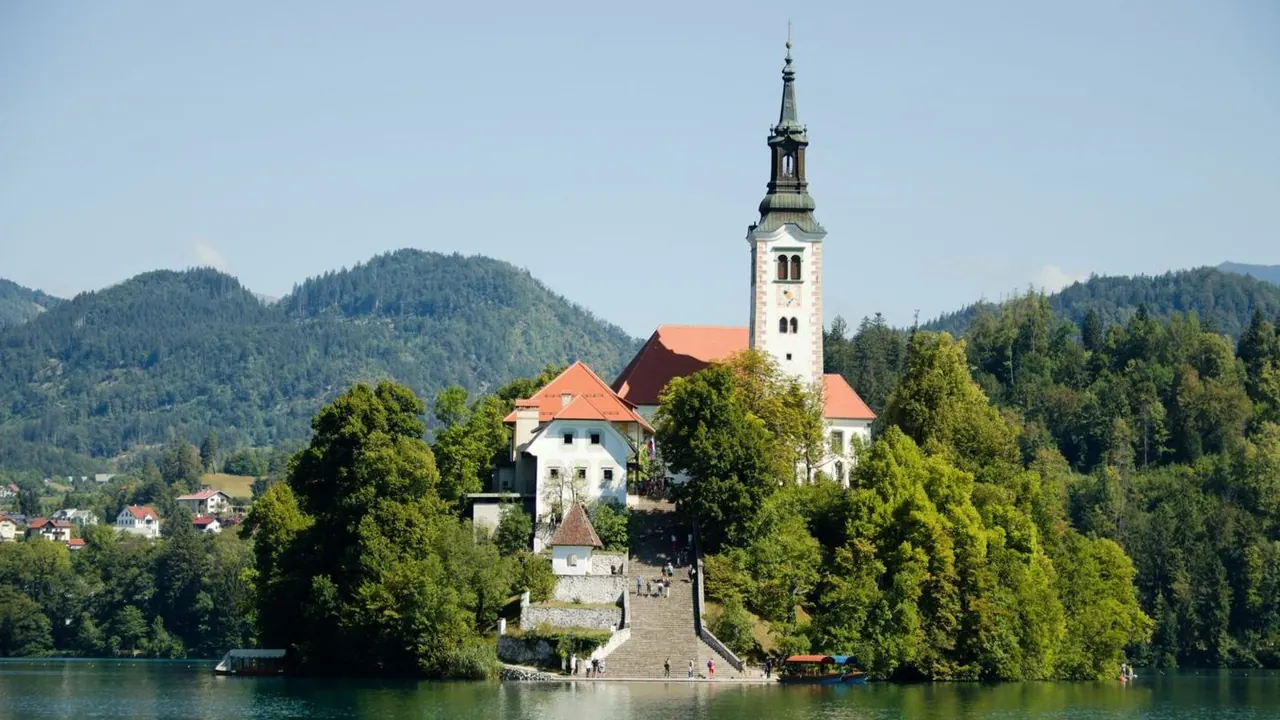
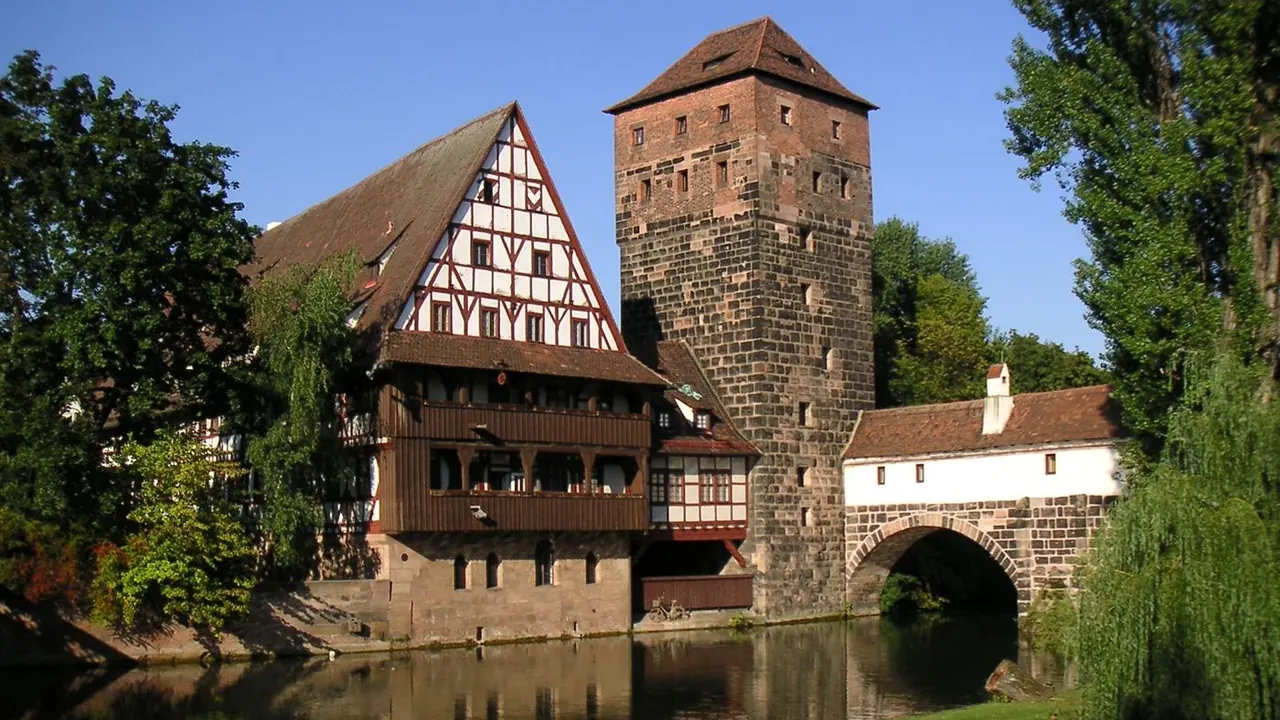
Photos: Bled by Philipp Schwarz, Pexels License; Nuremberg by Horst Gutmann, CC BY 2.0, cropped.
Bled or Nuremberg?
Our verdict in twelve categories, each scored against the same fixed benchmark cities, and the climate month by month, so you can choose for your trip.
Choose Bled for
- beaches
- nature and the outdoors
- wellness
Bled is for travellers who want the mountains on the doorstep and are happy to trade restaurants and nightlife for them. It suits walkers, cyclists, swimmers and anyone who wants to row out to an island in the morning and climb to a viewpoint above the lake in the afternoon. The village itself is small and goes quiet early, so the trip works best when the day is spent outdoors in the Julian Alps and the evening is a slow one.
Choose Nuremberg for
- culture and sights
- live music and the arts
- shopping
Nuremberg makes more sense for a city trip built around history, beer and good rail links. Inside its medieval walls are an imperial castle, Gothic churches and a major museum, and its twentieth-century sites carry real weight. Franconian taverns and some of Germany's finest old towns, all within easy reach by train, mean there is plenty to fill a week without a car, although the countryside around it is gentle rather than dramatic.
Scoreboard
Twelve categories on one fixed scale from 0 to 100. The shaded stretch is the gap between the two.
Your match
Pick a travel style or drag the sliders, and both match scores follow your weighting.
Wins on beaches and nature and the outdoors with your weighting.
Wins on culture and sights and live music and the arts with your weighting.
What matters to you?
Category by category
What the scores mean for a trip.
Beaches & swimming
Neither city has a sea, but in Bled the swimming is right in front of you. In July and August you can step off a pier or a grassy lido into a warm Alpine lake, with the castle cliff above you and the island close enough to swim to. Colder, wilder Lake Bohinj is about half an hour away.
In Nuremberg, a swim on a hot day means a city pool or about an hour's trip to the Brombachsee and the other Franconian reservoirs. They are pleasant enough, but they make a side trip rather than a reason to choose the city.
Food & drink
Nuremberg is clearly the better place to eat and drink. It has its own cooking, from the small beechwood-grilled bratwurst to Schäufele and Lebkuchen, and a beer culture built on dense clusters of small breweries, poured in old-town taverns and riverside beer gardens.
Bled's cooking is mostly simple and aimed at day visitors: trout, žlikrofi and buckwheat dishes, with the famous cream slice on a lakeside terrace. The more rewarding meals are in the valley farm inns, and anyone who travels to eat will run out of options after a couple of days.
Culture & sights
Nuremberg has much more to see, and it carries more weight. You can walk the walled old town, the Kaiserburg, St Sebaldus and St Lorenz, and Dürer's house, and the Germanisches Nationalmuseum could take a whole day. The Rally Grounds and Courtroom 600 add a sombre twentieth-century layer that few cities can match.
Bled's sights are a matched pair, the cliff-top castle and the baroque island church reached by pletna boat. They make a memorable morning or afternoon, but they are done in a day.
Nightlife
Nuremberg has a proper night out, mostly in bars. You can choose between taverns and wine bars in the old town, students drinking on the riverbanks in summer, and the smaller alternative places in Gostenhof, with a few clubs for later.
Bled's evenings come down to a drink on a terrace and a walk along the lit shore, and the village is asleep before midnight. Anyone after more has to go to Ljubljana.
Nature & outdoors
This is Bled's great strength. The Julian Alps start at the edge of the village, so the lake circuit, the climbs to Ojstrica and Osojnica, the Vintgar Gorge, Bohinj and the Pokljuka pastures are all within a short drive. Beyond them come hut routes, canyoning, paragliding, the Vršič pass and winter skiing.
Nuremberg's outdoors are pleasant but tame: the Reichswald pine forest at the edge of town, cycling along the Pegnitz, and the limestone towers, caves and climbing crags of Franconian Switzerland about an hour away. It is good country for walkers and cyclists, but there are no peaks.
Day trips
Both make good bases, but Nuremberg has the richer choice and an easier way of getting to it. Bamberg, Regensburg, Würzburg, Rothenburg ob der Tauber and Bayreuth are all on regional rail lines, and Munich is about an hour away by fast train, so a different old town each day is easy.
From Bled you see more of a small country: Ljubljana and Radovljica close by, the Postojna cave and Predjama Castle further off, Piran on the Adriatic, and Carinthia in Austria through the tunnel. Several of these trips work much better with a car.
Good for families
The two are close for families, but they offer different kinds of day. In Bled the fun is outdoors: rowing to the island, ringing the wishing bell, swimming from shallow lidos and riding the toboggan on Straža. With no zoo or big indoor attraction, a wet day is hard to fill.
Nuremberg has more for rainy days, including the Toy Museum, full-size locomotives at the railway museum, and the quarry zoo with its dolphin house. There is also a children's Christmas market in Advent. The cobbled climb to the castle is the main effort with a pushchair.
Getting around
Nuremberg is much easier without a car. You can walk the old town in an afternoon, the main station sits by its southern gate, and a single ticket system covers the U-Bahn, trams and S-Bahn out to the Rally Grounds, Fürth and Erlangen.
Bled's lakeshore is easy on foot, and buses run to Ljubljana and Bohinj. The mountain trailheads, Pokljuka and the Soča valley are poorly served, though, so most people who come for the Alps end up hiring a car, and lakeside parking is tight in summer.
Shopping & style
Nuremberg has far more to buy. Königstraße has chain stores and department stores, and the more memorable things are Lebkuchen in tins, wooden toys and crafts from the Handwerkerhof. In Advent the Christkindlesmarkt adds plum-figure dolls and ornaments.
In Bled there is little beyond lakeside stalls selling honey, lace and painted beehive panels, plus a supermarket for the basics.
Affordability
The overall cost is similar, but the money goes in different places. In Bled you pay for the view, at lakeside hotels and terraces, especially in July and August. The best things there cost nothing, from the lake path to the viewpoints and trails, and staying in Radovljica, Bohinj or at the campsite brings the bill down.
In Nuremberg the food, beer and transport are cheap. Hotels are the risk, because rooms become scarce and expensive during trade fairs and the Advent market, so it pays to check the dates before booking.
Live music & performing arts
Nuremberg has a real season: opera, ballet and drama at the Art Nouveau Staatstheater, two orchestras, a big open-air concert in the Luitpoldhain, and the free Bardentreffen folk weekend in the old-town squares. Bayreuth's festival theatre is within reach too.
Bled has no venue at all. There are the odd summer concerts in the castle or the churches and folk evenings put on for visitors, and anything more serious means going to Ljubljana.
Wellness & relaxation
Bled is the more restful of the two, mainly because of its pace. The resort began with Rikli's nineteenth-century air and sun cures, and some lakeside hotel spas use the mild springs at the eastern end and sometimes take day guests. Early walks around still water do the rest.
Nuremberg's relaxation is German sauna culture: the thermal spa with sauna gardens in Fürth, a short U-Bahn ride away, mixed nude saunas at the leisure pools, and the saline float pools at Bad Windsheim about an hour west.
When should you go?
Pick your month. The climate figures are measured averages, not a forecast.
Bled in July
Nuremberg in July
Daytime high, °C
Rainfall in the month, mm
Where the figures come from
Bled's temperatures are measured 36 km from the centre, at Klagenfurt.
Bled has no rain gauge within 25 km of the centre, so its rainfall comes from a gridded climate dataset read at the city rather than from a gauge further away.
Temperature and rainfall are climate normals, averaged over the years shown. Bled: 1991-2020 normals, Klagenfurt (35.5 km from centre). Nuremberg: 1991-2020 normals, Nuernberg (5.5 km from centre).
Bled has the bigger swing through the year. Summer days reach about 27°C and the lake is warm enough to swim from late June to early September. Summer is also a wet season, though, with around 152mm in August, often in mountain downpours, so a dry spell is worth catching. June and September tend to be the most comfortable months for hiking. In winter the high is around 1°C, which suits sledging and skiing nearby more than strolling round the lake. Bled is also sunnier than Nuremberg in most months, winter included.
Nuremberg is a little cooler in summer, at about 25°C, and much drier, with July the wettest month at around 77mm. That makes May to September easy for walking the old town and sitting in beer gardens. Its winters are grey but slightly milder than Bled's, so for a city break in the colder months Nuremberg is the more comfortable of the two.
Which traveller are you?
On an outdoors trip, Bled is far ahead. Triglav National Park, the Vintgar Gorge, hut-to-hut hiking, rafting on the Sava and skiing on Pokljuka are all close by, while Nuremberg's forests and Franconian Switzerland offer gentle walks and climbing crags rather than mountains.
For a culture and arts trip, Bled's castle and island church make a lovely day but not much more, so choose Nuremberg. The Kaiserburg, the Germanisches Nationalmuseum, Courtroom 600 and opera at the Staatstheater fill several days, with Bamberg and Regensburg close by train.
On a food and nightlife trip, Bled offers little beyond kremšnita on a terrace and a quiet lakeside café. Nuremberg wins easily, with grilled bratwurst, Schäufele, unfiltered Kellerbier from small Franconian breweries and an evening in the bars of Gostenhof.
Before you go
| Measure | Bled | Nuremberg |
|---|---|---|
| Official language | Slovene | German |
| Currency | Euro (EUR) | Euro (EUR) |
| Sockets | CF230 V, 50 Hz | CF230 V, 50 Hz |
| Driving side | Right | Right |
| Time zone | UTC+1, UTC+2 in summer | UTC+1, UTC+2 in summer |
| Emergency number | 112 | 112 |
| Elevation | 501 m | 209 m |
| Main airport | Ljubljana Jože Pučnik Airport (LJU)31 km from centre32 non-stop destinations | Nuremberg Airport (NUE)5 km from centre56 non-stop destinations |
| Public holidays this year | 21 days | 12 days |
By the numbers
| Measure | Bled | Nuremberg |
|---|---|---|
| City population | 4,969 | 531,159 |
| People per km² | 26 | 2,848 |
| Museums within 10 km | 4 | 50 |
| UNESCO World Heritage sites within 50 km | 3 | 1 |
Where else could you go?
Every comparison below shares a destination with this one, so you can follow Bled or Nuremberg somewhere new.