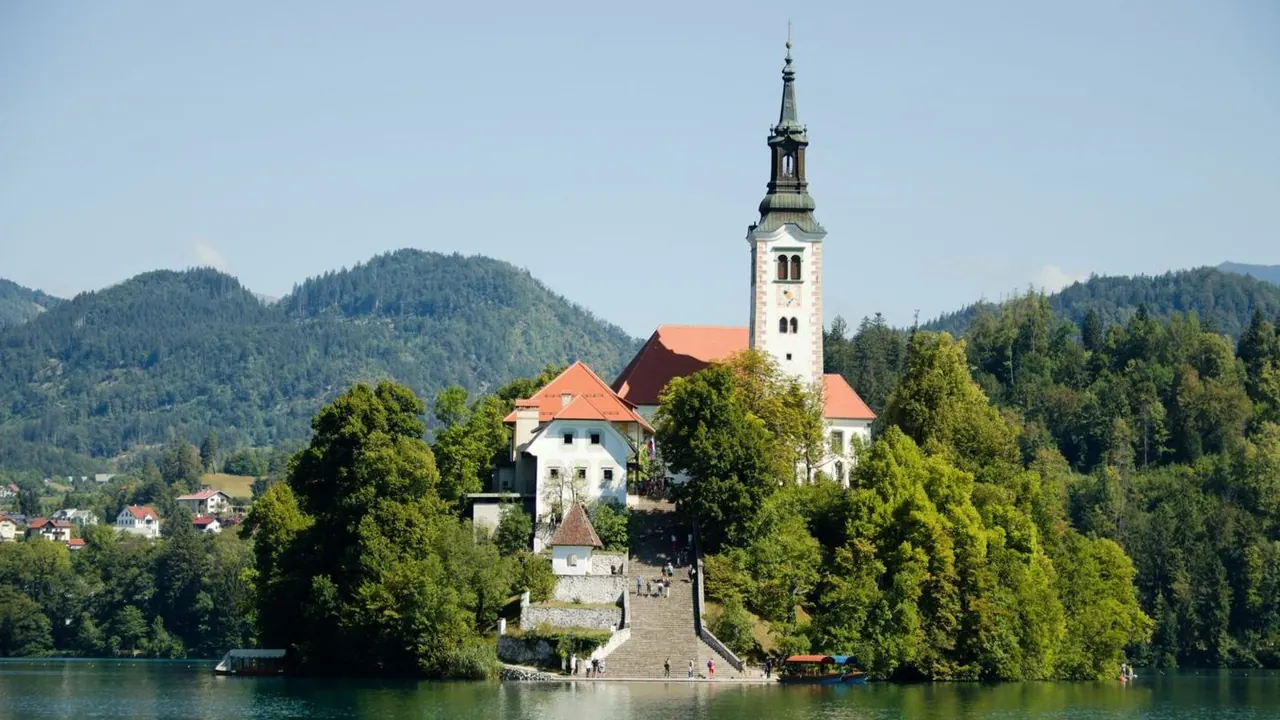
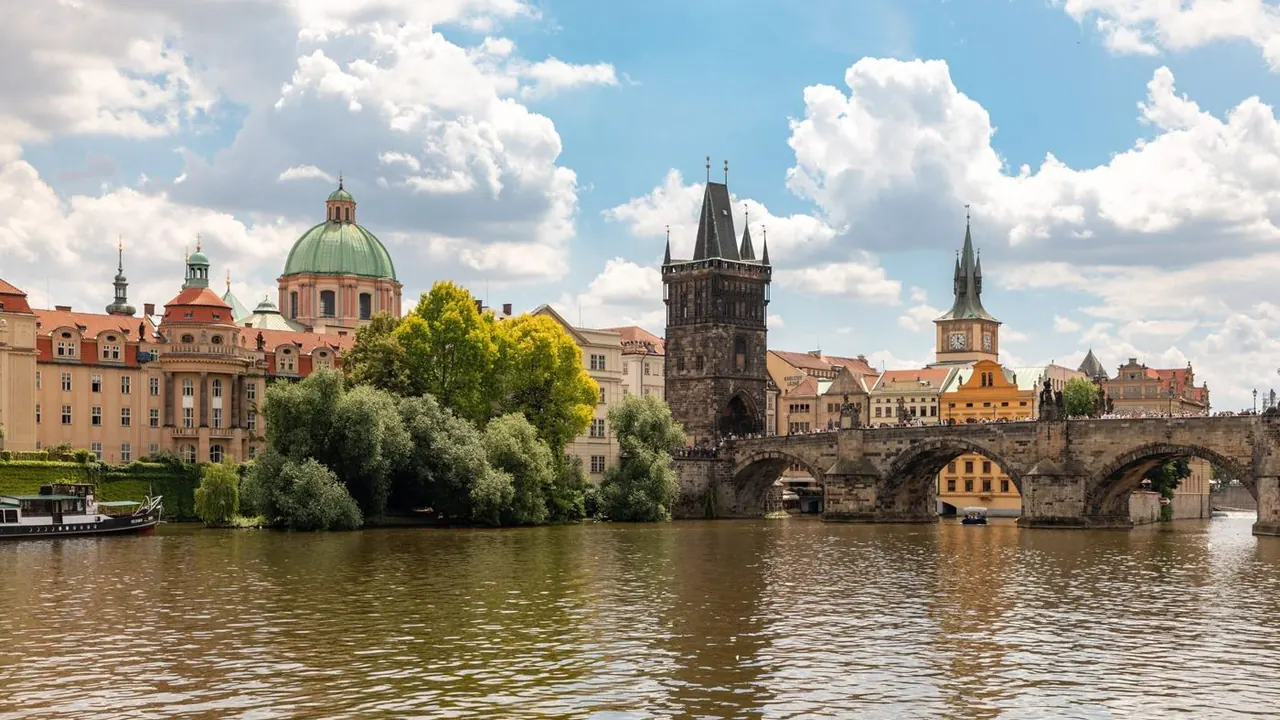
Photos: Bled by Philipp Schwarz, Pexels License; Prague by Dietmar Rabich, CC BY-SA 4.0, cropped.
Bled or Prague?
Our verdict in twelve categories, each scored against the same fixed benchmark cities, and the climate month by month, so you can choose for your trip.
Choose Bled for
- beaches
- nature and the outdoors
- wellness
Bled is for travellers who want mountains and water rather than a city. The lake, the Vintgar Gorge and Triglav National Park are close by, which makes it an outstanding base for walking, swimming in summer and slow, quiet days. Families who enjoy the outdoors will find it calmer and easier than a capital. Expect simple food and early nights.
Choose Prague for
- live music and the arts
- culture and sights
- nightlife
Choose Prague if you want a place that fills both the days and the evenings. Its intact old centre, opera houses and concert halls, beer pubs and late nights give you far more to do after dark or on a wet afternoon, and trams and the metro mean you never need a car. It is the weaker choice if you're after nature or a vacation spent on the water.
Scoreboard
Twelve categories on one fixed scale from 0 to 100. The shaded stretch is the gap between the two.
Your match
Pick a travel style or drag the sliders, and both match scores follow your weighting.
Wins on beaches and nature and the outdoors with your weighting.
Wins on live music and the arts and culture and sights with your weighting.
What matters to you?
Category by category
What the scores mean for a trip.
Beaches & swimming
Neither city is near the sea, but Bled has a lake made for swimming. In July and August Lake Bled warms to around 24°C. People swim from grassy lidos and wooden piers below the castle, at the shallow western end or straight off the rocks along the path, and some swim out to the island. Lake Bohinj, half an hour away, adds wilder pebble shores with colder water.
In Prague, swimming takes planning. The Vltava in the centre is not for bathing, so your options are an outdoor pool, the Dzban reservoir in the Sarka valley, or the wooded banks of the Slapy reservoir about an hour south.
Food & drink
Prague is the better place to eat, though neither city is worth the journey for food alone. Bled has kremšnita on a lakeside terrace and trout, žlikrofi and buckwheat dishes in a handful of inns. Beyond that it is mostly hotel dining rooms and pizzerias, and the best meals are in the farm inns out in the valleys.
Prague offers more range and a real drinking culture: unpasteurised lager in classic pubs, microbreweries, svickova and goulash, cheap chlebicky lunches and Moravian wine bars. The trick is to eat in Vinohrady, Karlin or Letna rather than around Old Town Square.
Culture & sights
Culture is where the two cities differ most. Bled's sights fit into a single day: the cliff-top castle with its small museum and printing workshop, the pletna boat ride to the baroque island church with its wishing bell, and the old spa villas along the shore.
In Prague the entire historic centre is a UNESCO site. It runs from the Castle and St Vitus Cathedral through Baroque Mala Strana, then across the Charles Bridge to the Old Town and the synagogues of Josefov. Add the Art Nouveau facades, the rare Cubist buildings and the National Gallery's palaces, and three or four days barely covers it.
Nightlife
An evening in Bled means a drink by the lake and a walk along the lit shore, then bed. There is no club, and the village is quiet well before midnight. Prague has a reputation as a drinking city and lives up to it, with long pub tables in Zizkov, wine and cocktail bars in Vinohrady, summer beer gardens on Letna and Riegrovy sady, and techno venues in Holesovice for anyone who wants to stay out until dawn.
Nature & outdoors
For the outdoors, Bled is the stronger choice by a wide margin. It sits where the Julian Alps begin, with the climbs to Ojstrica and Osojnica, the Vintgar Gorge, Lake Bohinj and the Pokljuka plateau all close by. There is also rafting and canyoning on the Sava, paragliding, and skiing at Vogel in winter.
Prague is green for a capital, with Petrin Hill, Stromovka and the rocky Divoka Sarka gorge, and the sandstone towers of Bohemian Switzerland are good hiking within about two hours. The countryside around the city is gentle, though, with no real mountains.
Day trips
Both cities make good bases for day trips, and Prague has the edge for range and ease. By train, Kutna Hora's cathedral and ossuary, Karlstejn and Terezin are each about an hour away, and Dresden is about two. Cesky Krumlov is far enough to be worth an overnight stay.
From Bled, the outings take in a small country and its neighbours: Ljubljana and medieval Radovljica nearby, the Postojna cave and Predjama Castle for a full day, Venetian Piran on the Adriatic, and Austria's Wörthersee just through the Karawanks tunnel.
Good for families
Bled suits families better, as long as they like being outside. The flat lake path works for pushchairs and young cyclists, children can row out to the island and ring the bell, and Straža hill has a summer toboggan run and a rope park. A wet day is hard to fill, though.
Prague has the bigger single attraction in its hillside zoo at Troja, along with the astronomical clock, the mirror maze on Petrin and the technical museum. With small children, though, the cobbles, steep lanes, castle stairs and summer crowds make it more tiring.
Getting around
Prague is much easier to get around. You can walk the old centre from end to end, and the three metro lines, the trams (which run through the night) and the Petrin funicular all use the same tickets, so no visitor needs a car. Watch for pickpockets on crowded trams.
In Bled, getting around the lake is a simple walk, with buses to Ljubljana and Bohinj and two railway stations nearby. The mountains are another matter. Pokljuka, the Vršič pass and the Soča valley are poorly served by public transport, so many visitors hire a car.
Shopping & style
There is barely any shopping in Bled: a few lakeside stalls selling honey, lace and painted beehive panels, and a small supermarket. Prague is no shopping capital either, but it has luxury labels on Parizska, chains on Na Prikope, and Czech buys such as Bohemian crystal, garnet jewellery and marionettes. The better design and vintage shops are in Vinohrady and Holesovice, away from the souvenir streets.
Affordability
Bled's fame comes at a price. As Slovenia's best-known resort it costs more than the rest of the country, and lakeside rooms in July and August are scarce and expensive. Village guesthouses, the campsite at the western end of the lake or a base in Radovljica or Bohinj bring the bill down. The lake path, viewpoints and trails cost nothing, though the island boats, the castle and the gorge all charge entry.
Your money goes further in Prague. Beer, pub lunches and public transport are inexpensive, and staying a few tram stops from the centre and eating in Vinohrady or Zizkov keeps the stay good value. The streets around Old Town Square and the exchange booths in the centre are where visitors overpay.
Live music & performing arts
Prague is a serious music city. It has three opera stages, including the Estates Theatre where Mozart conducted the premiere of Don Giovanni, and the Czech Philharmonic plays at the Rudolfinum. Black-light theatre and marionette shows need no Czech.
Bled has nothing regular, only the occasional summer concert in the castle or a church and folk evenings put on for visitors. For opera or a proper concert you have to go to Ljubljana.
Wellness & relaxation
Rest was Bled's original trade. In the nineteenth century Arnold Rikli brought guests here for air and sun cures and lake bathing, and mild springs still supply warm water to the spas and pools of the big lakeside hotels, some of which take day guests. Outside the summer peak, early walks around the still lake do the rest.
Prague has no bathing tradition of its own, only hotel spas, massage studios and beer baths that are more novelty than cure. Its calm lies in the grand coffee houses, the Baroque gardens below the castle and a bench on Kampa, and it is best enjoyed from a base in a quieter neighbourhood.
When should you go?
Pick your month. The climate figures are measured averages, not a forecast.
Bled in July
Prague in July
Daytime high, °C
Rainfall in the month, mm
Where the figures come from
Bled's temperatures are measured 36 km from the centre, at Klagenfurt.
Bled has no rain gauge within 25 km of the centre, so its rainfall comes from a gridded climate dataset read at the city rather than from a gauge further away.
Temperature and rainfall are climate normals, averaged over the years shown. Bled: 1991-2020 normals, Klagenfurt (35.5 km from centre). Prague: 1991-2020 normals, Praha-Libus (8.1 km from centre).
Both cities have cold winters, with daytime highs barely above freezing in December and January, and both are at their best from May to September. Bled gets slightly warmer at the height of summer, around 27°C in July, and from late June to early September the lake is warm enough to swim in. The catch is rain. Autumn is Bled's wettest season, peaking at about 211mm in November. In compensation, Bled has more sunshine than Prague in every month of the year.
Prague is drier all year round, with summer rain topping out at about 80mm. July and August highs of around 25°C are comfortable for long days on foot. March is cooler in Prague than in Bled, but April, May and September are good months for walking the streets in both. Prague's winters are grey and very short on sun, while Bled's cold months are brighter and suit the snow up on the plateaus.
Which traveller are you?
For an outdoors trip, Bled is the clear choice. The lake path, the viewpoints over the island, the Vintgar Gorge and the trails of Triglav National Park all start near the village, with rafting, canyoning and winter skiing within reach. Prague's green hills are pleasant but gentle.
On a culture and arts trip, Prague wins easily. The castle and cathedral, Baroque Mala Strana, the Jewish Quarter and the Cubist buildings fill several days, and in the evenings there is opera at the National Theatre or the Estates Theatre. Bled's castle and island church take a day.
For a food and nightlife trip, Prague is the only real option. Classic pubs pour carefully kept lager, the bars of Zizkov and Vinohrady stay full until late, and clubs run until dawn. Bled offers kremšnita, mountain dishes and a quiet drink on a terrace, and is asleep before midnight.
Before you go
| Measure | Bled | Prague |
|---|---|---|
| Official language | Slovene | Czech |
| Currency | Euro (EUR) | Czech Koruna (CZK) |
| Sockets | CF230 V, 50 Hz | CE230 V, 50 Hz |
| Driving side | Right | Right |
| Time zone | UTC+1, UTC+2 in summer | UTC+1, UTC+2 in summer |
| Emergency number | 112 | 112 |
| Elevation | 501 m | 235 m |
| Main airport | Ljubljana Jože Pučnik Airport (LJU)31 km from centre32 non-stop destinations | Václav Havel Airport Prague (PRG)12 km from centre178 non-stop destinations |
| Public holidays this year | 21 days | 13 days |
By the numbers
| Measure | Bled | Prague |
|---|---|---|
| City population | 4,969 | 1,397,880 |
| People per km² | 26 | 2,817 |
| Museums within 10 km | 4 | 88 |
| UNESCO World Heritage sites within 50 km | 3 | 1 |
Where else could you go?
Every comparison below shares a destination with this one, so you can follow Bled or Prague somewhere new.