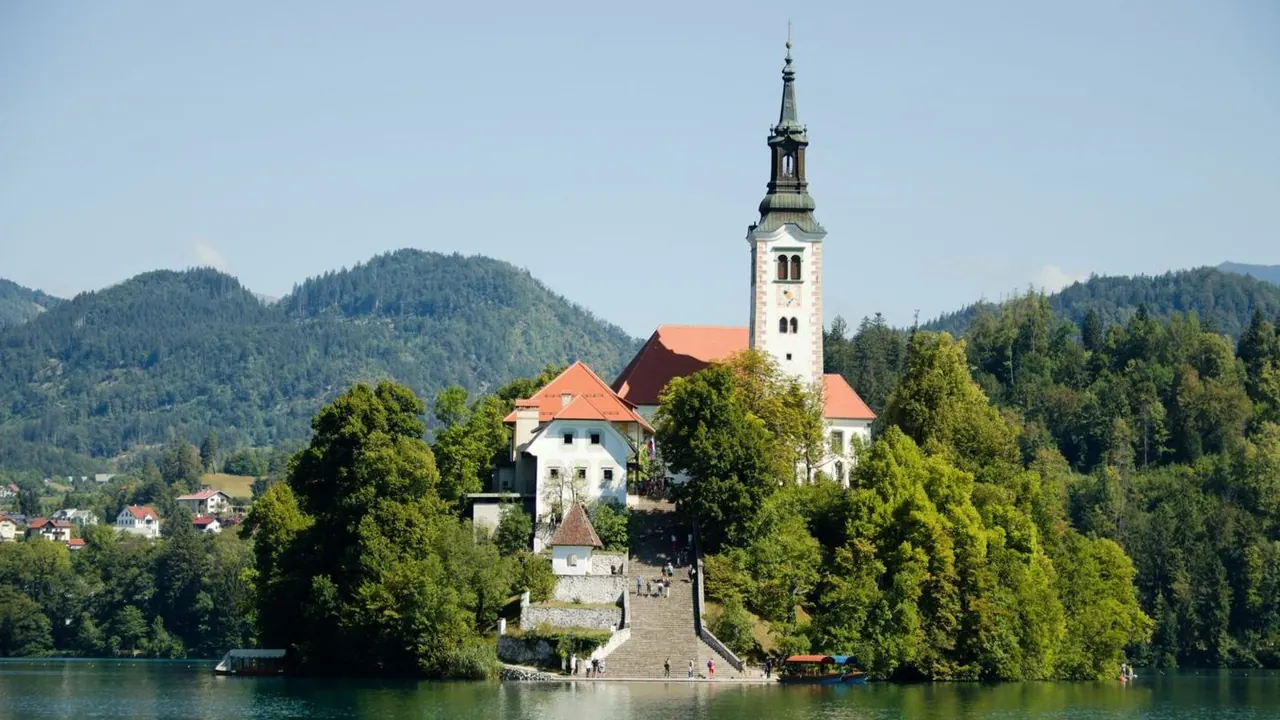
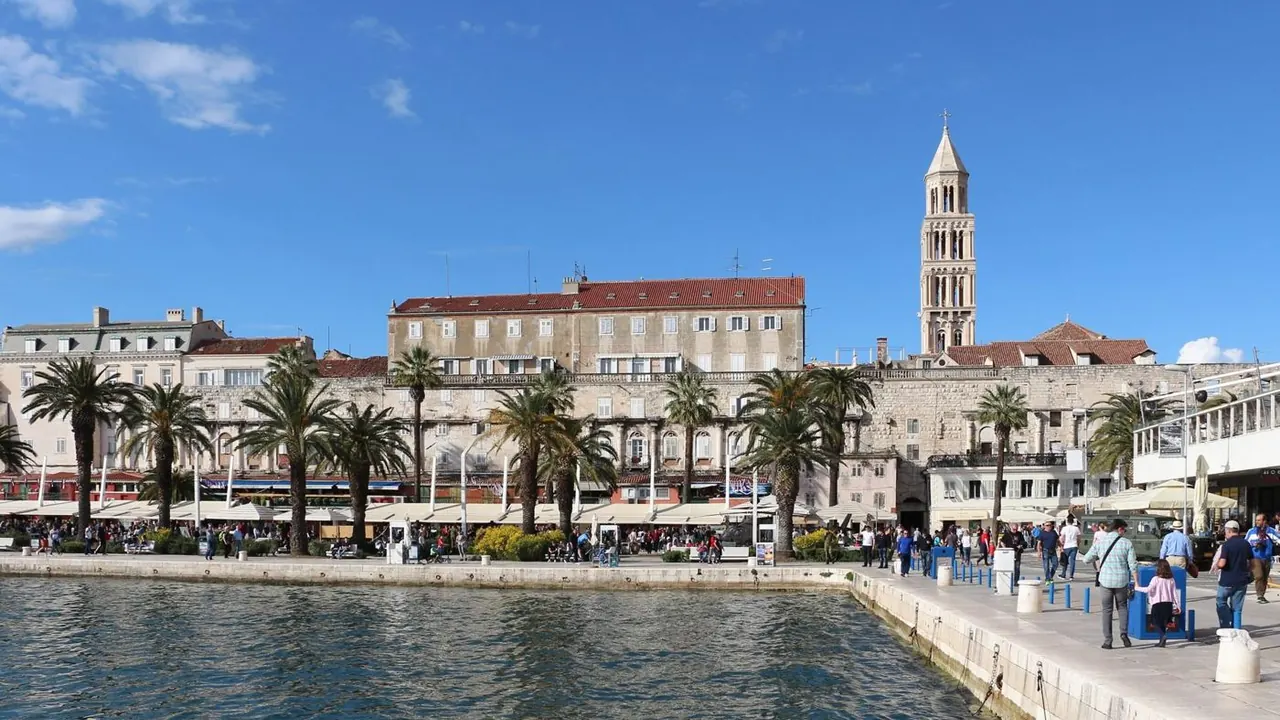
Photos: Bled by Philipp Schwarz, Pexels License; Split by Bernard Gagnon, CC BY-SA 4.0, cropped.
Bled or Split?
Our verdict in twelve categories, each scored against the same fixed benchmark cities, and the climate month by month, so you can choose for your trip.
Choose Bled for
- wellness
- nature and the outdoors
- families
Bled is for travellers who want the mountains at the door. It suits walkers, cyclists, rafters and winter cross-country skiers who are happy with quiet evenings, plain food and a short list of sights. The Julian Alps, Triglav National Park and the Soča valley are all within reach, and the slow, restorative pace makes it a good choice for couples and families who like being outside all day and in bed early.
Choose Split for
- nightlife
- culture and sights
- food and drink
Split rewards those who want a city as well as scenery. A Roman palace people still live in, Dalmatian konobas, summer bars in stone alleys and the open Adriatic a short walk from the old town give it far more to fill the hours after dark. It also has a ferry port that puts Hvar, Brač and Vis within easy reach. Choose it for a sea, food and island-hopping trip, ideally outside the hottest weeks.
Scoreboard
Twelve categories on one fixed scale from 0 to 100. The shaded stretch is the gap between the two.
Your match
Pick a travel style or drag the sliders, and both match scores follow your weighting.
Wins on wellness and nature and the outdoors with your weighting.
Wins on nightlife and culture and sights with your weighting.
What matters to you?
Category by category
What the scores mean for a trip.
Beaches & swimming
Split has the sea, and it makes a real difference. You can walk from the palace to the sandy shallows of Bačvice or the pine-shaded rocks around Marjan, then take a ferry to Brač or Hvar for longer beaches. The water stays swimmable into early October.
Bled's swimming is in a lake: grassy lidos below the castle cliff, the gentle western end at Velika Zaka and quiet rocks along the shore path, with the island as a goal for strong swimmers. It is lovely in high summer, but the season is short, and nearby Bohinj is colder still.
Food & drink
Split gives a food lover far more to work with. Grilled fish, black risotto, pašticada and peka are served in family konobas in Varoš, and the fish market and Pazar show what is in season. Plavac Mali and Pošip are poured everywhere, though menus inside the palace lean towards visitors.
Bled has kremšnita on a lake terrace and some honest mountain cooking such as trout and žlikrofi, but little beyond hotel dining rooms and pizzerias. The more rewarding meals are out in the valley farm inns, and after a couple of days most people have eaten their way through the village.
Culture & sights
Split has one of the great Roman sites on the Adriatic, and it is still lived in. Diocletian's Palace holds medieval houses and shops inside its walls, a cathedral that began as the emperor's mausoleum and vaulted halls underneath. The Meštrović Gallery adds a fine museum on the Marjan slopes, and it all fills about two days.
Bled offers a beautiful set piece rather than a programme: the cliff-top castle with its small museum and printing workshop, and the baroque church on the island, reached by pletna boat. It is done in a day, and the museums and architecture are in Ljubljana.
Nightlife
Evenings in Bled end early. Expect a drink on a hotel terrace or at a lakeside café, then a walk along the lit shore, with no clubs and very little open late. For a real night out you have to go to Ljubljana.
Summer nights in Split are a different matter. Evenings begin on the Riva and move into the palace, where small bars spill out onto the stone stairways until late. The beach bars and clubs around Bačvice keep a younger crowd going into the small hours. From October to May it shrinks to a few bars and a glass of wine with locals.
Nature & outdoors
Bled is the stronger base for the outdoors, because it sits right on the edge of the Julian Alps. The Vintgar Gorge, Lake Bohinj, the Savica waterfall and the Pokljuka plateau are all close, with Vršič and the Soča valley beyond. Hiking ranges from meadow walks to multi-day hut routes, and the activities run through the seasons from rafting and paragliding to winter skiing.
Split's landscape is limestone and sea rather than alpine. Marjan, the Mosor and Biokovo ridges, rafting in the Cetina canyon and Krka's waterfalls are all excellent, and kayaking and sailing among the islands are things Bled cannot match. Summer heat limits the hiking to spring and autumn, though.
Day trips
Both are good bases, but Split has the edge, mainly because so much is easy without a car. Trogir and Šibenik, both with UNESCO-listed centres, Roman Salona and Klis Fortress are a short trip away by bus, and in summer the ferries make Hvar and Brač simple days out.
Bled's day trips cover more of a small country and cross borders. Ljubljana and medieval Radovljica are close, Postojna cave and Piran make full days, and Villach, the Wörthersee and Italian Friuli are within reach. More of it is easier with a car, though.
Good for families
Families are well served in both, with Bled slightly ahead for active children. Rowing out to the island to ring the bell, the summer toboggan and rope park on Straža, and a flat lake path for pushchairs and small bikes keep days full. A rainy day is the weak spot.
Split offers shallow paddling at Bačvice, shade and space on Marjan, and ferry rides that children remember. The July and August heat, the crowds and the stepped stone streets of the palace make it harder work with small children.
Getting around
Split is the easier of the two. Its car-free core puts the palace, Varoš, the markets and Bačvice within a short walk, and the ferry port, bus station and railway all sit together at the harbour, so islands and coastal towns are simple to reach.
Bled is easy on foot around the lake and has buses to Ljubljana and Bohinj, plus two railway stops. The real limits are the trailheads, Pokljuka and the Vršič pass, which most visitors reach by hire car or transfer.
Shopping & style
Neither is a shopping destination, but Split has rather more. Marmontova carries the main fashion chains, the palace has a few galleries and jewellers, and the Pazar market is good for figs, honey, brandies, olive oil and Dalmatian wine to take home.
Bled has a handful of lakeside stalls selling honey, lace and painted beehive panels, and little else. Ljubljana is where serious shopping happens.
Affordability
Overall costs are much alike, but they work differently. Bled is the priciest place in Slovenia, with lakeside rooms and terraces charging for the view, though staying in Radovljica, Bohinj or the campsite brings the bill down, and the trails and viewpoints are free. The island boat, the castle and the gorge all charge entry.
Split's costs depend most on the season. July and August rooms near the old town cost about what a large Western European city would, and fish sold by weight and family ferry tickets add up. In May, June, late September and winter it becomes a modestly priced city.
Live music & performing arts
Catching a performance in Bled comes down to luck. There may be the odd summer concert in the castle or one of the churches, or a folk evening put on for visitors, but there is no theatre or concert hall to plan around. For opera and drama you have to go to the capital.
Anyone who wants an evening of music or opera will do far better in Split. The 19th-century Croatian National Theatre stages opera, ballet and drama, and the Split Summer Festival moves opera outdoors, with the Peristyle as its stage. Klapa, the local unaccompanied male harmony singing, can often be heard in the domed vestibule of the palace. Outside summer there is much less on.
Wellness & relaxation
Bled is the better place to slow down. It began as a nineteenth-century health resort under Arnold Rikli, warm springs at the eastern end feed hotel pools that day guests can sometimes use, and early walks around still water set an easy rhythm, especially outside the summer peak.
Split offers hotel spas along the coast and the Dalmatian habit of fjaka, the long coffee on the Riva. In midsummer, though, the old town is loud late into the night, and real rest means Marjan's pine woods or an island.
When should you go?
Pick your month. The climate figures are measured averages, not a forecast.
Bled in July
Split in July
Daytime high, °C
Rainfall in the month, mm
Where the figures come from
Bled's temperatures are measured 36 km from the centre, at Klagenfurt.
Bled has no rain gauge within 25 km of the centre, so its rainfall comes from a gridded climate dataset read at the city rather than from a gauge further away.
Temperature and rainfall are climate normals, averaged over the years shown. Bled: 1991-2020 normals, Klagenfurt (35.5 km from centre). Split: 1991-2020 normals, Split / Marjan (0.9 km from centre).
Bled is a summer and early autumn place. Highs reach about 27°C in July, warm enough for lake swimming from late June to early September, but this is also the wettest stretch of the year, with August rainfall near 152mm, often in afternoon storms. May, June and September are the best months for hiking. Winters hover around freezing and bring the season for skiing and sledging, while November and December are grey and short on sun.
Split runs warmer all year. July and August reach 31°C with very little rain and long sunny days, which is fine for the beach but hard going on the palace streets at midday. The sea warms to about 25°C in August and is still pleasant in October. Late spring and September are the sweet spot for walking and swimming together. Rain arrives with autumn and peaks around 117mm in November, but winters are mild, never close to Bled's cold.
Which traveller are you?
On a beach and sun trip, Split is the clear choice. The Adriatic is a walk from the old town, Bačvice and the Marjan coves offer different kinds of swimming, and island beaches on Brač and Hvar are a ferry ride away.
For an outdoors trip, Bled has the edge. It sits at the edge of Triglav National Park, with the Vintgar Gorge, Pokljuka's pastures and hut-to-hut routes close by, plus rafting on the Sava and winter skiing at Vogel and on Pokljuka.
On a food and nightlife trip, Split wins easily. Dalmatian konobas in Varoš, peka and local Pošip fill the evenings, and in summer the palace alleys and Bačvice bars stay busy late, while Bled is asleep before midnight.
Before you go
| Measure | Bled | Split |
|---|---|---|
| Official language | Slovene | Croatian |
| Currency | Euro (EUR) | Euro (EUR) |
| Sockets | CF230 V, 50 Hz | CF230 V, 50 Hz |
| Driving side | Right | Right |
| Time zone | UTC+1, UTC+2 in summer | UTC+1, UTC+2 in summer |
| Emergency number | 112 | 112 |
| Elevation | 501 m | 0 m |
| Main airport | Ljubljana Jože Pučnik Airport (LJU)31 km from centre32 non-stop destinations | Split Saint Jerome Airport (SPU)12 km from centre69 non-stop destinations |
| Public holidays this year | 21 days | 14 days |
By the numbers
| Measure | Bled | Split |
|---|---|---|
| City population | 4,969 | 160,577 |
| People per km² | 26 | - |
| Museums within 10 km | 4 | 11 |
| UNESCO World Heritage sites within 50 km | 3 | 4 |
| Swim season, months above 21 °C | - | 4 months |
Where else could you go?
Every comparison below shares a destination with this one, so you can follow Bled or Split somewhere new.