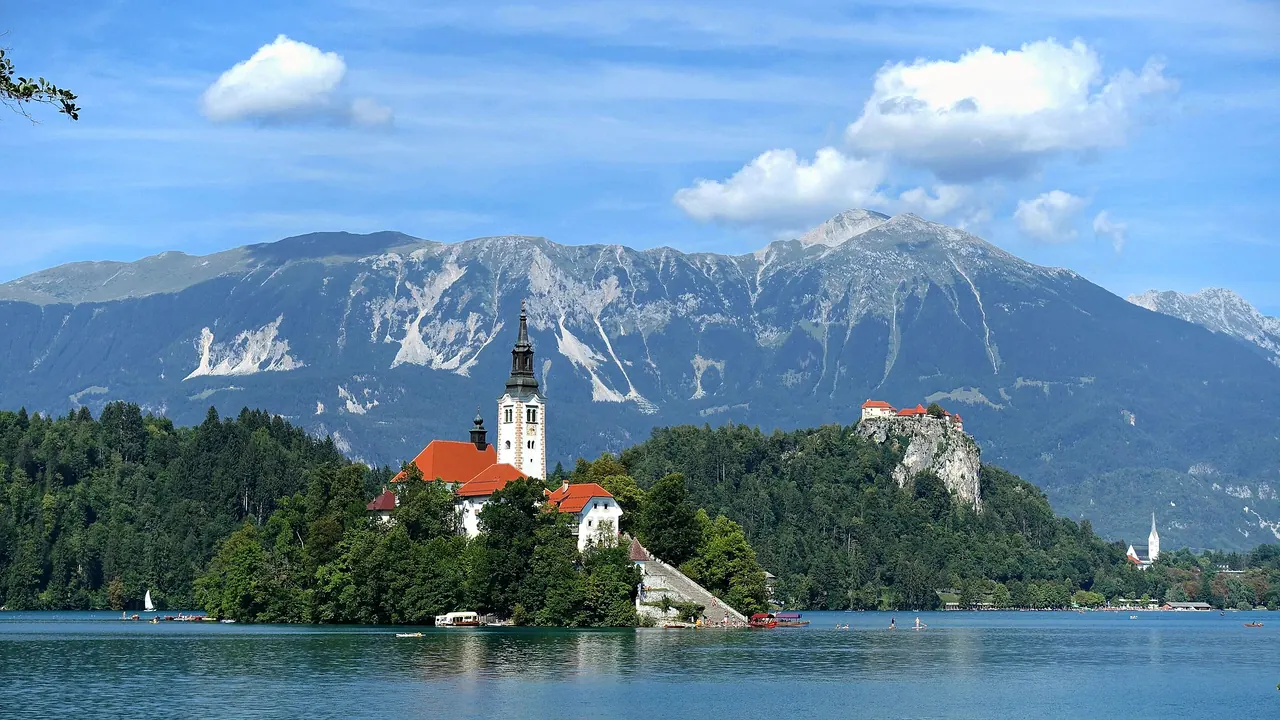
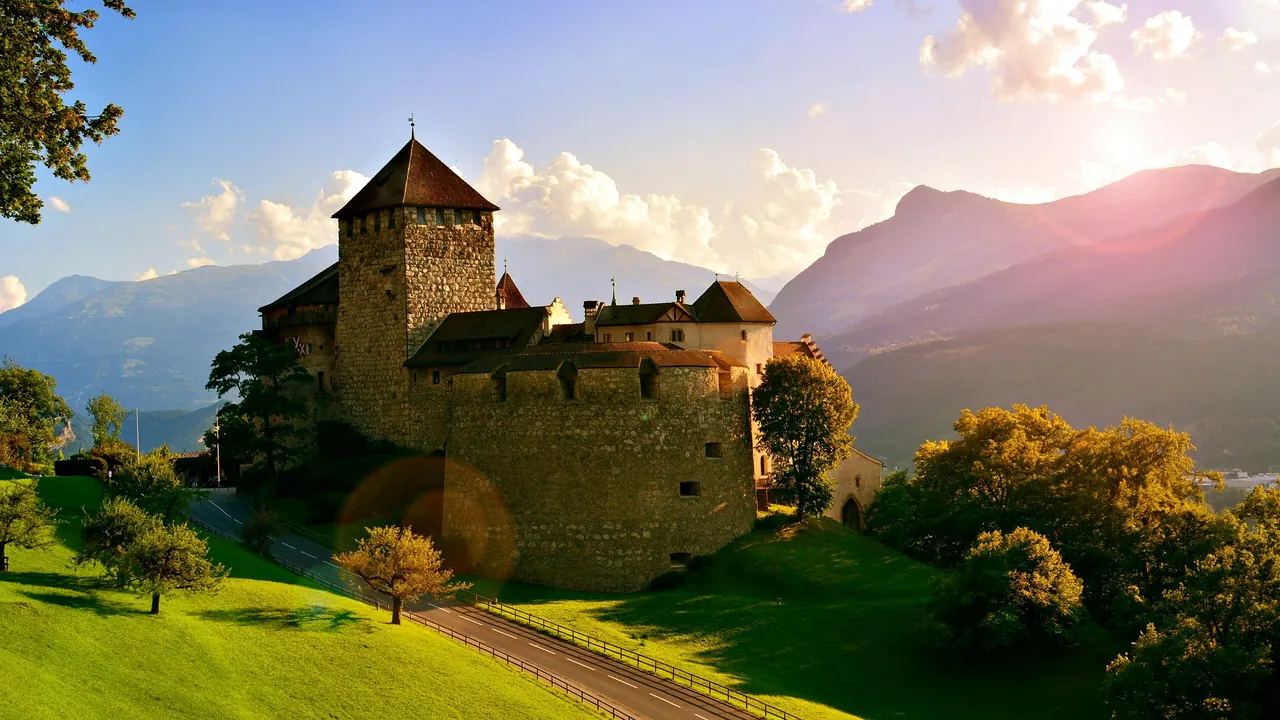
Photos: Bled by Luka Peternel, CC BY-SA 4.0, cropped; Vaduz by Justin LaBerge, CC BY 2.0, cropped.
Bled or Vaduz?
Our verdict in twelve categories, each scored against the same fixed benchmark cities, and the climate month by month, so you can choose for your trip.
Choose Bled for
- prices
- beaches
- families
Bled is the better pick for travellers who want mountains and water together, and who would rather spend less doing it. The lake is warm enough to swim in during summer. Families have rowing boats, lidos and a toboggan run to fill their days, and the hotel spas fed by mild springs suit a slow stay. It costs noticeably less than Vaduz, and Ljubljana is close when you want more to eat or see.
Choose Vaduz for
- live music and the arts
- culture and sights
- shopping
Choose Vaduz if money is not a worry and your interests run to modern art, wine and a small concert calendar as well as hiking. Trails climb straight from town towards the Rätikon peaks, and the prince's vineyards supply the evening glass. Switzerland and Austria are both on the doorstep, from the abbey library at St Gallen to the shores of Lake Constance. It is a quieter, more grown-up place than Bled, better for keen walkers than for young children.
Scoreboard
Twelve categories on one fixed scale from 0 to 100. The shaded stretch is the gap between the two.
Your match
Pick a travel style or drag the sliders, and both match scores follow your weighting.
Wins on prices and beaches with your weighting.
Wins on live music and the arts and culture and sights with your weighting.
What matters to you?
Category by category
What the scores mean for a trip.
Beaches & swimming
Bled has real swimming on its doorstep. In high summer Lake Bled warms up enough that bathing from the lidos below the castle cliff or the shallow western end near Velika Zaka becomes a daily habit, and strong swimmers head out to the island. Bohinj adds a colder, wilder pebble shore nearby.
Vaduz has no lake of its own and the Rhine is not for swimming. A swim there means a municipal open-air pool or a drive to the Walensee or Lake Constance, which makes a pleasant afternoon out. In Bled you can walk from your room straight into the water.
Food & drink
Neither town is worth travelling to for the food, and both lean on hearty mountain cooking: trout, žlikrofi dumplings and buckwheat in Bled's inns, Käsknöpfle, rösti and autumn game in Vaduz. Where they differ is the one treat each offers. In Bled it is a kremšnita cream slice on a lakeside terrace; in Vaduz it is wine, from the vineyards below the castle and the prince's own estate.
In Bled the better meals are out in the valley farm inns or in Ljubljana. In Vaduz the cooking is solid rather than adventurous, and dinner ends early.
Culture & sights
You can see either town in a day, but the sights are of different kinds. Bled's are scenic set pieces: the clifftop castle with its small museum and printing workshop, and the pletna boat ride to the baroque island church and its wishing bell.
Vaduz has more to see indoors. The Kunstmuseum Liechtenstein and the Hilti Art Foundation hold a surprisingly strong modern collection, and the National Museum and the Postage Stamp Museum add to it. Its castle, by contrast, can only be admired from the path up to it, since the prince lives there.
Nightlife
Both towns go to bed early, so neither suits a night out. In Bled the evening means a terrace drink and a walk along the lit shore, with Ljubljana the nearest real scene. Vaduz has a few wine bars and hotel lounges on the Städtle, and younger locals go to Feldkirch or Zurich for anything livelier.
Nature & outdoors
Both are superb mountain bases, and the difference lies in the landscape. Bled pairs lakes with the Julian Alps: the level lake circuit, the climbs to the Ojstrica and Osojnica viewpoints, the Vintgar Gorge walkways, Bohinj and the Pokljuka plateau. Rafting and canyoning on the Sava, and the Soča valley over the Vršič pass, give it more variety on the water.
Vaduz is steeper and more about the high ground. Trails start in town and climb through vineyards and beech forest, Malbun and the Rätikon peaks are half an hour up the road, and the exposed Fürstensteig path tests sure-footed walkers. The flat Rhine dam path is good for cycling, and in winter the larger Swiss ski resorts are within an hour.
Day trips
Bled's outings mostly explore one small country. Ljubljana's riverside old town and Plečnik architecture are under an hour away, medieval Radovljica is just down the road, and the Postojna cave with cliff-built Predjama Castle, or the Venetian harbour at Piran, each make a full day. Austrian Carinthia, with Villach and the Wörthersee, is the main trip across a border.
From Vaduz almost every outing crosses one. Arcaded Feldkirch in Austria is about twenty minutes away, while Appenzell's painted house fronts and the old Swiss town of Chur take around an hour, as do Bregenz and the island town of Lindau on Lake Constance. Going by train usually means changing at Buchs or Sargans.
Good for families
Bled is the easier choice with children. Rowing to the island to ring the bell, swimming from the shallow lidos, the toboggan run and rope park on Straža, and the Vintgar walkways fill several days outdoors, and the flat lake path suits pushchairs.
Vaduz is just as safe and calm but has less to do. Its museums lean towards modern art and stamps, so families fall back on the open-air pools, gentle walks above Triesenberg or the beginner slopes at Malbun. Neither has a zoo or a large indoor attraction, so a wet day is hard work in both.
Getting around
Bled has the railway nearby, which Vaduz lacks: Lesce-Bled on the main line a few kilometres out, and the small Bled Jezero station on the scenic Bohinj line, with regional buses to Ljubljana and Bohinj as well. The mountains are another matter. Trailheads, the Pokljuka plateau and the Vršič pass are thinly served, so most visitors hire a car or book transfers, and then struggle to park by the lake in summer.
Vaduz has no station, but its tidy bus network reaches every village in the country and climbs to Triesenberg and Malbun, so the high trails are easy to reach without a car. A car is only worth having for wider trips around the region, since getting to a train means taking a bus to Buchs, Sargans or Feldkirch first.
Shopping & style
Neither town is a place to shop. Bled's lakeside stalls sell honey, lace and painted beehive panels. The Städtle in Vaduz adds watches, jewellery and collectable stamps, though a bottle of local wine makes the better gift. Serious shoppers go to Ljubljana from one and Zurich from the other.
Affordability
Bled is much easier on the wallet. It costs more than the rest of Slovenia, especially in July and August, but village guesthouses, the lakeside campsite or a room in Radovljica or Bohinj keep the bill down, and the lake path and mountain trails are free.
Vaduz charges Swiss prices for rooms and meals alike, with few hotels and almost nothing at the budget end. Even a short stay is costly, and the usual way to save is to sleep across the border in Austria.
Live music & performing arts
Vaduz has the more dependable calendar. The national theatre stage in neighbouring Schaan, a short orchestra season and a summer classical festival mean there is usually something on during a week's stay. Bled has no venue at all, only occasional summer concerts in the castle or churches and folk evenings for visitors, so a proper performance means a trip to Ljubljana.
Wellness & relaxation
Bled has spa history and still has spas. It grew up as a nineteenth-century health resort under Arnold Rikli, and mild springs at the eastern end of the lake feed the indoor pools of several lakeside hotels, some of which take day guests. Add early walks around still water and slow boat rides to the island, and slowing down comes easily.
Vaduz is calm and orderly but has no bathing tradition of its own, and its spas are limited to a few hotels. Its best asset lies across the Rhine at Bad Ragaz, about twenty-five minutes away, where a large public thermal bath fed from the Tamina gorge makes a restful afternoon.
When should you go?
Pick your month. The climate figures are measured averages, not a forecast.
Bled in July
Vaduz in July
Daytime high, °C
Rainfall in the month, mm
Where the figures come from
Bled's temperatures are measured 36 km from the centre, at Klagenfurt.
Bled has no rain gauge within 25 km of the centre, so its rainfall comes from a gridded climate dataset read at the destination rather than from a gauge further away.
Vaduz's temperatures are measured 51 km from the centre, at Sigmarszell-Zeisertsweiler.
Vaduz has no rain gauge within 25 km of the centre, so its rainfall comes from a gridded climate dataset read at the destination rather than from a gauge further away.
Temperature and rainfall are climate normals, averaged over the years shown. Bled: 1991-2020 normals, Klagenfurt (35.5 km from centre). Vaduz: 1991-2020 normals, Sigmarszell-Zeisertsweiler (51.3 km from centre).
Bled has the warmer summer, reaching about 27°C in July, and from late June to early September the lake is warm enough to swim in. It is also the wetter of the two: rain builds through autumn to a peak of about 211mm in November, and winter days hover near freezing in December and January. For hiking, May, June and September are the best months, sunny without being hot.
Vaduz is milder and steadier. Summer highs of about 24°C make July and August comfortable for walking the town and the mountain trails, winter days stay a few degrees above freezing, and it is drier than Bled all year. Bled gets more sunshine through the summer months. In late autumn the valley floor at Vaduz can sit under fog, and then the heights above are often the sunnier place to be.
Which traveller are you?
On a trip on a tight budget, Bled is the clear choice. Guesthouses in the surrounding villages, the lakeside campsite and cheap buses keep costs down, and the lake path and trails are free. Vaduz charges Swiss prices and has almost nothing at the budget end.
On a family trip with young children, Bled has far more to offer: rowing boats to the island, shallow lidos, a summer toboggan run and rope park on Straža hill, and a flat lake path for pushchairs. Vaduz is safe but has little laid on for children.
For a culture and arts trip, Vaduz has the edge. The Kunstmuseum Liechtenstein and the Hilti Art Foundation hold strong modern collections, and theatre in Schaan, orchestra concerts and a summer classical festival fill the evenings. Bled offers a castle and an island church, but no venue.
Before you go
| Measure | Bled | Vaduz |
|---|---|---|
| Official language | Slovene | German |
| Currency | Euro (EUR) | Swiss Franc (CHF) |
| Sockets | CF230 V, 50 Hz | CJ230 V, 50 Hz |
| Driving side | Right | Right |
| Time zone | UTC+1, UTC+2 in summer | UTC+1, UTC+2 in summer |
| Emergency number | 112 | 112 |
| Elevation | 501 m | 455 m |
| Main airport | Ljubljana Jože Pučnik Airport (LJU)31 km from centre32 non-stop destinations | Zürich Airport (ZRH)81 km from centre226 non-stop destinations |
| Public holidays this year | 21 days | 21 days |
By the numbers
| Measure | Bled | Vaduz |
|---|---|---|
| Population | 4,969 | 5,668 |
| People per km² | 26 | 328 |
| Museums within 10 km | 4 | 7 |
| UNESCO World Heritage sites within 50 km | 3 | 3 |
Where else could you go?
Every comparison below shares a destination with this one, so you can follow Bled or Vaduz somewhere new.