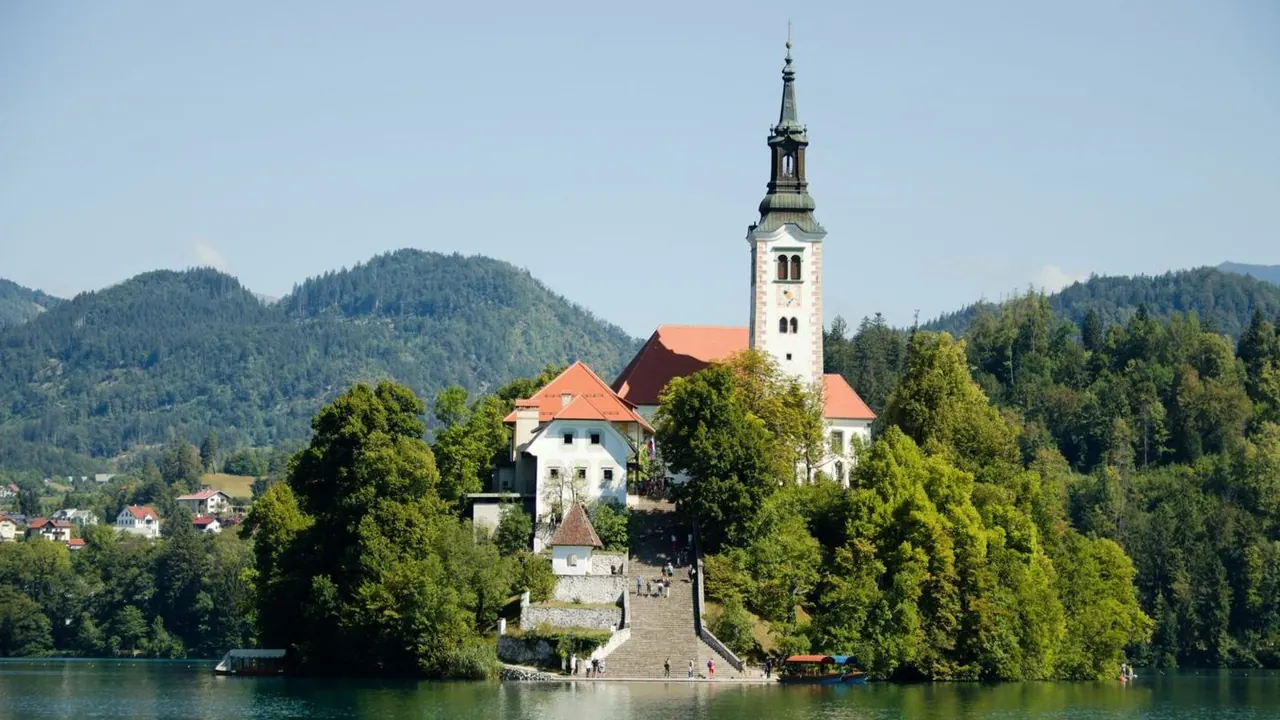
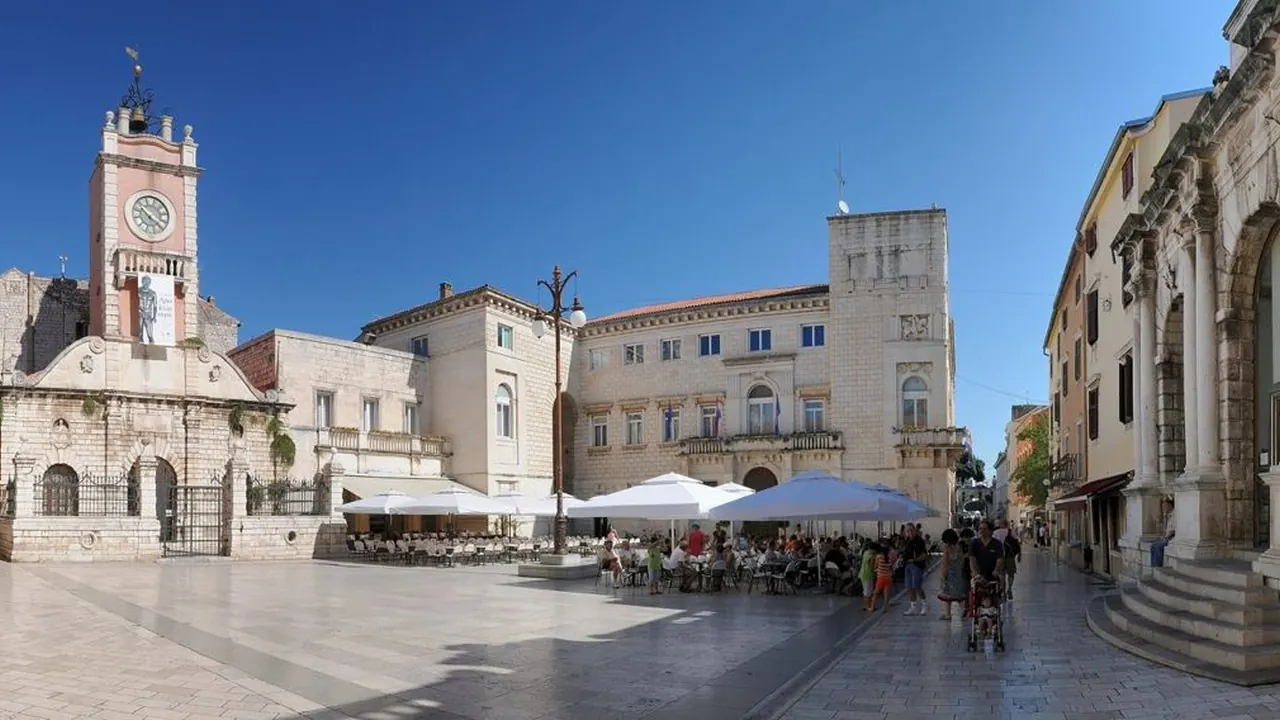
Photos: Bled by Philipp Schwarz, Pexels License; Zadar by Böhringer Friedrich, CC BY-SA 2.5, cropped.
Bled or Zadar?
Our verdict in twelve categories, each scored against the same fixed benchmark cities, and the climate month by month, so you can choose for your trip.
Choose Bled for
- wellness
- families
- nature and the outdoors
Bled is for travellers who want the mountains on the doorstep and a quiet village to come back to. The Julian Alps, Triglav National Park, the Vintgar Gorge and Lake Bohinj are all close, and in winter there is skiing too. The lake, the warm-spring hotel pools and the slow evenings make it a restful place, as long as you don't expect much from the restaurants, bars or sights. It works best as a base for walking, cycling and touring Slovenia, with Ljubljana nearby for anything urban.
Choose Zadar for
- culture and sights
- nightlife
- food and drink
Zadar is the better pick for a summer trip by the sea that still feels like a proper town. Here you swim off the stone promenade and take ferries out to the islands. There is a walled Roman and Venetian old town to explore, Dalmatian seafood to eat and sunset evenings on the Riva. The outdoors is just as strong here as at Bled, but it is coastal and island country, and the town gives you more to eat, see and do after dark.
Scoreboard
Twelve categories on one fixed scale from 0 to 100. The shaded stretch is the gap between the two.
Your match
Pick a travel style or drag the sliders, and both match scores follow your weighting.
Wins on wellness and families with your weighting.
Wins on culture and sights and nightlife with your weighting.
What matters to you?
Category by category
What the scores mean for a trip.
Beaches & swimming
Zadar is the place for swimming. Bled's lake reaches about the same warmth in high summer, and swimming there means grassy lidos, wooden piers and the long swim out to the island. Lake Bohinj nearby is colder and wilder, and the whole season lasts only about ten weeks.
Zadar has the open Adriatic. Locals swim off the stone promenade, and Kolovare and Borik are within easy reach, though they are pebble and concrete rather than sand and get crowded. The real draw is further out: the shallow sandy beaches at Nin, and ferry trips to Ugljan, Pašman and the pale sands of Sakarun.
Food & drink
Neither town is a destination for food, but Zadar gives you more to enjoy. In Bled you get kremšnita on a lakeside terrace, trout and žlikrofi in the inns and a lot of hotel and pizzeria cooking. The better meals are out in the valley farm inns.
Zadar has proper Dalmatian coastal cooking: grilled fish, black risotto, octopus or lamb under the peka bell, and Pag cheese with pršut. Maraschino, the local liqueur, and the market by the walls add something you can't get in Bled, even if the menus on the peninsula start to look alike after a few days.
Culture & sights
Zadar has much more history to explore. Its walled peninsula packs in an open Roman forum, the round church of St Donatus, a Romanesque cathedral with a bell tower you can climb and UNESCO-listed Venetian walls. The museums of ancient glass and archaeology are small but good, and the Sea Organ adds a modern note. It is a solid two days of sightseeing.
Bled's sights are fewer but make lovely pictures: the castle on its cliff with a small museum, and the pletna boat ride to the island church with its wishing bell. One day covers them.
Nightlife
Bled's evenings mean a terrace drink after dinner and a stroll along the lit shore. There are no clubs, and anyone after a night out has to go to Ljubljana.
Zadar has a small but real summer scene. It starts at sunset by the Sea Organ and moves on to café-bars along Kalelarga and terrace bars on the walls, with warm nights going on fairly late. Serious clubbing means the party beach at Zrće on Pag, about an hour away. Outside the summer months both towns go quiet.
Nature & outdoors
There is little to choose between them for the outdoors, but the landscapes could hardly be more different. Bled is Alpine country: the lake circuit and the steep climbs to Osojnica, the green river below the Vintgar walkways, and Triglav National Park with Bohinj and the Pokljuka plateau. Add rafting on the Sava, the Soča valley over the Vršič pass, and skiing at Vogel and on Pokljuka in winter.
Zadar's outdoors is limestone and sea. You get gorge hiking and climbing in Paklenica, sailing to the bare Kornati and Telašćica, sea kayaking, and the waterfalls at Krka and Plitvice. Its high walks are best in spring and autumn, because the summer heat makes them hard work. At Bled, summer is the season for the high hut routes in the mountains.
Day trips
From Bled you can tour a whole small country and cross its borders too. Ljubljana is under an hour away and medieval Radovljica is just down the road. Postojna's cave with cliff-built Predjama Castle makes a full day, as does Piran on the Adriatic, and Villach and the Wörthersee in Austria are through the Karawanks tunnel.
Zadar's outings stay on the Dalmatian coast and out among the islands. Šibenik's cathedral and Nin's tiny royal church are close by. Split and Trogir make long but rewarding days, and ferries go straight from the harbour to car-free Silba.
Good for families
Both work about equally well for families, in different ways. Bled is for active children: rowing out to the island to ring the bell, the summer toboggan and rope park on Straža, and the Vintgar walkways. A wet day is hard to fill.
In Zadar, family time centres on the sea, with Nin's shallow sand the best choice for small children and ferry rides that feel like an adventure. The lit-up Greeting to the Sun and late family evenings out are a bonus, but the midsummer heat can wear children down.
Getting around
Bled's strength is the railway. Lesce-Bled is on the main line and Bled Jezero is on the scenic Bohinj line, so the trains are useful to visitors in a way that Zadar's sparse rail services are not. In the village, the lake path links everything on foot. The trailheads and mountain passes, though, are poorly served without a car.
In Zadar, the water does that job. Ferries leave from the edge of the flat, car-free peninsula, which takes about a quarter of an hour to cross, so island hopping is easy. For the national parks and the wider coast, a hire car or an organised excursion is far more practical than the buses.
Shopping & style
Zadar has more to browse, though neither is a shopping town. Kalelarga's marble street has jewellers, chains and galleries, and the market by the walls is good for Maraschino, Pag cheese, figs, olive oil and Pag lace.
Bled has little more than a few lakeside stalls selling honey, painted beehive panels and lace, plus a supermarket. For real shopping you go to Ljubljana.
Affordability
Zadar is a little easier on the budget. Bled charges for being Slovenia's best-known resort, and lakeside rooms and terrace restaurants cost more. Staying in Radovljica, Bohinj or at the lakeside campsite brings costs down, and the trails and viewpoints are free.
Zadar's private apartments are good value outside high summer, and it costs less than the famous towns further south along the coast. In both places, July and August push prices up, and paid extras soon add up: boat trips and gorge entry at Bled, national park fees and excursions from Zadar.
Live music & performing arts
Zadar has the one regular cultural event either town can offer: the Musical Evenings in St Donatus, a long-running summer series of early and chamber music inside the ninth-century church. Add to that summer concerts in churches and squares, klapa singing and a small Croatian-language theatre.
Bled has no venue of its own and only the occasional summer concert in the castle or a church, so opera and theatre mean a trip to Ljubljana.
Wellness & relaxation
Bled is the better place to unwind. It grew up around Arnold Rikli's air and sun cures, and warm springs feed the indoor pools of several lakeside hotels, some of which let in day guests. Outside the summer peak, the lake is very quiet.
Zadar's relaxation is more about a rhythm of the day than any spa tradition. There are long café mornings, a siesta and sunset on the Sea Organ steps. Spas are limited to the hotels at Borik, plus the mineral mud of the Nin lagoon.
When should you go?
Pick your month. The climate figures are measured averages, not a forecast.
Bled in July
Zadar in July
Daytime high, °C
Rainfall in the month, mm
Where the figures come from
Bled's temperatures are measured 36 km from the centre, at Klagenfurt.
Bled has no rain gauge within 25 km of the centre, so its rainfall comes from a gridded climate dataset read at the city rather than from a gauge further away.
Zadar has no rain gauge within 25 km of the centre, so its rainfall comes from a gridded climate dataset read at the city rather than from a gauge further away.
Temperature and rainfall are climate normals, averaged over the years shown. Bled: 1991-2020 normals, Klagenfurt (35.5 km from centre). Zadar: 1999-2020 (rainfall 1991-2020) normals, Zadar / Zemunik (9.9 km from centre).
Bled has a short, warm summer. July highs are about 27°C, and the lake is warm enough for swimming from late June to early September. Autumn is also the wettest time of year, with November the wettest month, though summer rain often comes as showers between long sunny spells. May, June and September are the most comfortable months for walking and hiking. November and February are cool and grey, and December and January are properly cold, with highs of about 1°C. That suits skiers and winter walkers but nobody who wants to swim.
Zadar is hotter and drier in midsummer. Highs reach about 31°C in July and August, so the old town is best explored early or late in the day, and the sea warms to 25°C. June and September are still good for swimming and much easier for walking. The rain comes back sharply in September, at about 100mm, and the wet season lasts through the autumn and winter, with November the wettest month. Winters are mild, never as cold as Bled's, but the sea is too cool for most people.
Which traveller are you?
For a relaxing and wellness trip, Bled is the calmer choice. It began as a nineteenth-century health resort, and its lakeside hotels have spas fed by warm springs. Morning walks around still water and quiet evenings under the castle do the rest.
On a beach and sun trip, Zadar wins clearly. It has warm, clear Adriatic water from June to September, swimming straight off the promenade, sandy shallows at Nin and island coves by ferry. Bled's lake season is short.
On a food and nightlife trip, Zadar gives you far more. There is Dalmatian seafood, Pag cheese and Maraschino by day, sunset drinks on the Riva and Kalelarga café-bars at night, and clubbing at Zrće. Bled is asleep before midnight.
Before you go
| Measure | Bled | Zadar |
|---|---|---|
| Official language | Slovene | Croatian |
| Currency | Euro (EUR) | Euro (EUR) |
| Sockets | CF230 V, 50 Hz | CF230 V, 50 Hz |
| Driving side | Right | Right |
| Time zone | UTC+1, UTC+2 in summer | UTC+1, UTC+2 in summer |
| Emergency number | 112 | 112 |
| Elevation | 501 m | 5 m |
| Main airport | Ljubljana Jože Pučnik Airport (LJU)31 km from centre32 non-stop destinations | Zadar Airport (ZAD)10 km from centre66 non-stop destinations |
| Public holidays this year | 21 days | 14 days |
By the numbers
| Measure | Bled | Zadar |
|---|---|---|
| City population | 4,969 | 70,779 |
| People per km² | 26 | - |
| Museums within 10 km | 4 | 1 |
| UNESCO World Heritage sites within 50 km | 3 | 2 |
| Swim season, months above 21 °C | - | 4 months |
Where else could you go?
Every comparison below shares a destination with this one, so you can follow Bled or Zadar somewhere new.