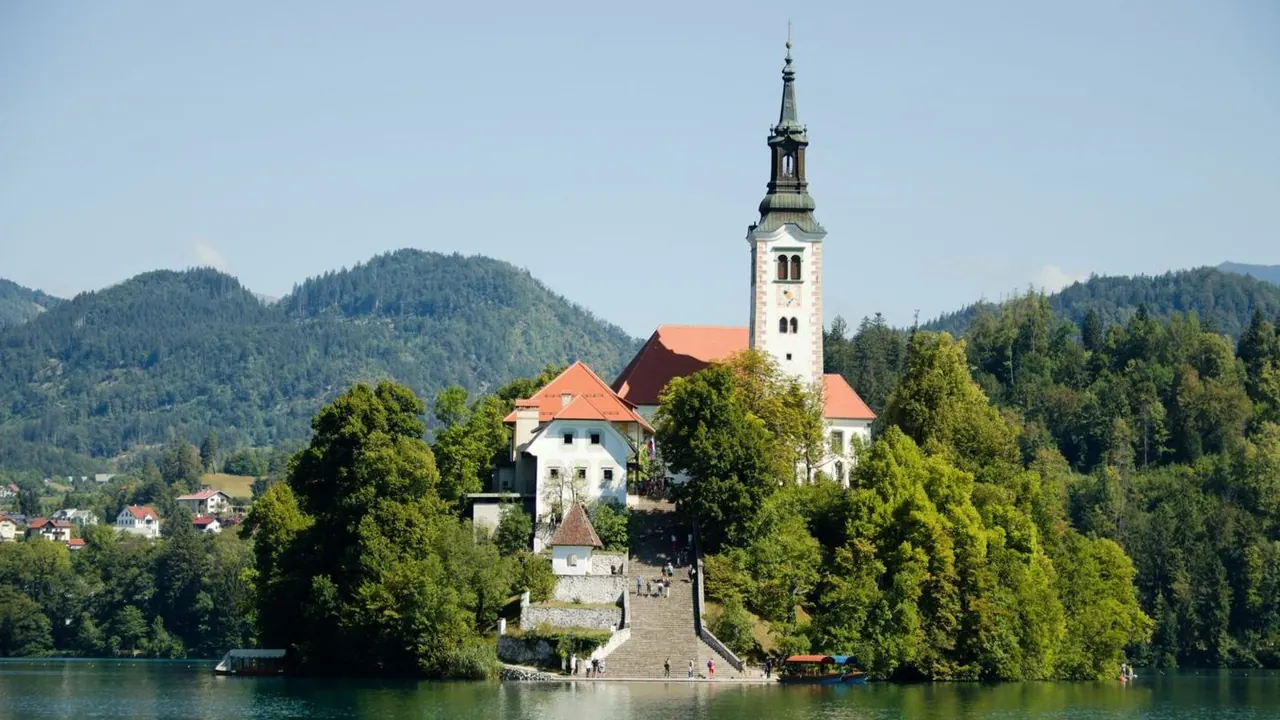
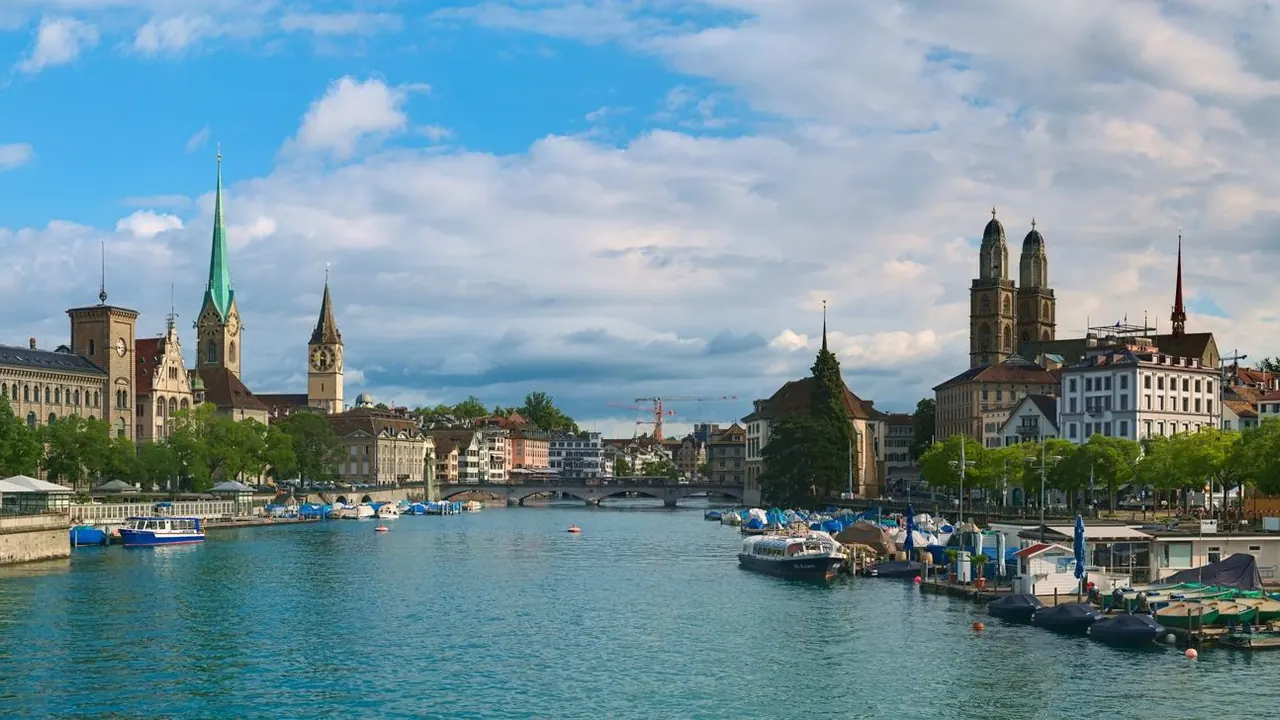
Photos: Bled by Philipp Schwarz, Pexels License; Zurich by Daniel Kraft, CC BY-SA 3.0, cropped.
Bled or Zurich?
Our verdict in twelve categories, each scored against the same fixed benchmark cities, and the climate month by month, so you can choose for your trip.
Choose Bled for
- prices
- nature and the outdoors
- beaches
Bled is for a trip built around mountains and water rather than a city. The Julian Alps, Triglav National Park and the Vintgar Gorge are on the doorstep, the lake is good for swimming and rowing in summer, and the bill comes out well below Zurich's. It suits walkers, swimmers and couples who are happy with quiet evenings and simple food. You will need a car or transfers to reach the high country, and Ljubljana for anything urban.
Choose Zurich for
- live music and the arts
- shopping
- nightlife
Travellers who want a real city with the Alps on the horizon should choose Zurich. Its museums, opera house, clubs and restaurants give it far more to do after dark and on a wet afternoon. Trams and trains make a car unnecessary, and much of Switzerland is an easy day out by rail. The catch is the cost, which is steep at every turn.
Scoreboard
Twelve categories on one fixed scale from 0 to 100. The shaded stretch is the gap between the two.
Your match
Pick a travel style or drag the sliders, and both match scores follow your weighting.
Wins on prices and nature and the outdoors with your weighting.
Wins on live music and the arts and shopping with your weighting.
What matters to you?
Category by category
What the scores mean for a trip.
Beaches & swimming
Neither has a beach, and both swim well from lakes in July and August, when the water is about 24°C. Bled's water is the slightly warmer of the two. You get in from grassy lidos below the castle cliff, from the shallow western end or straight off the rocks on the shore path, and strong swimmers head out to the island. Lake Bohinj nearby is colder and wilder, with pebble shores.
Zurich's swimming is a city habit instead. Wooden bathing houses line the lake at Utoquai and Mythenquai, and at the Letten river baths you float down the Limmat with a young crowd, a few minutes from the old town.
Food & drink
Zurich is much the better place to eat. It has veal Geschnetzeltes with rösti in panelled Altstadt taverns, fondue in winter, the tea rooms of Paradeplatz with their Luxemburgerli, and a wider spread of casual, international and fine-dining kitchens around Langstrasse. It is expensive, though, and street food and markets are thin.
Bled can cover a day or two at the table. Kremšnita on a lakeside terrace is the ritual, and trout, žlikrofi and buckwheat dishes appear in the inns, but much of the cooking is aimed at day visitors. The better meals are in the farm inns of the surrounding valleys.
Culture & sights
Zurich gives you two or three days of real sightseeing. The Kunsthaus runs from Swiss painters to Monet and Giacometti, the National Museum tells the country's history, and the Rietberg shows art from beyond Europe. In the Altstadt are the Grossmünster, where the Swiss Reformation began, and the Chagall windows of the Fraumünster.
Bled's culture is a postcard you walk into: the clifftop castle with its small museum, and a pletna boat out to the island church to ring the wishing bell. You will have seen it all within a day.
Nightlife
Zurich has a serious electronic music scene. Clubs in Kreis 4 and 5 and in the old industrial halls of Zurich West stay open until morning at weekends, Langstrasse stays loud late, and in August the Street Parade fills the lake shore. Weeknights are calmer, and the price of a round keeps nights out shorter.
Bled offers a drink on a hotel terrace and a walk along the lit shore, and that is the evening. Anyone wanting more takes the bus to Ljubljana.
Nature & outdoors
Bled has the edge because you are already in the mountains. The 6km lake circuit, the short climbs to Ojstrica and Osojnica, and the walkways of the Vintgar Gorge start from the village. Bohinj, the Savica waterfall and the Pokljuka pastures are about half an hour away, and the Soča valley lies over the Vršič pass. Add rafting, canyoning, paragliding and skiing at Vogel in winter.
Zurich's landscape is its lake, with the Glarus Alps at the far end and the Uetliberg ridge a short train ride from the centre. The big peaks, such as Rigi, Pilatus and the slopes of Flumserberg, are about an hour away by rail. They are easy to reach without a car, but each one is a trip out.
Day trips
Zurich is at the centre of the Swiss rail network, so Lucerne, Bern, Basel and the St Gallen abbey library are each about an hour away. The Rhine Falls with Stein am Rhein, Rapperswil by lake boat and the abbey at Einsiedeln are closer still, all reachable by train.
Bled's day trips are good but less effortless. Ljubljana and medieval Radovljica are easy by bus. Postojna with Predjama Castle, Venetian Piran on the coast, Austria's Wörthersee and Italian Friuli are much easier with a car.
Good for families
Zurich is easier with children, mainly because there are things to do whatever the weather. The zoo has its Madagascar rainforest hall and an elephant park, the lake lidos have shallow areas and lawns, and the Technorama in Winterthur and Lucerne's Transport Museum are short train rides away.
Bled works well for outdoorsy families in good weather. Children can row a boat out to the island, ride the summer toboggan and try the rope park on Straža hill, and push buggies along the flat lake path. With no zoo or big indoor attraction, a wet day is hard to fill.
Getting around
In Zurich you never need to think about transport. Trams, S-Bahn, funiculars and even the lake boats run on one ticket, and the airport is a short train ride from the main station.
Bled is easy on foot around the lake, and buses link it to Ljubljana, Radovljica and Bohinj. The trailheads, Pokljuka and the Vršič pass are poorly served by public transport, so most people who explore hire a car, and lakeside parking is tight in summer.
Shopping & style
Zurich has Bahnhofstrasse, where watchmakers, jewellers and old department stores run from the station to the lake. It also has antique shops and boutiques in the Niederdorf, and design shops in the arches of the old railway viaduct in Zurich West. The range is narrow beyond luxury and design, and everything is expensive.
Bled has a few lakeside stalls selling honey, lace and painted beehive panels, and a small supermarket.
Affordability
Bled is clearly cheaper. It is still Slovenia's priciest resort, and you pay for a lake view. Guesthouses in the surrounding villages, the campsite at the western end and the free mountain trails keep the bill reasonable, though the island boat, castle and gorge all charge entry.
Zurich is among the most expensive cities in the world for rooms, meals and drinks. Supermarket lunches, lakeside picnics, the free lidos and the visitor card help a little, but they do not change the picture.
Live music & performing arts
Zurich has a full cultural calendar: opera and ballet at the Opernhaus on the lake, the Tonhalle Orchestra in its restored hall, and leading German-language theatre at the Schauspielhaus. Jazz, indie and electronic acts play at the Rote Fabrik, and the Theater Spektakel takes over the shore in summer.
Bled has no stage of its own. There are a few summer concerts in the castle or churches and some folk evenings for visitors, and Ljubljana is the place for anything more.
Wellness & relaxation
Both are calm places to unwind, in different ways. Bled's appeal is its stillness. It grew up as Arnold Rikli's nineteenth-century health resort, warm springs feed the indoor pools of the big lakeside hotels, and an early walk around the still lake does the rest, best outside high summer.
Zurich offers more actual bathing: thermal pools and a rooftop pool in the vaults of the old Hürlimann brewery, and sauna sessions in the wooden lake and river bath houses in winter, with cold dips in between. The Roman spa town of Baden is twenty minutes away by train.
When should you go?
Pick your month. The climate figures are measured averages, not a forecast.
Bled in July
Zurich in July
Daytime high, °C
Rainfall in the month, mm
Where the figures come from
Bled's temperatures are measured 36 km from the centre, at Klagenfurt.
Bled has no rain gauge within 25 km of the centre, so its rainfall comes from a gridded climate dataset read at the city rather than from a gauge further away.
Temperature and rainfall are climate normals, averaged over the years shown. Bled: 1991-2020 normals, Klagenfurt (35.5 km from centre). Zurich: 1991-2020 normals, Zurich Town / Ville. (2.2 km from centre).
Both are summer destinations, and summer is also when both get most of their rain. Bled is the warmer and sunnier of the two. July highs reach about 27°C, the lake is warm enough for swimming from late June to early September, and long, bright days suit hiking. Afternoon showers are common, though, and November is the wettest month at around 211mm. Zurich peaks lower, near 24°C in July and August, which is comfortable for walking the streets all day. Its lake season covers roughly the same months, and its wettest stretch runs from May to July.
Winter is where they part company. Bled drops to around 1°C in December and January but keeps fair sunshine, and that suits skiing on Pokljuka and at Vogel. Zurich is slightly milder but much greyer, with only about 43 hours of sun in December, often under fog on the lake. September and early October suit walking in both places, with Bled still the sunnier of the two.
Which traveller are you?
On a trip on a tight budget, Bled is the realistic choice. It is not cheap for Slovenia, but guesthouses in Radovljica or Bohinj and the lakeside campsite keep costs down, and the trails and viewpoints are free. Zurich is expensive everywhere.
For a food and nightlife trip, go to Zurich. It has guild-house dining rooms, chocolate institutions and a mix of cooking from around the world in Kreis 4 and 5, then clubs running until morning. Bled has a custard slice, mountain inns and a village that is asleep before midnight.
On an outdoors trip, Bled puts you inside the Julian Alps. You can walk to Ojstrica or the Vintgar Gorge, go rafting on the Sava, and reach Bohinj and Pokljuka in half an hour. From Zurich the real mountains are an hour away by train.
Before you go
| Measure | Bled | Zurich |
|---|---|---|
| Official language | Slovene | French, German, Italian, Romansh |
| Currency | Euro (EUR) | Swiss Franc (CHF) |
| Sockets | CF230 V, 50 Hz | CJ230 V, 50 Hz |
| Driving side | Right | Right |
| Time zone | UTC+1, UTC+2 in summer | UTC+1, UTC+2 in summer |
| Emergency number | 112 | 112 |
| Elevation | 501 m | 408 m |
| Main airport | Ljubljana Jože Pučnik Airport (LJU)31 km from centre32 non-stop destinations | Zürich Airport (ZRH)9 km from centre226 non-stop destinations |
| Public holidays this year | 21 days | 10 days |
By the numbers
| Measure | Bled | Zurich |
|---|---|---|
| City population | 4,969 | 440,935 |
| People per km² | 26 | 5,016 |
| Museums within 10 km | 4 | 63 |
| UNESCO World Heritage sites within 50 km | 3 | 1 |
Where else could you go?
Every comparison below shares a destination with this one, so you can follow Bled or Zurich somewhere new.