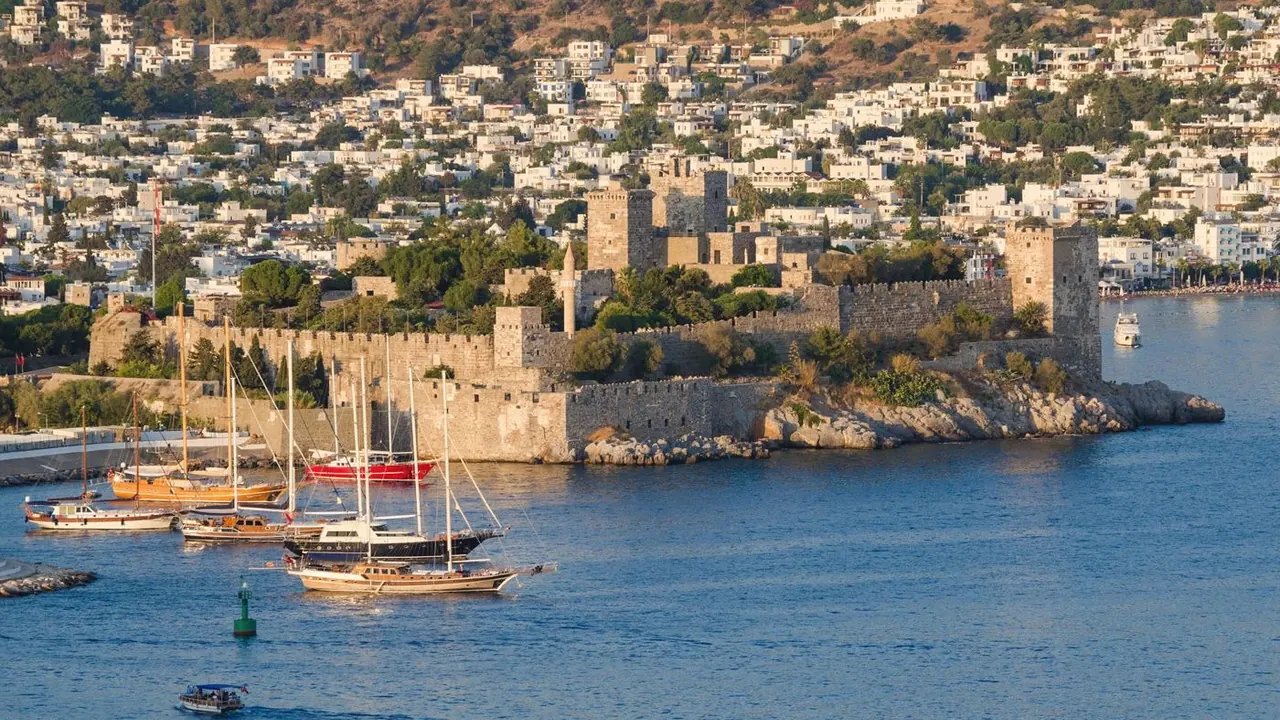
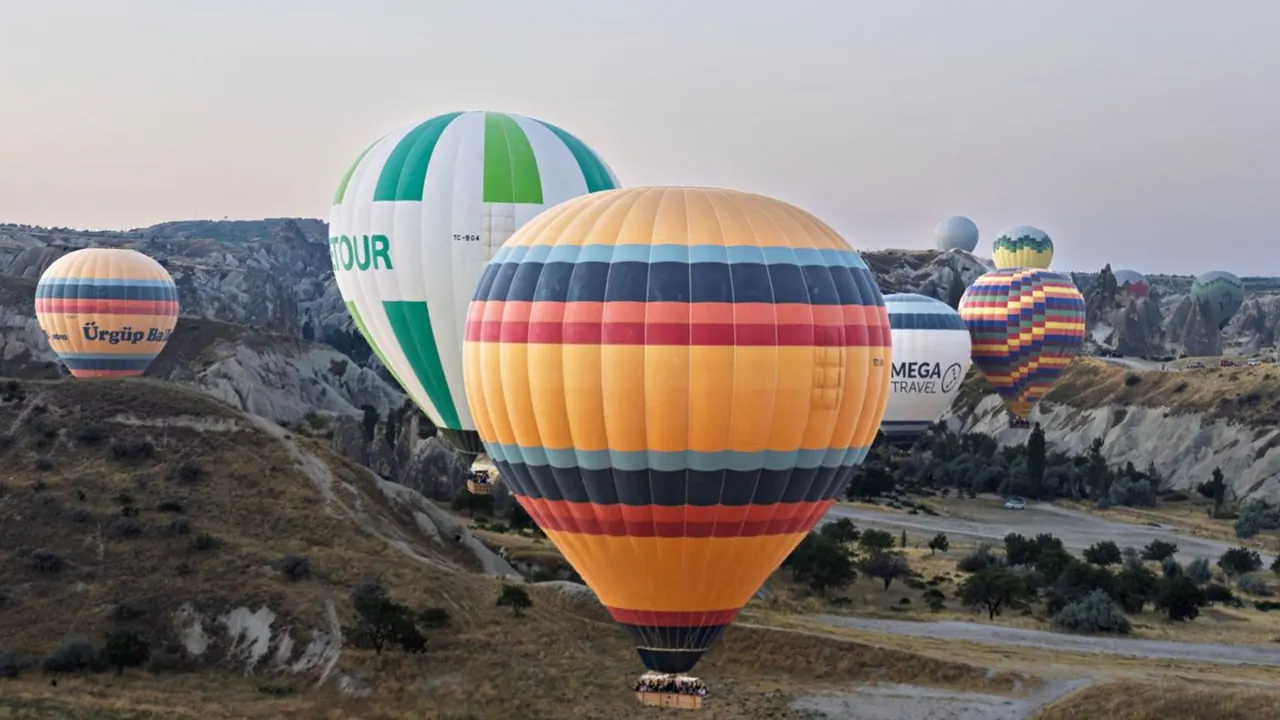
Photos: Bodrum by Serhio Magpie, CC BY 4.0, cropped; Goreme by Guerrero De la Luz, Pexels License.
Bodrum or Goreme?
Our verdict in twelve categories, each scored against the same fixed benchmark cities, and the climate month by month, so you can choose for your trip.
Choose Bodrum for
- beaches
- nightlife
- food and drink
Bodrum is for a summer vacation built around the sea. Its peninsula of bays, boat days to coves, Aegean fish dinners and late nights from the harbour to the north-coast beach clubs make it the stronger choice for sun, food and going out. Its shallow bays also suit families with small children. It costs more, though, and outside the warm months much of it shuts down.
Choose Goreme for
- prices
- nature and the outdoors
Choose Goreme when the landscape itself is the point. The valleys of fairy chimneys, the painted rock churches and the balloons at dawn make for a trip of walking, early starts and quiet evenings that no stretch of coast can offer, and a basic stay is easier on the budget. Expect simple food and no nightlife, and go in spring or autumn rather than in midwinter.
Scoreboard
Twelve categories on one fixed scale from 0 to 100. The shaded stretch is the gap between the two.
Your match
Pick a travel style or drag the sliders, and both match scores follow your weighting.
Wins on beaches and nightlife with your weighting.
Wins on prices and nature and the outdoors with your weighting.
What matters to you?
Category by category
What the scores mean for a trip.
Beaches & swimming
This is the widest gap between the two. Bodrum is a peninsula of bays, from the long, shallow shores at Bitez and Ortakent to the jetty-and-deck swimming of Türkbükü and Yalıkavak, and boat days reach coves that no road gets to. The sand is often coarse and beach clubs hold the best stretches, but the water is clear and warm all summer.
Goreme has no sea at all. It sits on the central Anatolian plateau, a long day's drive from the coast, and swimming means a cave-hotel pool. Many travellers deal with this by combining the two: a few days in Cappadocia, then the Aegean.
Food & drink
Bodrum eats far better. Aegean cooking brings olive-oil vegetables, wild greens, octopus and long meze evenings with rakı. You can choose fish at the market and have it cooked at the tables around it, or eat slowly at Gümüşlük's waterfront fish tables. If you avoid the tourist menus in Gümbet, it can keep a week of dinners interesting.
Goreme's food is limited and repetitive: testi kebab cracked open at the table, manti, gozleme from roadside stalls and breakfasts on hotel terraces. Wines from the volcanic soil are the nice surprise, but after two or three nights the menus all look the same.
Culture & sights
Each offers a day or two of sightseeing, but of very different kinds. Bodrum's culture rests mostly on one building, the Knights' Castle of St Peter, which holds the Museum of Underwater Archaeology and its shipwrecks raised from the coast. The Mausoleum, one of the Seven Wonders, is left only as foundations.
Goreme's sights are a whole valley of Byzantine faith. The rock-cut churches of the Open Air Museum, with the Dark Church and Tokali Church among the finest painted interiors in Cappadocia, are a short walk from the village, and more chapels and dovecotes are carved into the tuff all around it.
Nightlife
Bodrum is the place to go out, at least from June to early September. There is the bar street behind the harbour, louder and cheaper clubs in Gümbet for young package crowds, and dressed-up beach-club parties at Türkbükü and Yalıkavak that run until sunrise. Out of season it goes quiet.
Goreme has none of this. The balloons launch before dawn, so the village sleeps soon after dinner, and a night out means a glass of local wine on a terrace, looking at the lights on the rocks.
Nature & outdoors
On land, Goreme's landscape is the stronger draw. Rose, Red, Love and Pigeon valleys begin at the edge of the village, and you can walk, ride or cycle for hours among pinnacles and cones, with dozens of balloons above them at sunrise. The range is narrow, though: there is no water to paddle on and little forest.
Bodrum's outdoors is mostly the sea. Gulet cruises to Kara Ada and the greener Gulf of Gökova, clear water for diving and snorkelling and the meltem for windsurfing off Bitez make it the choice for time on the water. Hiking in its dry hills is limited to spring and autumn.
Day trips
Both make good bases, but for different kinds of outing. From Bodrum the range is wider: the Temple of Apollo at Didyma, with Miletus and Priene on the same day, Herakleia on Lake Bafa, and a ferry to the Greek island of Kos for a change of country.
From Goreme almost everything is less than an hour away, from the underground cities of Kaymakli and Derinkuyu to Uchisar's citadel and the potters of Avanos. Much of it is a variation on the same rock-cut heritage, so the outings feel more alike.
Good for families
Bodrum suits more families, especially those with young children. Bitez and Ortakent have shallow, calm water, many hotels have pools, kids' clubs and slides, and there are large water parks. Just stay away from Gümbet and the bar district at night.
Goreme is an adventure for older children, who can sleep in a cave room, crawl through an underground city and ride horses through the valleys. With toddlers it is hard work: steep paths with unfenced drops, lanes that defeat buggies, and minimum ages for balloon flights.
Getting around
In both places the walkable core is small, and beyond it you need wheels. Bodrum has the fuller public network, with dolmuş minibuses to almost every bay, but they route through town and the summer roads clog. In Goreme the village and nearby valleys are walkable, while the outlying sites mean slow local buses, a tour or a hired car.
Shopping & style
Bodrum has more to buy. There are made-to-measure leather sandals from small workshops in the lanes, the covered bazaar, lively weekly markets and luxury boutiques at Yalıkavak marina. Goreme is mostly a souvenir street with two real crafts behind it: hand-knotted carpets and kilims, and the red-clay pottery of Avanos, which you can watch being made.
Affordability
Goreme is the easier place to keep costs down. Cave-house hostels, simple guesthouses, gozleme stalls and walking the valleys for free keep a basic stay modest, though boutique cave hotels, tours and above all the balloon flight push the total up quickly.
Bodrum is Türkiye's most expensive resort area, and the north-coast bays of Yalıkavak, Türkbükü and Gölköy are priced for a wealthy crowd, with taxis and sunbed fees on top. Package hotels in Gümbet and Turgutreis, and the quieter months of May, June and late September, make it easier on the budget.
Live music & performing arts
Bodrum has a real programme, though only in summer. There are concerts in the restored ancient theatre and the castle courtyards, a long-running ballet festival staged at the castle, and chamber music in Gümüşlük's old stone quarry. Goreme offers only shows staged for visitors: a Turkish night of folk and belly dancing in a cave venue, and the more rewarding Sema ceremony of the whirling dervishes in a caravanserai near Avanos.
Wellness & relaxation
Bodrum offers more, mostly inside its resorts, where the hammam, scrub and foam massage are part of elaborate spa floors around Türkbükü and Yalıkavak. Gümüşlük and the western villages are quiet, but choose your corner carefully, because August in the centre and the party bays is far from restful.
Goreme's calm comes from its evenings and its terrace breakfasts over the rocks, with a few village hammams and small spas in cave hotels. Pre-dawn balloon starts and full tour days cut into that rest, and real thermal water means a drive across Nevsehir province.
When should you go?
Pick your month. The climate figures are measured averages, not a forecast.
Bodrum in July
Goreme in July
Daytime high, °C
Rainfall in the month, mm
Where the figures come from
Bodrum's temperatures are measured 43 km from the centre, at Kos Airport.
Bodrum has no rain gauge within 25 km of the centre, so its rainfall comes from a gridded climate dataset read at the city rather than from a gauge further away.
Goreme's station stands 160 m above the city centre, so the centre is likely a little warmer than the figures say.
Temperature and rainfall are climate normals, averaged over the years shown. Bodrum: 1993-2020 (rainfall 1991-2020) normals, Kos Airport (42.7 km from centre). Goreme: 1991-2020 normals, Nevsehir (10.2 km from centre).
Bodrum is a summer place. The sea is warm enough for swimming from June into October and reaches about 25°C in August, and there is almost no rain from June to September. July and August climb to 31°C, which is hot for the steep lanes of the old town, so May, June and late September are the most comfortable months for mixing beach days with sightseeing. From November the rain arrives and is heaviest in December, at 161mm. Winters are mild but wet.
Goreme's year swings much further. Winter is cold, with January highs around 5°C and snow possible on the rocks. Midsummer reaches 30°C under long, sunny days, with little shade on the valley trails. The best walking months are April to June and September to October, though late spring brings some showers. In high summer the coast is the better choice, and in spring and autumn Goreme is at its best.
Which traveller are you?
On a beach and sun trip, Bodrum is the only real choice of the two. It has a whole peninsula of bays, from shallow Bitez to the jetties of Türkbükü, with clear water and boat days. Goreme is landlocked, high on the plateau and far from any coast.
For a food and nightlife trip, Bodrum wins comfortably. Meze evenings with rakı, fish cooked beside the market and waterfront tables at Gümüşlük lead on to bars and beach-club parties until dawn. Goreme's menus start to repeat quickly, and the village goes to sleep early.
On an outdoors trip, Goreme is the better pick. Its valleys of pinnacles and cones start at the edge of the village and are good for walking, riding and cycling, with balloons overhead at sunrise. Bodrum's outdoor life happens mostly on the water, with sailing, snorkelling and windsurfing.
Before you go
| Measure | Bodrum | Goreme |
|---|---|---|
| Official language | Turkish | Turkish |
| Currency | Turkish Lira (TRY) | Turkish Lira (TRY) |
| Sockets | CF230 V, 50 Hz | CF230 V, 50 Hz |
| Driving side | Right | Right |
| Time zone | UTC+3 | UTC+3 |
| Emergency number | 112 | 112 |
| Elevation | 10 m | 1,100 m |
| Main airport | Milas Bodrum International Airport (BJV)32 km from centre83 non-stop destinations | Kayseri Erkilet International Airport (ASR)60 km from centre22 non-stop destinations |
| Public holidays this year | 14 days | 14 days |
By the numbers
| Measure | Bodrum | Goreme |
|---|---|---|
| City population | 175,000 | 2,000 |
| People per km² | 314 | 20 |
| Museums within 10 km | 4 | 5 |
| UNESCO World Heritage sites within 50 km | 0 | 1 |
| Swim season, months above 21 °C | 5 months | - |
Where else could you go?
Every comparison below shares a destination with this one, so you can follow Bodrum or Goreme somewhere new.