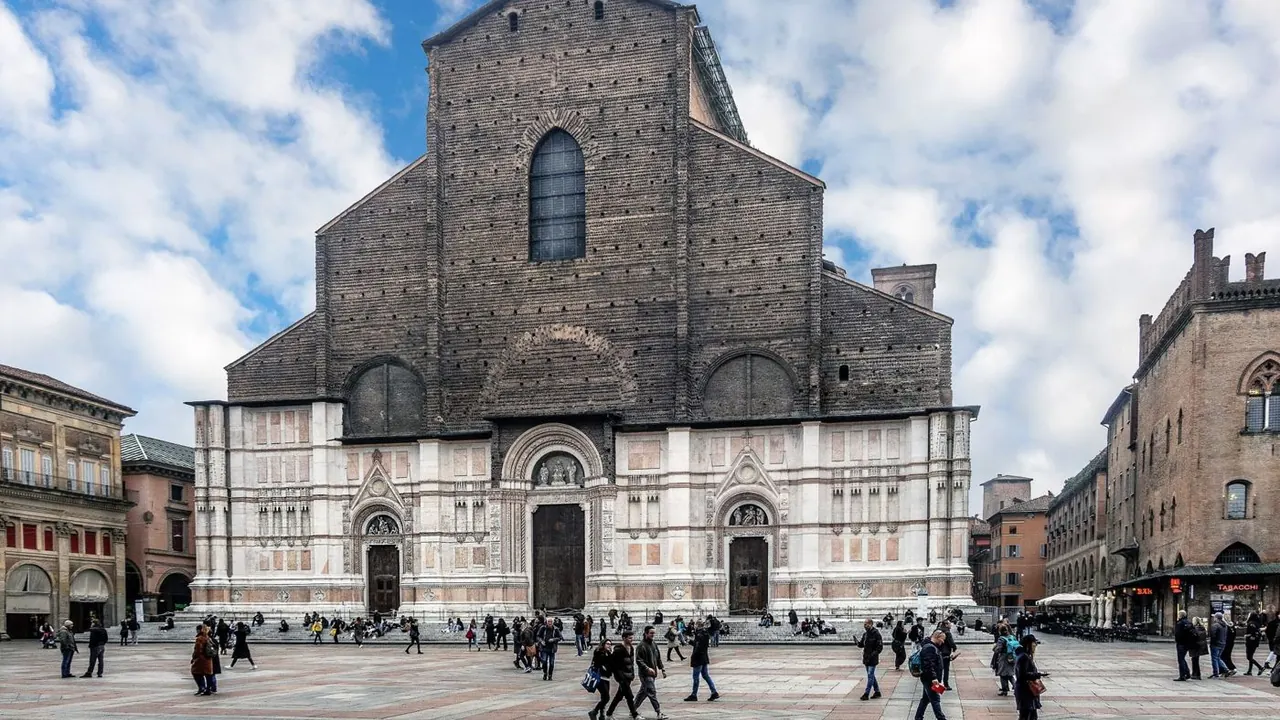
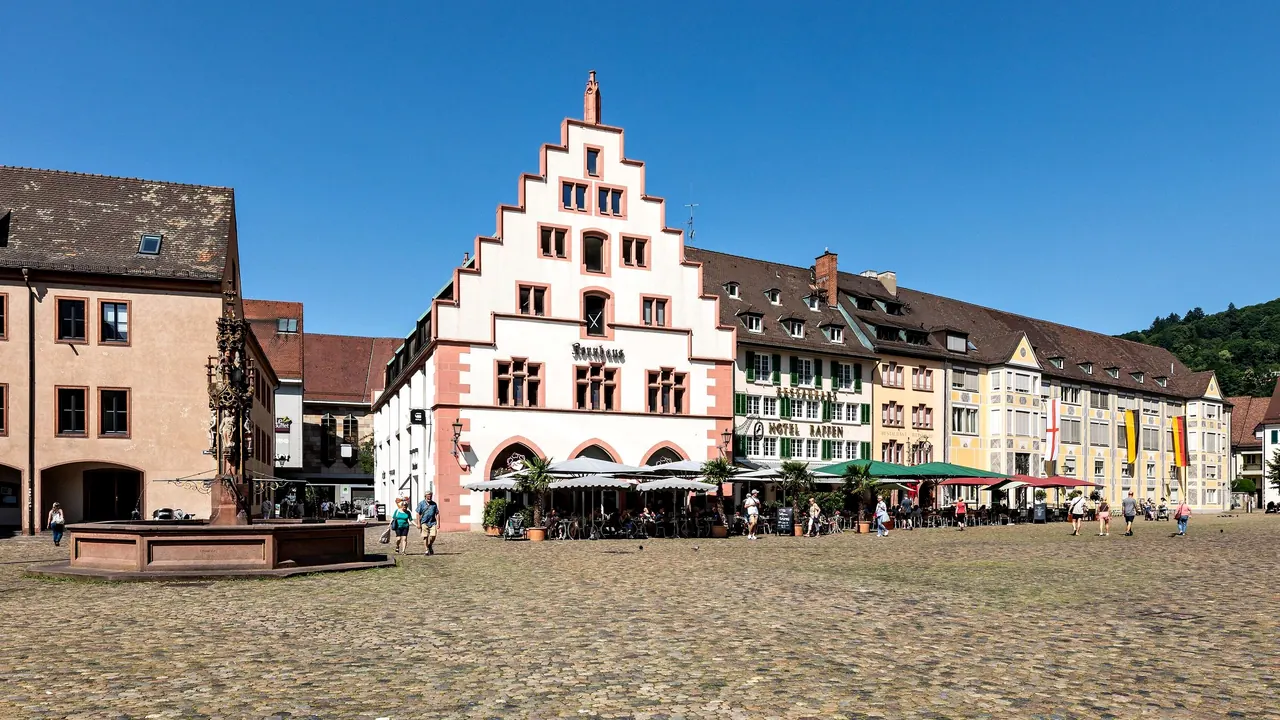
Photos: Bologna by Vanni Lazzari, CC BY-SA 4.0, cropped; Freiburg by Dietmar Rabich, CC BY-SA 4.0, cropped.
Bologna or Freiburg?
Our verdict in twelve categories, each scored against the same fixed benchmark cities, and the climate month by month, so you can choose for your trip.
Choose Bologna for
- food and drink
- culture and sights
- nightlife
Bologna suits travellers who plan their days around the table and the town. The fresh pasta and old osterie, the arcaded medieval centre and the student evenings around Piazza Verdi easily fill a long weekend. The station puts Florence, Ravenna, Ferrara and Venice within easy reach, so a week can become a tour of northern Italy without changing hotel.
Choose Freiburg for
- nature and the outdoors
- families
- wellness
Pick Freiburg if you would rather spend the afternoon on a forest ridge than in a church. The Black Forest begins at the edge of town and the thermal baths of southern Baden are a short ride away. Children get the Bächle channels, the Schauinsland cable car and Europa-Park. It is the calmer, greener stay, with Basel and Alsace across the borders for variety.
Scoreboard
Twelve categories on one fixed scale from 0 to 100. The shaded stretch is the gap between the two.
Your match
Pick a travel style or drag the sliders, and both match scores follow your weighting.
Wins on food and drink and culture and sights with your weighting.
Wins on nature and the outdoors and families with your weighting.
What matters to you?
Category by category
What the scores mean for a trip.
Beaches & swimming
Neither city is a beach destination, but Bologna at least has a real sea within reach. Rimini and the Romagna Riviera are about an hour away by train, with warm, shallow Adriatic water and long rows of rented umbrellas. It works as a day out when the city is hot, not as a reason to stay.
Freiburg swims in fresh water instead: gravel-pit lakes with grassy banks on the Rhine plain, the city's open-air pools, and the cooler Black Forest lakes at Titisee and Schluchsee. These are pleasant dips, but nothing like a day at the seaside.
Food & drink
Bologna is the stronger eating city by a wide margin, and for many visitors it is the reason to go. Ragù, tortellini in brodo and mortadella are cooked where they were invented, the Quadrilatero lanes still work as a food market, and Parmigiano and Parma ham are made down the road.
Freiburg's Baden cooking is lighter and closer to French, with Flammkuchen, Black Forest ham and stream trout, and the Pinot wines of the Kaiserstuhl are a real pleasure. It is good regional food, but the menus start repeating sooner. The two share one weakness: there is little to eat beyond their own regional cooking.
Culture & sights
Bologna has far more to see. Its whole medieval centre is built in brick, with the UNESCO-listed porticoes, the Two Towers, the seven churches of Santo Stefano and the anatomical theatre of Europe's oldest university, and it needs two or three full days.
Freiburg's sights gather around the red sandstone Münster, with its tower to climb, the Bächle channels and the medieval sculpture in the Augustinermuseum. Much of the centre was rebuilt after the war, so it feels historic rather than truly old, and a day or two covers it.
Nightlife
Both are student towns, but Bologna goes out harder. Crowds stand outside cheap bars on Piazza Verdi, the taverns of Via del Pratello stay open late, and aperitivo around the Quadrilatero leads into the wine bars.
Freiburg's evenings are smaller and gentler: pubs and beer gardens near the Martinstor, summer nights by the Dreisam and a handful of clubs. Neither has much serious clubbing, and both go quiet when the students leave, Bologna above all in August.
Nature & outdoors
Freiburg is the outdoors city of the two. The Schlossberg rises behind the old town and the Schauinsland cable car lifts you to ridge trails at about 1,280m. The Feldberg has summer hiking and reliable winter snow, and there is mountain biking and vineyard cycling in the Kaiserstuhl as well.
Bologna's outdoors is gentler: the arcaded climb to San Luca, the paths of the Colli Bolognesi and the gypsum caves of the Parco dei Gessi, with the Via degli Dei to Florence for the committed. North of the city lies flat farmland, and the hot summers shorten the walking season.
Day trips
Both are excellent bases, but Bologna is exceptional. As a rail junction, it has Florence about half an hour away and puts Ravenna's mosaics, Ferrara, Modena and Parma within easy reach, while Verona, Padua and Venice still make a comfortable day out.
Freiburg's strength is its three borders rather than its speed: Basel by train, Colmar and the Alsace wine villages, Strasbourg further on and Baden-Baden to the north. Several of the French outings are easier by car, whereas almost everything from Bologna runs on the train.
Good for families
Freiburg is much easier to fill with children. They can paddle in the Bächle, see animals at the free Mundenhof park and ride the Schauinsland cable car, and Europa-Park, Germany's largest theme park, is about 40 minutes away.
Bologna is welcoming, flat and largely free of traffic, and pasta and gelato make meals simple, but its sights are made for adults. Families usually add a day at Mirabilandia or the beach at Rimini, and the city's summer heat is hard on small children.
Getting around
The two are much alike here. Both centres are compact, flat and largely closed to cars, so you see either one on foot. Bologna's porticoes keep you in the shade or out of the rain, the town has buses rather than any rail network, and the station is its real gateway to the rest of northern Italy.
Freiburg adds a dense tram network, cycle lanes everywhere and regional trains up the Höllental and towards Basel, and many hotels give guests a card for local transport. Only the Alsace villages really call for a car.
Shopping & style
Bologna gives you more to take home, though neither is a shopping destination. Most visitors leave with mortadella, aged Parmigiano and balsamic vinegar from the Quadrilatero, and Via Farini and the Galleria Cavour hold a small cluster of luxury fashion houses.
Freiburg's Kaiser-Joseph-Strasse has German chains, the Gerberau has independent and organic shops, and the Münster market sells wine, ham and cuckoo clocks. There is no luxury shopping, and locals go to Basel for serious retail.
Affordability
The two cost much the same, with Bologna a little kinder overall. In both, rooms are the expensive part and trade fairs make them scarcer, while most sights cost little or nothing.
The difference shows at the table. Bologna's trattorias and its aperitivo with food included cost less than in Italy's main tourist cities, so meals go further. Freiburg's market snacks and student-quarter taverns are fairly priced, but its hotels are tight for the demand, and a trip into Switzerland adds noticeably to the bill.
Live music & performing arts
Bologna has the deeper scene. The Teatro Comunale is one of Italy's historic opera houses, jazz has a long history in its basement clubs, and summer brings concerts and films to Piazza Maggiore.
Freiburg's Theater Freiburg and Konzerthaus give a solid programme, and the Freiburger Barockorchester is a genuine draw for lovers of early music, as is the summer Zelt-Musik-Festival. Neither is worth the journey for its stages alone, but in Bologna it is easier to come across live music on an ordinary night.
Wellness & relaxation
Freiburg sits in spa country and is the better place to slow down. There is a thermal bath on the city's edge, Bad Krozingen's warm outdoor pools and saunas about twenty minutes south, Badenweiler with its Roman ruins, and Baden-Baden an hour away by train.
In Bologna, relaxing mostly means a long lunch under the arcades. Castel San Pietro Terme and Porretta Terme make a half day in thermal water, but the noisy university quarter and heavy summers make the city itself less restful.
When should you go?
Pick your month. The climate figures are measured averages, not a forecast.
Bologna in July
Freiburg in July
Daytime high, °C
Rainfall in the month, mm
Where the figures come from
Bologna has no rain gauge within 25 km of the centre, so its rainfall comes from a gridded climate dataset read at the city rather than from a gauge further away.
Bologna's sunshine is measured 82 km from the centre, at Cervia.
Temperature and rainfall are climate normals, averaged over the years shown. Bologna: 1991-2020, 14 years observed normals, Bologna / Borgo Panigale (5.5 km from centre). Freiburg: 1991-2020 normals, Freiburg (0.6 km from centre).
Bologna is at its best in May and again in September and early October, when the days are warm and sunny and walking the porticoes is a pleasure. July and August reach 32°C and feel heavy and humid. They are the sunniest months and the time for a seaside day at Rimini, but too hot for long walks in the city. Rain builds through autumn and peaks in November at around 95mm, and winters are cold and grey.
Freiburg has milder summers, about 27°C in July, so hiking and city walks stay comfortable right through the warm months. The catch is that its wettest stretch falls in early summer, with May around 103mm, and it gets less sunshine than Bologna in every month. Spring and autumn are the sweet spots there too, and in winter the city stays cool while the higher Black Forest slopes get snow.
Which traveller are you?
For a food and nightlife trip, Bologna is the clear choice. Hand-rolled pasta, the Quadrilatero delicatessens and an evening aperitivo with Lambrusco lead into late nights along Via del Pratello and among the student bars of Piazza Verdi.
On an outdoors trip, Freiburg wins easily. Trails start right behind the old town, the Schauinsland and the Feldberg give ridge hiking and winter snow, and mountain biking and vineyard cycling in the Kaiserstuhl fill days that Bologna would spend in museums.
On a family trip with children, Freiburg makes life simpler. Europa-Park is close by, the Bächle channels and the free Mundenhof animal park keep children busy, and summers are milder than Bologna's heavy heat, which quickly tires small children.
Before you go
| Measure | Bologna | Freiburg |
|---|---|---|
| Official language | Italian | German |
| Currency | Euro (EUR) | Euro (EUR) |
| Sockets | CFL230 V, 50 Hz | CF230 V, 50 Hz |
| Driving side | Right | Right |
| Time zone | UTC+1, UTC+2 in summer | UTC+1, UTC+2 in summer |
| Emergency number | 112 | 112 |
| Elevation | 54 m | 278 m |
| Main airport | Bologna Guglielmo Marconi Airport (BLQ)6 km from centre98 non-stop destinations | EuroAirport Basel–Mulhouse–Freiburg (BSL)50 km from centre112 non-stop destinations |
| Public holidays this year | 13 days | 12 days |
By the numbers
| Measure | Bologna | Freiburg |
|---|---|---|
| City population | 387,971 | 238,299 |
| People per km² | 2,754 | 1,558 |
| Museums within 10 km | 68 | 13 |
| UNESCO World Heritage sites within 50 km | 3 | 2 |
Where else could you go?
Every comparison below shares a destination with this one, so you can follow Bologna or Freiburg somewhere new.
- Colmarvs Freiburg
- Baselvs Freiburg
- Strasbourgvs Freiburg
- Florencevs Bologna
- Zurichvs Freiburg
- Baden-Badenvs Freiburg