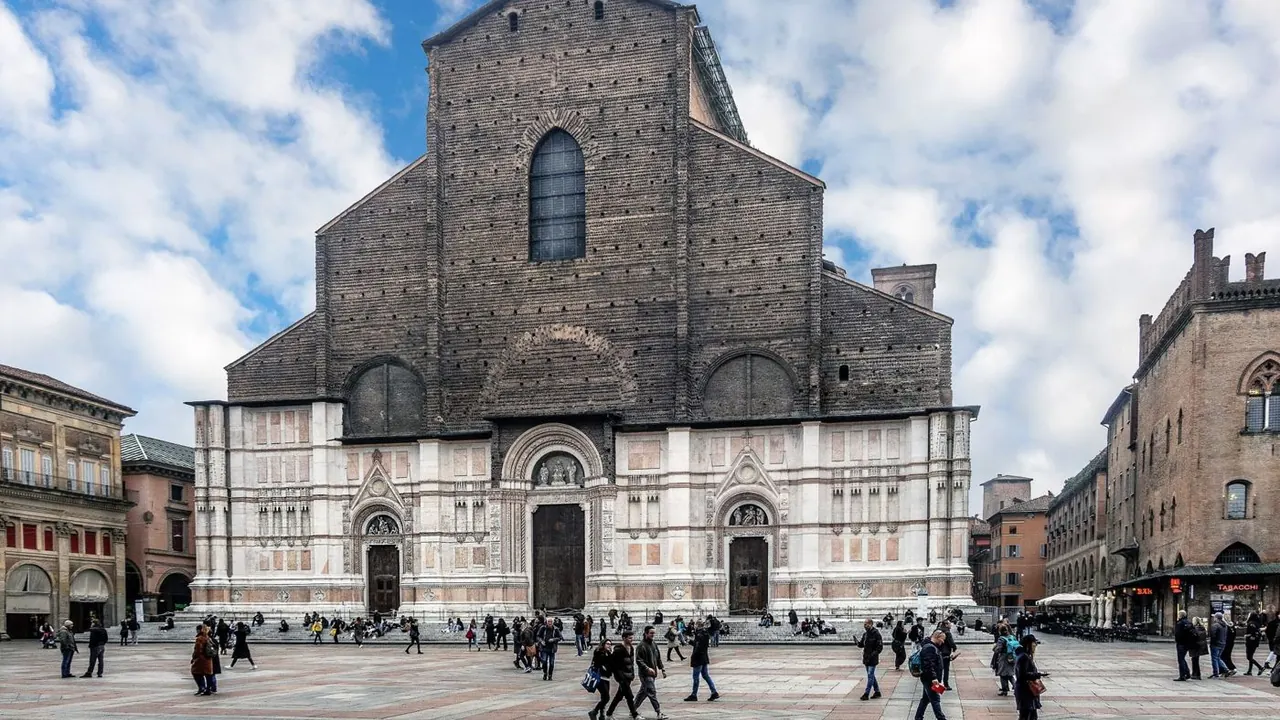
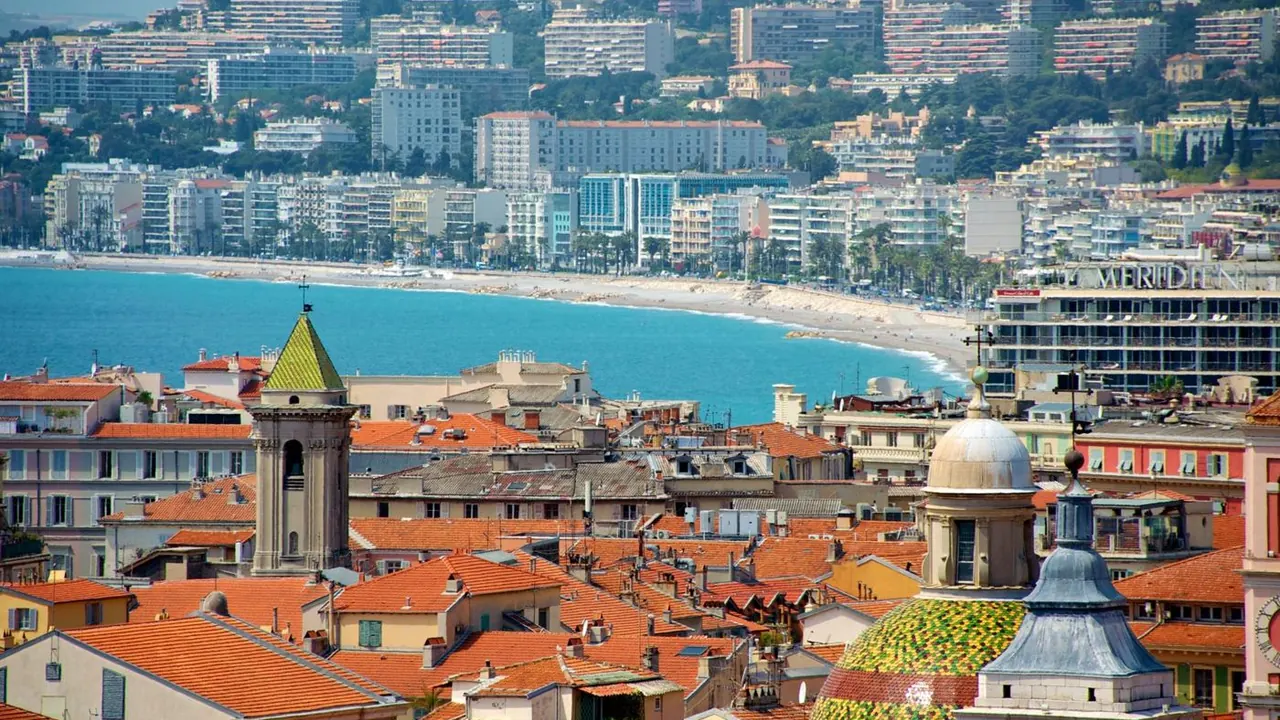
Photos: Bologna by Vanni Lazzari, CC BY-SA 4.0, cropped; Nice by Daniel Stockman, CC BY-SA 2.0, cropped.
Bologna or Nice?
Our verdict in twelve categories, each scored against the same fixed benchmark cities, and the climate month by month, so you can choose for your trip.
Choose Bologna for
- food and drink
- live music and the arts
- culture and sights
Bologna suits travellers who plan their days around the table and the train timetable. Emilian cooking is made here at its source, the arcaded brick centre rewards slow walking, and Florence, Ravenna, Parma and Venice are all within easy reach by rail, so it works very well as a base for a tour of Italian towns. It is also the cheaper of the two, and its students keep it livelier after dark.
Choose Nice for
- beaches
- nature and the outdoors
- families
Choose Nice if the sea and the mountains matter more than the menu. You can swim below the promenade, walk the paths on Cap Ferrat and head up into the Mercantour behind the city, an outdoor life Bologna cannot match, and the Matisse and Chagall museums give it art of real weight. It costs more, especially in summer, but it rewards anyone who wants sun, salt water and a Riviera town to explore each day.
Scoreboard
Twelve categories on one fixed scale from 0 to 100. The shaded stretch is the gap between the two.
Your match
Pick a travel style or drag the sliders, and both match scores follow your weighting.
Too close to call, level with your weighting
Wins on food and drink and live music and the arts with your weighting.
Wins on beaches and nature and the outdoors with your weighting.
What matters to you?
Category by category
What the scores mean for a trip.
Beaches & swimming
The gap here is wide. Nice has about 7km of its own pebble shore with clear blue water in the middle of town, and Villefranche, Paloma beach and Juan-les-Pins are nearby for sand. Water shoes or a rented lounger make the stones much easier.
Bologna is inland, so a swim means an hour on the train to Rimini or Cervia. There the Adriatic is warm and shallow, but the shore is lined with rows of rented sunbeds and the water is often greenish. It works as an escape from the summer heat, not as the point of the trip.
Food & drink
Bologna is clearly the stronger food city. Tagliatelle al ragù, tortellini in brodo and mortadella are made with care in old osterie and sold in the delicatessens of the Quadrilatero, and the producers of Parma and Modena are close by. The weakness is range: nearly everything is Emilian, and rich.
Nice eats more lightly and with the sea in mind, with socca from wood ovens, pissaladière, stuffed vegetables, the Cours Saleya market and the rare Bellet wine. Simple meals in Vieux Nice are very good, but the promenade terraces cater to passing crowds, and the depth is not Bologna's.
Culture & sights
Bologna's appeal is a medieval city that is still remarkably whole: red brick streets under UNESCO-listed porticoes, the Two Towers, the cluster of churches at Santo Stefano and the anatomical theatre of Europe's oldest university. The city itself is the sight, and it holds together more completely than Nice does.
Nice is split between the baroque lanes of Vieux Nice and the Belle Époque villas of its resort years, and its strength is modern art, with the Matisse and Chagall museums and MAMAC. If you care most about twentieth-century painting, Nice gives you plenty, but for history and architecture Bologna leads.
Nightlife
Bologna goes out more, largely because of its students. Piazza Verdi fills with young crowds outside cheap bars, and the taverns along Via del Pratello stay busy late, although the city goes very quiet in August.
In Nice the evening is mostly wine and cocktail bars in the old town lanes, with beach clubs keeping things going in summer. For glamour people go to Monaco and Cannes, and neither city is a place for serious clubbing.
Nature & outdoors
Nice wins outdoors because the Alps come down to the sea right beside it. Walks on Castle Hill and Mont Boron, the shore paths of Cap Ferrat, cycling on the corniches and water sports are all close by, with the Mercantour and the red rocks of the Esterel further out.
Bologna has the gentler green foothills of the Apennines: the climb to San Luca, the gypsum caves of the Parco dei Gessi and the Via degli Dei trail to Florence. North of the city, though, the plain is flat farmland, better for cycling than for views.
Day trips
Both are excellent bases, and Bologna's edge is the size of what its railway opens up. Florence is barely half an hour away, Ravenna, Ferrara, Modena and Parma are short rides, and even Venice and Verona fit into a day. Each of these is a major historic city in its own right.
Nice offers shorter and more varied outings along a single coast: Monaco, Èze on its rock, Menton, Antibes, Saint-Paul-de-Vence and the Lérins islands, with Italy just over the border. Most take under an hour by train or bus.
Good for families
Nice is the slightly easier choice with children. The playgrounds and water jets of the Promenade du Paillon, Parc Phoenix and the long flat seafront give them things made for them, and the sea is right there, though the pebbles are hard on small feet.
Bologna is flat, mostly free of traffic and shaded by its porticoes, and older children may enjoy climbing the Asinelli tower. Its sights are mainly aimed at adults, though, so families usually head out to Mirabilandia or the beach at Rimini.
Getting around
Both are easy without a car, in different ways. Bologna's compact medieval centre is best seen on foot under the porticoes, with buses but no metro, and its station puts fast trains to the rest of northern Italy at the edge of the old town.
Nice stretches further along its bay, so the tram does more of the work, running straight from the airport to the centre and the port, and the coastal railway handles day trips. The main drawback is that Riviera trains and roads get packed in summer.
Shopping & style
Neither city is a shopping destination, and what you bring home is what sets them apart. In Bologna it is food: mortadella, aged Parmigiano and balsamic vinegar from the Quadrilatero, plus a small luxury cluster in the Galleria Cavour and vintage shops in the university quarter.
In Nice it is Provençal goods, such as olive oil, soaps and candied fruit from Vieux Nice. The chain stores are on Avenue Jean Médecin, and on Mondays the Cours Saleya becomes a flea and antiques market.
Affordability
Bologna is easier on the wallet. Trattoria meals, aperitivo with food included and local wine cost less than in Italy's main tourist cities, most sights are churches and squares that are free to enter, and you can walk everywhere. Hotels are the expensive part, especially during the big trade fairs.
Nice costs more, above all in summer, when seafront rooms, beach loungers and promenade terraces add up quickly. Cheap trams and trains, socca and market picnics help, and spring or late autumn are noticeably cheaper.
Live music & performing arts
Bologna has more going on through the year. There is the opera and symphonic season at the Teatro Comunale, a long jazz tradition in basement clubs and a steady run of student gigs, all of which back up its UNESCO City of Music title, and in summer there are concerts in Piazza Maggiore.
Nice relies more on a few big events: the Nice Jazz Festival in July and the Carnival in February, with the Opéra de Nice's season in between. Outside those, live music is mostly in small bars.
Wellness & relaxation
Neither city has a bathing tradition of its own, so the difference is in the setting. Bologna's thermal water is out of town, at the spa pools of Castel San Pietro Terme or old Porretta Terme in the Apennines, and in the city calm means a long lunch under the arches. Nice has thalassotherapy along the coast and the simpler pleasures of an early swim and an evening walk on the promenade, which are best out of season.
When should you go?
Pick your month. The climate figures are measured averages, not a forecast.
Bologna in July
Nice in July
Daytime high, °C
Rainfall in the month, mm
Where the figures come from
Bologna has no rain gauge within 25 km of the centre, so its rainfall comes from a gridded climate dataset read at the city rather than from a gauge further away.
Bologna's sunshine is measured 82 km from the centre, at Cervia.
Temperature and rainfall are climate normals, averaged over the years shown. Bologna: 1991-2020 normals, Bologna / Borgo Panigale (5.5 km from centre). Nice: 1991-2020 normals, Nice (8 km from centre).
Bologna has clear seasons. July and August reach about 32°C, which makes walking the streets hard work in the middle of the day, and winter is grey and cold, around 7°C in January, with little sun. The best months for exploring are late April to early June and September into early October, though September to November is also the city's wettest stretch.
Nice is milder all year, around 13°C in January, and its winters are much sunnier than Bologna's, so a winter visit there is pleasant. Summer is its beach season. July and August are the driest and sunniest months, and the sea is at its warmest then, about 25°C in August. The water is warm enough to swim from June into October. June is a little less hot for walking, but it is wetter than high summer. The rain returns in September, and October and November are the wettest months of the year.
Which traveller are you?
For a beach and sun trip, Nice is the obvious choice. A pebble shore with clear water runs right below the promenade, and the sandier coves at Villefranche and Juan-les-Pins are a short ride away. From Bologna the nearest sea is an hour away by train.
On a food and nightlife trip, Bologna comes out ahead. Fresh pasta, mortadella and Parmigiano are made close by, aperitivo leads into late evenings on Via del Pratello and around Piazza Verdi, and the students keep bars fuller than in Nice's old town.
For an outdoors trip, pick Nice. Coastal paths, corniche cycling, kayaking and diving sit alongside the larch forests and high lakes of the Mercantour inland. Bologna has pleasant hill walks and the Via degli Dei, but the landscape around it is gentler and less varied.
Before you go
| Measure | Bologna | Nice |
|---|---|---|
| Official language | Italian | French |
| Currency | Euro (EUR) | Euro (EUR) |
| Sockets | CFL230 V, 50 Hz | CE230 V, 50 Hz |
| Driving side | Right | Right |
| Time zone | UTC+1, UTC+2 in summer | UTC+1, UTC+2 in summer |
| Emergency number | 112 | 112 |
| Elevation | 54 m | 0 m |
| Main airport | Bologna Guglielmo Marconi Airport (BLQ)6 km from centre98 non-stop destinations | Nice-Côte d'Azur Airport (NCE)6 km from centre130 non-stop destinations |
| Public holidays this year | 13 days | 11 days |
By the numbers
| Measure | Bologna | Nice |
|---|---|---|
| City population | 387,971 | 357,737 |
| People per km² | 2,754 | 4,975 |
| Museums within 10 km | 68 | 17 |
| UNESCO World Heritage sites within 50 km | 3 | 2 |
| Swim season, months above 21 °C | - | 4 months |
Where else could you go?
Every comparison below shares a destination with this one, so you can follow Bologna or Nice somewhere new.