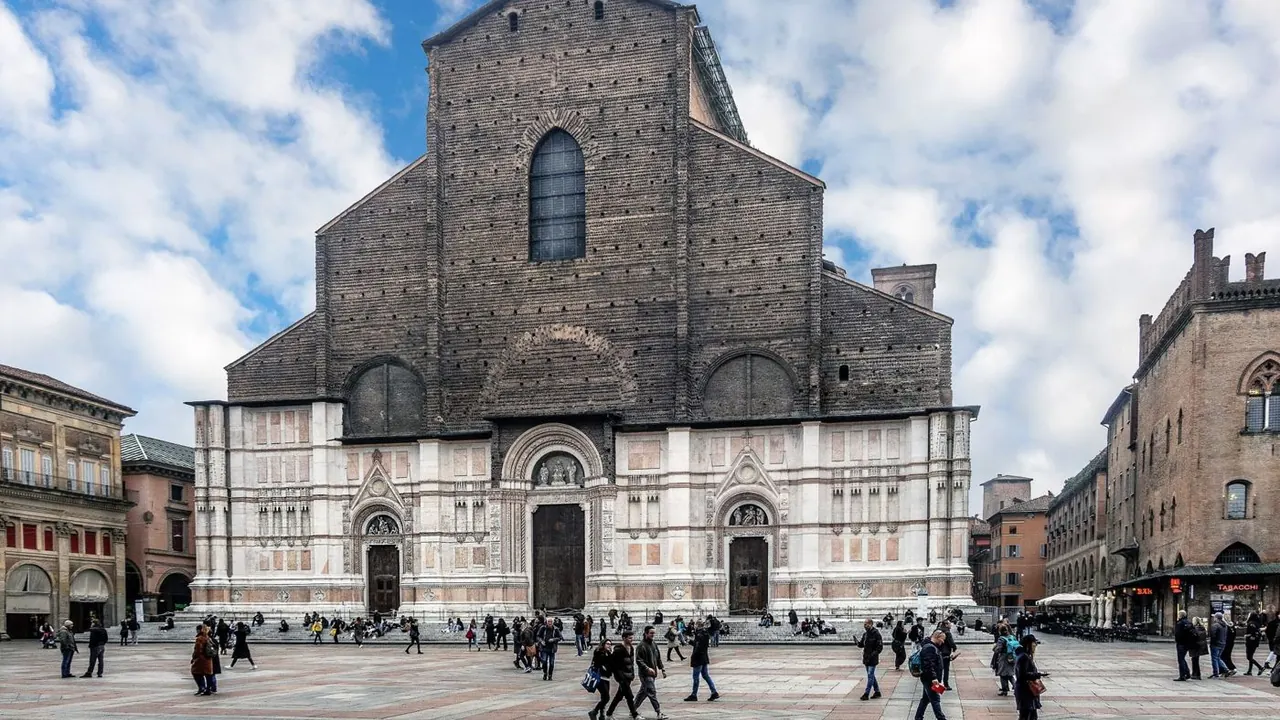
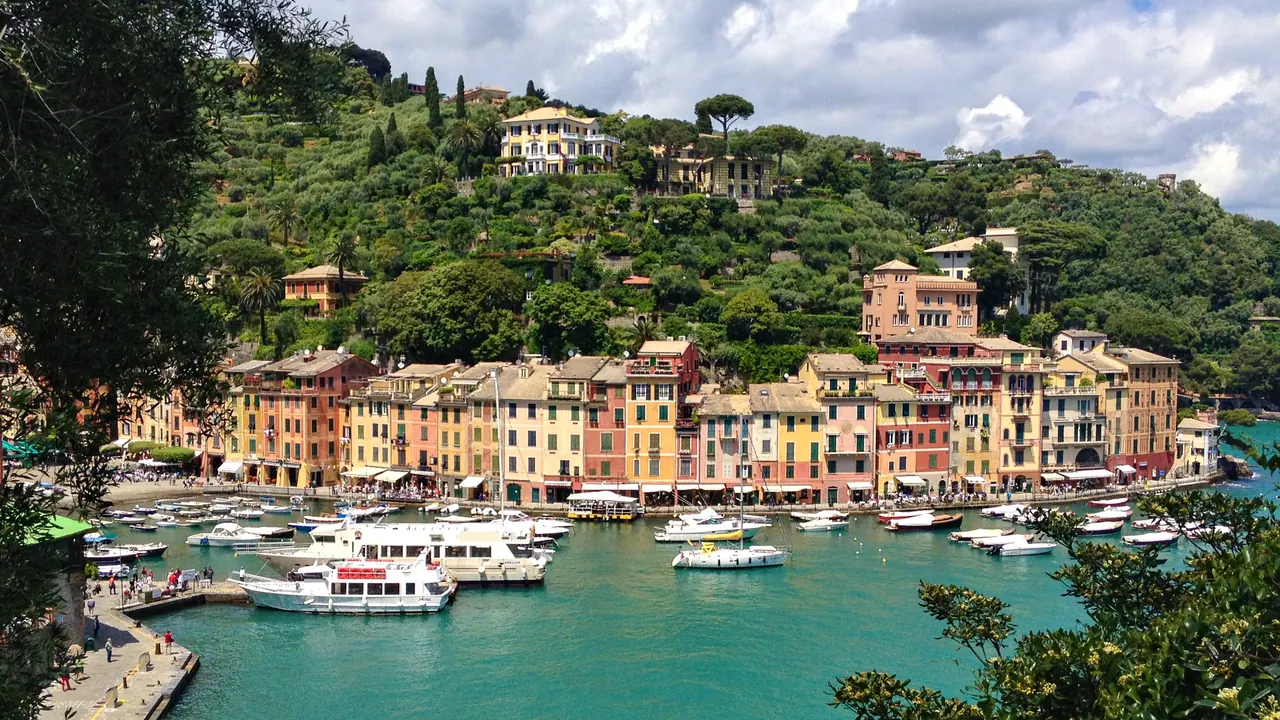
Photos: Bologna by Vanni Lazzari, CC BY-SA 4.0, cropped; Portofino by Michal Osmenda, CC BY 2.0, cropped.
Bologna or Portofino?
Our verdict in twelve categories, each scored against the same fixed benchmark cities, and the climate month by month, so you can choose for your trip.
Choose Bologna for
- culture and sights
- live music and the arts
- food and drink
Bologna suits travellers who plan their days around the table and the streets: hand-rolled pasta in old osterie, a medieval brick centre under miles of arcades, opera and jazz in the evening, and a station that puts Florence, Ravenna and Venice within easy reach. It costs far less than Portofino, rewards a stay of several days and keeps working well into the evening.
Choose Portofino for
- beaches
- nature and the outdoors
- wellness
Portofino is the better pick when the trip is about the sea and the headland rather than sights or nights out. It offers a swim in clear water off the rocks, a cliff path down to San Fruttuoso, a dive in the marine reserve and a slow aperitivo beside the harbour. It suits couples with a generous budget, or anyone happy to sleep in Santa Margherita and come over for the day, and two or three days cover it.
Scoreboard
Twelve categories on one fixed scale from 0 to 100. The shaded stretch is the gap between the two.
Your match
Pick a travel style or drag the sliders, and both match scores follow your weighting.
Wins on culture and sights and live music and the arts with your weighting.
Wins on beaches and nature and the outdoors with your weighting.
What matters to you?
Category by category
What the scores mean for a trip.
Beaches & swimming
Neither place has a proper beach of its own, but Portofino comes much closer to a seaside stay. You can climb down ladders from the rocks into deep, clear water along the lighthouse path. Paraggi's small sandy bay is a short walk away and San Fruttuoso's pebble cove is reachable by boat. All of these spots are small and crowded in summer.
From Bologna, the sea means an hour's train ride to Rimini and the long Romagna shore of rented umbrellas and shallow, often greenish water. It is fine for one hot day out, but nobody chooses Bologna for swimming.
Food & drink
Eating is one of the main reasons to visit Bologna and one of the weaker points of Portofino. Bologna gives you fresh pasta rolled in shop windows, mortadella, the delicatessens and fishmongers of the Quadrilatero, and Parmigiano and Parma ham made less than an hour away. Its one limit is that almost everything is Emilian and rich.
Portofino has Ligurian pesto, focaccia di Recco and fritto misto, served on harbourside terraces. The view costs more than the cooking deserves. Keen eaters head to Camogli, Santa Margherita or the hill trattorie for better local food.
Culture & sights
Bologna has far more to see. Its large brick centre has UNESCO-listed porticoes, Piazza Maggiore with San Petronio, the Two Towers, the seven churches of Santo Stefano and the anatomical theatre of Europe's oldest university. The Pinacoteca adds a serious collection of paintings, and you need two or three days to see it all.
In Portofino, the sight is the coloured horseshoe of houses itself. Beyond that there is Castello Brown, the church of San Giorgio and the abbey at San Fruttuoso, and no museums of any size. It is a place for atmosphere rather than sightseeing.
Nightlife
Bologna's student population keeps the city out late. Crowds gather outside cheap bars around Piazza Verdi, small taverns line Via del Pratello, and wine bars fill after aperitivo near Via San Vitale. The one gap is August, when the students leave and the city goes quiet.
Portofino's evening is a dressed-up drink facing the yachts, followed by dinner, and then very little. For anything later you have to go to Rapallo, Santa Margherita or Genoa.
Nature & outdoors
Portofino is the outdoor destination of the two. The whole headland is a regional park and the sea around it is a marine reserve. Trails climb through holm oak and pine to the Semaforo Nuovo, with chained sections above the cliffs, and below the water there are red coral walls and the Christ of the Abyss statue.
Bologna's countryside is gentler. You can walk the arcaded climb to San Luca, explore the gypsum caves of the Parco dei Gessi or set off on the Via degli Dei towards Florence. The higher Apennines are about an hour and a half south, and the plain to the north is good for cycling but flat.
Day trips
Both make good bases, but Bologna's rail junction gives it the edge. Florence is about half an hour away, while Ravenna's mosaics, Ferrara, Modena and Parma are short trips along the Via Emilia. Venice, Verona and Padua are close enough for a long day out.
Portofino's outings follow the coast. Camogli, Rapallo and Sestri Levante are nearby, Genoa is under an hour away, and summer ferries run to the Cinque Terre and Portovenere. These are pleasant trips by sea, but they need more planning once the ferry season ends.
Good for families
Bologna is the easier of the two with children. Its flat, largely car-free centre and shaded porticoes work well with a pushchair, and climbing the Asinelli tower makes a small adventure. Mirabilandia and the Rimini beaches cover the rest, though the city itself has little aimed at children.
Portofino is calm and safe, and older children enjoy the boats and swimming off the rocks. However, the steep stepped paths, paid beach clubs and lack of playgrounds mean most families stay in Santa Margherita instead and visit the Genoa aquarium on a day trip.
Getting around
Bologna is simple to get around. The centre is compact and flat, you can walk under cover for most of it, and the main station sits at the edge of the old town with fast trains in every direction. There is no metro, but buses cover what walking does not.
In Portofino, the village itself takes minutes to cross, though the paths up to the church and castle are steep. Getting there is the problem: there is only one narrow road from Santa Margherita, about 5km away, with crowded summer buses and scarce parking. The spring-to-autumn ferries are the most pleasant way to arrive.
Shopping & style
Bologna offers more to browse, and much of what visitors take home is edible: aged Parmigiano, balsamic vinegar and tortellini from the Quadrilatero. Beyond food there are luxury fashion houses in the Galleria Cavour, the Montagnola market, a weekend antiques market in Piazza Santo Stefano and vintage shops in the university quarter.
Portofino packs big-name fashion and jewellery boutiques, resort wear and Ligurian lace into a few lanes behind the harbour. It makes an hour's stroll for window-shoppers, and for a longer browse locals go to Chiavari or Genoa.
Affordability
Bologna is the far cheaper stay. Its trattoria meals, aperitivo with food included and free churches keep daily spending moderate. Hotels in the old town are the main cost, and they become scarce and expensive during the big trade fairs.
Portofino's few hotels are mostly luxury properties, and the piazzetta charges heavily for its view, as do Paraggi's loungers and boat hire. Walking and buses are about the only cheap things, which is why so many visitors sleep in Rapallo or Camogli.
Live music & performing arts
Bologna has a real musical life. The Teatro Comunale is a historic opera house with seasons of opera and ballet, and the city is a UNESCO City of Music. Basement jazz clubs play most nights, students fill small rock and indie venues, and summer brings concerts and film screenings to Piazza Maggiore.
Portofino has no theatre and no regular venue, apart from the occasional summer concert in the piazzetta or at the castle. For an opera night from there, you have to go to the Teatro Carlo Felice in Genoa.
Wellness & relaxation
Neither place has a bathing tradition, and both offer a similar degree of rest, in different ways. From Bologna, thermal springs are a short trip away at Castel San Pietro Terme or in the green valley at Porretta Terme, while the city itself is noisy around the university and heavy in summer heat.
Portofino's calm comes from its setting. It has hillside hotel spas, quiet shaded paths and long lunches by the water, but this peace holds mainly in the early morning, in the evening and outside high summer, before the tour boats arrive.
When should you go?
Pick your month. The climate figures are measured averages, not a forecast.
Bologna in July
Portofino in July
Daytime high, °C
Rainfall in the month, mm
Where the figures come from
Bologna has no rain gauge within 25 km of the centre, so its rainfall comes from a gridded climate dataset read at the city rather than from a gauge further away.
Bologna's sunshine is measured 82 km from the centre, at Cervia.
Portofino's temperatures are measured 31 km from the centre, at Genova / Sestri.
Portofino has no rain gauge within 25 km of the centre, so its rainfall comes from a gridded climate dataset read at the city rather than from a gauge further away.
Temperature and rainfall are climate normals, averaged over the years shown. Bologna: 1991-2020 normals, Bologna / Borgo Panigale (5.5 km from centre). Portofino: 1991-2020 normals, Genova / Sestri (31 km from centre).
Bologna's best months are May, June and September, when the days are warm and sunny. July and August are hot and humid on the plain, at around 32°C, which makes walking the streets hard work by midday even with the shade of the porticoes. Winter is cold and grey, and October and November bring the most rain. Portofino has a milder year, with winter days around 12°C and summers that stay a little cooler than Bologna's.
For swimming on the Ligurian coast, aim for June to September. The sea reaches about 25°C in August and is still pleasant in early October. Autumn is the weak point there: October and November are very wet, with October rain around 225mm, far more than Bologna gets. Spring suits both places for walking, while early autumn favours Bologna once the coast turns stormy.
Which traveller are you?
On a food and nightlife trip, Bologna wins easily. It has tagliatelle al ragù and tortellini in family trattorias, the Quadrilatero market lanes and aperitivo with Lambrusco, and then late student bars along Via del Pratello. Portofino offers pricey harbour dinners and is quiet soon afterwards.
For an outdoors trip, Portofino is the stronger choice. The protected headland has cliff trails over Monte di Portofino to San Fruttuoso and Camogli, and the marine reserve has coral walls for divers and is good for kayaking. Bologna offers gentler hill walks and the long Via degli Dei.
On a trip with a tight budget, Bologna is far easier to manage. Trattorias and aperitivo with food are reasonably priced, the churches are free and the centre is walkable. Portofino is among Italy's costliest stays, and even a lounger at Paraggi adds up.
Before you go
| Measure | Bologna | Portofino |
|---|---|---|
| Official language | Italian | Italian |
| Currency | Euro (EUR) | Euro (EUR) |
| Sockets | CFL230 V, 50 Hz | CFL230 V, 50 Hz |
| Driving side | Right | Right |
| Time zone | UTC+1, UTC+2 in summer | UTC+1, UTC+2 in summer |
| Emergency number | 112 | 112 |
| Elevation | 54 m | 20 m |
| Main airport | Bologna Guglielmo Marconi Airport (BLQ)6 km from centre98 non-stop destinations | Genoa Cristoforo Colombo Airport (GOA)32 km from centre25 non-stop destinations |
| Public holidays this year | 13 days | 13 days |
By the numbers
| Measure | Bologna | Portofino |
|---|---|---|
| City population | 387,971 | 355 |
| People per km² | 2,754 | 142 |
| Museums within 10 km | 68 | 14 |
| UNESCO World Heritage sites within 50 km | 3 | 2 |
| Swim season, months above 21 °C | - | 4 months |
Where else could you go?
Every comparison below shares a destination with this one, so you can follow Bologna or Portofino somewhere new.