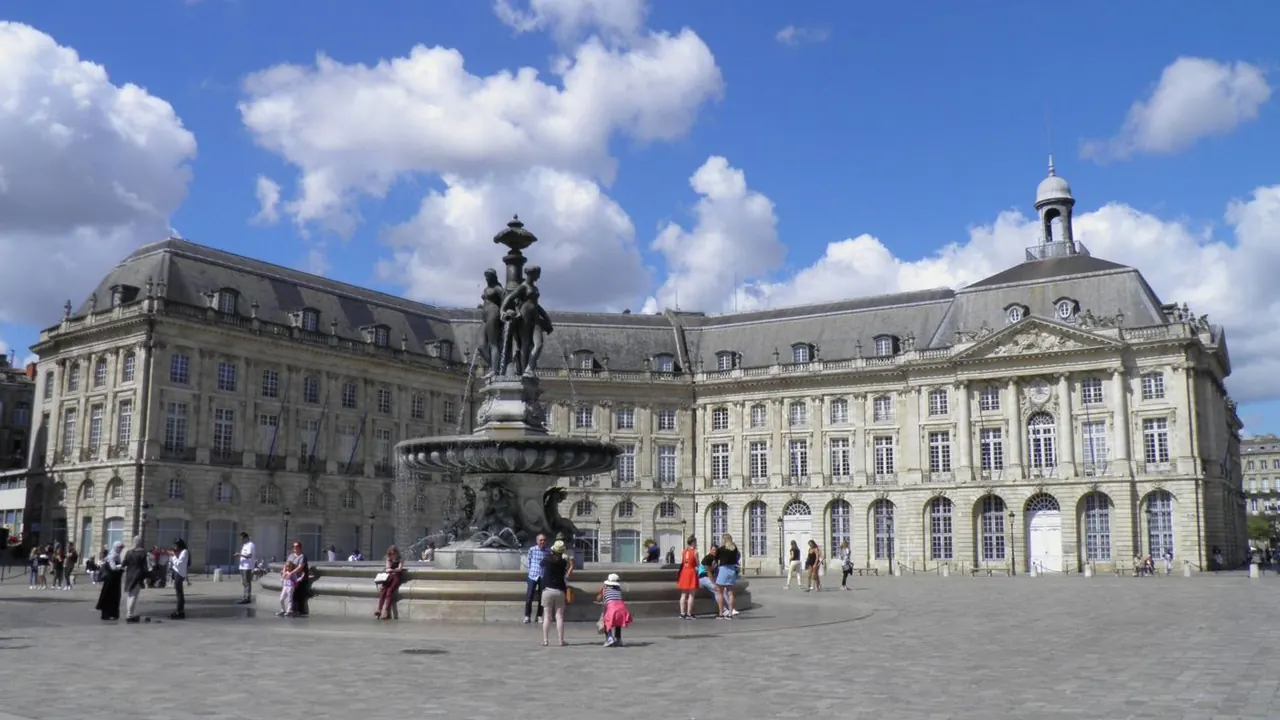
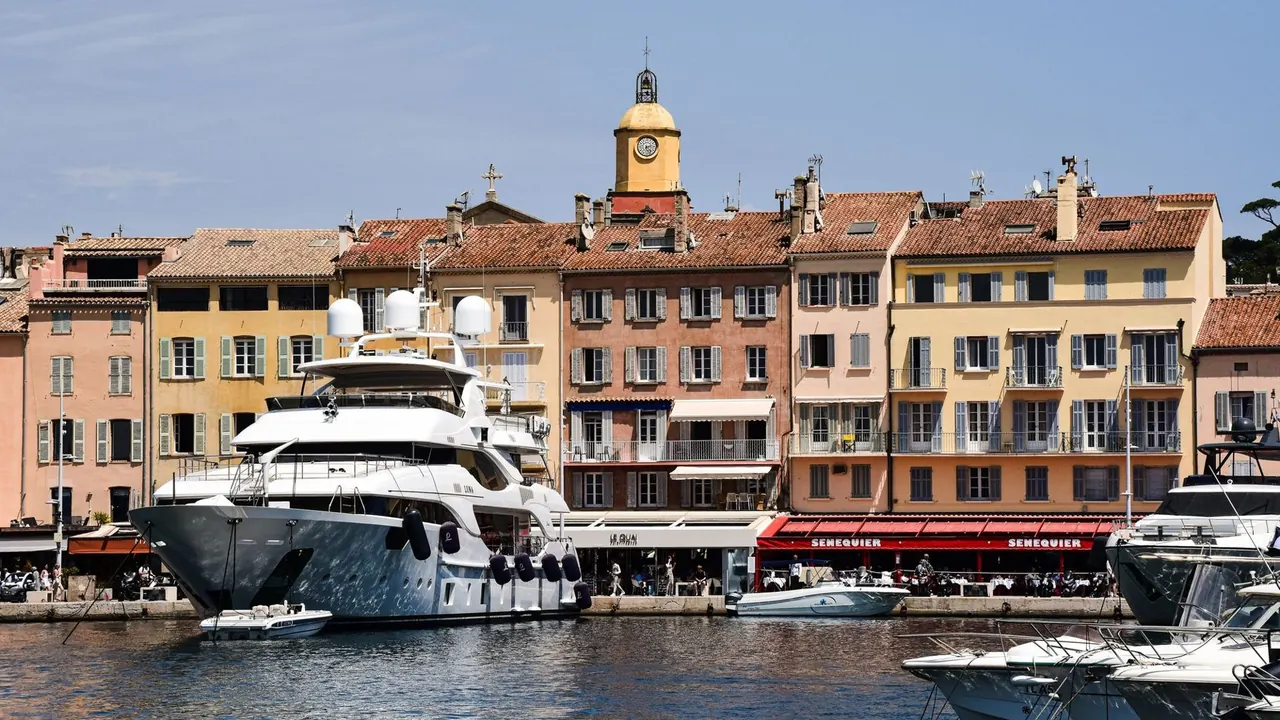
Photos: Bordeaux by Gzen92, CC BY-SA 4.0, cropped; Saint-Tropez by AXP Photography, Pexels License.
Bordeaux or Saint-Tropez?
Our verdict in twelve categories, each scored against the same fixed benchmark cities, and the climate month by month, so you can choose for your trip.
Choose Bordeaux for
- getting around
- live music and the arts
- prices
Bordeaux suits travellers who want a city to settle into for a few days. It has an elegant UNESCO centre to walk, serious food and wine, opera at the Grand Théâtre and easy trains to Saint-Émilion and Arcachon. It works in any season, you need no car in town and it costs far less, so it is the better choice for wine lovers, culture seekers and anyone watching their spending.
Choose Saint-Tropez for
- beaches
- nature and the outdoors
- nightlife
For a summer of sand, sea and glamour, Saint-Tropez is the place. Pampelonne and the coves of the peninsula, the coast path, sailing and the islands of Port-Cros and Porquerolles put it ahead outdoors, and its harbour and beach clubs make the more famous night out. Expect high prices, few sights and heavy traffic, and come between May and September to see it at its best.
Scoreboard
Twelve categories on one fixed scale from 0 to 100. The shaded stretch is the gap between the two.
Your match
Pick a travel style or drag the sliders, and both match scores follow your weighting.
Wins on getting around and live music and the arts with your weighting.
Wins on beaches and nature and the outdoors with your weighting.
What matters to you?
Category by category
What the scores mean for a trip.
Beaches & swimming
Saint-Tropez is far ahead for beaches. Pampelonne's 5km of pale sand and clear water are a short ride from town, quieter coves such as Escalet and Gigaro lie further south, and the swimming season runs from June to September.
From Bordeaux the sea is always a day out. There are long Atlantic surf beaches at Lacanau, where you need to stay inside the lifeguarded zones because of the rip currents, and the calmer Arcachon basin is an hour away by train. The water is cooler and the season is really just July and August.
Food & drink
Bordeaux is the better place to eat, by some distance, and wine is the reason. In one week you can taste Médoc, Saint-Émilion and Sauternes by the glass, alongside entrecôte cooked over vine cuttings and Arcachon oysters at the Marché des Capucins. Set lunches and good bistros in Saint-Pierre and Chartrons make eating well an everyday thing.
Saint-Tropez has grilled fish, aïoli and rosé on the sand, and its best hotel dining rooms are genuinely good. Simple, honest meals are harder to find, though. Many quayside places charge for the view, and much of the town closes in winter.
Culture & sights
Bordeaux's main attraction is the city itself: a UNESCO-listed 18th-century centre of pale limestone curving along the Garonne, with the Place de la Bourse, the Grand Théâtre and Gothic churches such as Saint-Michel. Add the Musée d'Aquitaine and the CAPC and you have three or four days of sightseeing.
Saint-Tropez has one notable museum, the Annonciade, with Signac and Fauvist paintings of the harbour. With the citadel and the lanes of La Ponche, everything is easily seen in a day.
Nightlife
In July and August, Saint-Tropez has the more famous night out. Afternoon parties at the Pampelonne beach clubs lead to champagne on the harbour terraces and then a few glamorous clubs that stay open until dawn, with table service and dress codes. Out of season, it largely shuts down.
Bordeaux is lower-key but steadier through the year. There are wine bars and terraces around Saint-Pierre, cheap student bars on Place de la Victoire and late clubs along the Quai de Paludate, and the city is liveliest at weekends in term time.
Nature & outdoors
Saint-Tropez has the more striking outdoors. The Sentier du Littoral runs past pine-backed coves to Cap Camarat and Cap Taillat, the Massif des Maures has cork-oak forest for hiking, and the gulf is good for sailing and snorkelling. The national-park islands of Port-Cros and Porquerolles are also within reach. Summer heat and fire risk can close trails, so walkers should come in spring or autumn.
Bordeaux's countryside is flat vineyards and Landes pine forest, best seen by bike on the greenways. The Dune du Pilat, the birdlife of the Arcachon basin and the surf at Lacanau are an hour away, but there is no real hiking nearby.
Day trips
Bordeaux is the much stronger base for day trips. Saint-Émilion is a short train ride away, the Médoc châteaux at Margaux and Pauillac and the Sauternes villages are close, and Arcachon, Blaye and Cognac each make a full day out.
The outings from Saint-Tropez are pretty but smaller: the hill villages of Ramatuelle, Gassin and Grimaud, boats to Port Grimaud and Sainte-Maxime, and Porquerolles for a longer day. In summer, traffic on the gulf road slows down every trip.
Good for families
Neither city is built around children, but Bordeaux is easier with them. The centre is flat, largely car-free and served by trams. The Miroir d'eau doubles as a paddling pool, and there is a puppet theatre in the Jardin Public and hands-on science at Cap Sciences. Days at the Dune du Pilat and the Arcachon beaches complete the picture.
Saint-Tropez has the better sand for small children, at Pampelonne and Gigaro, but little else for them. Its harbour and beach clubs are aimed at adults and the prices make a long stay hard, so many families stay in Sainte-Maxime and come over by boat.
Getting around
Getting around is where the two differ most. Bordeaux is flat and walkable, with long pedestrian streets, an easy tram network, plenty of bike lanes and trains to Saint-Émilion and Arcachon. You only need a car for the vineyards.
You can walk across Saint-Tropez's old town in a few minutes, but that is where the ease ends. There is no railway, the buses are slow and the main beaches are several kilometres out. In July and August the single road along the gulf jams for hours, so the passenger boats across the bay are often the best way in.
Shopping & style
For its size, Saint-Tropez has the more distinctive shopping. The big fashion houses open summer shops in the lanes behind the port, alongside resort wear and the hand-stitched Tropézienne leather sandal. The Place des Lices market adds linen, baskets and pottery. Much of it closes in winter.
Bordeaux has a wider range but less character: chains on Rue Sainte-Catherine, luxury labels in the Triangle d'Or and antiques on Rue Notre-Dame. Its best buy is wine, from cellars that will ship your bottles home.
Affordability
Bordeaux is much easier on the wallet, though it is not a cheap city. Your bed is the main fixed cost, and it goes up in summer and when the big wine events are on. The trams cost little, and the limestone streets, the quays and the Miroir d'eau cost nothing. If lunch is your main meal, eating well stays reasonable. After that, the bill grows only with what you choose to add, such as château visits or a grand cru with dinner.
In Saint-Tropez almost everything is expensive, not just the room. You pay for the taxi or the parking to reach Pampelonne, the lounger at a beach club and even a coffee on the quay. To save money, you have to plan the trip differently: sleep in Sainte-Maxime or a village inland, take the boat across the gulf, buy lunch at the market and lay a towel on a public stretch of sand. May, June and September cost less, but the town never becomes a bargain.
Live music & performing arts
Bordeaux has a proper season. Opera and ballet are staged in the gilded Grand Théâtre of 1780, the national orchestra plays nearby, and there is jazz, touring acts and bands in small bars, though the season pauses in high summer.
Saint-Tropez has only open-air concerts on the citadel and in gardens in summer, plus the Bravade procession each May. For opera or theatre you have to drive to Toulon or Nice.
Wellness & relaxation
Neither has a bathing culture of its own, so in both towns wellness mostly means hotel spas. Bordeaux has vinotherapy, grape-based treatments at spa hotels among the vineyards, and the thermal waters of Dax are within reach. Saint-Tropez can be restful, but it depends on when you go: it is loud and crowded in high summer and slow and calm in May, June and September.
When should you go?
Pick your month. The climate figures are measured averages, not a forecast.
Bordeaux in July
Saint-Tropez in July
Daytime high, °C
Rainfall in the month, mm
Where the figures come from
Saint-Tropez has no rain gauge within 25 km of the centre, so its rainfall comes from a gridded climate dataset read at the city rather than from a gauge further away.
Saint-Tropez's sunshine is measured 62 km from the centre, at Nice.
Temperature and rainfall are climate normals, averaged over the years shown. Bordeaux: 1991-2020 normals, Bordeaux / Merignac (9.5 km from centre). Saint-Tropez: 1999-2020 (sunshine 1991-2020, rainfall 1991-2020) normals, Le Luc (24.2 km from centre).
Bordeaux is a city for walking from spring to autumn. May to September is pleasant, with highs of about 28°C in August that rarely become oppressive, and July is the driest and sunniest month. Rain builds from September, and the winter months are grey and wet, with about 114mm in November, though the streets and museums still make a reasonable cool-weather break.
Saint-Tropez is hotter and much sunnier all year. July and August reach about 32°C, too hot for walking at midday but ideal for the beach. The sea warms to 24°C in August and is pleasant for swimming from June to September. May, June and September are the best months for the coast path. October and November bring heavy rain, around 155mm in November, and the winters are mild and bright but the sea is too cool for swimming.
Which traveller are you?
On a beach and sun trip, Saint-Tropez is the clear choice. Pampelonne's fine sand and clear, warm water lie close to town and the swimming lasts from June to September, while Bordeaux's Atlantic beaches are an hour away and best only in high summer.
For a culture and arts trip, Bordeaux offers far more. You get a UNESCO classical centre to explore over several days, the Musée d'Aquitaine and the CAPC, and opera or ballet in the Grand Théâtre. Saint-Tropez's art and history fit easily into a single day.
On a trip on a tight budget, Bordeaux works and Saint-Tropez barely does. Trams, set lunch menus and a centre that costs nothing to walk keep spending sensible, whereas Saint-Tropez is priced for the yachting crowd and has little public transport to help you save.
Before you go
| Measure | Bordeaux | Saint-Tropez |
|---|---|---|
| Official language | French | French |
| Currency | Euro (EUR) | Euro (EUR) |
| Sockets | CE230 V, 50 Hz | CE230 V, 50 Hz |
| Driving side | Right | Right |
| Time zone | UTC+1, UTC+2 in summer | UTC+1, UTC+2 in summer |
| Emergency number | 112 | 112 |
| Elevation | 1 m | 0 m |
| Main airport | Bordeaux–Mérignac Airport (BOD)11 km from centre95 non-stop destinations | Nice-Côte d'Azur Airport (NCE)64 km from centre130 non-stop destinations |
| Public holidays this year | 11 days | 11 days |
By the numbers
| Measure | Bordeaux | Saint-Tropez |
|---|---|---|
| City population | 267,991 | 3,582 |
| People per km² | 5,425 | 320 |
| Museums within 10 km | 18 | 4 |
| UNESCO World Heritage sites within 50 km | 4 | 0 |
| Swim season, months above 21 °C | - | 3 months |
Where else could you go?
Every comparison below shares a destination with this one, so you can follow Bordeaux or Saint-Tropez somewhere new.