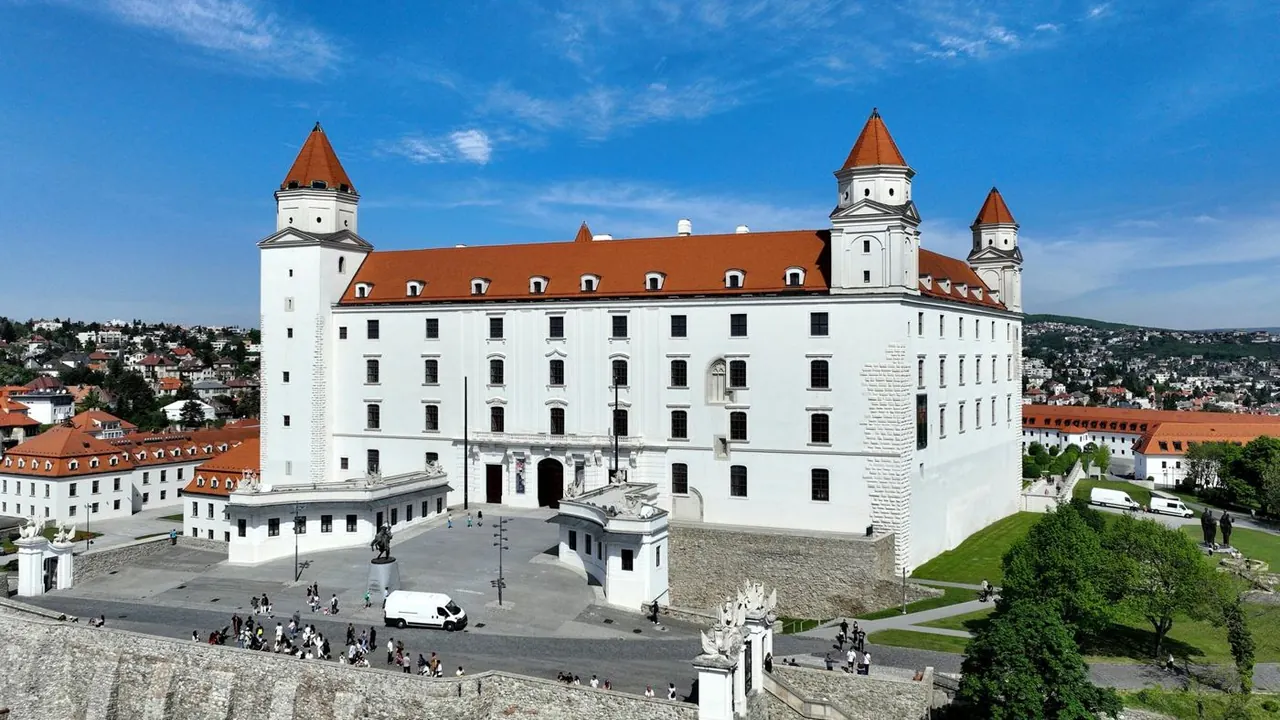
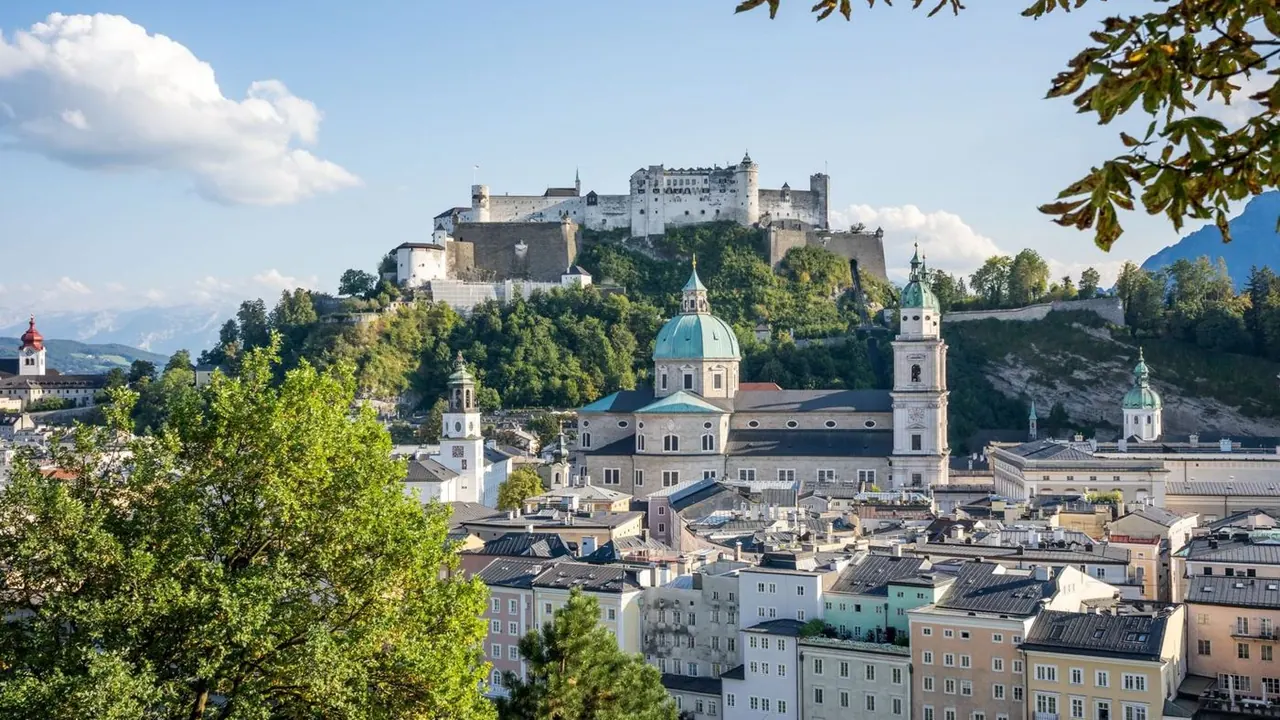
Photos: Bratislava by C.Stadler/Bwag, CC BY-SA 4.0, cropped; Salzburg by Leonhard Niederwimmer, Pexels License.
Bratislava or Salzburg?
Our verdict in twelve categories, each scored against the same fixed benchmark cities, and the climate month by month, so you can choose for your trip.
Choose Bratislava for
- prices
- nightlife
Bratislava suits travellers who want a relaxed, inexpensive few days with lively weekend evenings, Small Carpathian wine and an easy train to Vienna. The old coronation town and castle take a day or two, the pubs and wine bars fill up on Friday and Saturday nights, and a modest budget still buys good meals and a central room. It works well as a short break or as a cheap base for exploring three countries.
Choose Salzburg for
- live music and the arts
- nature and the outdoors
- culture and sights
Salzburg is the better choice when the scenery and the music are the reason for the trip. Its Baroque old town and clifftop fortress are a grander set piece, the festivals and concert halls give it a classical programme few small cities can match, and the Alps and the Salzkammergut lakes start almost at the edge of town. Expect to pay noticeably more, and expect evenings to end early.
Scoreboard
Twelve categories on one fixed scale from 0 to 100. The shaded stretch is the gap between the two.
Your match
Pick a travel style or drag the sliders, and both match scores follow your weighting.
Wins on prices and nightlife with your weighting.
Wins on live music and the arts and nature and the outdoors with your weighting.
What matters to you?
Category by category
What the scores mean for a trip.
Beaches & swimming
Neither city is a swimming destination, and both send people to lakes in summer. Bratislava's Zlate piesky has a sandy shore you can reach by tram, and the Senec lakes are the larger weekend escape, but they are flat lowland lakes that get crowded.
Salzburg has the more rewarding water. Fuschlsee, Wolfgangsee and Mondsee are clear, green alpine lakes ringed by steep hills, and you swim from lawns, jetties and small pebble shores rather than sand. A swim there makes a day out in its own right.
Food & drink
The two eat at much the same level, but the best thing at the table differs. Bratislava's highlight is wine: Veltliner, Riesling and Frankovka from vineyards at the city's edge, poured in wine bars alongside bryndzove halusky, roast duck with lokse and beer from small in-house breweries.
Salzburg's strength is its coffee-house culture and its beer halls, above all the Augustiner monastery brewery in Mülln with its chestnut-shaded garden, and dessert ends with a Salzburger Nockerl. In both cities the central squares lean towards tourist menus, so the better meals are a short walk away.
Culture & sights
Salzburg is the stronger sightseeing city. Its UNESCO-listed old town is a complete Baroque ensemble built by the prince-archbishops, overlooked by Hohensalzburg, one of Europe's largest intact medieval fortresses. Add the Residenz, the Mozart houses, the catacombs of St Peter and Hellbrunn, and you have two or three full days of sightseeing.
Bratislava is smaller in scale and more varied in period. The coronation route from St Martin's Cathedral, the Primate's Palace and the Blue Church sit alongside the communist-era Most SNP bridge and the cliff-top ruins of Devin. It is pleasant, but a day or two covers it.
Nightlife
Bratislava is the livelier choice after dark. Pubs, wine bars and cocktail bars run into one another across a few Old Town streets and stay loud until late at weekends, partly thanks to students and visiting groups. Weeknights are calm, and it is a pub crawl rather than a club scene.
In Salzburg an evening usually means a concert, a late dinner and a litre mug in a beer hall, and the old town is quiet by midnight. A few student bars around Rudolfskai stay open later during term, but for a real night out locals take the train to Munich.
Nature & outdoors
Salzburg sits at the foot of the Alps, and it shows. The Untersberg cable car rises to about 1,800m for limestone ridge walks, the Gaisberg draws hikers and paragliders, and the Salzkammergut lakes and the Königssee in Berchtesgaden National Park are within easy reach. Even inside the city, the Mönchsberg and Kapuzinerberg give wooded walks above the domes.
Bratislava's outdoors is gentler. Beech-wood trails climb from Koliba to Kamzik in the Little Carpathians, Devinska Kobyla has steppe meadows above the river confluence, and the flat Danube cycle route and the Cunovo whitewater course add variety. These are hills, though, not mountains.
Day trips
Both are excellent bases, with different kinds of outing. From Bratislava the headline is Vienna, about an hour by train or a boat ride up the Danube, plus wine villages such as Modra and Pezinok, Roman Carnuntum, Lednice-Valtice in Czechia and Pannonhalma in Hungary. Most of these are within reach by train.
From Salzburg the trips are more scenic: Hallstatt on its lakeshore, the salt mines of Hallein and Berchtesgaden, the clifftop fortress at Werfen and the lake villages of St Wolfgang and St Gilgen, with Munich as the big-city option. Several of the lakes are much easier to reach with a hire car.
Good for families
Salzburg gives children more to do. The trick fountains at Hellbrunn, the neighbouring zoo, the hands-on Haus der Natur, the fortress funicular and the marionette theatre fill a couple of days, and the salt mines nearby have wooden miners' slides and boat rides on underground lakes. Its cobbles and steep lanes are hard going with a pushchair.
Bratislava is just as safe and calm but has less built for children. Spotting the bronze street statues, the chairlift and playgrounds at Kamzik, the hillside zoo and the water park at Senec make for a happy short stay, but the options run thin after two or three days.
Getting around
Both centres are compact and mostly pedestrian, so you walk almost everywhere. Bratislava adds trams to its buses and trolleybuses, which reach Kamzik, the zoo and Devin, although longer rides across the river are slow. Trains cover most of its day trips, and a car only helps for the more remote wine villages and castles.
Salzburg runs on trolleybuses and buses alone, but its flat riverside paths make cycling a real option. Getting out of town is where it is weaker: regional buses to the lakes and Berchtesgaden are slow, so many visitors hire a car for those days.
Shopping & style
Salzburg has more worth buying. Getreidegasse, with its wrought-iron guild signs, is an attractive street to browse, and the old town's speciality is made-to-measure Tracht: dirndls, loden jackets and leather goods. Add the farmers' market by the Andräkirche and the long-established Christmas market on Domplatz in Advent.
Bratislava's best finds are Small Carpathian wine and the genuine crafts at the state folk-craft centre, such as Modra majolica and blue-print cloth. Otherwise shopping means chain-store malls, and serious fashion is a train ride away in Vienna.
Affordability
Bratislava is much easier on the wallet. Beer, wine, transport and museum entry are cheap, pubs serve hearty weekday lunch menus, and central rooms stay reasonable for most of the year. Only the main squares and the riverside complexes charge Western prices.
Salzburg is expensive for a city its size, with old-town hotels dear all year and both rooms and restaurant tables scarce during the festival and Advent. A city card covering transport and the main sights helps, and staying across the river or in the suburbs is the usual way to save.
Live music & performing arts
This is Salzburg's great strength. The summer Salzburg Festival brings leading performers to the Grosses Festspielhaus and the Felsenreitschule, a riding school cut into the cliff, and Jedermann is staged in front of the cathedral. Mozart Week and the Easter Festival add two more seasons, and the Mozarteum, the Landestheater and the Marionette Theatre keep music going all year.
Bratislava offers a good evening rather than a pilgrimage. The Slovak National Theatre's opera and ballet and the Philharmonic in the Reduta are of a solid standard, tickets are easy to get, and an autumn music festival adds some highlights.
Wellness & relaxation
Neither city has thermal springs of its own, but Salzburg makes relaxing easier. The Paracelsus Bad in the city park has saunas and a pool facing the Kapuzinerberg, the Mirabell gardens and Mönchsberg are quiet once the day-trippers leave, and the brine spa of Bad Reichenhall is about twenty minutes away, with the Gastein valley's springs further south.
Bratislava's calm comes from slow café afternoons and empty weekday forest paths. For real bathing you need a day out, either to the water park at Senec or by train to the historic mud and sulphur cures of Piestany.
When should you go?
Pick your month. The climate figures are measured averages, not a forecast.
Bratislava in July
Salzburg in July
Daytime high, °C
Rainfall in the month, mm
Where the figures come from
Bratislava has no rain gauge within 25 km of the centre, so its rainfall comes from a gridded climate dataset read at the city rather than from a gauge further away.
Bratislava's sunshine is measured 56 km from the centre, at Wien / Hohe Warte.
Temperature and rainfall are climate normals, averaged over the years shown. Bratislava: 1991-2020 normals, Bratislava Ivanka (8.6 km from centre). Salzburg: 1991-2020 normals, Salzburg (3.4 km from centre).
Winters are much alike, with daytime highs around 3°C in January in both cities, so December to February is about museums, concerts and Advent rather than long walks. From May to September Bratislava is the warmer and drier of the two, reaching 27°C in July with plenty of sunshine. Its summer heat can make a midday walk on the Old Town lanes tiring, but it is also when the lakes at Zlate piesky and Senec are warm enough for swimming.
Salzburg stays a little cooler, and its summer is its wettest season, with rain peaking at 168mm in June and frequent showers through August. Those are still the months for the Salzkammergut lakes and high walks on the Untersberg, but pack for rain. For walking either city in comfort, May and September are the most reliable, and Bratislava's drier autumn gives it a slight edge into October.
Which traveller are you?
On a trip with a tight budget, Bratislava is the clear pick. Cheap beer, wine and transport and filling pub lunch menus keep daily costs low. Salzburg is expensive all year, and rooms climb further during the festival and the Advent markets.
For a culture and arts trip, choose Salzburg. The UNESCO-listed Baroque old town, the Hohensalzburg fortress, the Mozart houses and the Salzburg Festival make for a far richer few days than Bratislava's compact coronation town and its solid national opera.
On an outdoors trip, Salzburg wins easily. A cable car climbs the Untersberg, the Gaisberg is used for paragliding and the Salzkammergut lakes are close by. Bratislava offers pleasant forest trails in the Little Carpathians and Danube cycling, but nothing alpine.
Before you go
| Measure | Bratislava | Salzburg |
|---|---|---|
| Official language | Slovak | German, Austrian Sign Language |
| Currency | Euro (EUR) | Euro (EUR) |
| Sockets | CE230 V, 50 Hz | CF230 V, 50 Hz |
| Driving side | Right | Right |
| Time zone | UTC+1, UTC+2 in summer | UTC+1, UTC+2 in summer |
| Emergency number | 112 | 112 |
| Elevation | 152 m | 424 m |
| Main airport | M. R. Štefánik Airport (BTS)8 km from centre70 non-stop destinations | Salzburg Airport (SZG)3 km from centre64 non-stop destinations |
| Public holidays this year | 15 days | 16 days |
By the numbers
| Measure | Bratislava | Salzburg |
|---|---|---|
| City population | 480,902 | 155,021 |
| People per km² | 1,308 | 2,360 |
| Museums within 10 km | 22 | 38 |
| UNESCO World Heritage sites within 50 km | 2 | 3 |
Where else could you go?
Every comparison below shares a destination with this one, so you can follow Bratislava or Salzburg somewhere new.