Brazil
Foz do Iguacu
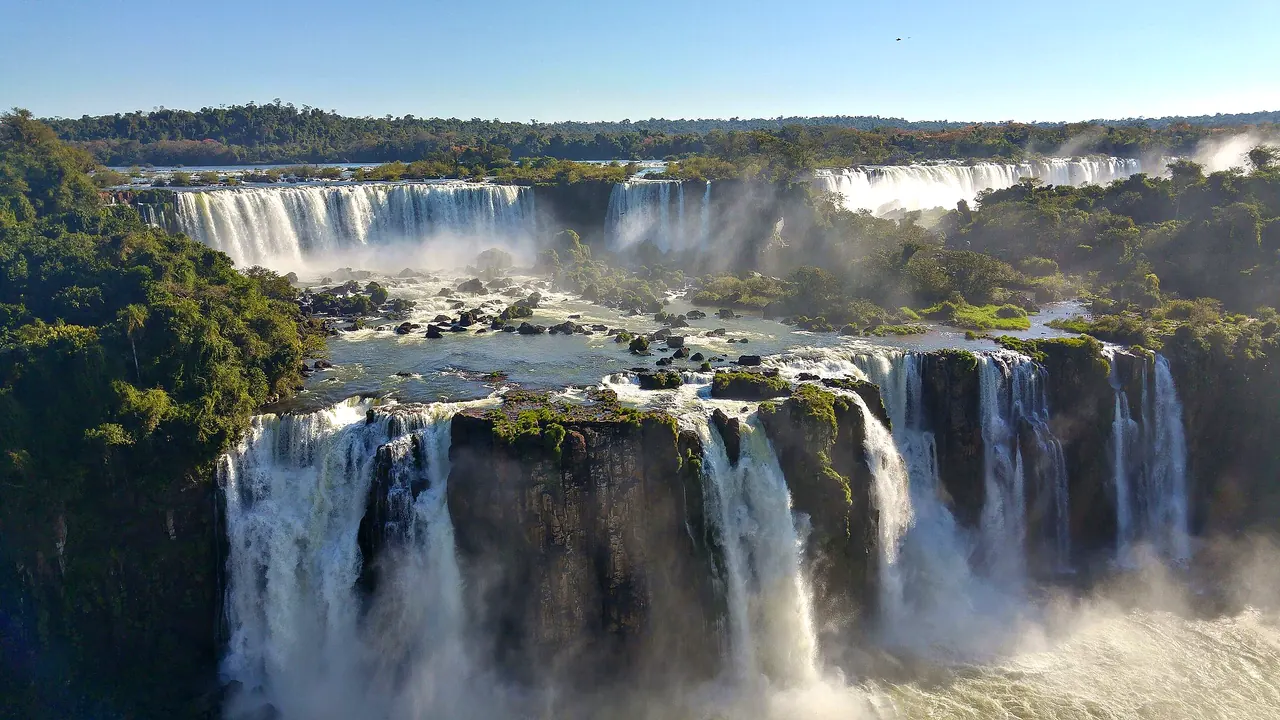
The cascades of the Iguaçu Falls
- Nature & outdoors90
- Families64
- Affordable cities64
Photo: Gabriel Resende Veiga, CC BY-SA 4.0, cropped
Match
39
Every category weighted equally
- Beach & sun39
- Culture & arts35
- Food & nightlife33
- Family trip45
- Outdoors46
- Relax & unwind39
- Shopping & style36
- On a budget42
Foz do Iguacu in twelve categories
Our verdict on each, scored 0 to 100 against the same fixed benchmark cities, so a score means the same thing on every page.
Beaches & swimming. Scores 12 out of 100.
Food & drink. Scores 40 out of 100.
Culture & sights. Scores 30 out of 100.
Nightlife. Scores 30 out of 100.
Nature & outdoors. Scores 90 out of 100.
Day trips. Scores 30 out of 100.
Good for families. Scores 64 out of 100.
Getting around. Scores 38 out of 100.
Shopping & style. Scores 32 out of 100.
Affordability. Scores 64 out of 100.
Live music & performing arts. Scores 12 out of 100.
Wellness & relaxation. Scores 28 out of 100.
Foz do Iguacu category by category
Beaches & swimming
12Foz do Iguaçu is deep in the interior, far from the Atlantic, so a beach vacation is not on offer. The nearest thing is the Itaipu reservoir, where small towns along the shore have built sandy lake beaches with lifeguarded swimming areas, about half an hour to an hour by car. The water is warm in the long summer and families from the region crowd them at weekends.
For most visitors, swimming means the hotel pool, which matters here because the summer is hot and humid. The falls themselves are for looking at and getting soaked by on a boat, not for bathing.
Food & drink
40Eating here follows the borders. Churrascarias serving rodízio, where waiters circle with skewers of grilled beef, are the classic Brazilian night out, and buffet restaurants with weighed plates cover lunch. One of Brazil's largest Arab communities, mostly of Lebanese origin, gives the city good esfihas, kibbeh and shawarma in family-run places around the centre.
Across the bridge in Puerto Iguazú, Argentine parrillas, empanadas and Malbec make an easy evening out, and that side often feels the more relaxed place to eat. Beyond that the range is narrow: there is little fine dining and no regional dish to seek out, and restaurants near the falls are mostly geared to coach groups.
Culture & sights
30The city itself is young and plain, so its sights are few but unusual. The Itaipu dam on the Paraná river, one of the largest hydroelectric plants in the world, is the main one, with guided tours across the crest and into the structure that give a real sense of its scale. The Omar Ibn Al-Khattab mosque, with its white dome and minarets, reflects the large Arab community, and the Chen Tien Buddhist temple, with its rows of statues looking over the river towards Paraguay, reflects the Chinese one.
At the Marco das Três Fronteiras, an obelisk marks the meeting of the Iguaçu and Paraná rivers, where three countries face each other. There is no old town, and museums are small. Visitors come for the falls.
Nightlife
30Going out is low-key. The centre has a short strip of bars, pubs and open-air terraces along its main evening avenue, busiest on Thursday to Saturday nights with a mostly local, student crowd, and a few clubs that run late at weekends. On the Argentine side, Puerto Iguazú has a small, pleasant cluster of bars, and casinos on both the Argentine and Paraguayan sides draw some visitors.
Most travellers here have been walking the falls since early morning and end the night with a long dinner. Anyone after a real night out will find it thin.
Nature & outdoors
90The Iguazu Falls are the reason this city exists for travellers: some 275 separate cascades spread across nearly 3km of the Iguazu river, set in subtropical Atlantic rainforest protected by national parks on both banks. The Brazilian side gives the great panorama from a cliff-edge walkway that runs out over the water near the Devil's Throat. The Argentine side, a short drive across the border, has longer trails that lead to the top of the falls and right to the edge of the Devil's Throat.
Boat rides run into the spray at the foot of the falls, and there are jungle walks, rafting, kayaking and cycling in the park. Coatis, toucans, caimans and clouds of butterflies are easy to see. Water levels peak in the rainy summer, and the forest is greenest then, though heat and humidity are high.
Day trips
30Crossing borders is the novelty here. Puerto Iguazú in Argentina is a small, easy-going town a short drive across the bridge, usually combined with the Argentine side of the falls. Ciudad del Este in Paraguay, across the Friendship Bridge, is a chaotic market city that people visit to shop rather than to sightsee.
After that the list stops. The Jesuit mission ruins, the region's great heritage sites, lie three or more hours away in Argentina and Paraguay, and the surrounding countryside is farmland and reservoir. Allow time for border queues on any crossing.
Good for families
64Iguaçu works well with children. The main walkway on the Brazilian side is short and mostly gentle, with a lift at the end, and the spray, the noise and the coatis wandering the paths hold children's attention far better than any museum. The Parque das Aves, a bird sanctuary beside the park entrance, lets them walk through large aviaries with toucans, macaws and flamingos.
The Itaipu dam tour and the boat rides into the falls appeal to older children, though boats have minimum ages. Big hotels with pools on the road to the falls make a good base. The downsides are summer heat, humidity and mosquitoes, and the time spent in taxis and buses between sights and across the border.
Getting around
38The centre is compact enough to walk, but the sights are not in it. The falls and the bird park lie about 20km out along the road past the airport, served by a direct city bus from the urban terminal. Itaipu is on the other side of town.
The Argentine side is where it gets fiddly: there are cross-border buses, but most visitors use a taxi, a ride-hailing car or a booked transfer to manage the border posts on both sides. Many hotels sit along the falls road rather than in town. With no rail and a spread-out layout, a few days here usually mean several car journeys.
Shopping & style
32Shopping is about bargains rather than style. Ciudad del Este, just across the bridge in Paraguay, is one of South America's largest discount markets, a crowded maze of electronics, perfume and imported goods sold from street stalls and multi-storey shopping galleries. Watch for fakes and keep bags close. Duty-free shops on both sides of the border sell spirits, perfume and cosmetics.
In Foz itself there is a large shopping mall and souvenir shops selling Brazilian gemstones, hammocks and falls-themed crafts. There are no boutique streets, design shops or serious markets.
Affordability
64Day-to-day costs are low. Mid-range hotels, buffet lunches, churrascaria dinners and city buses are inexpensive by European or North American standards, and taxis and ride-hailing cars to the falls are affordable. Prices on the Argentine side of the river rise and fall with the exchange rate, so it is worth checking before planning meals or nights there.
The main sights are what push the budget up. Both national parks charge foreign visitors higher entry fees, and the bird park, the Itaipu tours, the boat rides and helicopter flights all cost extra, so a packed two or three days costs more than the food and rooms suggest. The few hotels inside the parks are expensive.
Live music & performing arts
12There is little to attend. The main evening performance is the dinner show, where large restaurants put on folk dances from across Latin America, from samba to Argentine tango and Paraguayan harp music, for tour groups. A small municipal theatre and occasional concerts serve local audiences, but there is no opera, orchestra or live-music scene a visitor would plan around.
Wellness & relaxation
28Foz has no bathing tradition, hot springs or public spas. Relaxation means the hotel: the larger resort hotels on the road to the falls, and the few inside the park, have spas, pools and gardens where a rest day between sightseeing comes easily. The town itself is unhurried but not especially restful, and the falls draw crowds.
When should you go?
Pick a month to see what it is like. The climate figures are measured averages, not a forecast.
Foz do Iguacu in July
Daytime high, °C
Rainfall in the month, mm
The whole year
Shaded against this city’s own year: the deepest cell is its best month for that figure and the palest its weakest.
Temperature and rainfall are climate normals, averaged over the years shown. Foz do Iguacu: 1992-2020 (sunshine 1991-2020, rainfall 1991-2020) normals, Foz Do Iguacu Aeroporto (2.6 km from centre).
Before you go
| Measure | Foz do Iguacu |
|---|---|
| Official language | Portuguese |
| Currency | Brazilian Real (BRL) |
| Sockets | CN60 Hz |
| Driving side | Right |
| Time zone | UTC-3 |
| Emergency number | Police 190, ambulance 192, fire 193 |
| Elevation | 164 m |
| Main airport | Cataratas International Airport (IGU)12 km from centre10 non-stop destinations |
| Public holidays this year | 14 days |
By the numbers
| Measure | Foz do Iguacu |
|---|---|
| City population | 285,415 |
| People per km² | 462 |
| Museums within 10 km | 1 |
| UNESCO World Heritage sites within 50 km | 1 |
Compare Foz do Iguacu with
Every comparison with a written verdict behind it.