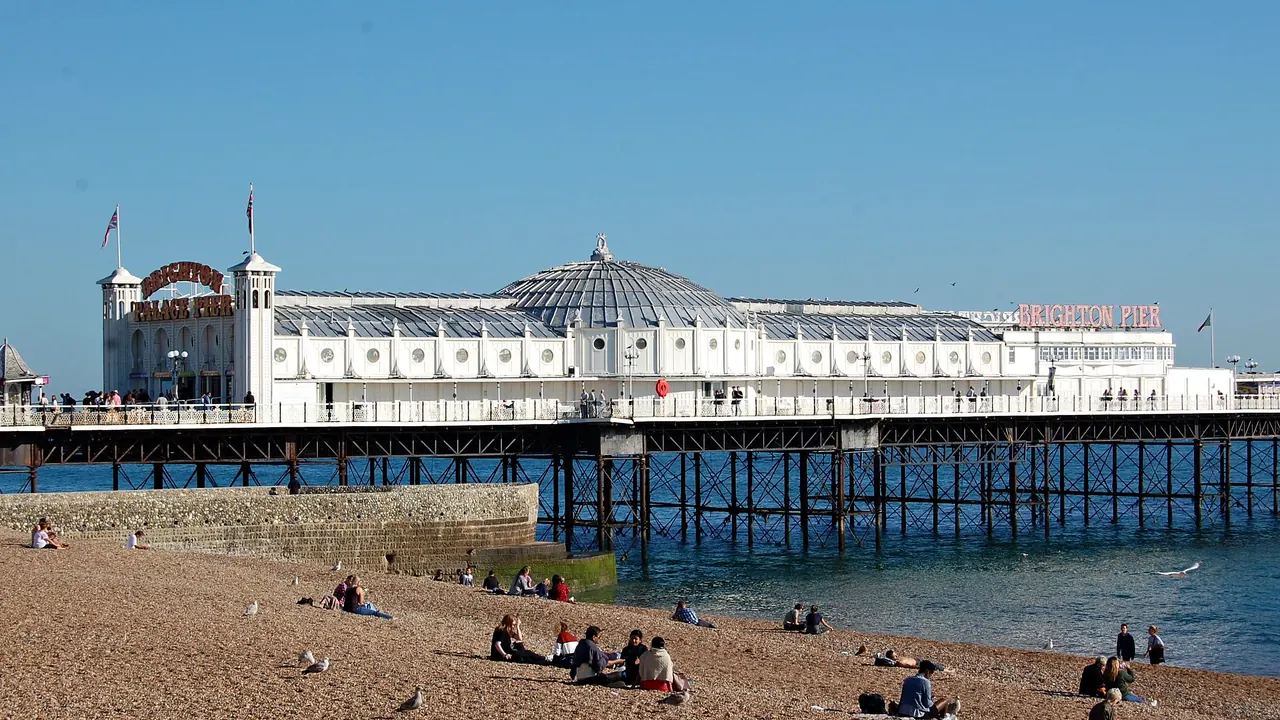
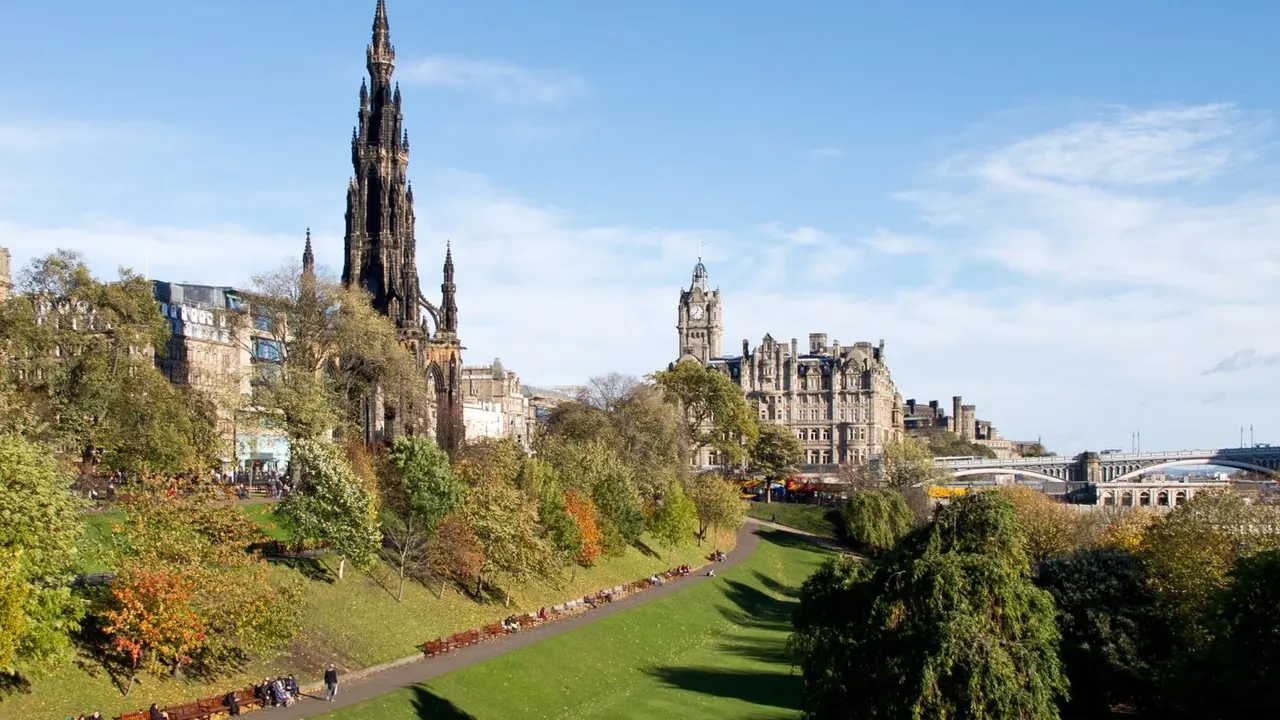
Photos: Brighton by Hassocks5489, CC0; Edinburgh by Carlos Delgado, CC BY-SA 3.0, cropped.
Brighton or Edinburgh?
Our verdict in twelve categories, each scored against the same fixed benchmark cities, and the climate month by month, so you can choose for your trip.
Choose Brighton for
- beaches
- nightlife
- day trips
Brighton suits a relaxed, sociable break: a seafront to sit on, a big night out in Kemptown or on West Street, and the North Laine's independent shops and kitchens to browse by day. It is also the better place to roam from, with London an hour away by train and Sussex castles, cathedral towns and vineyards all around. Its summers are a little warmer and sunnier too.
Choose Edinburgh for
- culture and sights
- live music and the arts
- nature and the outdoors
Pick Edinburgh when the city itself is the reason for going. The castle, the Old Town and the Georgian New Town, along with free national museums, give it far more to see, and Arthur's Seat and the Pentlands put real hills close to the centre. Anyone who loves theatre, comedy or classical music should aim for August, when the Fringe and the International Festival take over. The crowds and room rates that come with them are part of the deal.
Scoreboard
Twelve categories on one fixed scale from 0 to 100. The shaded stretch is the gap between the two.
Your match
Pick a travel style or drag the sliders, and both match scores follow your weighting.
Too close to call, level with your weighting
Wins on beaches and nightlife with your weighting.
Wins on culture and sights and live music and the arts with your weighting.
What matters to you?
Category by category
What the scores mean for a trip.
Beaches & swimming
Neither is a swimming destination, but Brighton's beach is part of daily life in a way Edinburgh's is not. The shingle runs the whole seafront from the Marina to Hove, the Channel is noticeably milder in late summer, and lifeguards cover the central stretch in season.
Edinburgh actually has the softer sand, at Portobello a bus ride from the centre and on the wide East Lothian beaches at Gullane and North Berwick. The colder water means most people walk the sand rather than swim, so it makes a pleasant outing rather than a reason to go.
Food & drink
The two eat about equally well, in different ways. Brighton's strength is the number of small independent places packed into the North Laine, the Lanes and Kemptown, with a long vegetarian and vegan tradition, serious coffee and Sussex sparkling wine.
Edinburgh's lies in Scottish produce: scallops, langoustines, game and Highland beef, cooked best in a few ambitious dining rooms in Leith and Stockbridge, plus whisky bars with hundreds of malts. Brighton is easier for casual grazing, while Edinburgh rewards a booked dinner.
Culture & sights
Here Edinburgh is far ahead. Its whole centre is a World Heritage Site: the castle, the closes of the Royal Mile and the Georgian New Town. The National Museum of Scotland and the national galleries add several days of substance, and most of them are free.
Brighton has one great sight in the Royal Pavilion, with the museum beside it, plus the piers and the Regency terraces of Kemptown and Hove. That fills a day or two of pleasant wandering rather than a full itinerary.
Nightlife
Brighton is the bigger night out. Students, a young population and weekend visitors from London keep its bars busy all week. Kemptown has one of Britain's oldest LGBTQ+ scenes, and the clubs on West Street and in the seafront arches go on into the small hours.
Edinburgh is a pub city first, with Victorian bars on Rose Street, old pubs in the Grassmarket and harbour pubs in Leith, cocktail basements around George Street and a small late-night strip in the Cowgate. Outside August it winds down earlier.
Nature & outdoors
Both have open country close by, but Edinburgh's is wilder and nearer. Arthur's Seat rises out of Holyrood Park a short walk from the Royal Mile, the Pentland Hills offer real ridge walking, and the edge of the Highlands is within about two hours.
Brighton's landscape is gentler: the chalk grassland of the South Downs at Devil's Dyke, the Seven Sisters cliffs further east and the Undercliff Walk. It makes up some ground on the water, with windsurfing, kitesurfing and paddleboarding off the seafront.
Day trips
Both make excellent bases, and the difference is in what lies around them. From Brighton, London is about an hour away by fast train, and Lewes, Arundel, Chichester, Rye and the battlefield at Battle are close, with vineyards and Weald country houses for anyone with a car.
Edinburgh opens up Scotland instead. Glasgow and Stirling are each under an hour away, St Andrews and the Borders abbeys make full days, and the Forth Bridges suit an easy half-day.
Good for families
Families do equally well in both, with different kinds of fun. Brighton is the traditional seaside outing, with pier rides and arcades, the Victorian aquarium, Volk's Electric Railway and paddling at Hove Lagoon, though the shingle is no good for sandcastles.
Edinburgh has the castle, the hands-on National Museum, Dynamic Earth and the zoo, with Portobello's sand for digging. Its Old Town steps and cobbles are harder going with a buggy, and the August crowds make everything more work.
Getting around
Both centres are walkable and have dense bus networks that take contactless payment, and in both a car is more nuisance than help. The difference is the terrain. Brighton is one long slope from the station down to a flat seafront promenade that is good for cycling, and the climb back up is the main effort.
Edinburgh is all ridges, bridges and stairways, and the cobbled closes off the Royal Mile are tiring. On the other hand, it has a tram line from the airport to Leith, and Waverley station sits right in the middle of town.
Shopping & style
Neither is a shopping city, and each rewards a different kind of shopper. Brighton is for browsing: the North Laine's vintage clothes, record shops, comics and retro furniture, and the jewellers and antique dealers of the Lanes.
Edinburgh is more polished on George Street and around St Andrew Square, and its real speciality is Scottish goods: cashmere, tweed, kilts from specialist kiltmakers and single malts. Neither offers much at the luxury end.
Affordability
Both are expensive, mainly because of rooms, and both are much cheaper outside their peak times. In Brighton the pressure comes on summer weekends, so midweek and winter stays save the most, and the beach, the piers and the Downs cost nothing.
Edinburgh's peaks are the August festivals and Hogmanay, when central rooms sell out far ahead. The free national museums and galleries help on a sightseeing trip, while ticketed sights such as the castle and Holyroodhouse add up.
Live music & performing arts
Edinburgh comes out ahead, above all in August. The Fringe fills hundreds of venues, the International Festival brings major orchestras, opera and dance, and the Tattoo is staged on the castle esplanade. All year it has two resident orchestras, Scottish Opera and Scottish Ballet, and strong drama at the Lyceum and the Traverse.
Brighton is lively for its size, with its own festival and fringe each May, a deep circuit of small music rooms and good comedy. Glyndebourne's summer opera is close by.
Wellness & relaxation
Neither suits a spa vacation, and both find their calm in cold water and long walks. Brighton's ritual is a dawn sea swim followed by a seafront sauna, and its restful side is a quiet midweek stroll past Hove's beach huts.
Edinburgh has a few unusual extras: the Victorian Turkish baths at Portobello and the modernist Royal Commonwealth Pool. Add a morning in the Botanic Garden or a walk along the Water of Leith.
When should you go?
Pick your month. The climate figures are measured averages, not a forecast.
Brighton in July
Edinburgh in July
Daytime high, °C
Rainfall in the month, mm
Where the figures come from
Brighton has no rain gauge within 25 km of the centre, so its rainfall comes from a gridded climate dataset read at the city rather than from a gauge further away.
Brighton's sunshine is measured 37 km from the centre, at London Gatwick Airport.
Temperature and rainfall are climate normals, averaged over the years shown. Brighton: 1999-2020 (sunshine 1981-2010, rainfall 1991-2020) normals, Shoreham Airport (10.3 km from centre). Edinburgh: 1991-2020 (sunshine 1981-2010, rainfall 1981-2010) normals, Edinburgh Airport (10 km from centre).
Neither city gets hot, so think of summer as mild. Brighton is at its best from June to September, when daytime highs reach about 20°C and the Channel warms to 17°C by late summer. That is enough for a brisk swim on a calm day, and July is its sunniest month. The rain sets in from October, and November and December are the wettest, greyest months, though they are rarely too cold for a walk along the coast.
Edinburgh is a degree or two cooler all year, and the North Sea only reaches about 14°C, so swimming is for the hardy. Its rain is spread more evenly, and summer is nearly as wet as autumn. May is often its sunniest month. Late spring to September is the time for walking the hills and the Old Town. From November the days are short and chilly.
Which traveller are you?
On a culture and arts trip, Edinburgh is the clear choice. The Old Town and New Town make a World Heritage townscape, the national museum and galleries are largely free, and the August festivals bring theatre, comedy, orchestras and opera on a scale Brighton's May festival cannot match.
For a food and nightlife trip, Brighton has the edge. Its independent kitchens, vegan cooking and serious coffee are easy to graze through, and evenings run from craft-beer pubs in the North Laine to Kemptown's LGBTQ+ bars and seafront clubs that stay open late.
On a beach and sun trip, neither city is ideal, but Brighton comes closer. On a warm day its shingle beach is the centre of town, its summers are sunnier, and the Channel is a few degrees less cold than the North Sea off Portobello.
Before you go
| Measure | Brighton | Edinburgh |
|---|---|---|
| Official language | English | English |
| Currency | Pound Sterling (GBP) | Pound Sterling (GBP) |
| Sockets | G230 V, 50 Hz | G230 V, 50 Hz |
| Driving side | Left | Left |
| Time zone | UTC, UTC+1 in summer | UTC, UTC+1 in summer |
| Emergency number | 112 or 999 | 112 or 999 |
| Elevation | 22 m | 47 m |
| Main airport | London Gatwick Airport (LGW)37 km from centre224 non-stop destinations | Edinburgh Airport (EDI)11 km from centre163 non-stop destinations |
| Public holidays this year | 8 days | 10 days |
By the numbers
| Measure | Brighton | Edinburgh |
|---|---|---|
| City population | 134,293 | 488,050 |
| People per km² | 1,624 | 1,884 |
| Museums within 10 km | 11 | 32 |
| UNESCO World Heritage sites within 50 km | 0 | 3 |
| Swim season, months above 21 °C | None | None |
Where else could you go?
Every comparison below shares a destination with this one, so you can follow Brighton or Edinburgh somewhere new.
- St Andrewsvs Edinburgh
- Glasgowvs Edinburgh
- Londonvs Brighton
- Oxfordvs Brighton
- Aberdeenvs Edinburgh
- Cambridgevs Brighton