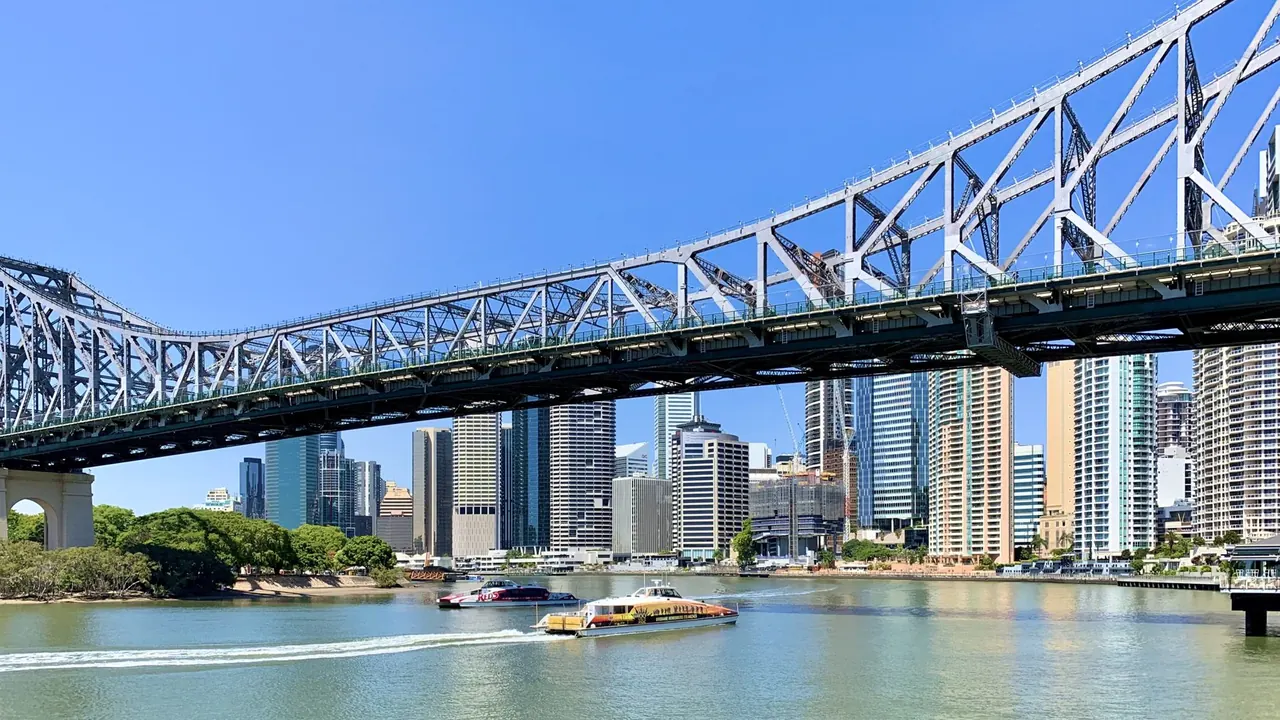
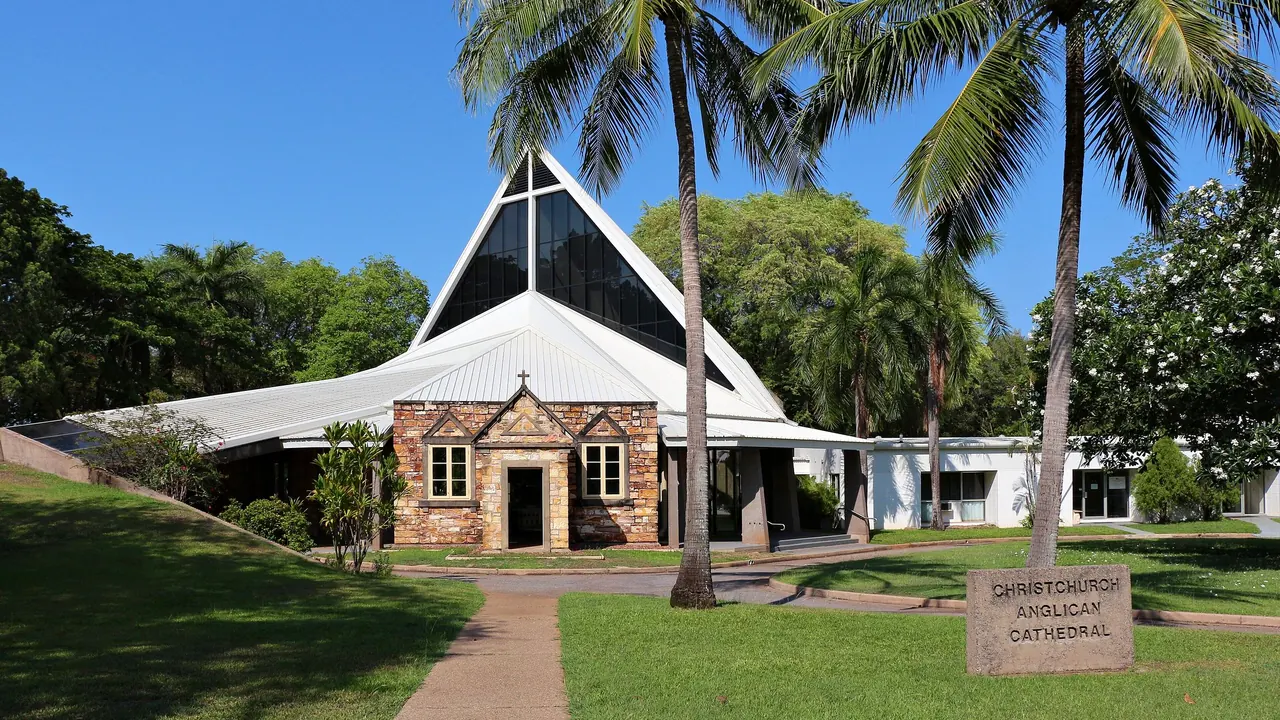
Photos: Brisbane by Kgbo, CC BY-SA 4.0, cropped; Darwin by Bernard Gagnon, CC BY-SA 4.0, cropped.
Brisbane or Darwin?
Our verdict in twelve categories, each scored against the same fixed benchmark cities, and the climate month by month, so you can choose for your trip.
Choose Brisbane for
- beaches
- day trips
- live music and the arts
Brisbane is the better all-round choice. It is a river city with free galleries at South Bank, a proper performing arts centre and a lively going-out district, and the surf beaches of the Gold and Sunshine coasts lie about an hour either side. It suits families, people on their first trip to Australia and anyone who wants easy days out by train or ferry, with rainforest walks in the hinterland when they have had enough of the beach.
Choose Darwin for
Darwin does not lead in any category we score.
Pick Darwin when the landscape is the point. The city itself is small, the sea is not for swimming and you will need a car or tours. In return you get waterfalls and spring-fed pools at Litchfield, saltwater crocodiles on the Adelaide River, the road towards Kakadu and galleries full of art from Arnhem Land and the Tiwi Islands. It rewards travellers who come in the dry season for wildlife and the edge of the outback rather than for the city.
Scoreboard
Twelve categories on one fixed scale from 0 to 100. The shaded stretch is the gap between the two.
Your match
Pick a travel style or drag the sliders, and both match scores follow your weighting.
Wins on beaches and day trips with your weighting.
Has no clear advantage with the weighting you have chosen.
What matters to you?
Category by category
What the scores mean for a trip.
Beaches & swimming
Brisbane is clearly the better choice for a sea swim, even though it has no surf of its own. The long, patrolled beaches of the Gold Coast and the Sunshine Coast are about an hour away, and North Stradbroke and Moreton islands, across the bay, have emptier sand and clearer water. In town, the South Bank lagoon and the big outdoor pools fill the gap. The bayside at Wynnum and Redcliffe is calm but muddy at low tide.
Darwin's beaches at Mindil, Casuarina and East Point are right in town, but box jellyfish and saltwater crocodiles keep locals out of the sea. The sand is for sunsets and markets. For a swim you go to the netted Waterfront lagoon, the wave pool or the waterholes of Litchfield, and some of those close in the wet.
Food & drink
Brisbane has much more depth. There are polished dining rooms around Fortitude Valley and James Street, cheap immigrant cooking in West End and breweries in the Newstead and Teneriffe warehouses. A strong café culture runs on local mangoes, prawns and Moreton Bay bugs.
Darwin's food is narrower but leans further towards Southeast Asia. The meals to plan around are laksa at Parap on a Saturday and the sunset market at Mindil Beach in the dry season, and barramundi and mud crab are on most menus. After a few days, though, you run short of restaurants.
Culture & sights
Brisbane has more to see. At South Bank the Queensland Art Gallery, the Gallery of Modern Art, the State Library and the Queensland Museum stand together, and the city adds colonial sandstone buildings and the timber Queenslander houses of Paddington and New Farm.
Darwin has fewer sights, but they are closely tied to its own story: Aboriginal art and the Cyclone Tracy gallery at Fannie Bay, the wartime oil tunnels and the gun emplacements at East Point. Neither centre has much old architecture, and an afternoon's walk covers Darwin's few stone survivors.
Nightlife
Going out is bigger and more varied in Brisbane. Fortitude Valley packs pubs, rooftop bars and clubs around its malls, while West End, Paddington and the Eagle Street riverfront add neighbourhood pubs, craft beer and terraces with skyline views.
Darwin has a single strip, Mitchell Street, where open-air pubs and backpacker bars get loud at weekends and through the dry season. Beyond a sunset drink on the waterfront or at the sailing club there is little else, and almost no clubbing.
Nature & outdoors
Both cities are strong for the outdoors, but the landscapes could hardly be less alike. Brisbane's is green and good for walking: Mount Coot-tha and D'Aguilar on the edge of the city, the Gondwana rainforest of Lamington and Springbrook, the Glass House Mountains, and dunes, dolphins and whales out in Moreton Bay.
Darwin's is wilder and more about watching animals: the waterfalls and termite mounds of Litchfield, crocodiles and birdlife on the Adelaide and Mary river wetlands, and Kakadu beyond. Both are at their best from May to September, but Darwin's wet season can close roads altogether.
Day trips
Brisbane offers a far wider choice of days out. You can take the train to the Gold Coast or go up to Noosa, visit the gallery and winery villages of Montville, Maleny and Tamborine Mountain, or cross the range to Toowoomba. Historic towns are few, but there is plenty of variety.
From Darwin, nearly every outing goes to a national park or a wetland. The main exceptions are the Tiwi Islands, reached by plane or ferry, and the war cemetery at Adelaide River, while Katherine is a long day away.
Good for families
Brisbane is the easier city with children. The free South Bank lagoon, the Queensland Museum's science centre, the koalas at Lone Pine and the river ferries are all close to the centre. The Gold Coast theme parks and Australia Zoo are about an hour away.
Darwin makes a memorable trip for children who love animals, with huge crocodiles to see in the centre, jumping-crocodile cruises and the netted Waterfront lagoon. But the sea is not for swimming, the heat wears small children out and most outings need a car.
Getting around
Brisbane is much easier without a car, at least inside the city. The CityCat ferries also make a good sightseeing ride along the river. Suburban trains run out to the bay, and one line goes through to the Gold Coast. Busways fill the gaps, and trains, buses and ferries all use one fare system. The rainforest parks, the hinterland villages and most trips along the coast are still far easier by car.
Darwin's centre is small enough to walk when the heat allows, but the buses don't run often and there is no train for visitors. For Litchfield, the wetlands and anything further out, you need a hire car or a tour.
Shopping & style
Brisbane suits the general shopper better. It has the department stores of the Queen Street Mall, heritage arcades, a few luxury labels on Edward Street, local fashion on James Street and the antique shops along Paddington's ridge road.
Darwin has one thing Brisbane cannot match: paintings, bark art and weavings from Arnhem Land, the Tiwi Islands and the desert, best bought from galleries linked to community art centres. Beyond that, it is everyday malls and souvenirs from the markets.
Affordability
Both are expensive in the usual Australian way, with dear restaurant meals and drinks, and neither is much cheaper than the other. The difference is where the money goes. In Brisbane most of it goes on hotels and restaurants, and cheap public transport, free galleries and the free lagoon help to offset that.
In Darwin the city costs about the same, but getting out of it adds a hire car or guided tours, and rooms are pricey in the dry season. The markets and the cheaper rooms of the wet season are the main savings.
Live music & performing arts
Brisbane has a real year-round scene. The Queensland Performing Arts Centre houses the state's symphony, opera, ballet and theatre companies, the Powerhouse in New Farm puts on comedy and cabaret, and the music rooms of Fortitude Valley carry on the city's long record of producing bands.
Darwin comes alive for its festival each August, with outdoor stages and Aboriginal performance. For the rest of the year there are touring shows at the Entertainment Centre, local theatre at Brown's Mart and cover bands on Mitchell Street.
Wellness & relaxation
Neither city has a bathing tradition, but Brisbane is the more restful. It has heritage pools such as the Spring Hill Baths, slow café mornings by the river, and rainforest spa lodges in the hinterland about an hour and a half away.
Darwin has hotel day spas, sunsets on the foreshore and the spring-fed pools at Berry Springs, which are lovely in the dry season. From October to April, though, the heat and humidity make it tiring rather than restorative.
When should you go?
Pick your month. The climate figures are measured averages, not a forecast.
Brisbane in July
Darwin in July
Daytime high, °C
Rainfall in the month, mm
Temperature and rainfall are climate normals, averaged over the years shown. Brisbane: 1991-2020 normals, Brisbane (4.5 km from centre). Darwin: 1991-2020 normals, Darwin Airport (7.7 km from centre).
Brisbane is pleasant all year. Summer highs sit around 30°C and the sea warms to 26°C, so November to April is the time for beach days, though the heaviest rain also falls from December to March, often as storms. Winter brings dry, sunny days near 22°C, which is ideal for walking the city and hiking in the hinterland, but the sea is too cool for most swimmers then.
Darwin really has only two seasons. It is hot every month, reaching 34°C in the sticky weeks before the rains, and from December to March the wet brings huge downpours, with January alone close to 470mm. The dry season from May to September is almost rainless and very sunny, and it is clearly the best time to go. It also falls in Brisbane's cooler months, so a winter trip can combine the two.
Which traveller are you?
On a beach and sun trip, Brisbane is the clear pick. The Gold and Sunshine coasts have long patrolled surf beaches about an hour away. Darwin's sand is lovely at sunset, but box jellyfish and crocodiles keep everyone out of the sea.
On a family trip with young children, Brisbane is far easier. It has the free South Bank lagoon, koalas at Lone Pine, ferry rides and theme parks within reach. Darwin's crocodiles thrill children, but the heat and the long drives tire small ones.
For a culture and arts trip, Brisbane has more to fill both days and evenings: the South Bank galleries and the opera, ballet and symphony at the Queensland Performing Arts Centre. Darwin rewards a shorter, focused visit for Aboriginal art and its wartime history.
Before you go
| Measure | Brisbane | Darwin |
|---|---|---|
| Official language | English | English |
| Currency | Australian Dollar (AUD) | Australian Dollar (AUD) |
| Sockets | I230 V, 50 Hz | I230 V, 50 Hz |
| Driving side | Left | Left |
| Time zone | UTC+10 | UTC+9:30 |
| Emergency number | 000 | 000 |
| Elevation | 0 m | 0 m |
| Main airport | Brisbane International Airport (BNE)13 km from centre88 non-stop destinations | Darwin International Airport / RAAF Darwin (DRW)5 km from centre20 non-stop destinations |
| Public holidays this year | 11 days | 12 days |
By the numbers
| Measure | Brisbane | Darwin |
|---|---|---|
| City population | 2,706,966 | 139,902 |
| People per km² | 171 | 3,446 |
| Museums within 10 km | 17 | 6 |
| UNESCO World Heritage sites within 50 km | 0 | 0 |
| Swim season, months above 21 °C | 9 months | 12 months |
Where else could you go?
Every comparison below shares a destination with this one, so you can follow Brisbane or Darwin somewhere new.
- Gold Coastvs Brisbane
- Noosavs Brisbane
- Byron Bayvs Brisbane
- Sydneyvs Brisbane
- Canberravs Brisbane
- Melbournevs Brisbane