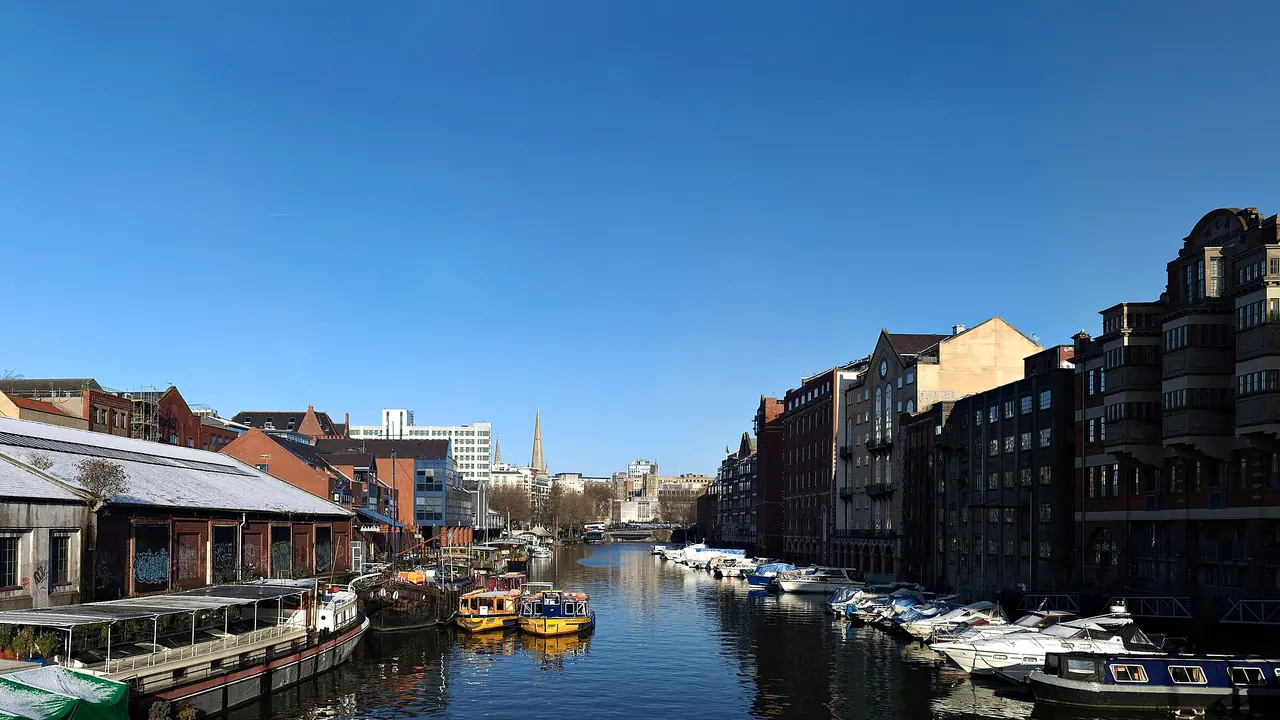
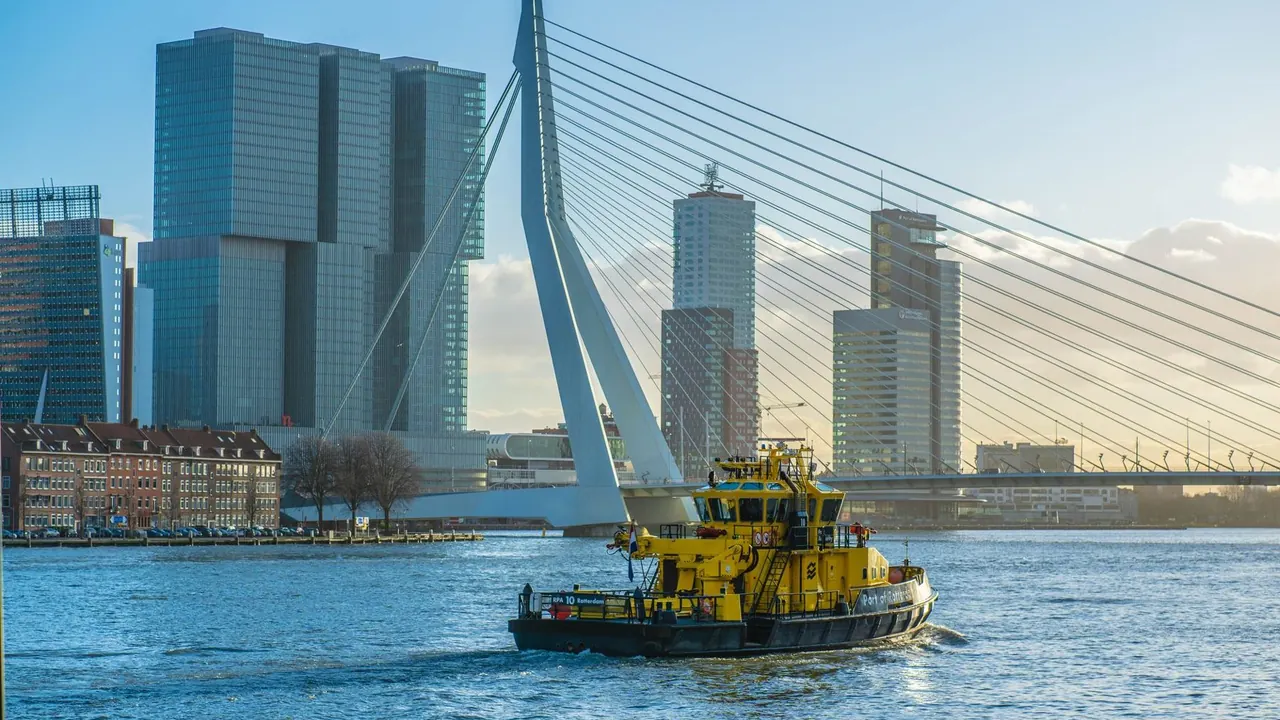
Photos: Bristol by NotFromUtrecht, CC BY-SA 3.0, cropped; Rotterdam by Bas Geerlings, Pexels License.
Bristol or Rotterdam?
Our verdict in twelve categories, each scored against the same fixed benchmark cities, and the climate month by month, so you can choose for your trip.
Choose Bristol for
- nature and the outdoors
- nightlife
- food and drink
Bristol suits travellers who want a hilly, characterful city with green country close by. The Avon Gorge, Leigh Woods and the Mendips are all within easy reach, Georgian Clifton and Brunel's engineering give the sightseeing a strong sense of history, and the club and live music scene has a sound of its own and stays busy all year. Bath is a short train ride away, so a slower, older kind of England is never far off.
Choose Rotterdam for
- getting around
- beaches
- day trips
Rotterdam is the better choice for anyone who values ease. Trams, metro and water taxis make it simple to get around, it is flat and calm with children, and its rail links put Delft, The Hague, Amsterdam and Antwerp within a day's reach. Come for postwar architecture, diaspora cooking and big weekend techno nights, and expect a modern port city rather than an old town.
Scoreboard
Twelve categories on one fixed scale from 0 to 100. The shaded stretch is the gap between the two.
Your match
Pick a travel style or drag the sliders, and both match scores follow your weighting.
Too close to call, 2 points apart
Wins on nature and the outdoors and nightlife with your weighting.
Wins on getting around and beaches with your weighting.
What matters to you?
Category by category
What the scores mean for a trip.
Beaches & swimming
Rotterdam has a real beach and Bristol does not. Hoek van Holland is a wide North Sea strand backed by dunes, with ships passing close offshore, and the metro takes you there directly. The wind and cool water mean it is mostly for walks and summer weekends rather than long swims.
Bristol sits on the muddy, silt-brown Severn estuary, where the huge tides make even Weston-super-Mare's sands awkward for bathing. Its best water is the Victorian marine lake at Clevedon, and it suits cold-water dippers far better than sunbathers.
Food & drink
Both cities eat well without a cuisine to call their own, but the flavour differs. In Bristol, the interest lies in independents: the covered stalls of St Nicholas Market, container kitchens on the harbourside, bakeries along Gloucester Road and West Country produce. Drinking is the local part, from scrumpy and old cider houses to warehouse taprooms.
Rotterdam's food reflects its port and its migrants. Surinamese roti, Turkish bakeries and Indonesian and Cape Verdean kitchens cluster around the Witte de Withstraat and the Nieuwe Binnenweg, and the Markthal gathers stalls under its painted vault.
Culture & sights
The two are evenly matched, but one is about the past and the other about rebuilding. Bristol's sights are trading-port and Victorian ones: the SS Great Britain in its dry dock, the Clifton Suspension Bridge over Georgian crescents, and St Mary Redcliffe. Banksy's early street art adds a modern layer.
Rotterdam lost its old centre in 1940 and is now visited for modern architecture: the Erasmus Bridge, the Cube Houses, the mirrored Depot Boijmans and the towers of the Kop van Zuid. Old Rotterdam survives mainly in Delfshaven.
Nightlife
Bristol is the better night out. The sound-system culture behind trip hop, drum and bass and dubstep still fills warehouses and railway arches around Temple Meads, and a large student population keeps things going through the week. Stokes Croft adds scruffier, creative bars.
Rotterdam's bar streets around the Witte de Withstraat and the Oude Haven are pleasant but low-key. Its clubs are the strong point: this is the home of gabber, and its harbour techno nights draw people from across the country. On ordinary weeknights, though, the centre goes quiet early.
Nature & outdoors
Bristol has much more to offer outdoors. Inside the city you have the Downs, the limestone cliffs of the Avon Gorge, Leigh Woods and the deer park at Ashton Court, plus a traffic-free railway path to Bath. Beyond them are the caves of Cheddar, the Wye Valley and proper upland walking in the Brecon Beacons and on Exmoor.
Rotterdam's outdoors is flat and made by people. You cycle along dykes into the polders, sail on the lake in the Kralingse Bos, or canoe and watch birds among the willow islands of the Biesbosch. It is pleasant but has no hills.
Day trips
Both cities make excellent bases, and Rotterdam has a slight edge because of the dense Dutch rail network. Delft and The Hague are minutes away, and Amsterdam, Utrecht, Leiden and Haarlem are all an easy day by fast train, with Antwerp, Bruges and Ghent to the south. The windmills of Kinderdijk can be reached by water bus.
From Bristol, Bath is just as close and Cardiff is under an hour by train. Wells, Glastonbury, the Cotswold villages, Stonehenge and Avebury are best reached with a car.
Good for families
Rotterdam is the easier family city. Its flat streets, wide pavements and trams take the strain out of moving around with small children. Blijdorp is one of the best zoos in the Netherlands, and the Maritime Museum has a hands-on harbour area. Madurodam is a short train ride away, and the Efteling theme park is about an hour away by car.
Bristol is welcoming too, with the SS Great Britain, the We The Curious science centre and the aquarium on the harbourside, all linked by little ferries. Its steep hills are hard work with a pushchair, though, and there is no large theme park nearby.
Getting around
Rotterdam is far easier to get around. Metro, trams and buses share one tap-in system, water taxis cross the Maas, the metro runs all the way to the beach, and there are separate cycle paths almost everywhere. The postwar centre is spread out, but a tram is always close.
Bristol's core is compact enough to walk, and yellow ferries cross the Floating Harbour. However, the climb to Clifton is steep, and with no metro or tram, anything further out depends on buses that get stuck in traffic.
Shopping & style
There is little between them. Rotterdam has the tidier high street, with the pedestrian Lijnbaan, the Beurstraverse and the Bijenkorf all close together, and a large market on the Binnenrotte. Its vintage and design shops are on the Meent and the Nieuwe Binnenweg.
Bristol's chains sit in Cabot Circus and Broadmead, but its character is on Gloucester Road, a long run of independent record shops, delis and vintage clothes shops, and in the Georgian arcades of Clifton Village. Neither city is a place for luxury labels.
Affordability
Neither city is cheap, but you save money in different places. In Bristol, most of the main museums and churches are free and the compact centre saves on fares, but hotels fill up and get dearer at weekends.
Rotterdam is the reverse: hotels in business districts empty out at weekends, while restaurants, beer and coffee cost the high Dutch norm. Its inexpensive trains also make it a sensible base for the wider region.
Live music & performing arts
The two are level, but strong in different ways. Rotterdam has the bigger classical and jazz offer: its Philharmonic plays a full season at De Doelen, and the North Sea Jazz Festival fills a July weekend with hundreds of acts. Much of its theatre is in Dutch.
Bristol is better for theatre in English and grassroots gigs. The Georgian Bristol Old Vic produces its own work, the Tobacco Factory stages Shakespeare, and small venues around Stokes Croft and Old Market have bands most nights.
Wellness & relaxation
Neither city is built for slowing down, but each offers a different way to bathe. From Bristol, Bath's naturally hot springs are a quarter of an hour away by train, and at home you have the heated Victorian lido in Clifton and cold dips in the Severn tidal pools.
Rotterdam's version is the Dutch sauna complex, with saunas, steam rooms and outdoor pools on the edge of the city. The sauna areas are usually textile-free, so check the house rules before you go.
When should you go?
Pick your month. The climate figures are measured averages, not a forecast.
Bristol in July
Rotterdam in July
Daytime high, °C
Rainfall in the month, mm
Where the figures come from
Bristol's station stands 178 m above the city centre, so the centre is likely a little warmer than the figures say.
Bristol has no rain gauge within 25 km of the centre, so its rainfall comes from a gridded climate dataset read at the city rather than from a gauge further away.
Bristol's sunshine is measured 43 km from the centre, at Lyneham.
Rotterdam has no rain gauge within 25 km of the centre, so its rainfall comes from a gridded climate dataset read at the city rather than from a gauge further away.
Rotterdam's sunshine is measured 52 km from the centre, at De Bilt.
Temperature and rainfall are climate normals, averaged over the years shown. Bristol: 1991-2020 normals, Lulsgate Bottom (11.8 km from centre). Rotterdam: 1993-2020 (sunshine 1991-2020, rainfall 1991-2020) normals, Rotterdam Airport Zestienhoven (3.9 km from centre).
The two climates are close, and both cities are at their best from late May to September. Rotterdam is a little warmer in high summer, with highs around 22°C in July and August against about 20°C in Bristol. Rotterdam's spring is also noticeably drier and slightly sunnier, with April the driest month at 44mm. In July and August the pattern flips: Rotterdam has its wetter summer months, while Bristol stays steadier through midsummer. Neither sea gets much above 18°C even in August, so beach days are for walking more than swimming.
From October to December both cities are grey, short of sunshine and wet, with close to 100mm a month. Winter highs stay in single figures. Neither is too cold for a city break with a good coat, but the parks, gorges and dykes are far more inviting between May and September.
Which traveller are you?
For an outdoors trip, Bristol is the stronger choice. Green country and real climbing begin at the edge of the city, and caving and upland hiking are within a couple of hours. Rotterdam's flat land suits a gentle bike ride or a canoe, not a serious walker.
On a family trip with young children, Bristol's harbourside attractions are fun, but the hills soon wear out small legs. Rotterdam asks less of parents: one tap-in card covers every journey, nothing involves a climb, and the boat rides double as entertainment.
For a food and nightlife trip, Bristol is the better bet. Independent kitchens and cider lead into clubs with their own sound, and students keep them busy all year. Rotterdam has good diaspora cooking and big techno weekends, but ordinary nights end early.
Before you go
| Measure | Bristol | Rotterdam |
|---|---|---|
| Official language | English | Dutch |
| Currency | Pound Sterling (GBP) | Euro (EUR) |
| Sockets | G230 V, 50 Hz | CF230 V, 50 Hz |
| Driving side | Left | Right |
| Time zone | UTC, UTC+1 in summer | UTC+1, UTC+2 in summer |
| Emergency number | 112 or 999 | 112 |
| Elevation | 11 m | 10 m |
| Main airport | Bristol Airport (BRS)11 km from centre117 non-stop destinations | Rotterdam The Hague Airport (RTM)5 km from centre53 non-stop destinations |
| Public holidays this year | 8 days | 11 days |
By the numbers
| Measure | Bristol | Rotterdam |
|---|---|---|
| City population | 472,465 | 664,311 |
| People per km² | 4,311 | 2,080 |
| Museums within 10 km | 23 | 41 |
| UNESCO World Heritage sites within 50 km | 3 | 5 |
| Swim season, months above 21 °C | None | None |
Where else could you go?
Every comparison below shares a destination with this one, so you can follow Bristol or Rotterdam somewhere new.
- Bathvs Bristol
- The Haguevs Rotterdam
- Cardiffvs Bristol
- Utrechtvs Rotterdam
- Haarlemvs Rotterdam
- Amsterdamvs Rotterdam