Brittany or Devon?
Our verdict in twelve categories, each scored against the same fixed benchmark cities, and the climate month by month, so you can choose for your trip.
Choose Brittany for
- getting around
- wellness
- culture and sights
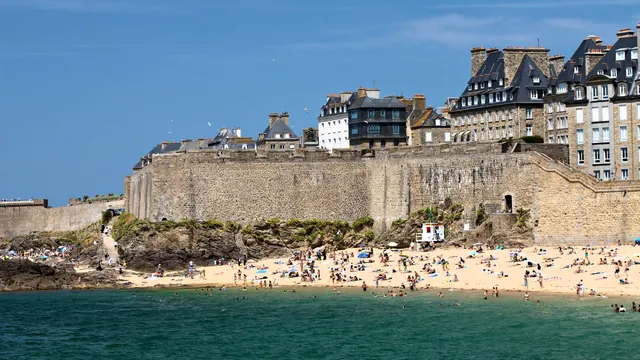
Brittany is the stronger choice for a seaside trip that also has plenty to see and eat. You can spend a day at the Carnac standing stones, walk the walls of Saint-Malo, eat oysters in Cancale and take a boat out to an island. The sea is a touch warmer, the thalassotherapy spas give a wet day a purpose, and the summer festivals bring the Celtic music to life. Trains to the main towns and toll-free roads make it easier to get about, and it is kinder to the budget.
Choose Devon for
- nature and the outdoors
Devon rewards travellers who want the high open moor as much as the coast. Dartmoor and Exmoor offer a wildness that Brittany's low interior does not, the north coast surf beaches are excellent, and the rhythm of cottage, pub and cream tea is gentle and unhurried. It also suits anyone already in Britain who would rather not cross the Channel. In return you accept a car on narrow lanes, colder water and higher prices in the school summer break.
Scoreboard
Twelve categories on one fixed scale from 0 to 100. The shaded stretch is the gap between the two.
Your match
Pick a travel style or drag the sliders, and both match scores follow your weighting.
Wins on getting around and wellness with your weighting.
Wins on nature and the outdoors with your weighting.
What matters to you?
Category by category
What the scores mean for a trip.
Beaches & swimming
Brittany has much more beach, and a wider range of it. In the south there are the broad sandy bays of Carnac, Quiberon and Bénodet. In the north you get the pink granite coves of Ploumanac'h, and the long strands of the Crozon peninsula lie in the west. The sheltered Gulf of Morbihan and the south-facing bays take some of the chill off the sea, though the big tides decide which beach works on a given day.
Devon's best sand is on the north coast. Woolacombe and Saunton are long, open and lifeguarded in summer, while Croyde next door is the surfers' beach. The south coast adds estuary sand around Bantham and Bigbury, shingle coves and the red-cliffed Torbay resorts. The water off Devon is a shade colder, so most people swim in short bursts or wear a wetsuit.
Food & drink
Both feed you from the harbour and the dairy, but Brittany's food culture runs deeper. Shellfish platters, Cancale oysters and Saint-Brieuc scallops sit alongside buckwheat galettes, cider drunk from a bowl and salted butter in everything, with a crêperie and a market in every town.
Devon's highlights are Brixham fish, Salcombe and Dartmouth crab, clotted cream and farmhouse cheese. The good cooking is concentrated in Dartmouth and a few estuary and moorland pubs, while the resort seafronts lean towards chips.
Culture & sights
Brittany has more to see, and more of it is memorable. The thousands of menhirs at Carnac are among Europe's great prehistoric sites. On top of that come the corsair ramparts of Saint-Malo, the half-timbered streets and castles of Dinan, Vitré and Josselin, and the distinctly Breton parish closes in the west.
Devon's high point is Exeter Cathedral, with its long Gothic vault. Beyond it are Plymouth's Barbican and a spread of country houses such as Castle Drogo and Greenway. They make pleasant outings rather than a reason to plan a trip.
Nightlife
Neither is a place to go out, but Brittany offers a little more. Rennes has student bars along Rue Saint-Michel and a few late clubs, the summer resorts stay busy into the evening, and a village fest-noz gives you dancing that Devon has no equivalent for. In Devon the evening usually means a pub by the harbour or on the moor, and only Exeter and Plymouth come alive at weekends.
Nature & outdoors
Both are excellent for outdoor trips, but the landscapes differ. Brittany looks outward to the sea. The GR34 follows the shore past Cap Fréhel and Pointe du Raz, boats reach Belle-Île and Ouessant, the Sept-Îles hold puffins and gannets, and the Gulf of Morbihan suits kayaking. Inland it is low and gentle.
Devon has real upland. Dartmoor's tors and ponies and Exmoor's high sea cliffs give you a full day's walking away from roads, and the Jurassic Coast and the surf at Croyde add to the coast. Choose Brittany for islands and water, Devon for moor and hill.
Day trips
Brittany has the better outings, and many of them are by boat. Mont-Saint-Michel is about an hour from Saint-Malo, ferries cross to Belle-Île, Bréhat and Ouessant, and the old capital of Nantes is within reach in the south-east.
Devon's trips are good but mostly by car. They include a Dart river boat between Totnes and Dartmouth, cobbled Clovelly, a sail to Lundy and Cornwall's Eden Project in the west. Bath is the standout by train from Exeter, while summer traffic slows the drives.
Good for families
Both are traditional family seaside regions and work equally well for children. Brittany leans towards sailing and kayaking schools, campsites and crêpes, with Océanopolis in Brest for a wet day, though the tides are strong. Devon's lifeguarded, gently shelving beaches at Woolacombe and Bigbury are easier for toddlers. Paignton Zoo, steam railways and Dartmoor's ponies keep the rest of the week busy.
Getting around
Brittany is easier to get around. Fast trains reach Rennes from Paris in about an hour and a half, and regional lines serve Saint-Malo, Vannes, Quimper and Brest. Toll-free dual carriageways make the drive to the coast straightforward.
Devon has main lines to Exeter, Plymouth and Torbay, including the scenic stretch along the sea wall at Dawlish. Beyond them a car is essential, and that means single-track lanes between high hedges, reversing to passing places and tight parking in the harbour towns.
Shopping & style
Shopping is a sideline in both, and Brittany has only a small edge. Its souvenirs are distinctive: Quimper faience, striped sailor tops and Guérande salt. The Saturday market at Place des Lices in Rennes is a destination in its own right. Devon's best shopping is the independent shops of Totnes, the antiques of Honiton and the cheese and cider from farm shops.
Affordability
Brittany is the cheaper of the two. Campsites, gîtes, crêperies and toll-free roads keep costs down, and June and September cost noticeably less. Only the seafood platters and the smart resorts push bills up.
Devon is expensive during the school summer break, especially in Salcombe-style harbour towns and the surf villages. Parking and admission charges add up. Torbay, Plymouth and spring or autumn stays are better value, and the coast path costs nothing.
Live music & performing arts
Brittany has the stronger live music scene, and it is rooted in a living tradition. Bagad pipe bands and fest-noz nights are part of village life. In August the Festival Interceltique fills Lorient, and Les Vieilles Charrues and the Festival de Cornouaille add to the summer, with an opera house in Rennes the rest of the year.
Devon's offer is a good night out rather than a reason to visit. Plymouth's Theatre Royal stages touring shows, and you will also find Dartington's summer music, cathedral concerts in Exeter and folk sessions in country pubs.
Wellness & relaxation
Brittany is one of the homes of seawater therapy, which began in Roscoff, and full thalassotherapy centres with heated seawater pools sit on the front at Quiberon, Carnac, Dinard and Bénodet. You could plan a whole spring or autumn stay around them.
Devon has no such tradition. Its restorative side comes from country-house spa hotels, the Art Deco Tinside Lido in Plymouth, year-round cold-water swimming in the south coast coves and the slow pace of its estuary villages.
When should you go?
Pick your month. The climate figures are measured averages, not a forecast.
Brittany in July
Devon in July
Daytime high, °C
Rainfall in the month, mm
Where the figures come from
Brittany has no rain gauge within 25 km of the centre, so its rainfall comes from a gridded climate dataset read at the destination rather than from a gauge further away.
Brittany's sunshine is measured 89 km from the centre, at Rennes.
Devon's temperatures are measured 31 km from the centre, at Exeter Airport.
Devon has no rain gauge within 25 km of the centre, so its rainfall comes from a gridded climate dataset read at the destination rather than from a gauge further away.
Devon's sunshine is measured 44 km from the centre, at Plymouth.
Temperature and rainfall are climate normals, averaged over the years shown. Brittany: 2004-2020 (sunshine 1991-2020, rainfall 1991-2020) normals, Vannes-Meucon (8.1 km from centre). Devon: 1973-2025 (sunshine 1981-2010, rainfall 1991-2020) normals, Exeter Airport (31.1 km from centre).
The two share a mild, damp Atlantic climate and both are at their best from June to early September. Brittany is a little warmer in every season. Around the main resort areas, July days reach about 24°C there against 22°C in Devon, and the sea peaks at 18°C off Brittany against 17°C off Devon. Swimming is slightly less bracing in Brittany, but cold in both. Neither gets too hot for walking around the towns, and June is the driest month in both.
Sunshine is more mixed. In May and June Devon is actually a little sunnier, while April and July are level. Brittany pulls ahead at either end of the season, with a much brighter March and a September that keeps its summer light while Devon's turns greyer. That makes Brittany the better choice for a late-season stay. From October heavy rain sets in on both sides of the Channel and lasts through to the new year. Winters are cool and wet rather than cold, which is fine for brisk coastal walks but not for the beach.
Which traveller are you?
On a culture and arts trip, Brittany is the clear choice. The Carnac alignments, the walled towns of Dinan, Vannes and Concarneau and the parish closes of Finistère outweigh Devon's single great cathedral and scattered country houses, and the August Celtic festivals add a lot.
For a relaxing and wellness trip, Brittany wins. It is the birthplace of thalassotherapy, and seafront seawater spas line resorts from Quiberon to Perros-Guirec. Devon offers country-house spa hotels and cold-water swimming but has no comparable bathing tradition.
On an outdoors trip, the choice depends on the terrain you want. Devon has Dartmoor's tors and Exmoor's sea cliffs for long upland walks. Brittany suits those who want the sea itself, with kayaking in the Gulf of Morbihan, island walks and seabird colonies.
Before you go
| Measure | Brittany | Devon |
|---|---|---|
| Official language | French | English |
| Currency | Euro (EUR) | Pound Sterling (GBP) |
| Sockets | CE230 V, 50 Hz | G230 V, 50 Hz |
| Driving side | Right | Left |
| Time zone | UTC+1, UTC+2 in summer | UTC, UTC+1 in summer |
| Emergency number | 112 | 112 or 999 |
| Main airport | Nantes Atlantique Airport (NTE)97 non-stop destinations | Exeter International Airport (EXT)24 non-stop destinations |
| Public holidays this year | 11 days | 8 days |
By the numbers
| Measure | Brittany | Devon |
|---|---|---|
| Population | 4,687,381 | 1,209,773 |
| People per km² | - | 180 |
| Swim season, months above 21 °C | None | None |
Where else could you go?
Every comparison below shares a destination with this one, so you can follow Brittany or Devon somewhere new.
- Cornwallvs Devon
- Cotswoldsvs Devon
- Normandyvs Brittany
- Normandyvs Devon
- Loire Valleyvs Brittany
- Peak Districtvs Devon