Photos: Bruges by Michielverbeek, CC BY-SA 4.0, cropped; Cologne by Jörg Braukmann, CC BY-SA 4.0, cropped.
Bruges or Cologne?
Our verdict in twelve categories, each scored against the same fixed benchmark cities, and the climate month by month, so you can choose for your trip.
Choose Bruges for
- beaches
- culture and sights
- day trips
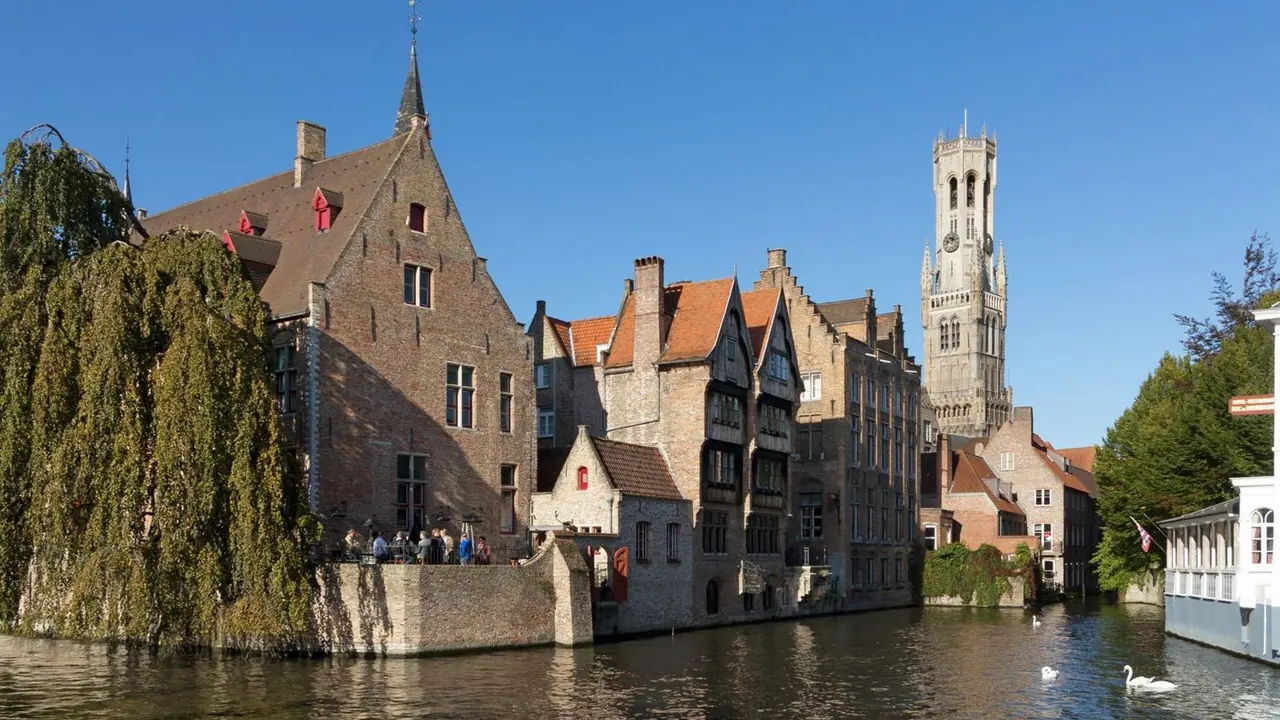
Bruges suits travellers who want the past to be the whole experience: a canal-ringed medieval town you can walk end to end, Flemish Primitives in the Groeninge Museum and Memling in St John's Hospital, and long evenings over Trappist ale in a brown café. It is a slow, romantic place for couples and art lovers, best at the edges of the day, and it doubles as an easy base for Ghent, Brussels and the coast.
Choose Cologne for
- nightlife
- live music and the arts
- nature and the outdoors
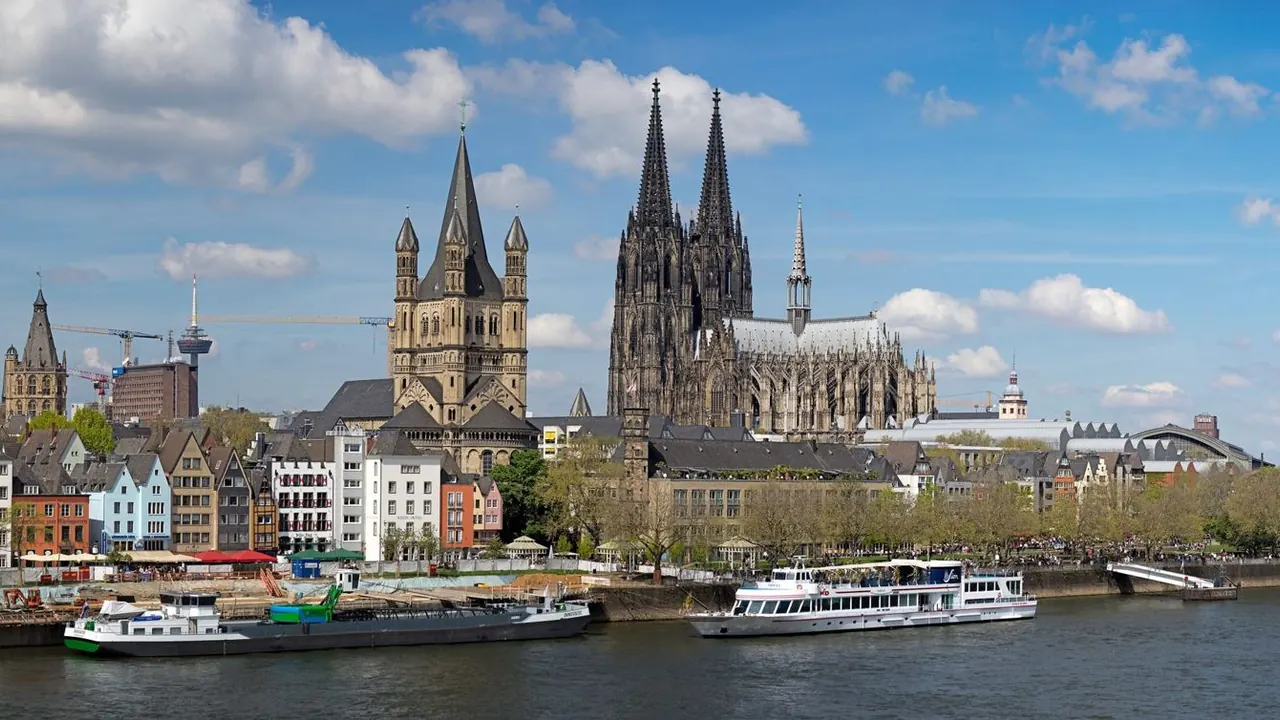
Choose Cologne if you want a working city with more going on after dark and more for every member of the group. The cathedral and the Romanesque churches give it real weight, but the edge lies in the opera, the Philharmonie, Ehrenfeld's clubs, the Kölsch brewhouses, Phantasialand for children and wooded hills within easy reach. It also costs a little less to stay.
Scoreboard
Twelve categories on one fixed scale from 0 to 100. The shaded stretch is the gap between the two.
Your match
Pick a travel style or drag the sliders, and both match scores follow your weighting.
Wins on beaches and culture and sights with your weighting.
Wins on nightlife and live music and the arts with your weighting.
What matters to you?
Category by category
What the scores mean for a trip.
Beaches & swimming
Neither is a beach destination, but Bruges at least has a real coast nearby. Fifteen minutes by train takes you to Blankenberge, and the coast tram runs past wide sandy beaches all the way to Knokke, even if the North Sea is cold for swimming.
Cologne has no sea within day-trip range, and the Rhine is too fast and busy to swim in. Its summer swimming happens in former gravel pits such as Fühlinger See, which warm up more than the North Sea but offer only small patches of sand.
Food & drink
Both cities eat around beer, and they come out roughly level, but the beer culture is very different. Bruges offers depth: long lists of Trappist and abbey ales, each in its own glass, alongside mussels, beef stewed in beer, waterzooi and serious chocolate. Its fine dining is mostly out in the surrounding villages.
Cologne's appeal is ritual rather than range: one local beer, Kölsch, served by Köbes in small glasses until you cover yours with a mat, with black pudding, sauerbraten and the Halve Hahn alongside. It is better for cheap, varied everyday eating, with Turkish and Middle Eastern food on Venloer Strasse, whereas in Bruges you have to leave the main squares to avoid tourist set menus.
Culture & sights
Bruges is the more complete historic experience. Its entire canal-ringed centre is a World Heritage site of guildhalls, gables and almshouses, and its art is of the first rank: van Eyck in the Groeninge, Memling in St John's Hospital and a Michelangelo Madonna in the Church of Our Lady. The catch is scale, since two days cover it and the streets fill with day-trippers by late morning.
Cologne has grand single monuments rather than a whole townscape, because most of the city was rebuilt plainly after the war. The cathedral, the twelve Romanesque churches and the Roman remains are outstanding, though. Its museums reach further in time than those of Bruges, from Kolumba's religious art to Museum Ludwig's Pop Art.
Nightlife
Cologne is by far the livelier night out. A typical evening moves from Altstadt brewhouses to cocktail bars in the Belgian Quarter, the packed student bars of Zülpicher Strasse or late clubs in Ehrenfeld's old factories. The city also has one of Germany's largest gay scenes around Rudolfplatz, and Carnival turns the streets into a party that runs for days.
Bruges offers a quieter pleasure: a long session over strong ales in a vaulted cellar or brown café near the Eiermarkt, then a walk along the lit canals. Beyond a couple of small weekend clubs there is little dancing, and on weeknights the town winds down well before midnight.
Nature & outdoors
Cologne gives far better access to walking country. Inside the city, the Grüngürtel parks and the Rhine meadows suit long walks. Within about forty minutes you reach the wooded volcanic hills of the Siebengebirge and the Drachenfels, and the Eifel's crater lakes and Ahr vineyards make good day hikes.
Bruges sits in flat polder land, lovely from a bike saddle but with no hills or forests. The towpath to Damme and the birdlife of the Zwin salt marsh are its outdoor highlights, and it is gentle countryside for an afternoon rather than a full day out.
Day trips
Both are excellent bases, and each points in a different direction. From Bruges, Flanders is close: Ghent in under half an hour, Brussels and Antwerp a little further, and the Ypres battlefields and the Belgian coast for something different.
From Cologne, fast trains reach Brühl's rococo palaces, Beethoven's Bonn, Düsseldorf and Charlemagne's Aachen. The castle-lined Rhine Gorge and Zollverein's industrial heritage add variety, and Maastricht and Liège sit just across the borders.
Good for families
Bruges is easy on parents because it is small, safe and short on distances, so tired legs are never far from the hotel. A canal boat, a carriage ride, the climb up the Belfry and the frites museum keep children happy for a day or two. Boudewijn Seapark, the beaches or the theme park near De Panne can add another outing, but after that most of the town's treasures are altarpieces and churches, and few children want to queue for those.
Cologne keeps a family busy for longer, because more of what it offers was made for children rather than for sightseers. Science centres and the adventure playgrounds in the Grüngürtel cover both wet and dry days, Rhine boat trips break up the week, and the riverside promenades have no cars to watch out for. Nobody minds children at the next table in a brewhouse either. Carnival is the exception, when the crowds and the drunken streets make it the wrong time to come with small children.
Getting around
Both are easy, but in different ways. Bruges is a place for walking and cycling: the whole old town fits inside the canal ring and can be crossed on foot in about half an hour, though the station is a walk away and the cobbles punish suitcases.
Cologne puts you right in the centre on arrival, because its main station stands beside the cathedral. For the Belgian Quarter, Ehrenfeld or the zoo you need its trams and Stadtbahn, which do the job but can be crowded and confusing to read.
Shopping & style
In Bruges, most of what you take home is edible: pralines from chocolate makers on almost every street, and bottles and matching glasses from specialist beer shops. Bobbin lace is the traditional craft, though much of it around the Markt is imported, and Steenstraat is mostly chains. The Saturday market on 't Zand and the flea market along the Dijver are good for a browse but not worth planning a trip around.
Cologne gives a shopper far more ground to cover. Schildergasse and Hohe Strasse are among Germany's busiest high streets, and Ehrenstrasse and the Belgian Quarter add independent fashion and design. Eau de Cologne from the historic Glockengasse perfume houses makes a souvenir with a real story behind it, and in Advent the Christmas markets are worth a trip of their own.
Affordability
Bruges is a small town that lives on its visitors, so the extra cost is there almost all year. A room inside the canal ring and a meal on the Markt cost more than they would elsewhere in nearly any week, and most of all at weekends and in summer. You save by choosing where and when: sleep near the station or outside the ring, come midweek, and eat a few streets back from the squares. Walking the old town costs nothing, and the train fares to Ghent or the coast are modest.
Cologne is a large working city, so in a normal week its hotels and brewhouse dinners cost what you would expect in any big city, and that is why it comes out cheaper. Its expensive spells are fixed points in the calendar: the big trade fairs at the Messe and Carnival, when rooms become scarce and rates climb. Avoid those dates and the money goes further than in Bruges, especially as the cathedral and the Romanesque churches are free to enter.
Live music & performing arts
Cologne has a full big-city stage. Its opera and the Schauspiel Köln share Offenbachplatz, and the Philharmonie by the cathedral is home to two major orchestras. Below that sit a long electronic music tradition, jazz, gigs most nights in Ehrenfeld and the Südstadt, and the dialect songs of the Carnival sessions.
Bruges is narrower but distinctive. The Concertgebouw specialises in early music, chamber music and contemporary dance, the summer early-music festival is known across Europe, and the Belfry carillon rings over the town. For opera or a wider choice, you take the train to Ghent or Brussels.
Wellness & relaxation
Cologne offers proper places to unwind. German sauna culture means large sauna landscapes with steam rooms and cold plunges, the Rheinpark thermal baths look across the river to the cathedral, and Aachen's hot springs are less than an hour away.
Bruges has only hotel and day spas, so its calm comes from the setting instead. Go early or late to the Begijnhof and the Minnewater, or spend the afternoon in the quiet Sint-Anna quarter, and the town feels very peaceful.
When should you go?
Pick your month. The climate figures are measured averages, not a forecast.
Bruges in July
Cologne in July
Daytime high, °C
Rainfall in the month, mm
Where the figures come from
Bruges has no rain gauge within 25 km of the centre, so its rainfall comes from a gridded climate dataset read at the city rather than from a gauge further away.
Bruges's sunshine is measured 37 km from the centre, at Vlissingen.
Temperature and rainfall are climate normals, averaged over the years shown. Bruges: 2009-2025 (sunshine 1991-2020, rainfall 1991-2020) normals, Zeebrugge / Zeemanshaard (15.8 km from centre). Cologne: 1991-2020 normals, Köln-Stammheim (5.4 km from centre).
The two share almost the same calendar: cold, grey winters, mild springs and a summer peak in July and August. Cologne runs a few degrees warmer, reaching about 25°C at its height against 22°C in Bruges, which makes it the better pick for warm evenings outdoors. Bruges is the sunnier of the two all year round. Its brightest months are May and June, and spring there is also notably dry, which makes April to June ideal for walking the canals and cycling to Damme.
Only Bruges has a sea within reach, and the North Sea tops out around 19°C in August, so a dip is brisk at best. Rain is spread through the year in both, heaviest in Cologne in high summer at about 81mm a month and wettest in Bruges from late summer through autumn. Neither city gets too hot for sightseeing. From November to February both are chilly and dark, though Cologne's Christmas markets give its Advent weeks a reason to go.
Which traveller are you?
For a food and nightlife trip, Cologne is the clear choice. The brewhouse ritual of endlessly refilled Kölsch leads on to Belgian Quarter bars, the Zülpicher Strasse student strip and Ehrenfeld's factory clubs, while Bruges is mostly asleep by midnight.
On a family trip with children, Cologne gives more to fill the days: an old zoo with an elephant park, the Chocolate Museum, the cable car to the Rheinpark playgrounds and Phantasialand nearby. Bruges charms young children for a day or two, but its cobbles defeat pushchairs.
For a short city break, Bruges is hard to beat. The whole medieval centre fits inside a half-hour walk, the Belfry, the Burg, the Begijnhof and the great Flemish paintings fill two full days, and nothing needs a tram.
Before you go
| Measure | Bruges | Cologne |
|---|---|---|
| Official language | French, German, Dutch | German |
| Currency | Euro (EUR) | Euro (EUR) |
| Sockets | CE230 V, 50 Hz | CF230 V, 50 Hz |
| Driving side | Right | Right |
| Time zone | UTC+1, UTC+2 in summer | UTC+1, UTC+2 in summer |
| Emergency number | 112 | 112 |
| Elevation | 2 m | 59 m |
| Main airport | Brussels Airport (BRU)94 km from centre191 non-stop destinations | Cologne Bonn Airport (CGN)15 km from centre115 non-stop destinations |
| Public holidays this year | 14 days | 11 days |
By the numbers
| Measure | Bruges | Cologne |
|---|---|---|
| City population | 118,509 | 1,025,523 |
| People per km² | 840 | 2,532 |
| Museums within 10 km | 38 | 40 |
| UNESCO World Heritage sites within 50 km | 3 | 3 |
| Swim season, months above 21 °C | None | - |
Where else could you go?
Every comparison below shares a destination with this one, so you can follow Bruges or Cologne somewhere new.