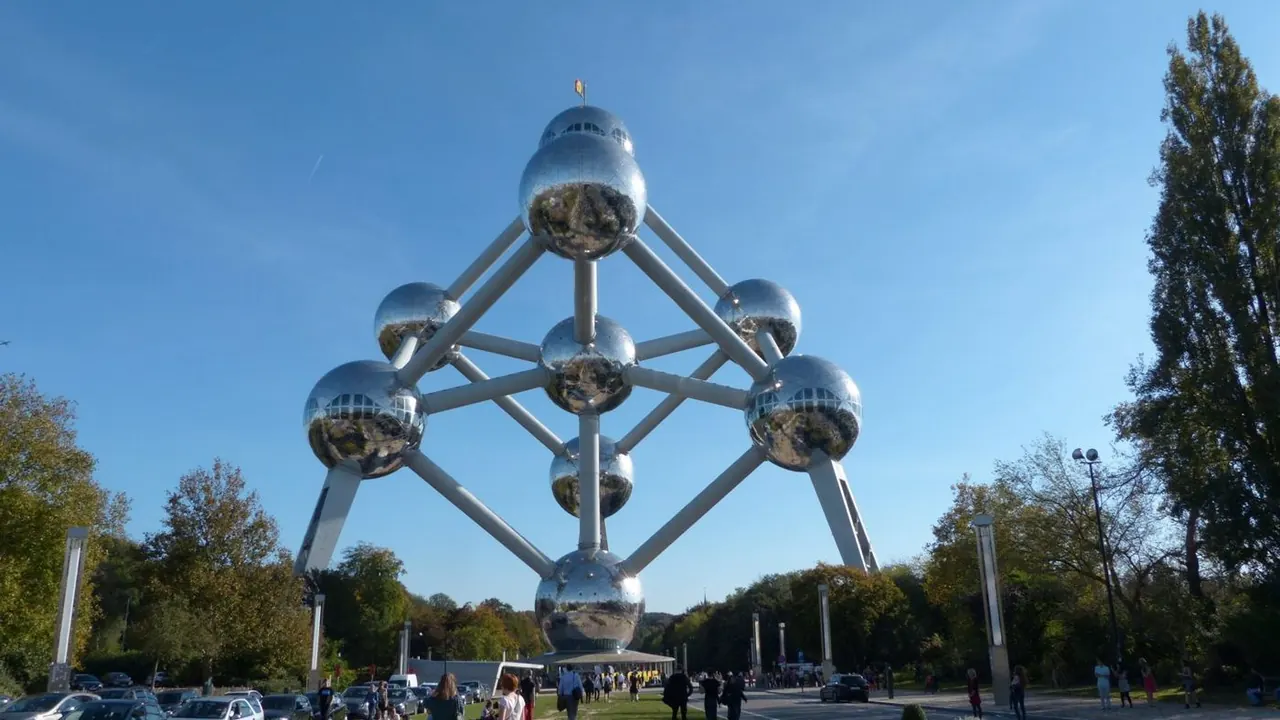
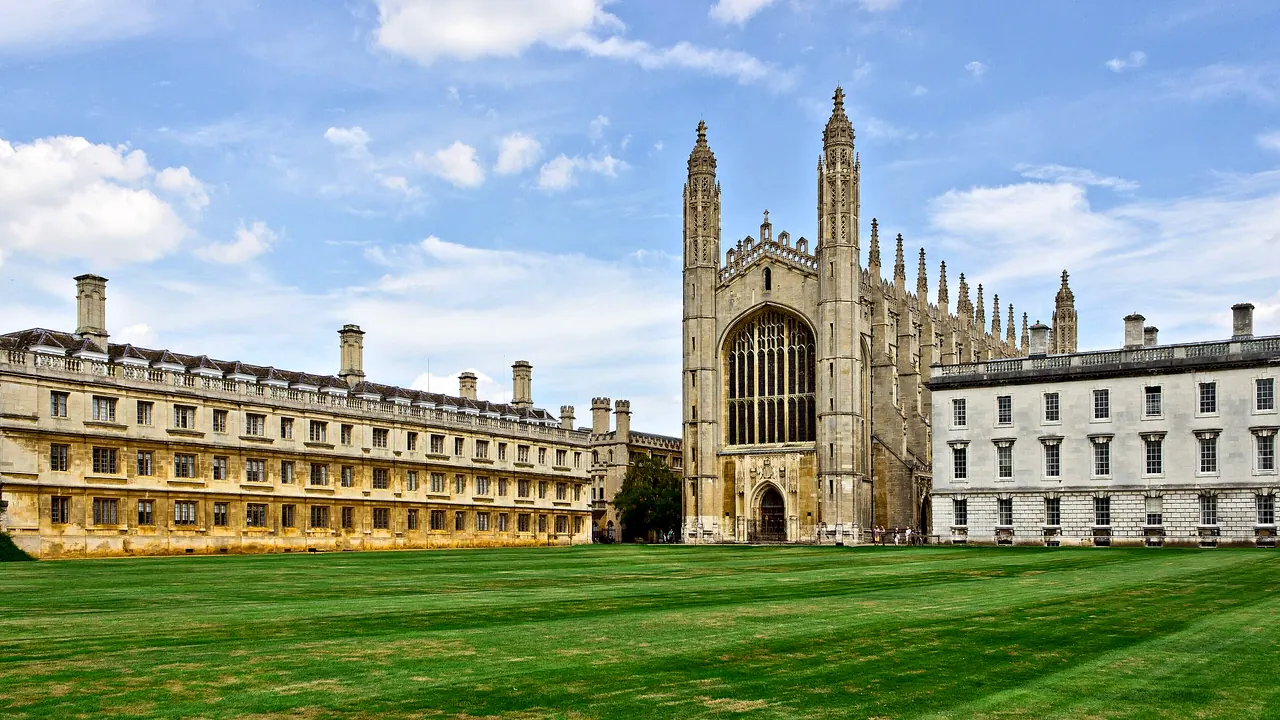
Photos: Brussels by Ettanghe, CC BY-SA 4.0, cropped; Cambridge by Dmitry Tonkonog, CC BY-SA 3.0, cropped.
Brussels or Cambridge?
Our verdict in twelve categories, each scored against the same fixed benchmark cities, and the climate month by month, so you can choose for your trip.
Choose Brussels for
- food and drink
- nightlife
- shopping
Brussels is the better pick for a trip built around eating, drinking and moving on. It has a serious beer and food culture, bars that stay busy late, an opera house and concert halls of real standing, and a train network that puts Ghent, Bruges, Antwerp and even Paris within easy reach. It is also the less expensive of the two, especially at weekends, and suits travellers who want a capital with range rather than a single polished centre.
Choose Cambridge for
- wellness
Cambridge is smaller and gentler, and its pleasures are concentrated: college courts and chapels along the Backs, free university museums, punting, and choral evensong in candlelit chapels. Choose it for a quiet few days of beautiful buildings, riverside walks and pub gardens, with London close by for a show. It costs more to stay in and has much less to offer after dark or at the table.
Scoreboard
Twelve categories on one fixed scale from 0 to 100. The shaded stretch is the gap between the two.
Your match
Pick a travel style or drag the sliders, and both match scores follow your weighting.
Wins on food and drink and nightlife with your weighting.
Wins on wellness with your weighting.
What matters to you?
Category by category
What the scores mean for a trip.
Beaches & swimming
Neither city is anywhere near a beach vacation, but Brussels makes a seaside day out easier. Trains reach the long sandy beaches and promenades of Ostend, De Haan or Knokke in a little over an hour.
From Cambridge the Suffolk shingle and Norfolk sands are about an hour and a half by car. Its swimming is fresh water instead: Jesus Green Lido and river dips at Grantchester Meadows on hot days, where Brussels offers indoor Art Deco pools and summer open-air basins.
Food & drink
Brussels is the far stronger city to eat in. It has a real cuisine of its own, from friterie frites to waterzooi and shrimp croquettes, and a beer culture with lambics and gueuzes brewed nowhere else. Praline makers around the Sablon and the Congolese, Moroccan and Turkish kitchens of Matonge, Saint-Josse and Schaerbeek add range.
In Cambridge the best of it is the old pub with ale and a Sunday roast, the daily stalls on Market Hill and scones in a riverside tea room. Mill Road adds some Asian and Mediterranean cooking, but there is no local cooking to seek out.
Culture & sights
Both are excellent for sightseeing, but in different ways. Brussels has the grand set pieces: the Grand-Place, Bruegel and Rubens at the Royal Museums of Fine Arts, a Magritte museum and Horta's Art Nouveau houses in Saint-Gilles and Ixelles. These are scattered through a patchy city where office blocks break up the old fabric.
Cambridge is the reverse: a small, intact core of college courts, King's College Chapel and the Wren Library, with the Fitzwilliam and the university museums close by. It feels more complete, while Brussels offers more variety and takes longer to see.
Nightlife
Brussels gives much better evenings out. The terraces around Saint-Géry and the Bourse, local crowds at Flagey and Châtelain, century-old taverns, a techno club in the Marolles with a European name and a queer scene on Rue du Marché au Charbon all make for late nights.
Cambridge nights are mostly pub nights: historic inns, riverside gardens and a few livelier bars on Regent Street and Mill Road. Its small clubs follow the student terms and go quiet in the summer break, and serious nightlife means a train to London.
Nature & outdoors
Brussels has more to offer outdoors, mainly thanks to the Sonian Forest, a tall beech forest on the city's edge with good trails. Within two hours are the valleys of the Meuse and the Ardennes around Dinant and Namur, with hills and kayaking.
Cambridge has gentler pleasures: punting through the Backs, the towpath to Grantchester, open commons and the birds and wild ponies of Wicken Fen. Its fen landscape is flat and wide-skied, with no hills within reach.
Day trips
Both are good bases, but Brussels is one of the best in Europe. Ghent is about half an hour away, Antwerp forty minutes and Bruges an hour, with Leuven and Mechelen even closer. Paris is about an hour and a half by high-speed train.
Cambridge has its own strong list: Ely Cathedral a short hop by train, Audley End, the wool towns of Lavenham and Long Melford, and Norwich. Many of these work best by car, though, and London under an hour away is the standout. Brussels simply has more first-rank cities at the end of a frequent train.
Good for families
Brussels has more big days out for children. The Atomium and Mini-Europe stand side by side at Heysel, the Natural Sciences museum has its herd of Iguanodons, comic murals cover walls across the centre, and Walibi and Pairi Daiza are both within an hour. The downsides are heavy traffic, cobbles, and rain that often pushes plans indoors.
Cambridge gives up size for ease. It is small, flat, safe and green, with punting, the whale skeleton at the free Museum of Zoology and the historic aircraft at Duxford just south of the city. There is no theme park, and the colleges are too hushed for young children, so it fills fewer days.
Getting around
Brussels runs on a network of metro, trams and buses, and you can pay by tapping a bank card. Trams are the pleasant way out to Ixelles and Saint-Gilles, and the three main stations have direct trains to the airport. The central sights are close together, but the climb to the upper town is steep and the cobbles are hard going with a pushchair.
Cambridge barely needs transport at all. Its centre is flat and largely pedestrian, and a hired bike takes care of the outlying colleges and Grantchester. Its weak points are the station, about twenty-five minutes' walk from the centre, and the country estates, which are easier to reach by car.
Shopping & style
Brussels gives a shopper much more to work with. Chocolatiers line the Galeries Royales Saint-Hubert and the Sablon, and there are antiques on the Sablon and a daily flea market on Place du Jeu de Balle. Belgian designers cluster on Rue Antoine Dansaert and the luxury brands on Avenue Louise.
Cambridge is pleasant but small: the Market Hill stalls, high-street names in the Grand Arcade and independent shops on Green Street and Trinity Street. Its one real speciality is books, from academic booksellers to second-hand dealers.
Affordability
Neither is cheap, but Brussels is easier on a budget. Its business hotels empty at weekends, and frites, immigrant neighbourhood cooking and fairly priced beer and transport keep daily costs reasonable.
Cambridge has few central hotel rooms and steady demand, so stays are expensive, especially in summer, and eating out is priced like the rest of south-east England. Free museums, free evensong and a walkable centre soften this, and a college room out of term can be the best value.
Live music & performing arts
Brussels has more depth on stage. La Monnaie stages adventurous opera, Bozar hosts the national orchestra, and Flagey is known for its acoustics. There is also contemporary dance and theatre in French and Dutch, and the big touring bands stop here.
Cambridge has fewer big stages but one thing Brussels cannot match: the choirs of King's, St John's and Trinity singing evensong in their chapels. Add the Arts Theatre, Footlights comedy and the summer folk festival, but there is no opera house.
Wellness & relaxation
Neither is a place for spas. Both have hotel and day spas, and neither has a bathing tradition. Brussels adds North African hammams and Art Deco pools, but its rest comes against a busy capital's traffic: a long lunch, an Ixelles terrace, a walk in the Sonian Forest.
Cambridge offers a quieter calm: a punt on the river, the Botanic Garden, a college garden bench or the meadow walk to Grantchester. Its crowded summer streets around King's Parade are the exception.
When should you go?
Pick your month. The climate figures are measured averages, not a forecast.
Brussels in July
Cambridge in July
Daytime high, °C
Rainfall in the month, mm
Where the figures come from
Cambridge's temperatures are measured 59 km from the centre, at Wattisham.
Cambridge has no rain gauge within 25 km of the centre, so its rainfall comes from a gridded climate dataset read at the city rather than from a gauge further away.
Temperature and rainfall are climate normals, averaged over the years shown. Brussels: 1991-2020 normals, Uccle (5.2 km from centre). Cambridge: 1991-2020 normals, Wattisham (58.5 km from centre).
The two climates run almost in step. Both are at their warmest in July and August, with highs of about 23°C in Brussels and 22°C in Cambridge. That is fine for walking the streets but never beach weather. May to September is the comfortable stretch in each, with the longest sunny days in late spring and early summer. Winters are short-dayed and chilly in both, with highs of around 6°C to 7°C and little sun from November to January.
The real difference is rain. Brussels is noticeably wetter all year and gets the most rain in high summer and in December, about 90mm in August. Cambridge is one of the drier corners of England and never sees much more than 60mm in a month, so a summer or autumn day there is less likely to be lost indoors.
Which traveller are you?
For a food and nightlife trip, Brussels wins easily. Lambics and Trappist ales in old brown cafés, mussels and carbonnade, Congolese cooking in Matonge, and late bars around Saint-Géry and Flagey give far more than the pubs and student clubs of Cambridge.
On a trip on a tight budget, Brussels is the easier city on the wallet. Weekend hotel rates drop as business travellers leave, and frites and immigrant neighbourhood cooking keep meals cheap. Cambridge rooms are scarce and expensive, though its free museums and evensong help.
For a relaxing and wellness trip, Cambridge has the slight edge in calm. Neither city has a spa tradition, but punting on the Cam, college gardens and tea at Grantchester are slower than café terraces set against a busy capital's traffic.
Before you go
| Measure | Brussels | Cambridge |
|---|---|---|
| Official language | French, German, Dutch | English |
| Currency | Euro (EUR) | Pound Sterling (GBP) |
| Sockets | CE230 V, 50 Hz | G230 V, 50 Hz |
| Driving side | Right | Left |
| Time zone | UTC+1, UTC+2 in summer | UTC, UTC+1 in summer |
| Emergency number | 112 | 112 or 999 |
| Elevation | 70 m | 6 m |
| Main airport | Brussels Airport (BRU)11 km from centre191 non-stop destinations | London Stansted Airport (STN)37 km from centre197 non-stop destinations |
| Public holidays this year | 14 days | 8 days |
By the numbers
| Measure | Brussels | Cambridge |
|---|---|---|
| City population | 195,546 | 123,867 |
| People per km² | 5,908 | 3,043 |
| Museums within 10 km | 106 | 17 |
| UNESCO World Heritage sites within 50 km | 11 | 0 |
Where else could you go?
Every comparison below shares a destination with this one, so you can follow Brussels or Cambridge somewhere new.
- Antwerpvs Brussels
- Ghentvs Brussels
- Londonvs Cambridge
- Brugesvs Brussels
- Maastrichtvs Brussels
- Lillevs Brussels