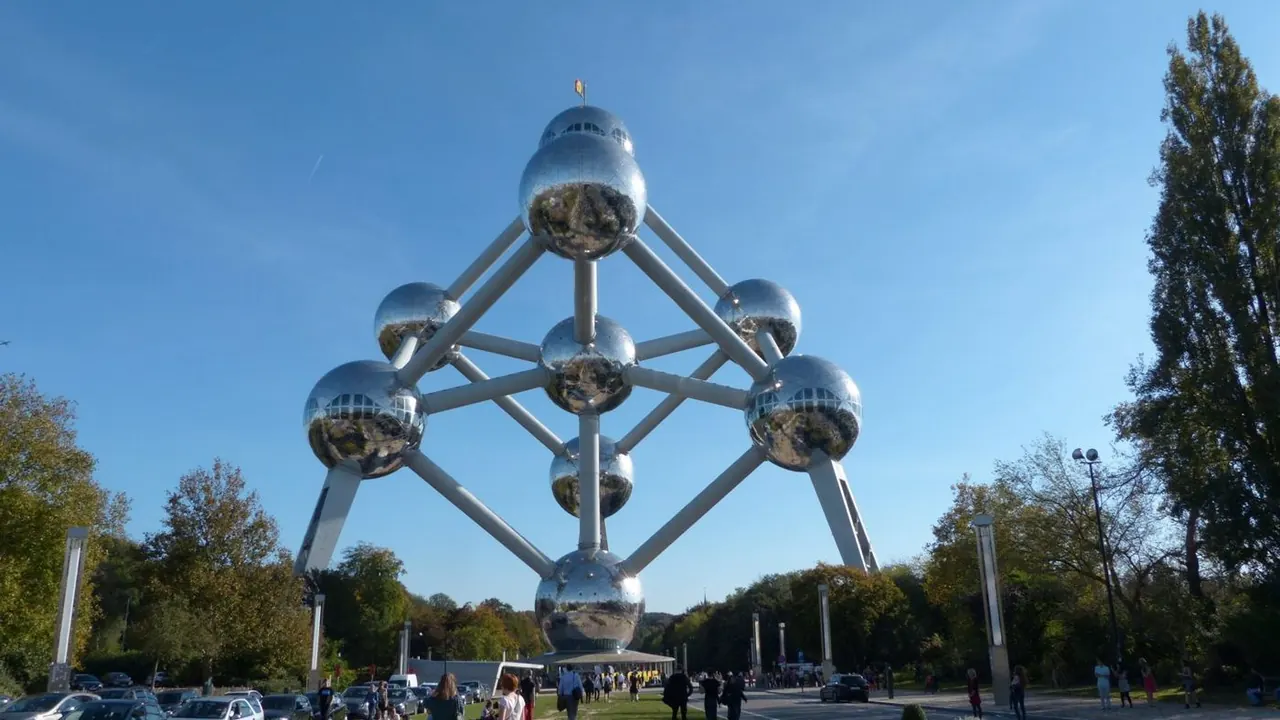
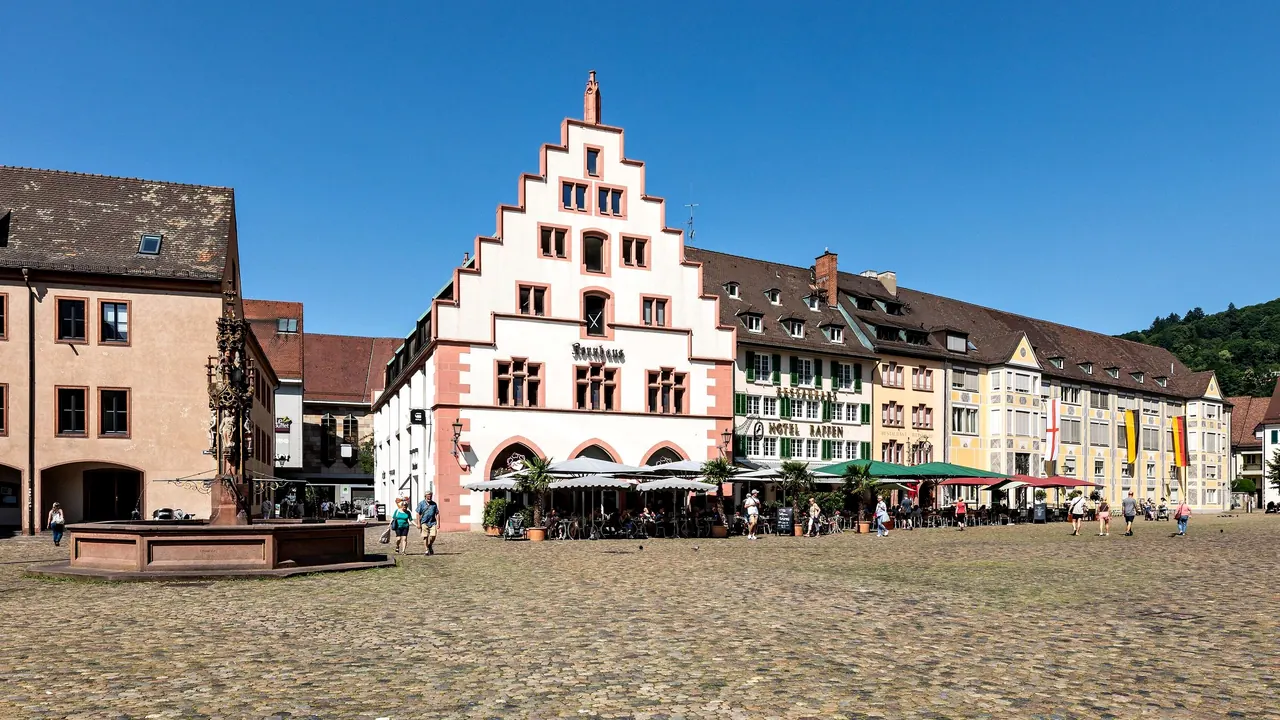
Photos: Brussels by Ettanghe, CC BY-SA 4.0, cropped; Freiburg by Dietmar Rabich, CC BY-SA 4.0, cropped.
Brussels or Freiburg?
Our verdict in twelve categories, each scored against the same fixed benchmark cities, and the climate month by month, so you can choose for your trip.
Choose Brussels for
- shopping
- live music and the arts
- nightlife
Brussels suits the traveller who wants a capital's depth: the Grand-Place and the Flemish masters, Horta's Art Nouveau houses, beer-hall evenings, an opera house with a European name and a food scene that runs from frites to Congolese cooking in Matonge. It is also the stronger base for hopping by train to Ghent, Bruges, Antwerp and even Paris. Pick it for a city trip where museums, restaurants and nights out fill the days.
Choose Freiburg for
- nature and the outdoors
- wellness
- families
Freiburg is the better choice for anyone who wants the outdoors and an easy pace. The Black Forest begins at the edge of town, the thermal baths of southern Baden are close by, and the small car-free centre is simple to manage with children or on a bike. What it gives up in big-city culture and nightlife, it makes back in hiking trails, spa afternoons and wine villages.
Scoreboard
Twelve categories on one fixed scale from 0 to 100. The shaded stretch is the gap between the two.
Your match
Pick a travel style or drag the sliders, and both match scores follow your weighting.
Too close to call, 2 points apart
Wins on shopping and live music and the arts with your weighting.
Wins on nature and the outdoors and wellness with your weighting.
What matters to you?
Category by category
What the scores mean for a trip.
Beaches & swimming
Neither city is a beach destination, but the swimming on offer is different. From Brussels you can take the train for just over an hour to the wide sands of Ostend or Knokke, where the North Sea stays cold and windy. In town there are Art Deco indoor pools.
Freiburg swaps sea and sand for fresh water. The gravel-pit lakes on the Rhine plain are reached by bike and warm up nicely in summer, and Titisee and Schluchsee are cooler but more scenic in the Black Forest.
Food & drink
Brussels has more to eat and drink. Mussels, carbonnade and waterzooi sit alongside lambics brewed only in this corner of Belgium, and pralines from the Sablon. The immigrant neighbourhoods of Matonge, Saint-Josse and Schaerbeek add a range that a smaller city cannot match.
Freiburg cooks a lighter, French-leaning Baden cuisine of Flammkuchen, Black Forest ham and trout, served with local Pinot from the Kaiserstuhl. The morning market around the Münster is a real pleasure. On a longer stay, though, the menus start to repeat and there is little foreign cooking.
Culture & sights
Brussels has much more to see. The Grand-Place is one of Europe's great squares, the upper town holds major Flemish painting and the Magritte museum, and Horta's houses in Saint-Gilles make the city a key place for Art Nouveau. The drawback is the setting, since office blocks break up the historic quarters.
Freiburg is smaller and more unified. Its red sandstone Münster, the medieval gates and the running Bächle channels make an attractive old town, but much of it was rebuilt after the war, and the sights can be covered in a day or two.
Nightlife
Brussels has the better nights out, and they centre on beer. People drink in the streets around Saint-Géry, on Place Flagey and in wood-panelled taverns. The city also has a well-known techno club in the Marolles and a queer scene around Rue du Marché au Charbon.
Freiburg's evenings belong to its students. There are pubs and wine bars around the Martinstor and summer gatherings by the Dreisam, but only a handful of clubs, and things quieten noticeably during the semester break.
Nature & outdoors
Freiburg is far better for the outdoors. You can walk straight up the Schlossberg from the old town, the Schauinsland cable car rises to about 1,280m with views to the Alps, and the Feldberg is about an hour away for hiking in summer and skiing in winter. The Kaiserstuhl vineyards and the Rhine plain add easy cycling.
Brussels has the tall beech stands of the Sonian Forest and some good parks, but the land around it is flat farmland. Real hills and kayaking mean a trip of an hour and a half or more to the Meuse valley.
Day trips
Both cities are excellent bases, and Brussels is the better one. Ghent is about half an hour away by train and Bruges about an hour, with Antwerp, Leuven and Mechelen in between. Paris is about an hour and a half away by high-speed train, so a car is never needed.
Freiburg benefits from sitting where three countries meet. Basel is about 45 minutes away by train, Strasbourg and Colmar are within reach, and Baden-Baden is an hour away. The Alsace wine villages, however, are much easier to reach by car.
Good for families
Freiburg is easier with children. The centre is small, flat and full of families on bikes, the Bächle are made for floating toy boats, and Europa-Park, Germany's largest theme park, is about 40 minutes away. Its weak point is rain, since there is little to do indoors.
That is where Brussels does well, with the Iguanodon hall at the Natural Sciences museum, the comic strip centre and Train World. The Atomium and Mini-Europe add more. Heavy traffic and cobbled pavements make the days more tiring.
Getting around
Freiburg is the easier city to get around. The old town is largely car-free and can be crossed on foot in twenty minutes, trams and bike lanes cover the rest, and many hotels give guests a card for local buses and trains.
Brussels is also walkable at its centre, but there is a steep climb between the lower and upper town. A metro and tram network reaches Ixelles and Saint-Gilles. Driving is hard work because of the tunnels and one-way streets.
Shopping & style
Brussels is much better for browsing. The Galeries Royales and the Sablon are lined with chocolatiers and antiques dealers, the Place du Jeu de Balle hosts a flea market every morning, and Rue Antoine Dansaert showcases Belgian designers. Avenue Louise covers the luxury brands.
Freiburg has chain stores on Kaiser-Joseph-Strasse and independent shops in the Gerberau quarter. The best things to take home are wine, schnapps and ham from the market or a cuckoo clock, and for serious shopping locals go to Basel.
Affordability
The two cost about the same overall, but their hotel prices follow opposite patterns. In Brussels the business hotels empty at weekends, so a Friday-to-Sunday stay is the better deal, and frites and food in the immigrant neighbourhoods keep daily costs down.
Freiburg's rooms are scarce and are dearest on summer weekends and during trade fairs, so many visitors stay in Black Forest villages instead. Once you are there, market snacks, wine taverns and largely free sights make the days cheap.
Live music & performing arts
Brussels is a serious city for the stage. La Monnaie is known for adventurous opera, Bozar and the Flagey building host major orchestras, and the Queen Elisabeth Competition fills the city with music each spring. Add contemporary dance in French and Dutch and halls on every European rock tour.
Freiburg offers a good evening rather than a reason to travel. It has opera and drama at the municipal theatre, the Freiburger Barockorchester for fans of period instruments, and summer concerts at the Zelt-Musik-Festival.
Wellness & relaxation
Freiburg wins easily here. There is a thermal bath on the city's eastern edge, Bad Krozingen's warm outdoor pools are about twenty minutes south, Badenweiler has a Roman ruin beside its modern baths, and Baden-Baden is an hour away by train.
Brussels has no bathing tradition. It offers a few North African hammams, hotel spas and Art Deco pools, and the nearest real rest is a long lunch in Ixelles or a walk in the Sonian Forest.
When should you go?
Pick your month. The climate figures are measured averages, not a forecast.
Brussels in July
Freiburg in July
Daytime high, °C
Rainfall in the month, mm
Temperature and rainfall are climate normals, averaged over the years shown. Brussels: 1991-2020 normals, Uccle (5.2 km from centre). Freiburg: 1991-2020 normals, Freiburg (0.6 km from centre).
Both cities have cold, grey winters of about the same temperature, but their summers differ. Brussels stays mild, with highs of about 23°C in July and August. It is rarely too hot for walking, but it is never dry: rain falls in every month and peaks in August at around 90mm. April is the driest month, and from May to August the days are reasonably bright, so late spring and early autumn are the most comfortable times to explore the streets.
Freiburg warms up more and gets noticeably more sun. July reaches about 27°C, which is warm enough for the lakes and open-air pools in July and August. May is the wettest month at about 103mm, with showers that carry on through the summer, while winter is drier, at around 49mm in January and February, and brings snow to the higher slopes for skiing. For hiking, the sunny spells of late spring and September to early October are ideal.
Which traveller are you?
On a culture and arts trip, Brussels is the clear choice. It has the Royal Museums with Bruegel and Magritte, Horta's UNESCO-listed houses and a full programme at La Monnaie and Bozar. Freiburg's cathedral and Augustinermuseum fill about a day.
For an outdoors trip, choose Freiburg. Trails start on the Schlossberg behind the old town, a cable car climbs the Schauinsland, and the Feldberg offers hiking and skiing. Brussels has the Sonian Forest, but its real hills are hours away in the Ardennes.
On a relaxing and wellness trip, Freiburg is far better. Thermal pools and saunas sit on the city's edge and at Bad Krozingen, Badenweiler and Baden-Baden, and the town moves slowly. Brussels offers a few hammams and the pace of a busy capital.
Before you go
| Measure | Brussels | Freiburg |
|---|---|---|
| Official language | French, German, Dutch | German |
| Currency | Euro (EUR) | Euro (EUR) |
| Sockets | CE230 V, 50 Hz | CF230 V, 50 Hz |
| Driving side | Right | Right |
| Time zone | UTC+1, UTC+2 in summer | UTC+1, UTC+2 in summer |
| Emergency number | 112 | 112 |
| Elevation | 70 m | 278 m |
| Main airport | Brussels Airport (BRU)11 km from centre191 non-stop destinations | EuroAirport Basel–Mulhouse–Freiburg (BSL)50 km from centre112 non-stop destinations |
| Public holidays this year | 14 days | 12 days |
By the numbers
| Measure | Brussels | Freiburg |
|---|---|---|
| City population | 195,546 | 238,299 |
| People per km² | 5,908 | 1,558 |
| Museums within 10 km | 106 | 13 |
| UNESCO World Heritage sites within 50 km | 11 | 2 |
Where else could you go?
Every comparison below shares a destination with this one, so you can follow Brussels or Freiburg somewhere new.
- Colmarvs Freiburg
- Antwerpvs Brussels
- Ghentvs Brussels
- Baselvs Freiburg
- Strasbourgvs Freiburg
- Zurichvs Freiburg