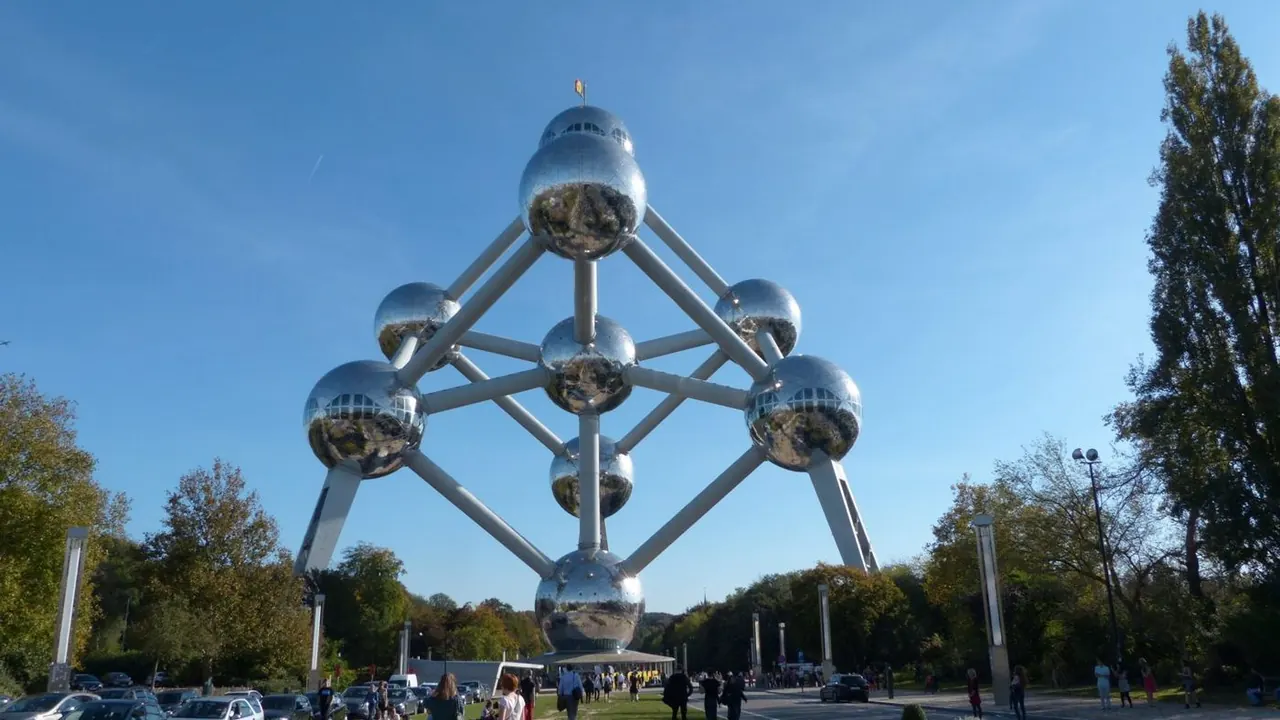
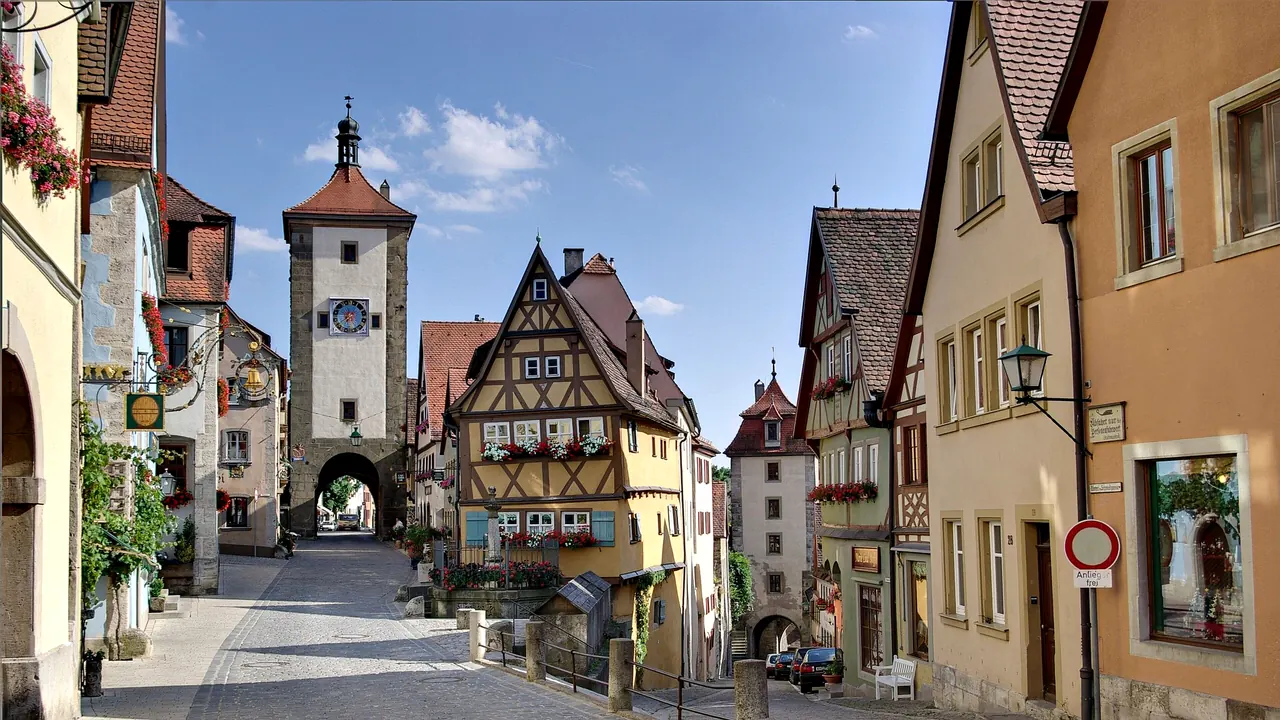
Photos: Brussels by Ettanghe, CC BY-SA 4.0, cropped; Rothenburg ob der Tauber by Berthold Werner, Public domain.
Brussels or Rothenburg ob der Tauber?
Our verdict in twelve categories, each scored against the same fixed benchmark cities, and the climate month by month, so you can choose for your trip.
Choose Brussels for
- nightlife
- live music and the arts
- food and drink
Brussels is the better choice for most trips of more than a couple of days. It has a real capital's range: Flemish masters and Magritte, Horta's Art Nouveau houses, an opera house and concert halls, serious Belgian cooking and the beer culture that goes with it, and evenings that carry on in bars across several neighbourhoods. Its fast trains to Ghent, Bruges and Antwerp mean a week never runs short of things to do.
Choose Rothenburg ob der Tauber for
- wellness
- prices
Rothenburg suits a slower, narrower trip. It is a single walled medieval town kept almost whole, at its best at dawn and after the coach parties have left, with gentle valley walks below the ramparts and thermal baths within driving distance. Go for a quiet night or two inside the walls, ideally as one stop on a drive along the Romantic Road, and accept that dinner at an inn is the evening's main event.
Scoreboard
Twelve categories on one fixed scale from 0 to 100. The shaded stretch is the gap between the two.
Your match
Pick a travel style or drag the sliders, and both match scores follow your weighting.
Wins on nightlife and live music and the arts with your weighting.
Wins on wellness and prices with your weighting.
What matters to you?
Category by category
What the scores mean for a trip.
Beaches & swimming
Neither is a swimming destination, but Brussels has the edge because the Belgian coast is little more than an hour away by train. At Ostend, De Haan or Knokke there are wide sandy beaches and promenades, though the cool, windy North Sea makes it a day out rather than a dip. In town, the handsome Art Deco indoor pools are a pleasure in themselves.
Rothenburg is far from any sea. Swimming there means the town's outdoor pool or a drive of about an hour to grassy bathing areas on Franconian lakes such as the Altmühlsee.
Food & drink
This is one of the widest gaps between the two. Brussels covers the whole range, from friterie cones to beer-braised carbonnade, waterzooi and shrimp croquettes. It has hundreds of beer styles including the lambics brewed only around the city, and Congolese, Moroccan and Turkish cooking in Matonge, Saint-Josse and Schaerbeek.
Rothenburg is a place of roast pork, Schäufele and dumplings, with Silvaner from the Bocksbeutel to drink. It is satisfying after a day on the walls but narrow, and much of the cooking around the Marktplatz is aimed at coach groups. Look for the family guesthouses away from the square.
Culture & sights
Brussels offers far more to see: the Grand-Place, Bruegel and Rubens in the Royal Museums, the Magritte museum, Horta's UNESCO-listed houses in Saint-Gilles and Ixelles, and the Cinquantenaire collections. Its weakness is the setting, since fine quarters sit beside dull office blocks.
Rothenburg is the reverse: the walled town itself is the sight, intact and almost free of anything modern. Riemenschneider's Holy Blood Altar and the Medieval Crime Museum are its highlights, but you can see it all in a day or two, while Brussels fills a week.
Nightlife
Brussels has a real night out, built mostly around bars. Drinkers fill Saint-Géry and the Bourse, locals gather at Flagey and Châtelain, there is a respected techno club in the Marolles and a queer scene on Rue du Marché au Charbon.
Rothenburg goes quiet once the day visitors leave. The evening highlight is the night watchman's lantern tour, followed by a glass of wine in a tavern. Anyone wanting more has to go to Würzburg or Nuremberg.
Nature & outdoors
Brussels has slightly more to offer outdoors, mainly because of the Sonian Forest. Its tall beech stands and trails lie on the city's edge, and the Meuse and Ardennes valleys are within a two-hour reach for kayaking and longer hikes.
Rothenburg's countryside is closer to the door. Paths drop straight from the walls into the Tauber valley, past mills to the Topplerschlösschen, and the river cycle path runs on through vineyards. It is pretty but gentle, with no wild country nearby.
Day trips
Brussels is the stronger base, and you do it all by train. Ghent is about half an hour away, Antwerp about forty minutes and Bruges an hour, and Paris, Cologne and Amsterdam can all be reached in a long day.
Rothenburg has excellent neighbours along the Romantic Road: walled Dinkelsbühl, crater-ringed Nördlingen, Würzburg's Residenz and Nuremberg's castle. The catch is that the trains are awkward, so without a car most of these trips are hard to manage.
Good for families
Brussels keeps children busy for longer. It has the Iguanodon herd at the Natural Sciences museum, the Atomium and Mini-Europe, comic murals and Train World, with Walibi and Pairi Daiza for bigger outings. The weather and the cobbles are the main drawbacks.
Rothenburg has a storybook appeal, with ramparts to walk, a tower to climb and the night watchman to follow, and its walled centre is calm and safe. Beyond that there is little made for children, so a day or two is usually enough.
Getting around
Both centres are walkable, but they differ beyond them. Brussels adds metro, trams and direct trains to the airport and the rest of Belgium. Trams take you out to Ixelles and Saint-Gilles, though the climb to the upper town is steep.
You can cross Rothenburg's old town on foot in about fifteen minutes, with cars kept outside the gates. Leaving is the hard part: the branch line usually means a change at Steinach, and buses are sparse, so a car is close to essential for exploring the region.
Shopping & style
Brussels rewards browsing. You will find pralines in the Galeries Royales Saint-Hubert and on the Sablon, weekend antiques, vintage in the Marolles and the flea market on Place du Jeu de Balle, and Belgian designers on Rue Antoine Dansaert. Lace, comics and beer make easy things to take home.
Rothenburg sells mostly one thing: Christmas, all year round, in the form of glass baubles, nutcrackers and Erzgebirge carvings along the Herrngasse. Its Christmas market is among Germany's most atmospheric, but there is almost nothing for everyday or fashion shopping.
Affordability
Costs are broadly similar, but the cheap times run opposite ways. In Brussels, weekends are the better deal because business hotels empty out, and frites or the cooking in immigrant neighbourhoods keep daily spending down. In Rothenburg, rooms inside the walls are dearest in December and on summer weekends, and staying in a village just outside saves a good deal.
Live music & performing arts
Brussels has a full cultural calendar: adventurous opera at La Monnaie, the national orchestra at Bozar, the fine acoustics of Flagey and the spring Queen Elisabeth Competition. Add contemporary dance and theatre in two languages, and the touring rock and pop halls.
Rothenburg's performances are tied to occasions. The costumed Meistertrunk play is the big one, alongside summer open-air theatre and organ concerts in St Jakob's. On most evenings there is simply no show to go to.
Wellness & relaxation
Rothenburg is the more restful place. Early in the morning and after the coach groups leave, the walls and the Tauber valley paths are deeply quiet. The Franken-Therme salt-water pool at Bad Windsheim and the old spa town of Bad Mergentheim are both within about an hour.
Brussels offers hammams, hotel spas and Art Deco pools, but the town of Spa is a long trip away. Its quieter moments, a long lunch or a terrace in Ixelles, come against the background of heavy traffic.
When should you go?
Pick your month. The climate figures are measured averages, not a forecast.
Brussels in July
Rothenburg ob der Tauber in July
Daytime high, °C
Rainfall in the month, mm
Where the figures come from
Rothenburg ob der Tauber's sunshine is measured 27 km from the centre, at Feuchtwangen-heilbronn.
Temperature and rainfall are climate normals, averaged over the years shown. Brussels: 1991-2020 normals, Uccle (5.2 km from centre). Rothenburg ob der Tauber: 1991-2020 normals, Rothenburg ob der Tauber (0.9 km from centre).
Neither town is ever warm enough for a beach trip, so the question is when the streets are pleasant to walk. Both are at their best from May to September. Rothenburg has the warmer, sunnier summer, with highs of about 25°C in July and August and close to 246 hours of sunshine in July. Brussels peaks a little cooler at around 23°C and is the wetter of the two, with August, at about 90mm, among its rainiest months.
Winter is grey in both towns, but Rothenburg's continental position makes it colder, with January highs near 3°C, so the cobbled lanes can be icy. Brussels stays a few degrees milder but has rain right through the year. Spring and early autumn are good shoulder seasons for both, and in Rothenburg they bring the orchard blossom and the autumn colour in the Tauber valley.
Which traveller are you?
On a food and nightlife trip, Brussels is the clear pick. It has mussels, carbonnade and frites, lambics poured in wood-panelled taverns, and late bars around Saint-Géry and Flagey. Rothenburg offers hearty inn cooking and is quiet by eleven.
For a shopping trip, Brussels gives you master chocolatiers on the Sablon, antiques, the Jeu de Balle flea market and Belgian designers on Rue Antoine Dansaert. Rothenburg only wins if Christmas decorations and its famous market are what you are after.
On a relaxing and wellness trip, Rothenburg is the gentler place. It has empty lanes at dawn, quiet walks on the walls and in the Tauber valley, and thermal baths at Bad Windsheim within an hour. Brussels keeps the pace and traffic of a working capital.
Before you go
| Measure | Brussels | Rothenburg ob der Tauber |
|---|---|---|
| Official language | French, German, Dutch | German |
| Currency | Euro (EUR) | Euro (EUR) |
| Sockets | CE230 V, 50 Hz | CF230 V, 50 Hz |
| Driving side | Right | Right |
| Time zone | UTC+1, UTC+2 in summer | UTC+1, UTC+2 in summer |
| Emergency number | 112 | 112 |
| Elevation | 70 m | 430 m |
| Main airport | Brussels Airport (BRU)11 km from centre191 non-stop destinations | Nuremberg Airport (NUE)66 km from centre56 non-stop destinations |
| Public holidays this year | 14 days | 12 days |
By the numbers
| Measure | Brussels | Rothenburg ob der Tauber |
|---|---|---|
| City population | 195,546 | 11,331 |
| People per km² | 5,908 | 272 |
| Museums within 10 km | 106 | 6 |
| UNESCO World Heritage sites within 50 km | 11 | 2 |
Where else could you go?
Every comparison below shares a destination with this one, so you can follow Brussels or Rothenburg ob der Tauber somewhere new.
- Antwerpvs Brussels
- Ghentvs Brussels
- Nurembergvs Rothenburg ob der Tauber
- Bambergvs Rothenburg ob der Tauber
- Brugesvs Brussels
- Maastrichtvs Brussels